An experience that led me into Iran’s political history
Iran has once again grabbed global attention with fresh protests against Supreme Leader Ayatollah Khamenei, made more powerful by the…
An experience that led me into Iran’s political history
Iran has once again grabbed global attention with fresh protests against Supreme Leader Ayatollah Khamenei, made more powerful by the visible presence of Iranian women. Their participation has turned political unrest into a moment the world can no longer ignore.
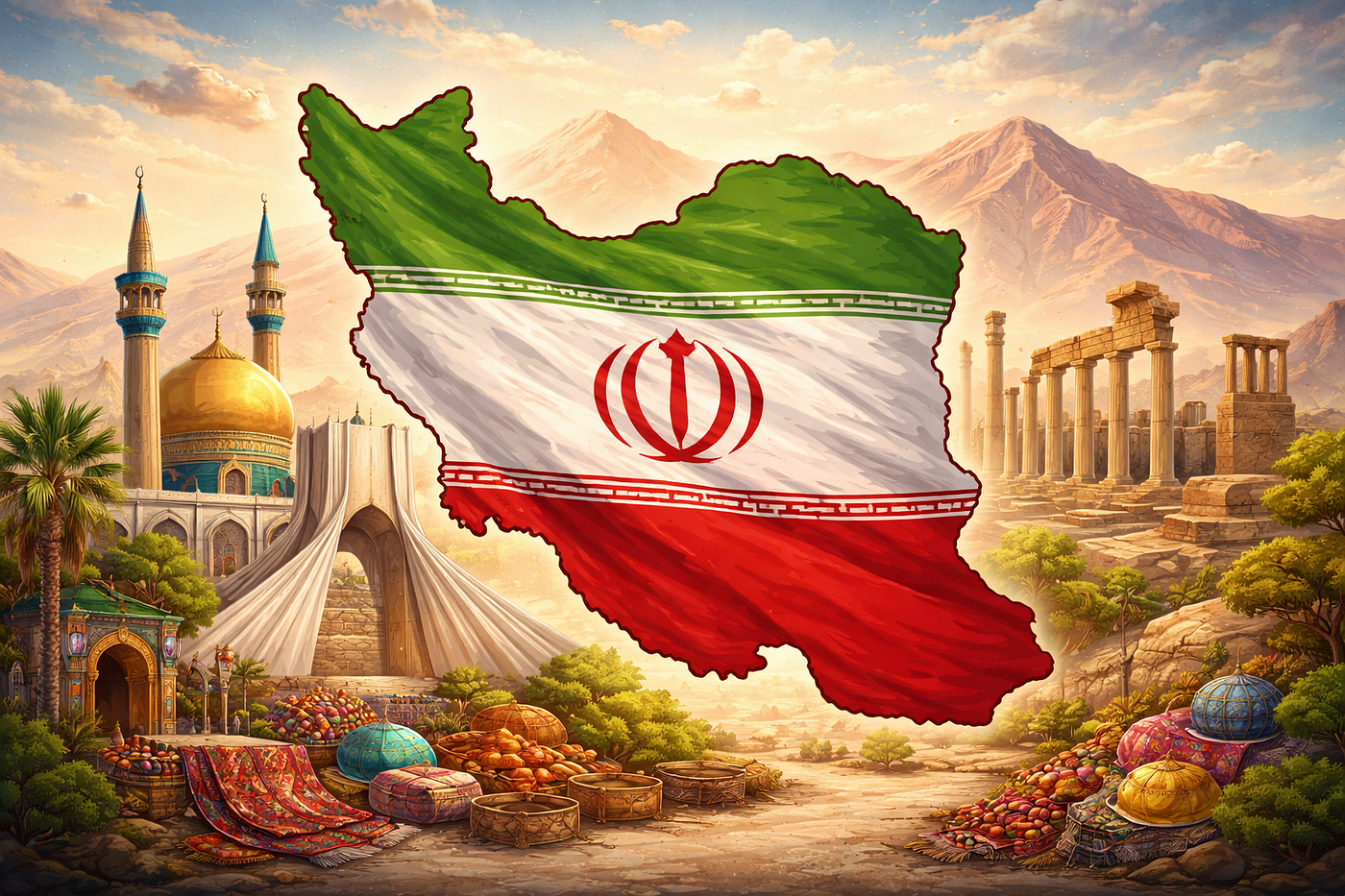
AI generated Image
Like many of us, I once followed conflicts from a distance. Wars were something I understood intellectually, but had never felt personally. That changed for me in June 2025, when I was living in Bahrain, a small Gulf island close to Iran and home to a major US Navy base.
On 23 June 2025, air-raid sirens rang through the night, breaking the calm of what is usually a peaceful nation. Fears spread quickly that Iran launching missiles toward neighboring countries hosting US military bases.
We didn’t know where one might land, only that if even a single missile hit Bahrain, the damage could be devastating simply because of how small the country is. The missiles eventually landed in Qatar without causing destruction, but the fear stayed with us.
This incident sparked my curiosity about Iran why does Iran hate the United States? Why many Arab countries oppose Iran even though it is an Islamic nation and both openly supports Palestine?
As I read more, I was surprised to learn that Iran, once known as Persia, has a deeply rich and ancient history. Even more striking was the contrast between past and present, Iranian women, who today are seen protesting and burning their hijabs, once had the freedom to dress as they chose, work, and participate actively in public life.
Beyond politics, Iran’s history is full of remarkable culture and achievements. From its role on the Silk Road that connected civilizations, to its architecture, literature, and art, trade and creativity have shaped the country alongside its political struggles.
(Iran, being one of the world’s oldest countries, has a history too vast to cover in a single article. I have tried to focus on the major political events that led to the current crisis. This piece reflects my own interpretation, informed by research from articles, news coverage, and digital tools.)
Iran’s Political History: Kings, Clergy, and the Road to the Islamic Revolution
While finding answers to my question, I had to learn about Iran’s political history, which is very interesting, and, as in most countries’ histories, also shows western influence.
In Iranian history, political power was never held by kings alone. Alongside them existed Shia religious scholars called Ayatollahs, who shaped public opinion and influenced rulers.
( Shia are Muslims who believe the Prophet’s family had the rightful leadership of Islam, contrary to them are Sunnis who believe leaders should be chosen by the Muslim community)
The surge of religious scholar’s influence
In the early 1900s, oil was discovered in Iran, leading to the creation of the Anglo-Persian Oil Company. Although Iran owned the land, most profits went to Britain, creating deep resentment among Iranians who felt their resources were being exploited.
This discontent led to the strengthening of the Majlis (parliament), where religious scholars Ayatollahs gained influence. From then on, kings could not rule freely without clerical approval, planting seeds of tension between monarchy and religion.
The period when Iran saw modernization and economic growth
Between 1920s to 1940s, Reza Shah Pahlavi took power with western support and this was the time he pushed rapid modernization. Western dress, women’s education, and reduced religious influence were encouraged. While urban elites supported this, religious leaders and traditional society strongly opposed it.
Between 1940s to 1950 during World War II, foreign powers increased influence and the king Shah aligned with the West. After World War II, Iran’s strategic importance brought the United States into its oil economy. The Shah Pahlavi welcomed US partnership, but clerics viewed it as continued foreign control. As wealth was uneven and limited by foreign control of key resources even locals supported clerics.
The emerge of first supreme leader
In the 1960s, Ayatollah Ruhollah Khomeini who later became first supreme leader of Iran rose as a radical religious voice, rejecting kings outright. He declared that only God has the right to rule, and under his doctrine of Velayat-e Faqih, Islamic jurists must govern on god’s behalf through Sharia law. He said, western influence, especially the US, was corrupting Iran. It is said his speeches were very powerful and even in exile, it spread through cassette tapes, reaching millions of Iranians .
By the late 1970s, economic inequality, cultural alienation, and anger toward the Shah and the US fueled mass protests in Iran. In 1979, the Shah fled Iran. Khomeini returned, elections were held, and Iran became an Islamic Republic.
This marked the most talked Islamic Revolution in Iran, which ended the monarchy, established theocracy, and introduced the concept of a Supreme Leader, seen as god’s representative on earth.
Iran’s revolution was not sudden, it was the outcome of history, oil, foreign influence, and religious power converging at once.
After the death of Iran’s first Supreme Leader in 1989, Ali Khamenei was elected as the second Supreme Leader, a position he still holds today. Khamenei had previously been a close student of Ayatollah Khomeini and was one of the most influential figures in the 1979 Islamic Revolution.
Under his leadership, Iran has maintained its theocratic system while navigating international sanctions, regional conflicts, and internal unrest, making him a central figure in the country’s modern history.
Why Arabs oppose Iran ?
Most Arab countries are Sunni majority and speak Arabic, while Iran is Shia majority and speak Persian(Farsi). Iran’s support for Shia groups across the Middle East has alarmed Sunni led governments, who see it as regional interference.
Additionally, Iran’s revolutionary message threatened monarchies in the Gulf, making Arab rulers wary of Iran’s influence even when they share positions on Palestine.
Why Iran’s government hates US ?
After the 1979 Islamic Revolution overthrew the US-backed Shah, opposing America became central to Iran’s new identity. The US had long been seen as interfering in Iran’s politics and controlling its oil resources, which fueled resentment.
Over the years, continuous economic sanctions, and political pressure worsened relations. These actions damaged Iran’s economy and strengthened anti-US sentiment within the government and among the people.
Why Iranians are protesting?
Iranians have been protesting largely due to years of economic hardship, soaring inflation, a collapsing currency, and frustration with government mismanagement.
In late December 2025, strikes by shopkeepers and bazaar merchants in Tehran highlighted growing public anger, which quickly spread nationwide. The government responded with arrests, force, and internet restrictions making it difficult for the world to learn more.
Just a year ago, Iran experienced a war-like situation, and the recent uprisings against their own government show that the struggle is far from over.
Coping with economic crisis and extremist pressures, the country faces an uncertain future but there is hope that one day Iranians can live free from both foreign interference and domestic oppression, and that peace and stability will prevail.
Apart from Iran’s politics, I’ve been reading about the Silk Road, Persian art, literature, trade, and more. Drop a comment if you want me to write about any of it!
Edited for Activated Thinker by Paulia Dianz ❃
메타데이터
- post_id
- e71f04d9bfdb
- slug
- an-experience-that-led-me-into-irans-political-history-e71f04d9bfdb
- url
- https://medium.com/activated-thinker/an-experience-that-led-me-into-irans-political-history-e71f04d9bfdb
- canonical_url
- https://medium.com/activated-thinker/an-experience-that-led-me-into-irans-political-history-e71f04d9bfdb
- author_url
- https://medium.com/@rutikamendhe
- status
- ok
- fetched_at
- 2026-06-23 06:34:20