The “Blue Men”: The Astonishing Story of African Slaves in Viking Ireland
How a daring 9th-century Norse expedition connected the North African deserts to the cold mists of the Emerald Isle.
The “Blue Men”: The Astonishing Story of African Slaves in Viking Ireland
How a daring 9th-century Norse expedition connected the North African deserts to the cold mists of the Emerald Isle.
The tale of the “blue men” (or blåmenn in Old Norse) constitutes one of the most unique and least-known episodes of Scandinavian expansion in the **Early Middle Ages, linking the deserts of North Africa with the cold mists of [Ireland](https://laboresylosdias.blogspot.com/2011/01/mitologia-celta-el-origen-hispano-de.html)**. This story is not a mere legend; it is thoroughly documented in historical chronicles such as the Irish Annals, which recount the unexpected arrival of African captives to the Gaelic shores in the 9th century.
1. The 859 Expedition: Setting Sail for the Mediterranean and Africa
It all began with the second great Viking incursion into the **Iberian Peninsula** and the Mediterranean, which took place roughly between the years 858 and 862. This audacious expedition was led by a fierce new generation of warlords, most notably Björn Ironside (son of the legendary Ragnar Lothbrok) and the veteran chieftain Hastein. After skirting the peninsula and launching devastating attacks on places like Algeciras — where they burned down the main mosque — the winds and their sheer ambition drove them toward the Atlantic coasts of Africa.
Their primary target on the African continent was the city of Nekor (modern-day Nador, in Morocco), a strategic stopover before their definitive push into the Mediterranean. Historical sources describe extreme violence during this landing. The **Vikings**, protected by their heavy chainmail, engaged in brutal hand-to-hand combat with the Mauritanian defenders, inflicting heavy losses and even severing the local monarch’s hand with one of their characteristic greatswords.

2. The Capture of the “Blue Men”
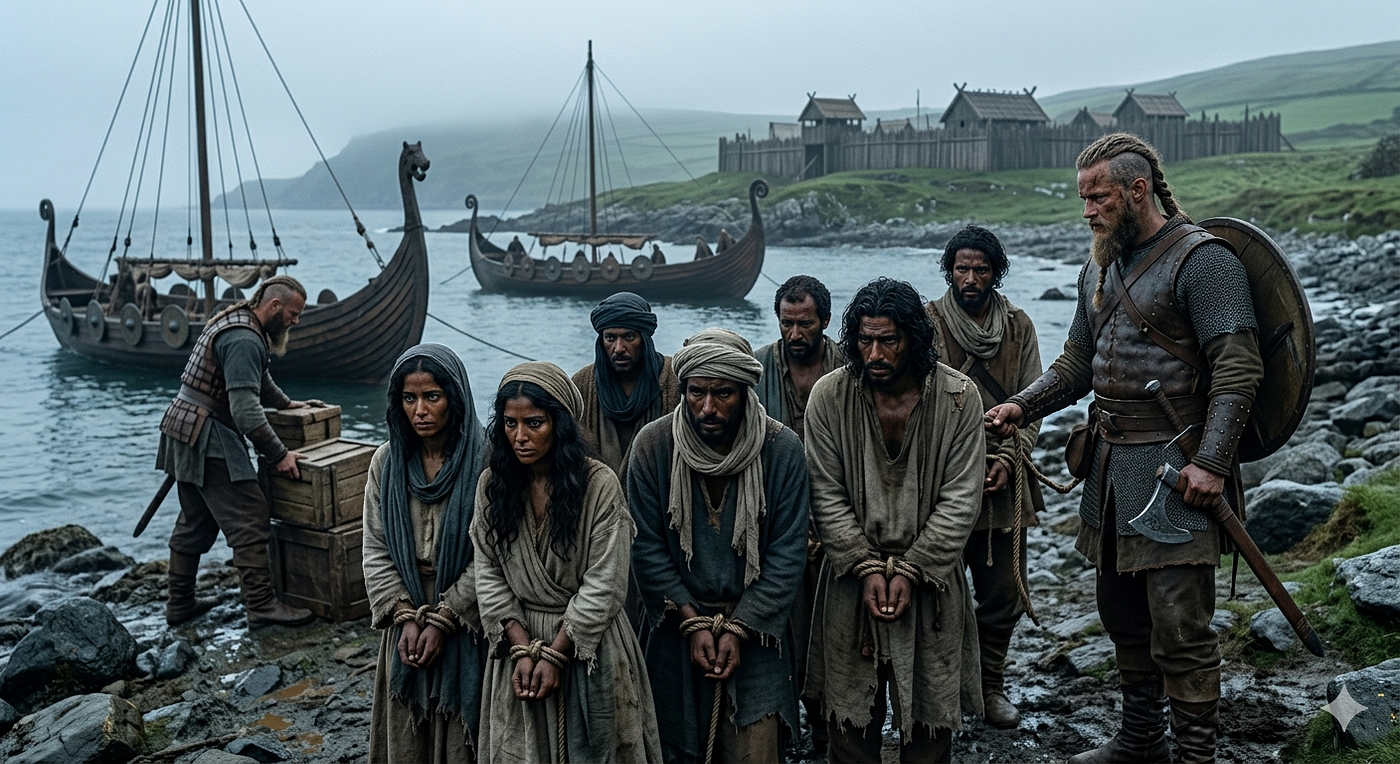
After defeating the local forces, the Vikings pillaged the territory and captured a massive number of people. Among the prisoners were two princesses from the Banū Sālih family, who were later successfully ransomed by the **Andalusian emir**. However, the most unusual prize among the loot was a large group of black slaves.
In the Norse terminology of the time, these captives were called blåmenn. Although today it literally translates to “blue men,” in Old Norse, the term blár did not only refer to the color blue but was commonly used to describe black or very dark complexions. For the chroniclers of the era, the skin color of these men was so striking that it remained forever etched in the collective memory of the European peoples who saw them pass by.

3. Final Destination: The Slave Markets of Ireland
How did these men end up in Ireland? The Vikings were, in addition to fierce warriors, expert merchants who financed their global expeditions through human trafficking. Following their Mediterranean journey, which included violent raids on Murcia, the Balearic Islands, and southern France, a portion of the fleet loaded with captives headed back North.
By that time, the Vikings had established fortified coastal settlements in Ireland known as longphorts, the most important of which was Dublin. Dublin quickly grew to become the largest and most dynamic slave-trading port in all of Western Europe during the 9th century. Chronicles indicate that the African captives taken during the 859 raid were brought directly there to be sold at high prices or used as forced labor.
4. Integration and Legacy on the Emerald Isle
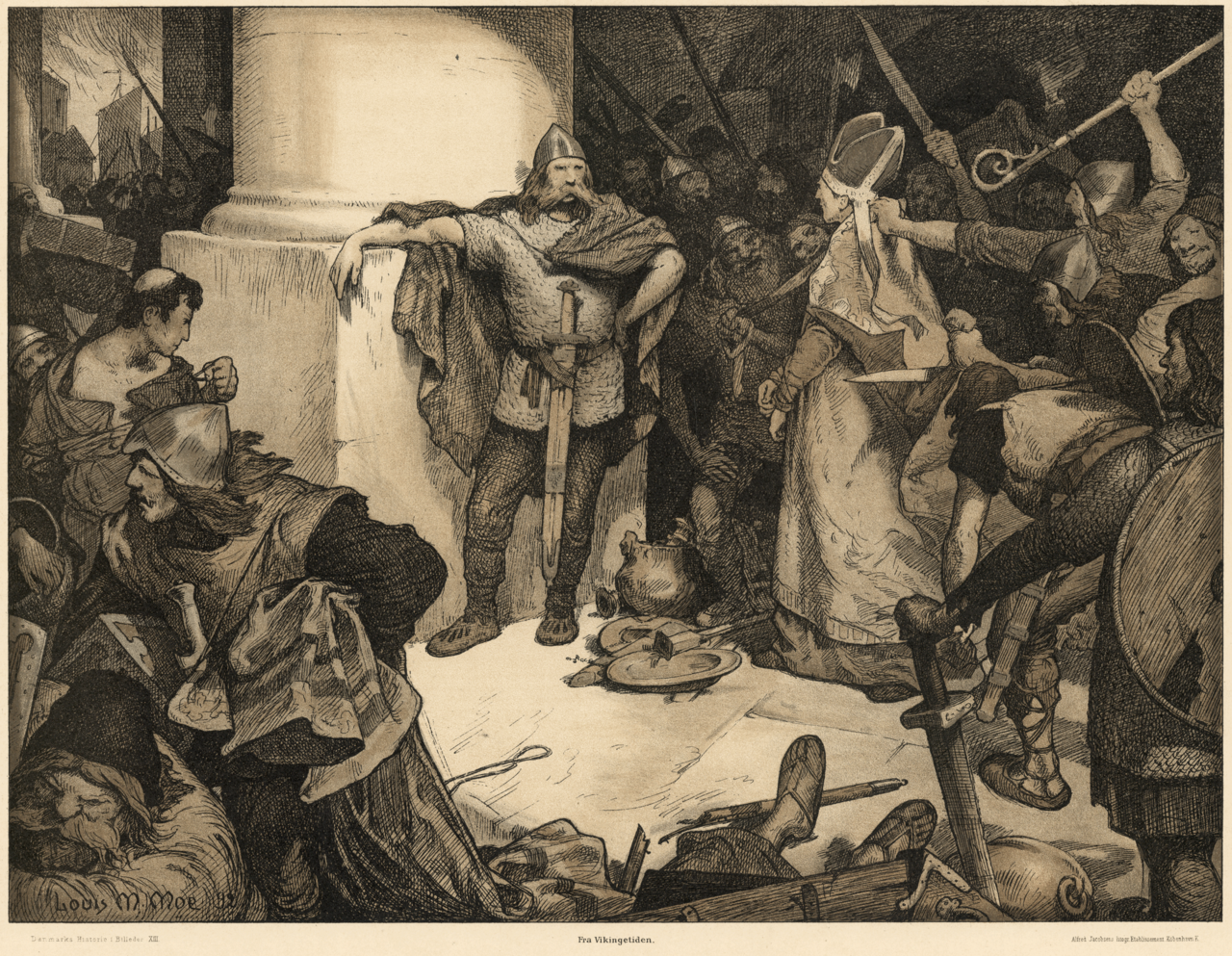
The presence of the blue men in Ireland is a powerful testament to the immense mobility of the Viking civilization, which successfully connected points as distant as North America, Byzantium, and Africa. In Ireland, the Norsemen did not limit themselves strictly to raiding; they settled and intermingled with the Gaelic population, eventually adopting the local culture and religion over time.
It is highly probable that these African slaves ultimately assimilated into the complex social structure of the Viking kingdoms of Ireland, where intermarriage was remarkably common. Although direct archaeological traces of this specific group are difficult to pinpoint, the written account of the blue men remains irrefutable proof that the age of global discovery and cultural mixing began much earlier than we usually imagine, under the square sail of a Viking longship.
Enjoyed this piece of hidden history? This article was originally researched and published in Spanish on my personal blog: Labores y los Días. [**https://laboresylosdias.blogspot.com/2026/05/los-hombres-azules-la-asombrosa.html**]
메타데이터
- post_id
- e7215af784d2
- slug
- the-blue-men-the-astonishing-story-of-african-slaves-in-viking-ireland-e7215af784d2
- url
- https://medium.com/@robcamino/the-blue-men-the-astonishing-story-of-african-slaves-in-viking-ireland-e7215af784d2
- canonical_url
- https://medium.com/@robcamino/the-blue-men-the-astonishing-story-of-african-slaves-in-viking-ireland-e7215af784d2
- author_url
- https://medium.com/@robcamino
- status
- ok
- fetched_at
- 2026-06-13 07:35:29