How a 21-Year-Old Helped Bring Nazis to Justice
The Holocaust Survivor Served as an Interpreter at Nuremberg
How a 21-Year-Old Helped Bring Nazis to Justice
The Holocaust Survivor Served as an Interpreter at Nuremberg
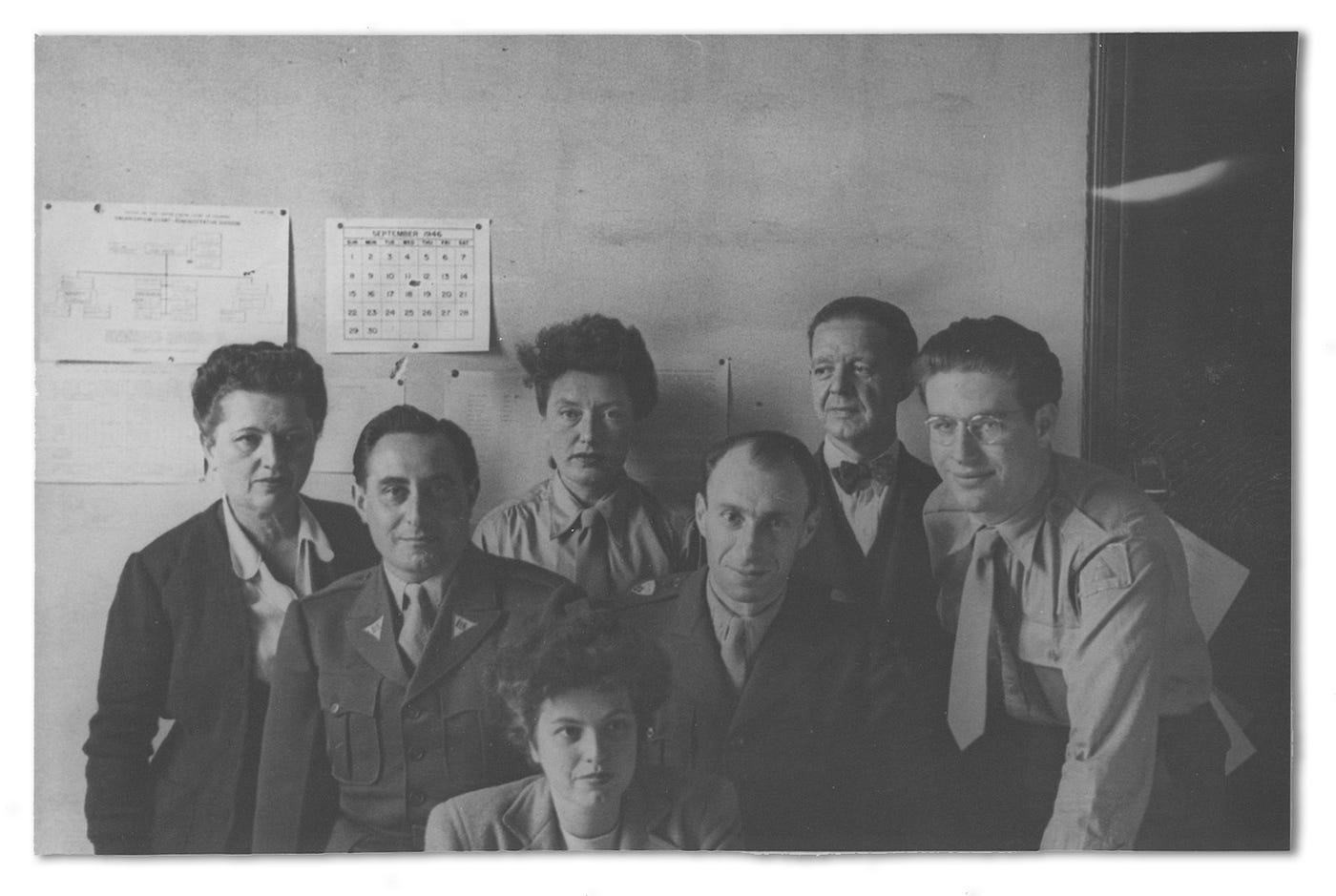
Interpreters at the International Military Tribunal. Among those pictured is Gerald Schwab (at the right), October 1946. USHMM, courtesy of Gerald (Gerd) Schwab
On November 20, 1945, the world’s attention turned to Nuremberg, Germany, as 24 Nazi leaders faced judgment for their unthinkable crimes during the Holocaust. They were on trial at the International Military Tribunal (IMT), a court created by the victorious Allied powers.
The IMT faced a challenge: Its charter stated the defendants had the right to a fair trial, and accordingly, all proceedings needed to be translated into a language the defendants, prosecutors, judges, and witnesses could understand. That meant the trial needed to be accessible in English, German, French, and Russian.
The tribunal judges “were really concerned with the optics of the trial, because they hoped the trial would not only serve to punish the guilty, but to educate the German people on the evils of Nazism,” explained Dr. Peter Black, a retired senior historian at the United States Holocaust Memorial Museum. “The interpretation into appropriate languages would help ensure that the defendants would get a demonstrably fair trial.”
This real-time interpretation had never been used in a courtroom before. It was made possible through the adoption of new technology — such as these headsets now part of the Museum’s collection — and with the help of more than 100 linguists, including Holocaust survivor Gerald Schwab.
Although Schwab did not pass the qualification test for simultaneous interpretation, he used his German-language skills to assist the prosecution in conducting pretrial interrogations of defendants and witnesses.
For Schwab, participating in trial preparation was not just a professional duty — it was deeply personal. He and his family had escaped Nazi Germany when he was 15, and after joining the US Army, he returned to Europe in 1944. “I ended up in Nuremberg … And if you want to know how I felt about it, I felt great,” Schwab said in an interview with Black in 2009.

Interpreter Gerald Schwab sits beside German Field Marshal Albert Kesselring (right) as he testifies at the IMT commission hearings investigating indicted Nazi organizations. June 1946. USHMM, courtesy of Gerald (Gerd) Schwab
Outside the main courtroom at Nuremberg, Schwab’s work supported the construction of cases against six organizations that were also on trial, including the SA, a paramilitary Nazi organization also known as the Storm Troopers, and the SS, the elite guards of the Nazi Reich. He interpreted at the interrogations of two top generals in the German Army and many mid-level officials used as prosecution witnesses.
In an effort to remain impartial, Schwab rarely revealed to defendants or witnesses that he was a German-born, Jewish man, despite them frequently asking where he learned his German. However, he made an exception when he was translating for an SA officer who had been instrumental in destroying Jewish property and synagogues during Kristallnacht in Schwab’s hometown of Freiburg, Germany.
The Nazi repeatedly asked Gerald where he had learned his German, and Schwab resisted telling him.
“Finally, the guy got on my nerves … and I told him: I learned my German in Germany, and I was there during Crystal Night.”
With that, Gerald said, “the penny finally dropped,” and the SA officer became silent after realizing Schwab’s background.
Schwab took pride that he, an “ordinary” US soldier and someone whom Nazi Germany had deemed “inferior,” was taking part in the interrogation of Nazi leaders, recalled Black. It was a way for Schwab to seek justice for men like his father, David Schwab.
During Kristallnacht, a night of nationwide violence against Jews in November 1938, David Schwab was arrested and sent to the Dachau concentration camp for about five weeks. He was one of nearly 30,000 men who were arrested because they were Jewish. In mid-December 1938, Gerald Schwab received a call from his father, who said he was at the railway station in Munich and was coming home. “There are certain things that one remembers vividly, and this was one of them.”

Paula (in the car) and David Schwab pose with their two children, Gerald and Margot. USHMM, courtesy of Gerald (Gerd) Schwab
After Kristallnacht, the Schwab family was desperate to find a way out of Nazi Germany and were lucky to receive visas to the United States. When the family arrived in New York, Schwab’s aunt and uncle took him on a two-week hike in the mountains and instructed their friends to speak to him only in English. While it was frustrating at the time, he said, “It was great because after two weeks I had a fairly decent command of the language.”
The dedication to learn English paid off after Schwab joined the US Army, although not immediately. First, he served as a machine gunner on the Italian front (“So much for my German language skills,” Schwab joked). He was finally able to use his dual language skills when he joined an intelligence unit in Austria, after recovering from serious wounds sustained in combat. In April 1946, he was discharged from the US Army and went to Nuremberg, Germany, as a civilian. He was only 21.
“Now, if anybody wants to know how come a kid of 21 can serve as an interpreter in a position such as that, let me just reach back to an old saying, that ‘In the land of the blind, the one-eyed is king.’ They needed people badly who spoke both languages,” Schwab explained.
Though his time at Nuremberg was brief, it shaped the course of his career.
After the first trial of the IMT ended in October 1946, Schwab moved to Berlin to work as a junior research analyst on German government files, where he prepared for future trials.
In May 1947, Schwab returned to the United States to further his education. He attended the University of Chicago, which allowed him to enroll despite having only completed two years of high school, and he later also received a degree from Stanford University. He married another Holocaust survivor and had two daughters.
Schwab had a long career with the US Department of State, and he authored two books: The Day the Holocaust Began: The Odyssey of Herschel Grynszpan (1990) and OSS Agents in Hitler’s Heartland: Destination Innsbruck (1996).
After he retired, Schwab volunteered at the United States Holocaust Memorial Museum, where he conducted research in the Division of the Senior Historian. Part of his work was helping Holocaust survivors to build legal cases against the German government to receive compensation or the return of stolen assets.

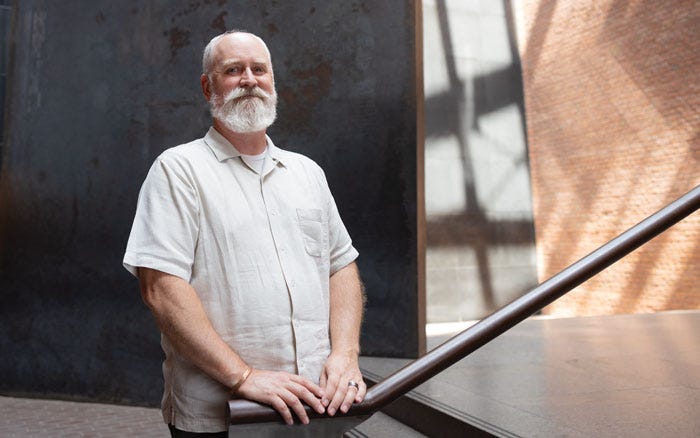
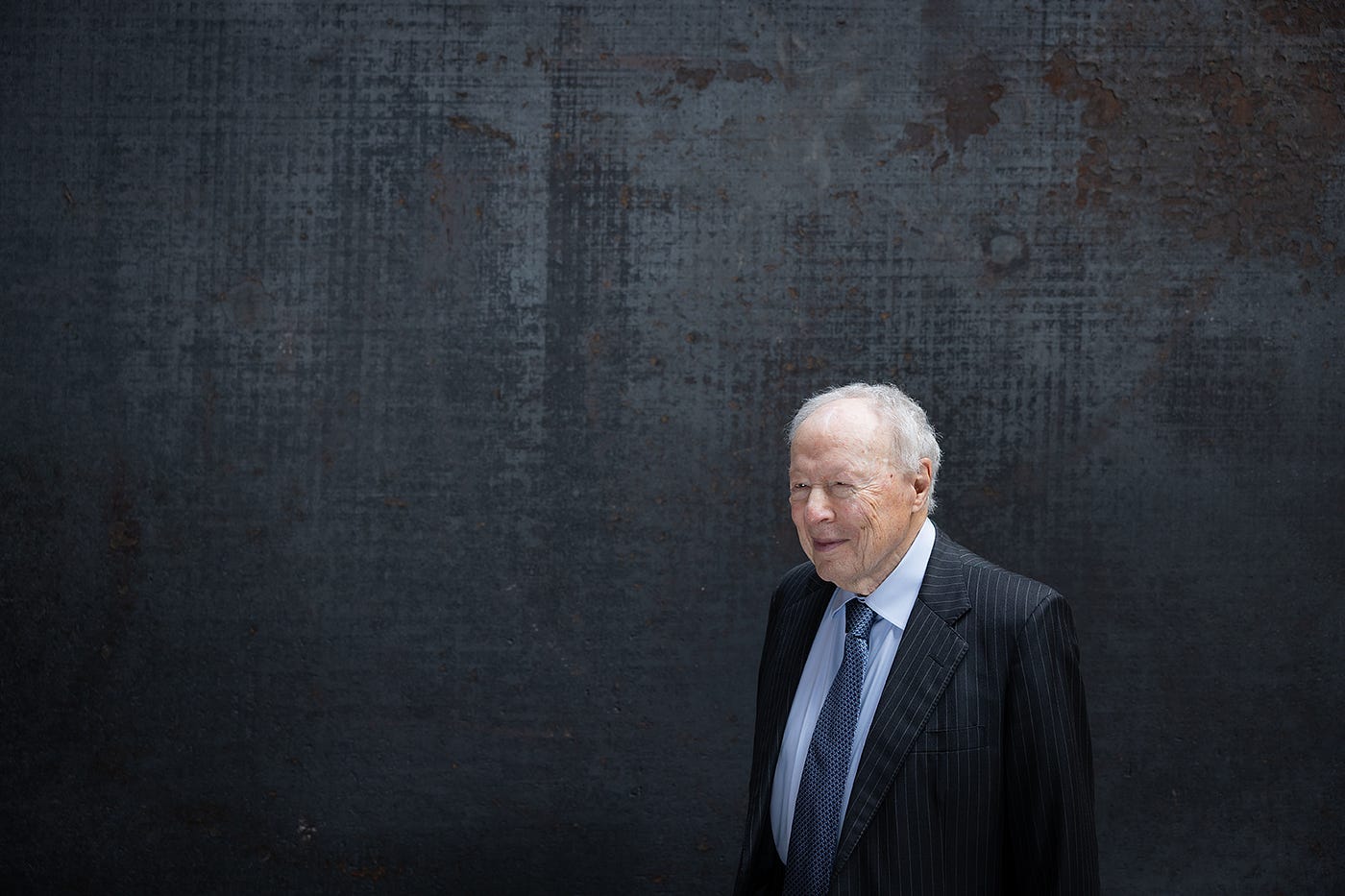
Gerald Schwab and Peter Black at the United States Holocaust Memorial Museum in 2012. US Holocaust Memorial Museum
He also allowed Peter Black to interview him before Museum audiences as part of the* First Person: Conversations with Holocaust Survivors* series. Black recalls him as “a good comrade with a great sense of humor.” Schwab passed away in 2014. Through his work, he had helped ensure the truth of the Holocaust — and pursuit of justice — would never be forgotten.
메타데이터
- post_id
- e74bd2d1944b
- slug
- how-a-21-year-old-helped-bring-nazis-to-justice-e74bd2d1944b
- url
- https://medium.com/memory-action/how-a-21-year-old-helped-bring-nazis-to-justice-e74bd2d1944b
- canonical_url
- https://medium.com/memory-action/how-a-21-year-old-helped-bring-nazis-to-justice-e74bd2d1944b
- author_url
- https://medium.com/@memoryandaction
- status
- ok
- fetched_at
- 2026-06-12 07:40:50