The New SEO: Why AI Visibility Now Matters More Than Your Google Ranking
SEO used to have a single mission: push your pages up the rankings and win the click. That mission is shifting under our feet. People…
The New SEO: Why AI Visibility Now Matters More Than Your Google Ranking
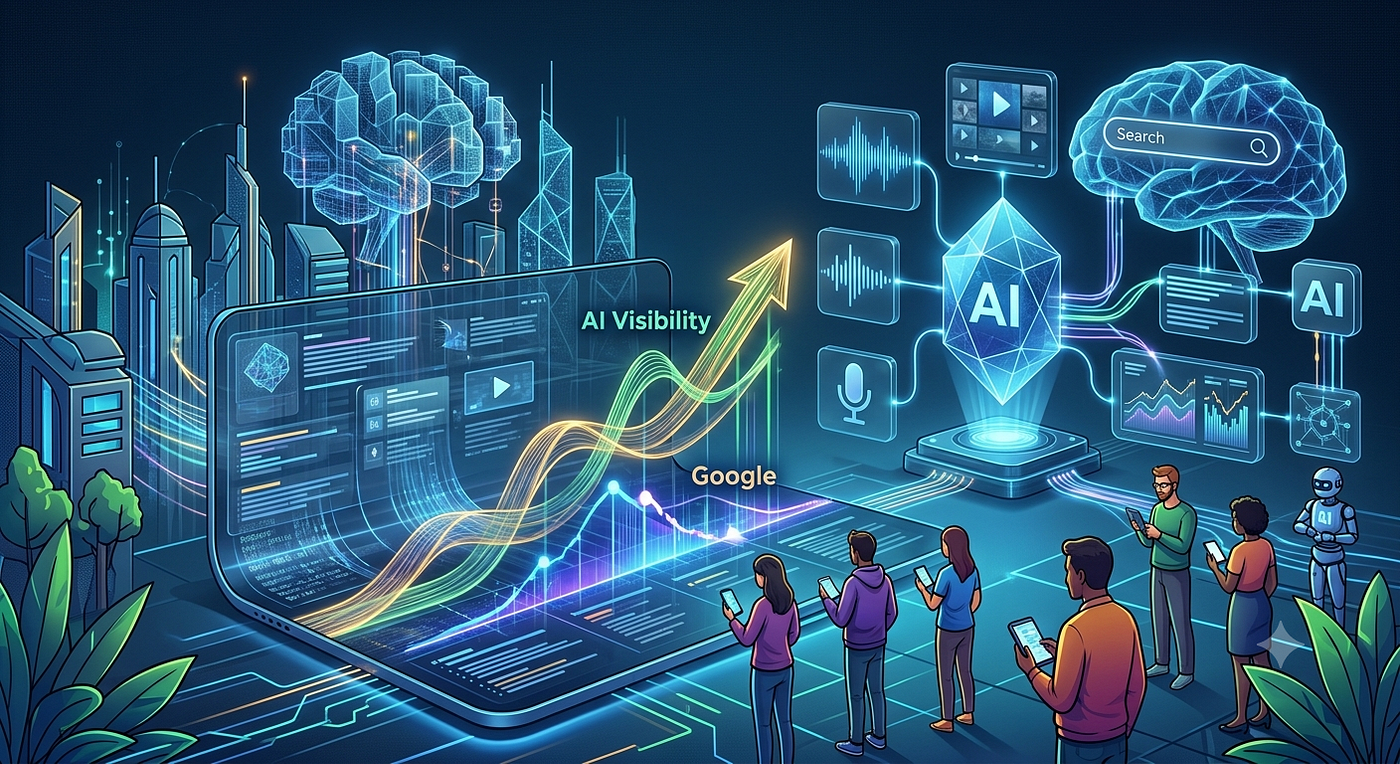
SEO used to have a single mission: push your pages up the rankings and win the click. That mission is shifting under our feet. People haven’t stopped searching, but they’ve stopped clicking as much. They put their question to ChatGPT, Claude, or Perplexity, glance at Google’s AI Overview, and carry on. The answer they act on increasingly comes from the AI, not from a visit to your site.
That one change in how people behave has rewritten the point of SEO. The work now is to get your brand picked up and recommended by the AI layer that has slipped in between the searcher and your website. We call it AI visibility, and at **DigiFix,** it now drives how we think about search, well before we ever reach the old ranking checklist.
Rankings Tell You Your Position. AI Visibility Tells You Whether You Exist.

Traditional SEO revolved around one question: where does my page land on the results page? AI visibility flips that to something more fundamental: when an AI tool builds its answer, does my brand even make the cut?
Those are very different problems. You can hold position one and still go completely unmentioned by ChatGPT. Meanwhile, a page ranked fifth might be the very source an AI Overview decides to quote. The reason is simple: language models don’t stack up ten links for you to choose from. They assemble one answer from many sources and credit only a handful. If the AI doesn’t count you among the sources it trusts, you simply aren’t there when a buyer is deciding.
And this is already how most people search. Bain & Company found that around 80% of consumers already lean on AI-generated summaries, and most searches now finish without anyone clicking through to a website. This isn’t a fringe habit anymore. It’s the norm.
So, How Do You Actually Build AI Visibility?
The reassuring part is that earning an AI recommendation isn’t some hidden hack or magic switch. It comes down to four habits we put in place for every client, the same ones we set out in our playbook on **how to get your business cited by Chat GPT.** Here’s where to begin.
1. Describe yourself the same way everywhere. AI starts to trust a business when its story is consistent. Your website, your directory profiles, your LinkedIn, your social bios, and the way others talk about you should all line up on who you are and what you do. Settle on one clear sentence about your business and repeat it everywhere. When those details clash, the AI hesitates and passes you over, even in cases where you were the best answer.
2. Become a name people mention, not just a link. What really gets you named by an AI is being referenced over and over, by other people, in the places that count. Ahrefs looked at 75,000 brands and found that mentions across the web were the strongest signal for appearing in Google’s AI Overviews, ahead of links. So work on getting cited: industry articles, guest posts, podcasts, honest reviews, and real conversations in your field.
3. Write so AI can lift your answer cleanly. AI reuses content it can extract without effort. Phrase your headings the way real people ask questions, then deliver the complete answer in the opening sentences before adding the detail underneath. Bring in comparisons, FAQ sections, and concrete examples. The easier your answer is to spot, the more often an AI will use it.
4. Stay current and concrete. AI favors recent, dated content, especially for “best [thing] in [place]” searches, which happen to be the ones worth winning. Stale, undated pages full of vague advice lose out to fresh, specific ones. Publish on a steady rhythm, use real figures, and name real things. A handful of strong, detailed pages will always outperform a stack of thin ones. We break down exactly how to structure this in our guide on **how to optimize for LLM visibility.**
How to Know It’s Actually Working
AI visibility is trickier to track than a ranking, so it calls for different measures. Three questions we ask ourselves every month:
- Coverage: Across a set list of target queries in ChatGPT, Perplexity, Claude, Gemini, and Google AI Overviews, how many now mention the business?
- Attribution: When we ask new leads how they found us, are AI tools coming up in their answers?
- Accuracy: When an AI does cite your brand, does it get the details right? A mention that describes you as something you’ve moved on from is a win in disguise, and it needs correcting.
The Early-Mover Advantage Is Real, and It Builds on Itself
Here’s the case for starting now instead of later: AI visibility compounds. Most teams give up somewhere between months three and five because nothing happens overnight. The ones who stay the course for six to twelve months build a presence their slower rivals struggle to catch.
SEO didn’t die. It grew up. The aim is no longer to climb the results page. It’s to be the trusted source AI turns to when people ask the questions that matter to your business. The companies that adjust now will be the familiar names tomorrow. The ones still chasing blue links alone will be left wondering where their influence went.
메타데이터
- post_id
- e758944adfbd
- slug
- the-new-seo-why-ai-visibility-now-matters-more-than-your-google-ranking-e758944adfbd
- url
- https://medium.com/@vishmi/the-new-seo-why-ai-visibility-now-matters-more-than-your-google-ranking-e758944adfbd
- canonical_url
- https://medium.com/@vishmi/the-new-seo-why-ai-visibility-now-matters-more-than-your-google-ranking-e758944adfbd
- author_url
- https://medium.com/@vishmi
- status
- ok
- fetched_at
- 2026-08-07 10:07:58