It Takes One Leap Up
The moment you touch and started to play basketball is the moment of a dream initiated.
It Takes One Leap Up
The moment you touch and started to play basketball is the moment of a dream initiated.
You see the hoop — the orange ring right above your head — and you want to get closer and closer to it, until you slam the ball inside, swishing through the net.
I am Ash, a 6’1” basketball player that once also had this dream, and with fortune I have achieved it when I was 15. However, the touch does not come without endeavor and hardworking in both the court and the gym. Hitherto now, I have consistently and systematically trained my explosive power and vertical jump techniques for almost 6 years. With two cofounders just as passionate, we developed “Bouncebunny” — a web project that aims to help endeavoring athletes achieve greater heights — specifically, generating AI-facilitated and customized training plans to improve one’s vertical jump heights.
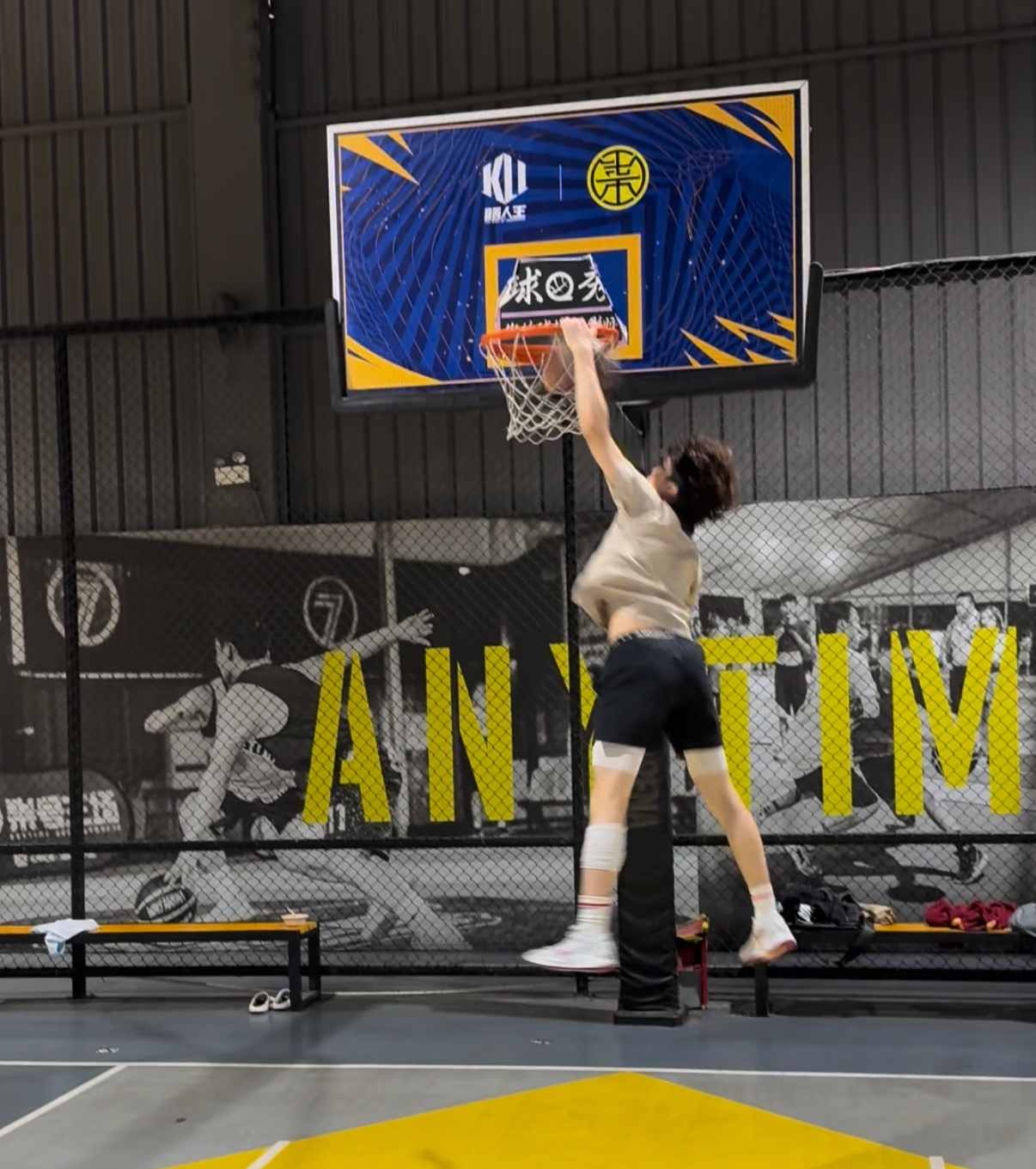
Picture of me dunking, June 2nd 2025
Here I am going to share some of my insights with those who have the same dream as me.
Firstly, it is never impossible to dunk. With a normal 10-foot hoop, and given that an average standing reach for a 6-foot male is approximately 8 feet, it only requires a vertical jump of 24 inches to touch the hoop, and perhaps some 5 more inches (that is, a vertical jump of about 29 inches) to dunk. This is definitely achievable through targeted training for power and explosiveness, as proven by countless amateur and professional basketball players.
Secondly, the hardest part of dunking for most players is not about gaining greater strength and PRs. It is always about how you jump, and how you put the ball into the net.
Here are some ideas about these techniques:
- How you jump: a lot of players don’t have great jumping forms. It is crucial to fully release the power in your legs, back, and abdominal. Having myself a 2-foot (left-right) release, I felt the most important part for a maximum release is to have a great follow-up movement — for both the last two steps. It is crucial to have your second-last step smoothly connected with the run-up in order to not waste the energy you have accumulated, and it is equally important to have the last step following quick enough to transform the energy into height.
- How you put the ball into the net: jumping with a ball will result in a lower maximum touch, for sure. In this case, it is quite hard to dunk successfully when your maximum height is just over the threshold. Therefore, do not think about “dunking” initially — but rather think about how you can “put” the ball into the net when you are having some of your first attempts. Briefly speaking, it is not about slamming the ball, but instead it is about pressing your wrist when you got to the net (just like shooting) and hence put the ball inside the hoop.
- Lastly, the training for dunking might be different from common perception — for example, squatting as low as possible to maximize efficiency, or to simply have more reps with small weights to grind on the size of the muscles. Research have shown that half-squats with partial range are more efficient for training explosive power for dunking as the movement imitates the jumping process best. It is also true that the lower back and abdominals contribute greatly for dunking specifically as they all enhance one’s stability mid-air, which essentially helps one to better control their dunking process. Moreover, with explosive power trainings, less reps with larger weights are more preferable.
Please go to **bouncebunny.app** for more training methods and plans for dunking.
메타데이터
- post_id
- e76591c797fe
- slug
- it-takes-one-leap-up-e76591c797fe
- url
- https://medium.com/@jintiand/it-takes-one-leap-up-e76591c797fe
- canonical_url
- https://medium.com/@jintiand/it-takes-one-leap-up-e76591c797fe
- author_url
- https://medium.com/@jintiand
- status
- ok
- fetched_at
- 2026-08-04 16:56:05