Why Productivity Advice Makes You Feel Worse (And the 3 Changes That Actually Help)
You’ve tried everything.
Why Productivity Advice Makes You Feel Worse (And the 3 Changes That Actually Help)
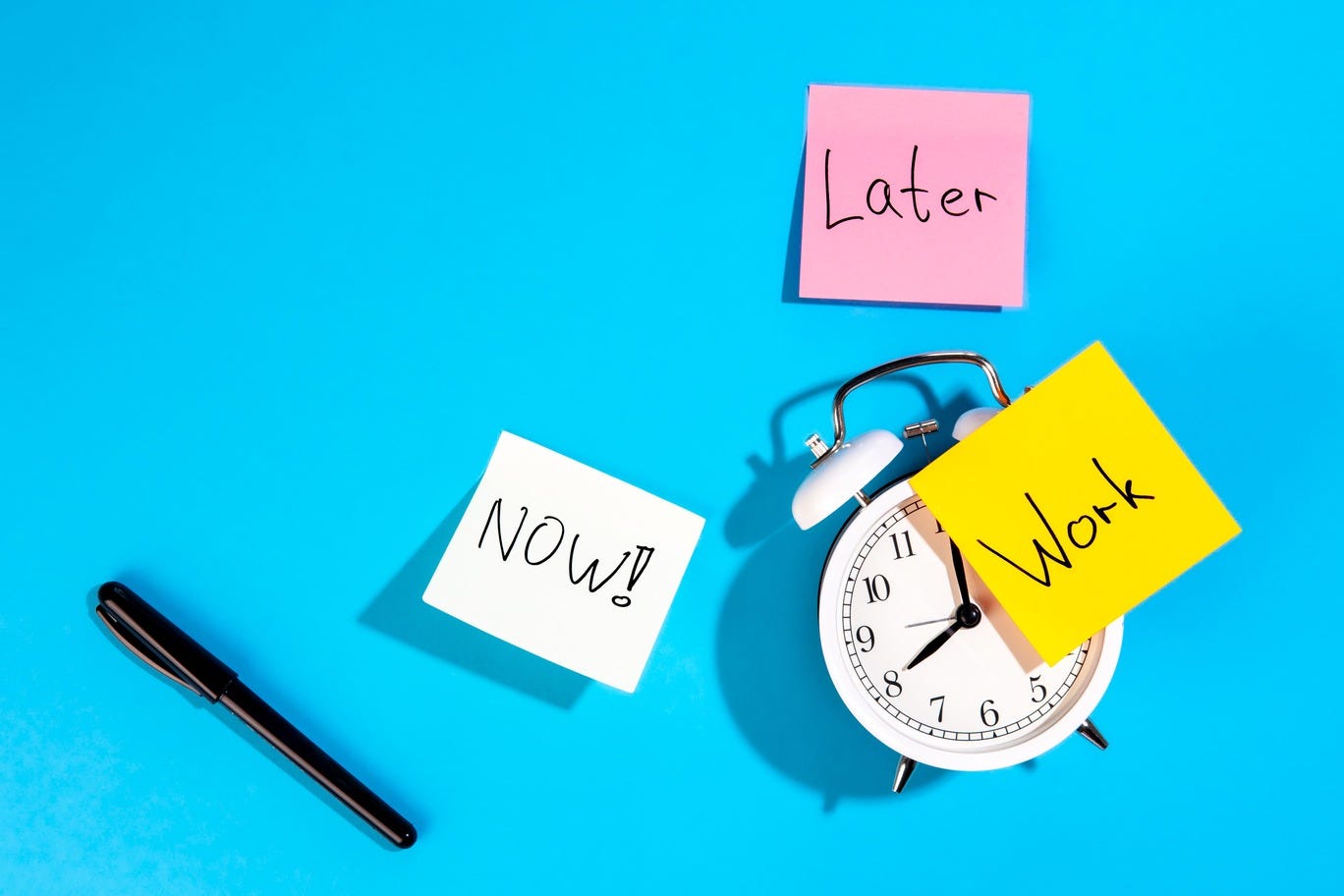
You’ve tried everything.
The morning routine. The time-blocking. The perfect planner. The app that promised to “finally organize your life.”
And somehow, you feel more overwhelmed than before.
More guilty. More behind. More like you’re failing at something that should be simple.
Here’s what nobody tells you: It’s not you. It’s the advice.
Most productivity systems are designed for a type of brain you don’t have. They assume:
- Linear thinking (one task, finish it, move to the next)
- Stable energy (same focus capacity every day)
- Predictable schedules (no interruptions, no mental load)
- Simple priorities (urgent vs. important is enough)
But if your brain is constantly buzzing with ideas, if you’re juggling multiple roles, if your energy fluctuates and your mental load never stops, those systems won’t just fail you.
They’ll make you feel broken.
You’re not broken. You just need different tools.
The Problem: You’re Being Told to Think Like Someone Else
Let me describe what I call a creative, generative mind (you might recognize yourself):
Your brain:
- Generates ideas faster than you can capture them
- Sees connections across different projects and possibilities
- Gets energized by novelty and new directions
- Thrives on flexibility, not rigid schedules
- Carries invisible mental load (remembering, coordinating, planning)
This isn’t chaos. This is creative intelligence.
But traditional productivity advice treats it like a bug to be fixed.
“Just focus on one thing.” “Stop getting distracted.” “Follow the schedule.” “Be more disciplined.”
So you try. You force yourself into systems that fight your natural thinking. And when they don’t work, you blame yourself instead of questioning the system.
Here’s the truth: You don’t need to change your brain. You need systems that work WITH it.
What Actually Changes the Game (3 Core Shifts)
Forget the seven-step frameworks and the perfect morning routines. Here are the three fundamental changes that actually make productivity feel supportive instead of punishing.
Shift #1: From “What Do I Have to Do?” to “What Should I Do Next?”
The problem with traditional to-do lists:
They tell you WHAT exists, not what MATTERS.
When everything sits on one flat list, you can’t tell the difference between:
- A 10-minute task and a 3-hour project
- Something that drains you vs. something that energizes you
- Busy work vs. meaningful progress
So you default to what’s easiest or most urgent, not what actually moves you forward.
What works instead: Add Context Before Choosing
Before you decide what to work on, ask:
Effort: How draining will this be? Low / Medium / High
Impact: What changes if this gets done? Low / Medium / High
Time: How long will it actually take? (Be honest, not optimistic)
Cost: What’s this really costing me? (Energy, money, opportunity, relationships)
Now you can see the difference between:
- High impact, low effort → Do this first
- High effort, low impact → Delegate, delay, or delete
- High impact, high effort → Save for when you have real focus time
Suddenly you’re choosing strategically instead of reactively.
Real example:
Task: “Respond to client email”
- Effort: Low (15 min)
- Impact: High (keeps project moving)
- Time: 15 min
- Cost: Low
Task: “Reorganize entire file system”
- Effort: High (mentally draining)
- Impact: Low (nice to have, not essential)
- Time: 3 hours
- Cost: High (kills focus for other work)
Which would you choose? The context makes it obvious.
Shift #2: From “Finish Tasks” to “Learn From Your Work”
The problem with just checking things off:
You complete tasks, feel briefly relieved, then immediately move to the next thing.
You never ask:
- Why did that take longer than expected?
- Why did I avoid that task all week?
- Why am I doing tasks that don’t create real value?
So you repeat the same patterns:
- Overcommitting
- Spending energy on low-impact work
- Ending days busy but unsatisfied
What works instead: Make “Done” a Learning Space
At the end of each day (or week), spend 5 minutes asking:
What flowed easily? → Do more of this What stalled or drained me? → Fix or delegate this What created real impact? → Prioritize this What patterns do I notice? → Adjust the system
This turns your completed work into data instead of just relief.
Real patterns you might discover:
- “I avoid every task that requires phone calls → I need a script or template”
- “I have energy for creative work in the morning, not at 4 p.m. → Stop scheduling it then”
- “Low-impact tasks keep sneaking onto my list → I need better boundaries”
- “I finish tasks faster when I batch similar work → Do more batching”
This is how you get better at productivity, not by trying harder, but by learning what actually works FOR YOU.
Shift #3: From “Plan Every Minute” to “Protect Your Energy”
The problem with rigid time-blocking:
It assumes your energy is constant, and your day is predictable.
But energy fluctuates. Interruptions happen. Mental load accumulates.
When you plan every minute and inevitably can’t follow it perfectly, the system makes you feel like you failed.
What works instead: Plan for 60% of Your Day
Here’s the maths nobody teaches you:
If you have 8 hours in a day, you do NOT have 8 hours for planned tasks.
You actually have:
- Interruptions (they will happen): 2 hours
- Mental transitions: 1 hour
- Communication/emails: 1 hour
- Unexpected needs: 1 hour
- Real focused work: 3 hours
So, plan for 3–4 hours of meaningful work and leave the rest as buffer.
This isn’t lowering your standards. It’s planning for reality.
What this looks like in practice:
Old way:
- 9–10 am: Project A
- 10–11 am: Emails
- 11–12pm: Project B
- 12–1pm: Lunch
- 1–2 pm: Meeting
- 2–3 pm: Project C
- 3–4 pm: Admin
- 4–5 pm: Project D
(By 11 a.m., this schedule has already fallen apart.)
New way:
- Morning: 1 meaningful project (high focus)
- Afternoon: 1–2 moderate tasks
- Buffer time: Built into the day for interruptions, transitions, mental load
(When interruptions happen, you’re not behind, you planned for them.)
When you stop overscheduling, you stop feeling constantly behind.
What This Actually Looks Like (A Real Day)
Let me show you how these three shifts work together:
Morning (Planning — 10 minutes):
Look at your list. Add context:
- Client presentation (High impact, High effort, 2 hours)
- Reply to emails (Low impact, Low effort, 30 min)
- Brainstorm project ideas (Medium impact, Low effort, 20 min)
Choose what fits your energy and capacity:
- Today I have 3 hours of focus
- Choose: Client presentation (priority) + emails
- Move brainstorming to tomorrow
During the Day:
Work on presentation. Get interrupted by a call (expected, you have buffer time). Finish presentation. Move to “Done.” Quick emails. Done.
Evening (Reflection — 5 minutes):
What flowed? Presentation went faster than expected when I had uninterrupted time. What stalled? Nothing today. What matters? Protecting morning focus time is key. What to adjust? Block mornings for deep work going forward.
Result: You made real progress without feeling crushed.
The Real Difference This Makes
When you make these three shifts:
✅ Your to-do list gets shorter (but more meaningful) ✅ Your days feel achievable (not overwhelming) ✅ You finish what matters (not just what’s easy) ✅ You learn what works for YOU (not what works for someone else) ✅ You have energy left at the end of the day (not resentment)
You stop trying to be productive like someone with a different brain.
And you start being productive in a way that actually fits your life.
Start With One Shift Today
You don’t have to overhaul everything at once.
Pick ONE shift:
Option 1: Add context to your to-do list Choose 3 tasks. Mark effort (Low/Med/High) and impact (Low/Med/High). See what becomes obvious.
Option 2: Reflect on yesterday What flowed? What stalled? What drained you? What created value? Write it down.
Option 3: Plan for 60% of tomorrow Look at your schedule. Cut 40% and call it buffer time. See how it feels.
Try one. See if it helps. You don’t need seven new habits or a complete system overhaul. You just need to stop fighting your brain and start working with it.
Follow me on Medium to explore how these productivity systems can work together and make your days feel less overwhelming. If you want a practical, step-by-step way to turn your tasks into meaningful progress, check out my full guide on the TODO List Method.
This article is part of a broader series on simple, real-life productivity strategies designed for real life, not ideal days.
메타데이터
- post_id
- e7697a5cf5ca
- slug
- why-productivity-advice-makes-you-feel-worse-and-the-3-changes-that-actually-help-e7697a5cf5ca
- url
- https://medium.com/@FlurryBrain/why-productivity-advice-makes-you-feel-worse-and-the-3-changes-that-actually-help-e7697a5cf5ca
- canonical_url
- https://medium.com/@FlurryBrain/why-productivity-advice-makes-you-feel-worse-and-the-3-changes-that-actually-help-e7697a5cf5ca
- author_url
- https://medium.com/@FlurryBrain
- status
- ok
- fetched_at
- 2026-06-23 03:48:11




