How Precision Clad Welding Extends the Life of High-Value Industrial Equipment
Equipment replacement costs have been climbing across heavy industry, even as maintenance budgets stay flat or shrink. Precision clad…
How Precision Clad Welding Extends the Life of High-Value Industrial Equipment
Equipment replacement costs have been climbing across heavy industry, even as maintenance budgets stay flat or shrink. Precision clad welding offers plants a way to protect critical components instead of replacing them outright by depositing a wear-resistant alloy layer onto a base metal to create a metallurgical shield against corrosion, abrasion, and high-temperature degradation. Depending on the application, this kind of surfacing can extend component life by 30% to 300% compared to untreated parts, according to hardfacing industry data compiled by the American Welding Society and equipment manufacturers such as Hobart Brothers.
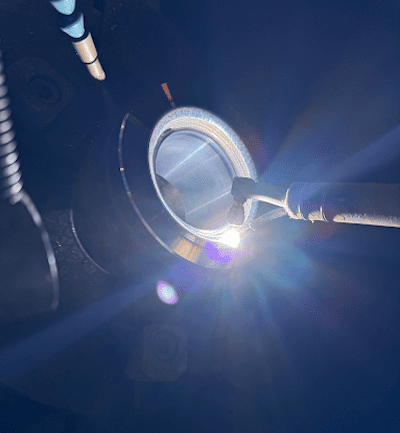
Image Credit: WH Labs
Understanding the Science Behind Precision Clad Welding
Clad welding works by forming a true metallurgical bond, not just a mechanical one, between a protective overlay material and the base metal beneath it. The result is a layer with specific engineered properties, corrosion resistance, wear resistance, or heat tolerance, fused directly to a base material that still provides the underlying structural strength.
The critical variable in this process is the dilution zone: the region where the overlay material and base metal mix during welding. Keeping dilution below roughly 10% is standard practice for preserving the overlay’s intended properties, since excessive mixing with the base metal can weaken the protective layer’s corrosion or wear resistance. Achieving that level of control requires precise heat input, carefully selected filler materials, and controlled deposition rates to minimize residual stress and avoid defects like cracking or delamination. Non-destructive testing is commonly used afterward to verify the integrity of the finished overlay.
Key Industries That Rely on Clad Welding
Industries with harsh operating environments are the primary drivers of demand for precision clad welding:
- Oil and gas — components exposed to corrosive chemicals, high pressure, and abrasive media benefit from overlay protection that would otherwise deteriorate quickly.
- Mining and mineral processing — equipment handling abrasive ores and slurries requires wear-resistant surfacing to hold up under constant friction.
- Power generation — boilers, heat exchangers, and turbine components are commonly clad to withstand extreme temperatures and steam erosion.
- Chemical processing — vessels and piping systems are protected from aggressive chemical exposure.
- Marine and shipbuilding — propeller shafts and other components exposed to seawater rely on cladding for corrosion resistance.
Cost-Benefit Analysis: Clad Welding vs. Replacement
Industry data consistently shows clad and hardfacing repairs cost roughly 25% to 75% of a full component replacement, according to figures published by the American Welding Society, Welding Alloys, and several industrial coatings providers. Those savings come from several compounding factors: reduced downtime, lower material requirements, fewer labor hours, and avoiding the requalification procedures that come with installing entirely new components.
Extended service intervals following a cladding repair add to the return on investment. When the operational disruption of a full replacement is factored in, production halts, installation complications, and the risk of cascade failures elsewhere in the system, targeted cladding repair is generally the more economical option for high-value assets.
Best Practices for a Preventative Clad Welding Program
A structured preventative program typically follows a consistent sequence:
- Assess the equipment to identify critical wear points and components most prone to failure.
- Document baseline conditions using ultrasonic thickness testing to establish a reference point.
- Build inspection schedules aligned with operational cycles, with closer monitoring during high-stress periods.
- Set intervention protocols that address minor wear immediately while scheduling more thorough treatment during planned downtime.
- Train maintenance staff to recognize early wear indicators and log interventions in a centralized record.
- Work with qualified, certified welding providers experienced in the relevant industry’s operating conditions.
- Track performance metrics, including life-extension outcomes and downtime reduction, to evaluate the program over time.
Non-destructive testing methods are typically integrated into this cycle to catch surface and subsurface defects before they progress to failure.
Documented Industry Outcomes
Independent hardfacing and overlay welding data, rather than single-project anecdotes, gives the clearest picture of what this process typically delivers:
- Component service life extended by 30% to 300%, depending on the alloy and application, compared to untreated parts.
- Repair costs running 25% to 75% of full replacement cost.
- Reduced spare-parts inventory, since worn components can often be rebuilt rather than replaced outright.
These figures come from hardfacing industry research aggregated by welding equipment and consumables manufacturers, rather than from a single facility’s results, making them a more reliable benchmark for planning purposes than any one case study.
Frequently Asked Questions
How long does a typical clad welding repair last?
Service life varies by alloy, application, and operating environment, but a properly executed overlay commonly extends component life well beyond that of an untreated part, in some cases by several multiples, depending on the wear mechanism involved.
What certifications should clad welding technicians hold?
Reputable clad welding work is typically backed by AWS certifications, ASME procedure and welder qualifications (WPS/PQR/WPQ), and documented non-destructive testing training to confirm the reliability of the finished weld.
Can clad welding be performed while equipment is in active operation?
In-situ clad welding is possible in limited scenarios, but it requires careful attention to fire risk, ventilation, and equipment isolation to avoid operational disruption or safety incidents.
Does extreme temperature affect clad welding durability?
Yes. Thermal expansion stress, microstructural changes, and accelerated oxidation can all compromise an overlay’s durability at high temperatures, which is why high-temperature applications typically call for specialized alloy combinations and post-weld heat treatment.
Are there environmental regulations specific to clad welding?
Clad welding operations in the U.S. are generally subject to EPA and OSHA requirements governing emissions, fume exposure, and waste disposal, with some local jurisdictions imposing additional rules on particulate matter and heavy-metal handling.
Takeaway
Precision clad welding extends the service life of high-value industrial equipment by depositing a controlled, metallurgically bonded overlay onto components exposed to corrosion, abrasion, and heat. When applied with proper pre-weld assessment, controlled dilution, and post-weld verification, it consistently delivers the kind of downtime reduction and cost savings that make it a standard tool in industrial maintenance programs across oil and gas, power generation, mining, and chemical processing. Facilities evaluating a preventative cladding program are best served by working with ASME-qualified providers experienced in the relevant alloys and service conditions.
Sources
- American Welding Society, “Hardfacing Tips: Best Weld Overlay Practices” — https://www.aws.org/magazines-and-media/welding-digest/wd-oct-24-25-hardfacing-tips-a-best-weld-overlay-practice/
- Welding Alloys, “Hardfacing FAQs” — https://www.welding-alloys.com/resources/faqs/hardfacing/
- Hobart Brothers, “Hardfacing: Compact Equipment Can Benefit, Too” — https://www.hobartbrothers.com/resources/technical-articles/hardfacing-compact-equipment-can-benefit-too/
- HTS Coatings, “Everything You Need to Know About Weld Overlays” — https://htscoatings.com/blogs/our-craft-our-culture/everything-you-need-to-know-about-weld-overlays
- WH Labs, “Clad Welding: Techniques, Applications, and Benefits” — https://www.whlabs.com/clad-welding-techniques-applications-and-benefits-in-the-industry/
메타데이터
- post_id
- e7754ee4c367
- slug
- how-precision-clad-welding-extends-the-life-of-high-value-industrial-equipment-e7754ee4c367
- url
- https://medium.com/@mineaes/how-precision-clad-welding-extends-the-life-of-high-value-industrial-equipment-e7754ee4c367
- canonical_url
- https://medium.com/@mineaes/how-precision-clad-welding-extends-the-life-of-high-value-industrial-equipment-e7754ee4c367
- author_url
- https://medium.com/@mineaes
- status
- ok
- fetched_at
- 2026-08-08 03:08:40