The Shards of the Mirror
Why Trying to Destroy the Enemy Creates More Suffering Than the Original Threat
The Shards of the Mirror
Why Trying to Destroy the Enemy Creates More Suffering Than the Original Threat

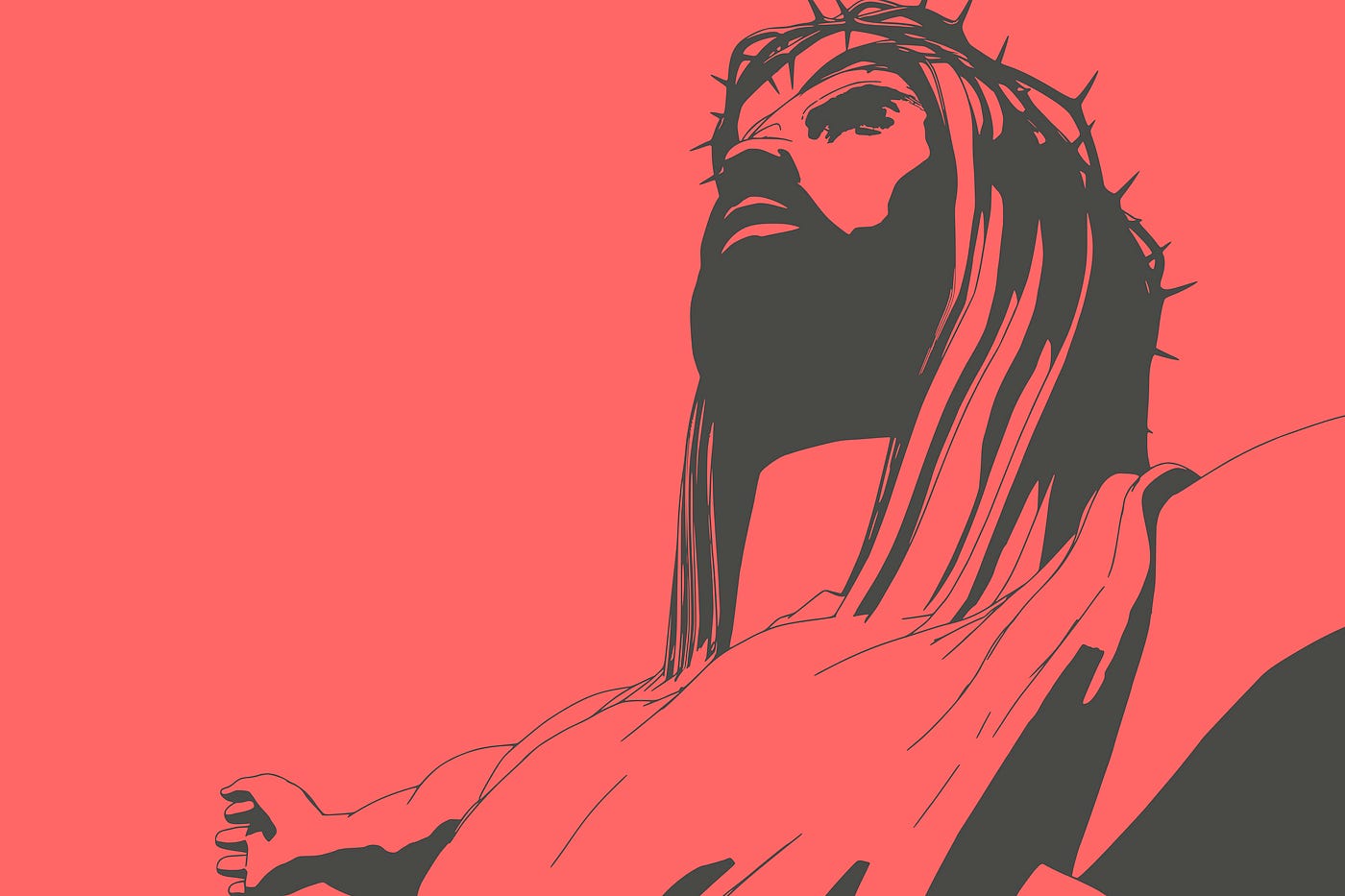
Artwork by Nano Banana Pro
There was a photograph Clara kept in the drawer of her bedside table, face down, as though the simple act of hiding it could erase what it contained.
In it, two boys — six and eight years old — played in a stream. The older one held the younger by the hand while he leaped from stone to stone. Both smiled with open mouths, with the recklessness of those who have not yet discovered that people can become strangers to one another.
The older boy was Clara’s husband. The younger one was the brother-in-law she had not seen in eleven years, whose name she refused to say aloud, as though speaking the word “Rafael” would open a door she had sealed shut with bricks.
Whenever someone asked about her husband’s brother, Clara would simply say: “He’s a closed chapter.”
Clara was a psychiatrist. She worked in a rehabilitation clinic on the outskirts of a city that had grown faster than its hospitals. She had a reputation for being rigorous, competent, and impatient with sentimentality. Her colleagues respected her. Her patients feared her a little. And if she had been honest with herself, she would have admitted that this fear brought her a strange sense of relief. If people kept their distance, she didn’t have to expose herself. The space between herself and others had become her territory of safety.
It was on a Tuesday in March that Henrique entered her office for the first time. Two security guards brought him in, handcuffed, with a scar running from his left temple to his chin. He was thirty-four years old, with eyes that looked like frosted glass, and a medical history that occupied three thick folders: drug addiction, aggression, escape attempts.
Clara read the report. She looked at the man sitting in front of her — staring blankly at the wall with the indifference of someone who no longer expected anything good — and thought, with the sharp clarity of someone who had made diagnoses for twenty years: This man is destructive by nature. He is a case for containment.
What Clara did not know was that Henrique was the mirror she had spent her entire life refusing to look into.
There is a logic that governs most of our reactions toward what threatens us. It is simple: if something causes pain, move away from it. And if you cannot move away, destroy it.
The dualistic paradigm offers a seductive promise: the problem is the other. Remove the enemy, and peace returns.
It works. In the short term.
But what dualistic logic cannot explain — because it cannot do so without dismantling itself — is what happens afterward.
What happens afterward is the wreckage.
Clara knew everything about containment. And she also knew that Rafael had become a kind of tumor she had tried to remove from her life.
The story seemed simple. Rafael had betrayed her husband’s trust in a family business. He had disappeared with the money and reappeared months later, asking for forgiveness. Forgiveness never came. Her husband held onto the anger. And Clara held on to her husband’s anger, because carrying his anger was easier than carrying her own.
For years, she hated Rafael with the conviction of someone fulfilling a duty. “He’s dead to us,” she would say. And she believed it.
But death — even metaphorical death — has an inconvenience: the corpse does not disappear. It decomposes slowly. And the smell seeps into everything.
Henrique returned the following week. And the week after that. Not because he wanted to. He made it clear that the clinic was merely another place where he was trapped.
Clara maintained a professional distance. But something began to happen. Henrique had a disturbing habit of saying things that echoed in corners of her mind she preferred to keep locked.
One Thursday, after weeks of almost complete silence, he said while staring out the window: “You think I’m a monster.”
Clara answered with the standard professional formula. “I don’t make judgments.”
He laughed. Not mockingly. Without humor. “Everyone makes judgments. The difference is that some people have the courage to admit it.”
Clara took those words home. Not because of what they meant, but because something in that laugh unsettled her. It wasn’t the laugh of contempt. It was the laugh of recognition. As though Henrique had seen something in her that she herself could not.
That night, she dreamed about Rafael. But unlike all the previous dreams, this one was different. Rafael was a mirror. And when Clara looked into him, she saw herself with the eyes of a child — afraid, angry, and carrying a vulnerability she had spent decades trying to transform into certainty.
The idea that there is an absolute separation between self and other is perhaps the most expensive illusion of human consciousness. Useful, certainly. But usefulness does not prove ultimate reality.
What disturbs us most in others is rarely a quality that belongs entirely to them. More often, it is something we carry within ourselves — repressed, denied, projected outward. The enemy becomes the container for everything we do not wish to see in ourselves. Which is why destroying the carrier of the message is so unsatisfying. Destroying the messenger does not destroy the message.
Henrique did not hate Clara. He feared her. And fear is always a form of recognition.
Clara saw in him the destructiveness she herself had domesticated into coldness, control, and professional distance. She saw in him the anger she had transferred onto Rafael. And her anger toward Rafael was, ultimately, anger toward herself — for never questioning, for aligning herself blindly with her husband, and for secretly enjoying the moral superiority that hatred provided.
Rafael was the perfect enemy. Far away. Defenseless. Safe to destroy. And therefore, cowardly. Though Clara never used that word.
It was a Tuesday — as it always seemed to be on Tuesdays — that Henrique asked the question that cracked Clara’s armor.
He looked at her quietly and said: “Is there someone in your life you hate so much that you prefer to pretend they don’t exist?”
It wasn’t a question. It was an observation.
Clara opened her mouth to answer with protocol. But the words never came. And in that silence — a silence that was not empty, but full — something dissolved.
She ended the session early. Went to the bathroom. And vomited. Not from disgust. From recognition.
Because the answer arrived through the body before it arrived through the mind: a chill down her spine, heat rushing to her face, a wave of nausea that had nothing to do with her stomach.
Rafael existed. The anger existed. The guilt existed. And her attempt to annihilate them — to turn her brother-in-law into a “closed chapter” — had eliminated nothing. It had only created wreckage.
The wreckage was her husband’s clenched jaw. The stiffness in her own neck. The silence at Christmas. The photograph hidden in the drawer. And the emptiness in both their lives that no amount of work or righteousness had been able to fill.
That evening, Clara called her husband. “I need to talk about Rafael.”
There was a long silence. Then his voice, rough and tired: “There’s nothing to talk about.”
And Clara, with the calm of someone walking on a wire, answered: “Exactly. There’s nothing to talk about because there never was. Only a huge silence where there should have been a conversation.”
There was no reconciliation that night. What there was instead was the willingness of two human beings to look at the wreckage together. To recognize that the enemy they had tried to destroy — Rafael, the little boy in the stream — was part of the fabric of their lives. And that in trying to cut him away, they had cut themselves.
The question was no longer: How do we eliminate him?
But: How do we live with what cannot be removed?
Henrique continued coming to therapy. Something in the quality of Clara’s attention had changed. She listened from somewhere different now — not from the place that diagnoses and distances, but from the place that recognizes.
Henrique noticed. And slowly, he began to trust. He spoke about his anger — not proudly, but cautiously, like someone touching something he knows can burn. And instead of sedating that anger with diagnoses, Clara allowed it to exist in the room. To be seen. To gradually lose its monstrous form and reveal what it had always been: fear. Ancient fear. The fear of a little boy who had been beaten and had never had anyone look at him without turning away.
Henrique did not “heal.” Healing itself is another dualistic illusion. He learned something harder and more true: the destructiveness he carried was not an evil essence. It was a response. And responses can change — not through elimination, but through understanding.
The current was still there. But he no longer had to drown in it.
Months later, Clara found the courage to call Rafael. Not to forgive him — forgiveness, when offered from above, is often just another form of power. She called to listen. To say: “I don’t know what happened. I never really knew. I simply decided.”
Rafael answered with a silence so long that Clara thought the call had been disconnected. Then his voice came — older, more tired, more human than she had allowed herself to remember. “I made a lot of decisions too. And I don’t really know either.”
There was no cinematic reconciliation. No tears. No dramatic apologies. What happened was what always happens when two human beings stop moving against one another and remain, for a brief moment, still before what is.
A quietness. Not exactly peace. But the condition that makes peace possible.
That night, Clara took the photograph out of the drawer. She looked at the two boys in the stream. She looked for a long time.
And for the first time in years, she felt neither anger nor forgiveness. She felt something simpler: the presence of what is. The two boys. The stream. The hand that reaches out. The leap from stone to stone, with the absolute trust of those who still do not know that stones can be slippery — and who, even knowing that, would leap again.
She placed the photograph on top of the bedside table, face up.
The wreckage remained. In her husband’s teeth grinding in his sleep. In memories that still hurt. But Clara no longer tried to eliminate them. Not because she had become a better person — she deeply distrusted the very idea of becoming a better person — but because she had finally understood, with the body and not merely with the mind, the radical inefficiency of destruction.
Destroying the enemy is like breaking the mirror because we dislike the reflection. And afterward, we remain alone in the dark, walking barefoot among the shards.
The shards do not disappear because the mirror is gone. They multiply. Each fragment reflects a smaller, sharper, more distorted version of the same truth we refused to see.
The truth is simple and therefore unbearable: there is no other. There is only the whole fabric, torn from within, trying to remember what it was like when it was whole.
And memory does not come from destroying the wreckage. It comes from the willingness to sit among it. To feel the cuts. And to realize that the shards, seen up close, still reflect. They still reveal something. They are still a mirror.
And the mirror was never the enemy. It never was.
OM Tat Sat
Wil, the Hacker of Illusion
메타데이터
- post_id
- e77b35577a5e
- slug
- the-shards-of-the-mirror-e77b35577a5e
- url
- https://medium.com/new-earth-consciousness/the-shards-of-the-mirror-e77b35577a5e
- canonical_url
- https://medium.com/new-earth-consciousness/the-shards-of-the-mirror-e77b35577a5e
- author_url
- https://medium.com/@wvs2002
- status
- ok
- fetched_at
- 2026-06-24 13:29:15