Democracy
Democracy
literally, rule by the people. The term is derived from the Greek dēmokratia, which was coined from dēmos (“people”) and kratos (“rule”) in the middle of the 5th century BCE to denote the political systems then existing in some Greek city-states, notably Athens
Fundamental questions

How does democracy work?Questions and answers about democracy.See all videos for this article
The etymological origins of the term democracyhint at a number of urgent problems that go far beyond semantic issues. If a government of or by the people – a “popular” government – is to be established, at least five fundamental questions must be confronted at the outset, and two more are almost certain to be posed if the democracycontinues to exist for long.
Democratic institutions
Since the time of the ancient Greeks, both the theory and the practice of democracy have undergone profound changes, many of which have concerned the prevailing answers to questions 1 through 3 above. Thus, for thousands of years the kind of association in which democracy was practiced, the tribe or the city-state, was small enough to be suitable for some form of democracy by assembly, or “direct democracy.” Much later, beginning in the 18th century, as the typical association became the nation-state or country, direct democracy gave way to representative democracy – a transformation so sweeping that, from the perspective of a citizen of ancient Athens, the governments of gigantic associations such as France or the United States might not have appeared democratic at all.
Prehistoric forms of democracy
Although it is tempting to assume that democracy was created in one particular place and time – most often identified as Greece about the year 500 BCE – evidence suggests that democratic government, in a broad sense, existed in several areas of the world well before the turn of the 5th century.
Classical Greece
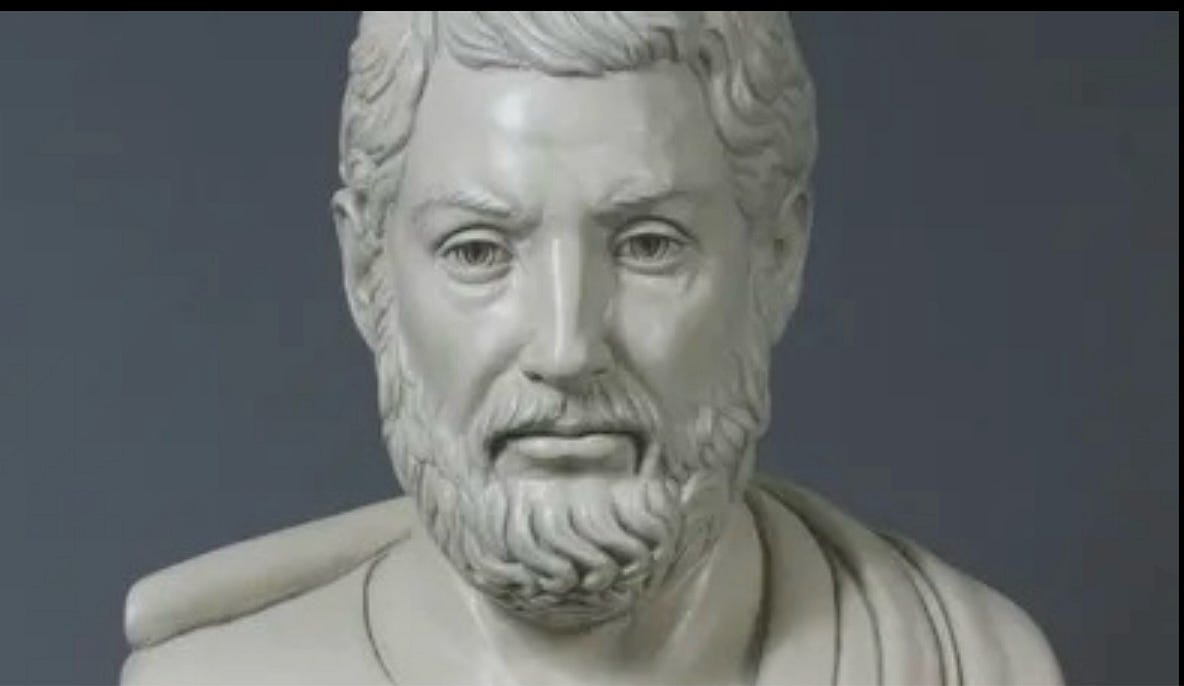
Cleisthenes of AthensCleisthenes of Athens, bust by Anna Christoforidis, 2004; in the Ohio Statehouse, Columbus, Ohio.
During the Classical period (corresponding roughly to the 5th and 4th centuries BCE), Greece was of course not a country in the modern sense but a collection of several hundred independent city-states, each with its surrounding countryside. In 507 BCE, under the leadership of Cleisthenes, the citizens of Athensbegan to develop a system of popular rule that would last nearly two centuries. To question 1, then, the Greeks responded clearly: The political association most appropriate to democratic government is the polis, or city-state.
메타데이터
- post_id
- e77fafd71249
- slug
- democracy-e77fafd71249
- url
- https://medium.com/@moeed1678/democracy-e77fafd71249
- canonical_url
- https://medium.com/@moeed1678/democracy-e77fafd71249
- author_url
- https://medium.com/@moeed1678
- status
- ok
- fetched_at
- 2026-07-18 06:18:28