Sitefinity vs WordPress 2026: Enterprise Security & Scalability
In 2026, your CMS is either your strongest security asset or your greatest digital liability. As websites evolve into Intelligent Digital…
Sitefinity vs WordPress 2026: Enterprise Security & Scalability
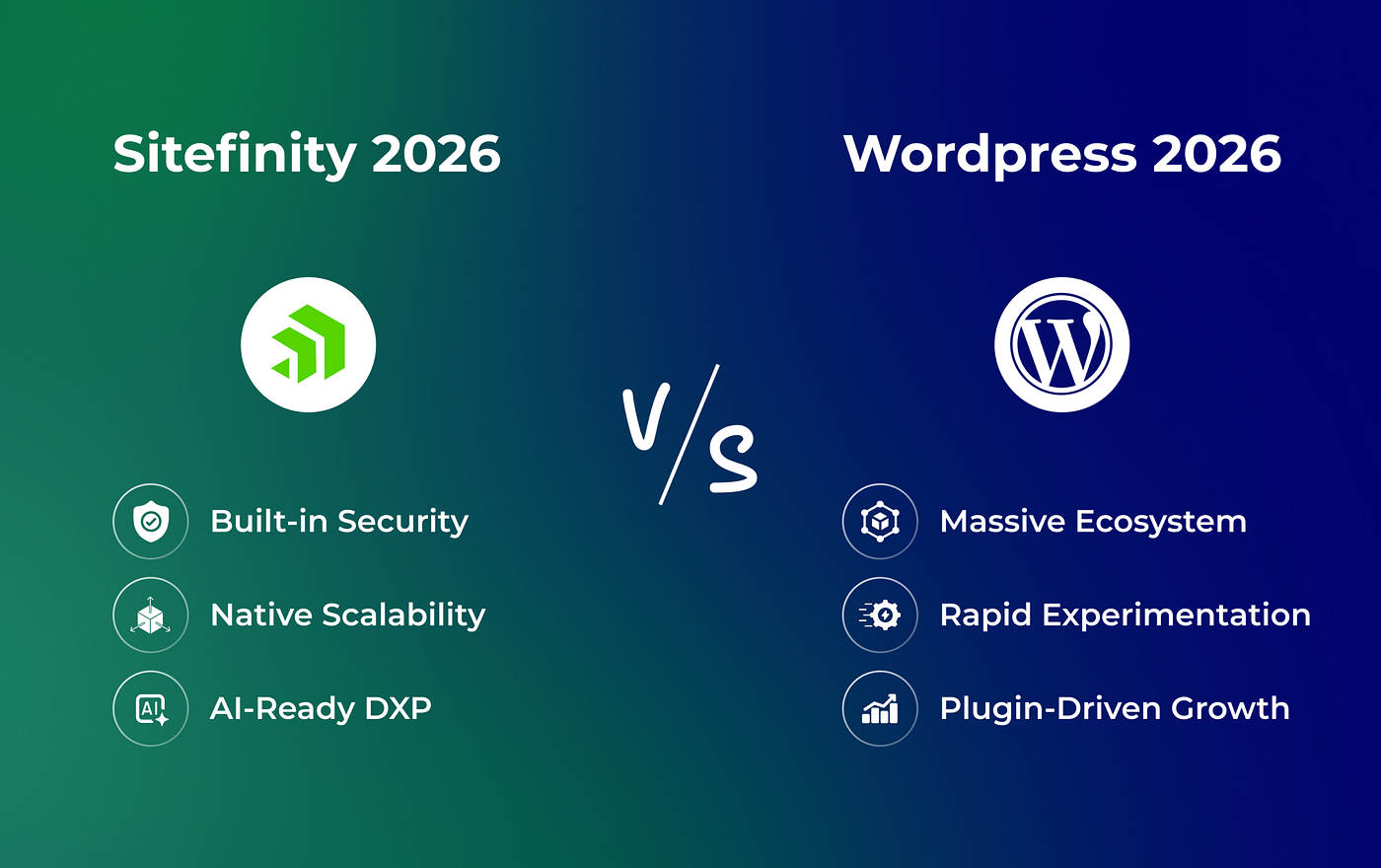
In 2026, your CMS is either your strongest security asset or your greatest digital liability. As websites evolve into Intelligent Digital Experience Platforms (DXPs), the ‘set it and forget it’ era of WordPress is being challenged by the ‘govern and grow’ architecture of Sitefinity
Two platforms dominate enterprise CMS conversations: Sitefinity and WordPress. While both power thousands of websites globally, they are fundamentally designed for very different organizational realities.
The Workspace Analogy: Choosing Your Digital Foundation
Before diving into technical specs, it helps to think of these platforms as different types of office spaces:
- WordPress is like a Shared Coworking Space: It’s affordable, easy to set up, and you can bring in your own furniture (plugins). However, you don’t control the building’s security, and if your neighbors (third-party plugins) are messy, it can affect your productivity.
- Sitefinity is like a Custom-Built Corporate Headquarters: It’s designed specifically for your organization. The security, the front desk, and the layout are all built-in. It requires a higher initial investment, but it is far more secure and scales as your staff grows.
This blog explores **Sitefinity vs. WordPress in 2026, with a sharp focus on enterprise security, scalability, governance, and future readiness** -the factors that truly matter at scale.
The Enterprise CMS Landscape Has Changed
From Websites to Intelligent Digital Platforms
In the past, CMS platforms were primarily used to publish static content. In 2026, enterprise websites act as:
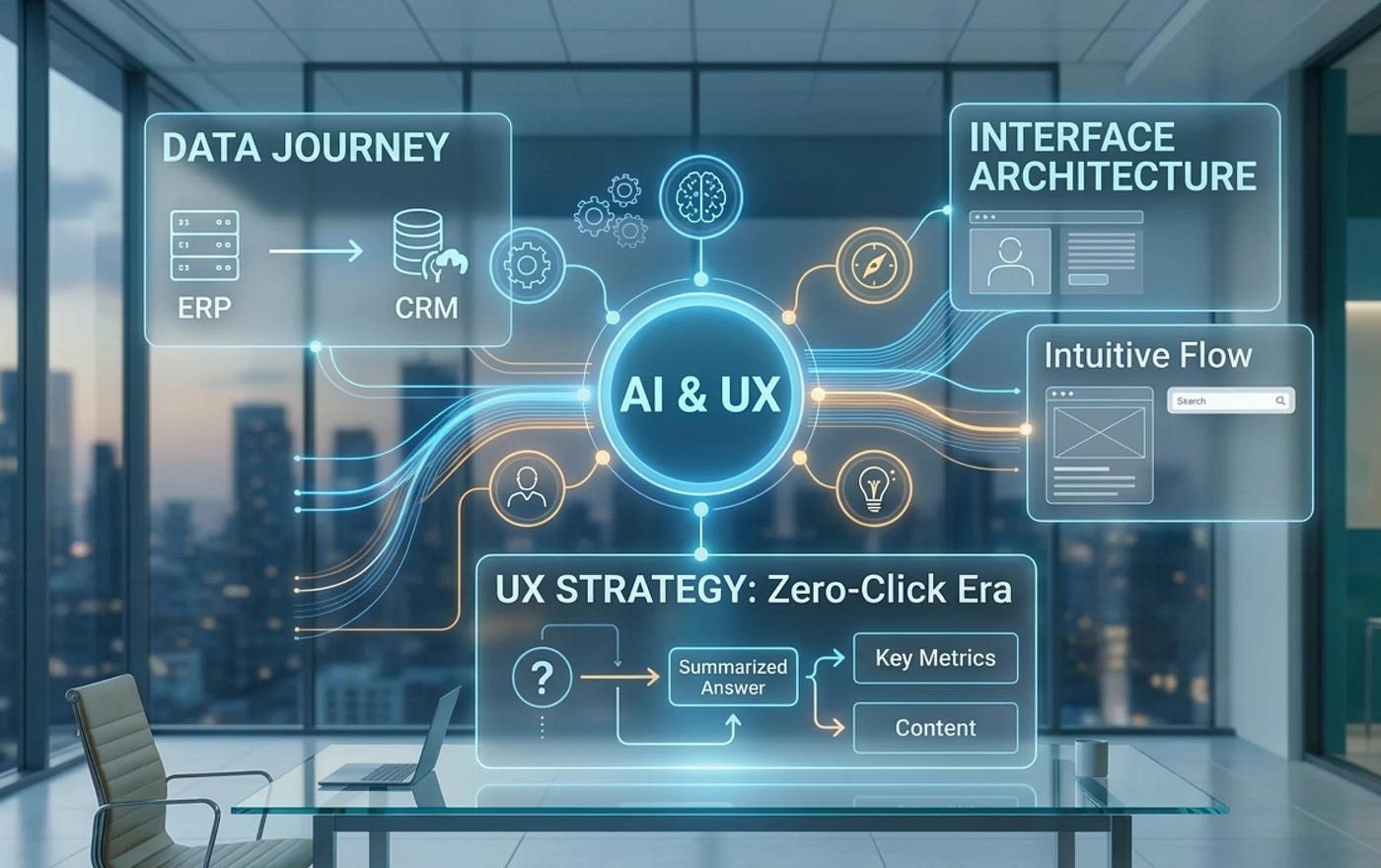
Modern enterprises require CMS platforms that integrate seamlessly with CRM, ERP, analytics, AI models, marketing automation, and identity systems. This shift has accelerated the move from traditional CMSs to Digital Experience Platforms (DXPs).
New Enterprise Expectations in 2026
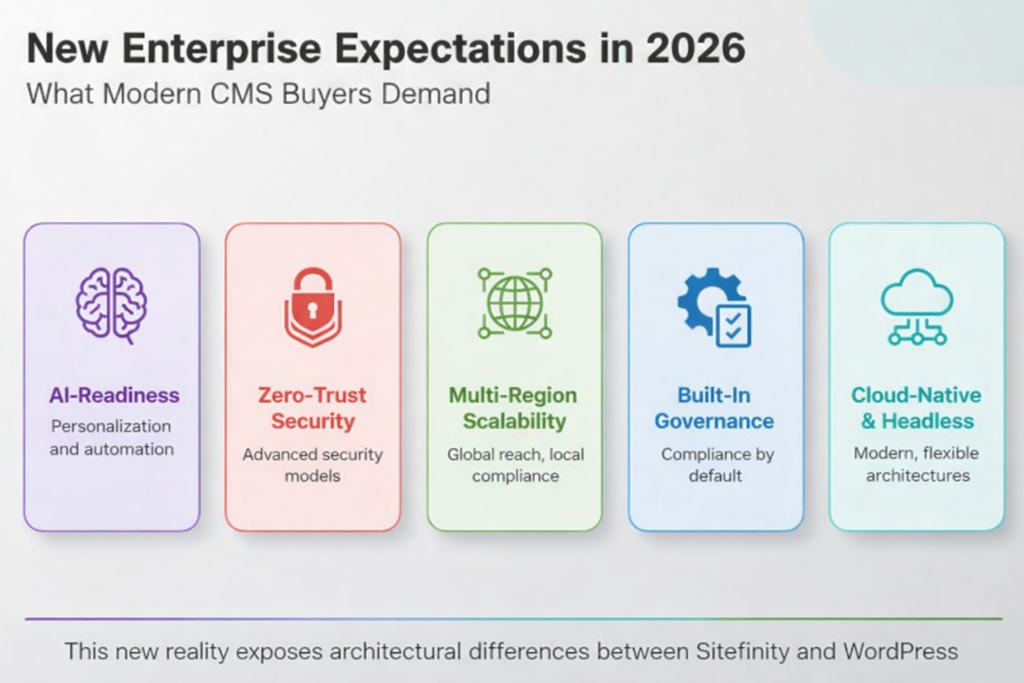
**Enterprise CMS** buyers now expect:
- AI-readiness for personalization and automation
- Zero-trust security models
- Multi-site and multi-region scalability
- Built-in governance and compliance
- Cloud-native and headless architectures
This new reality exposes the architectural differences between Sitefinity and WordPress more clearly than ever before.
Sitefinity Overview — Built for Enterprise Control
What Is Sitefinity in 2026?
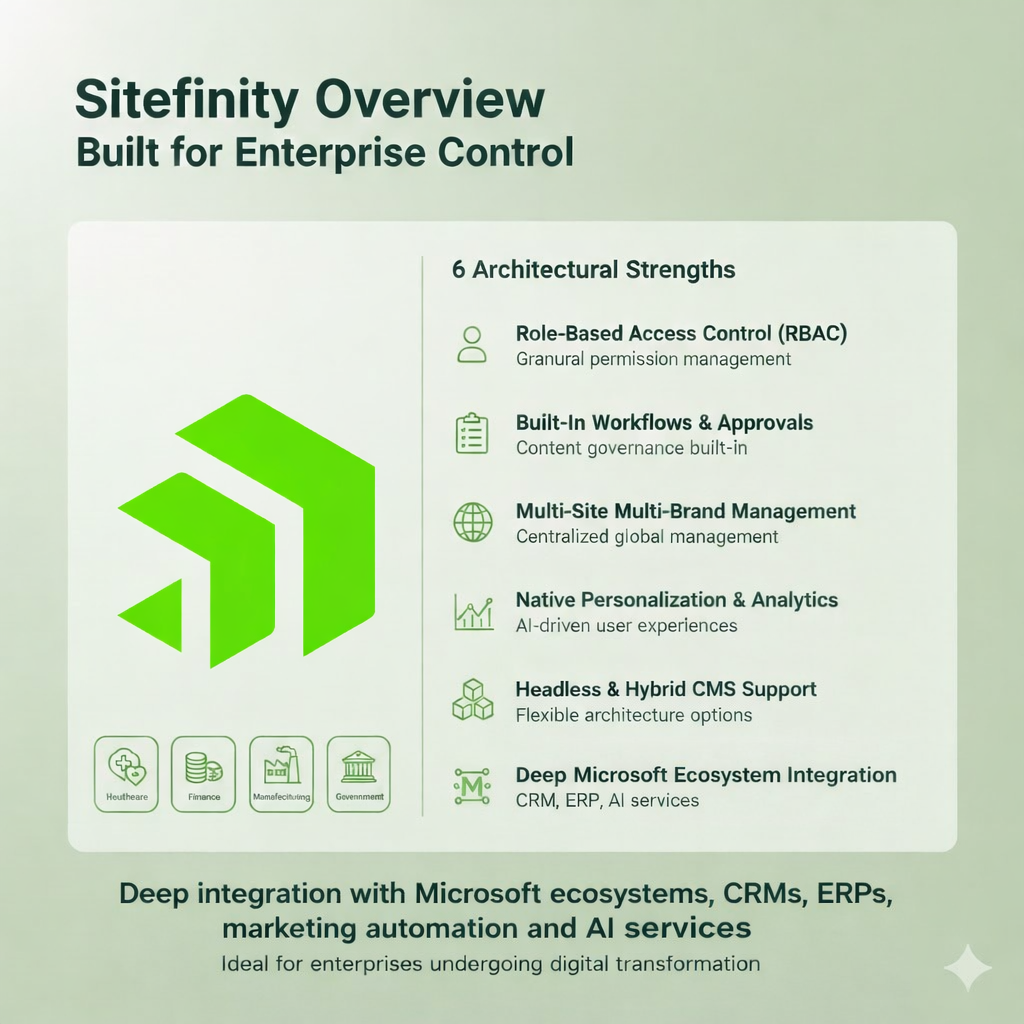
Sitefinity is an enterprise-grade CMS and DXP developed by Progress. It is an AI-ready, cloud-native platform designed for organizations that prioritize governance and security, such as those in healthcare, finance, and government.
In Simple Terms: Sitefinity isn’t just a place to type text; it’s a Professional Dashboard. While many systems focus only on “what you see” on the page, Sitefinity focuses on “who sees it.” It tracks a customer’s journey and automatically shows them the most relevant information.
Sitefinity’s Enterprise Architecture
Key architectural strengths include:
- Role-based access control (RBAC)
- Built-in workflows and approvals
- Multi-site and multi-brand management
- Native personalization and analytics
- Headless and hybrid CMS support
Sitefinity integrates deeply with Microsoft ecosystems, CRMs, ERPs, marketing automation platforms, and AI services, making it a strong fit for enterprises undergoing digital transformation.
WordPress Overview — Power and Limitations at Scale
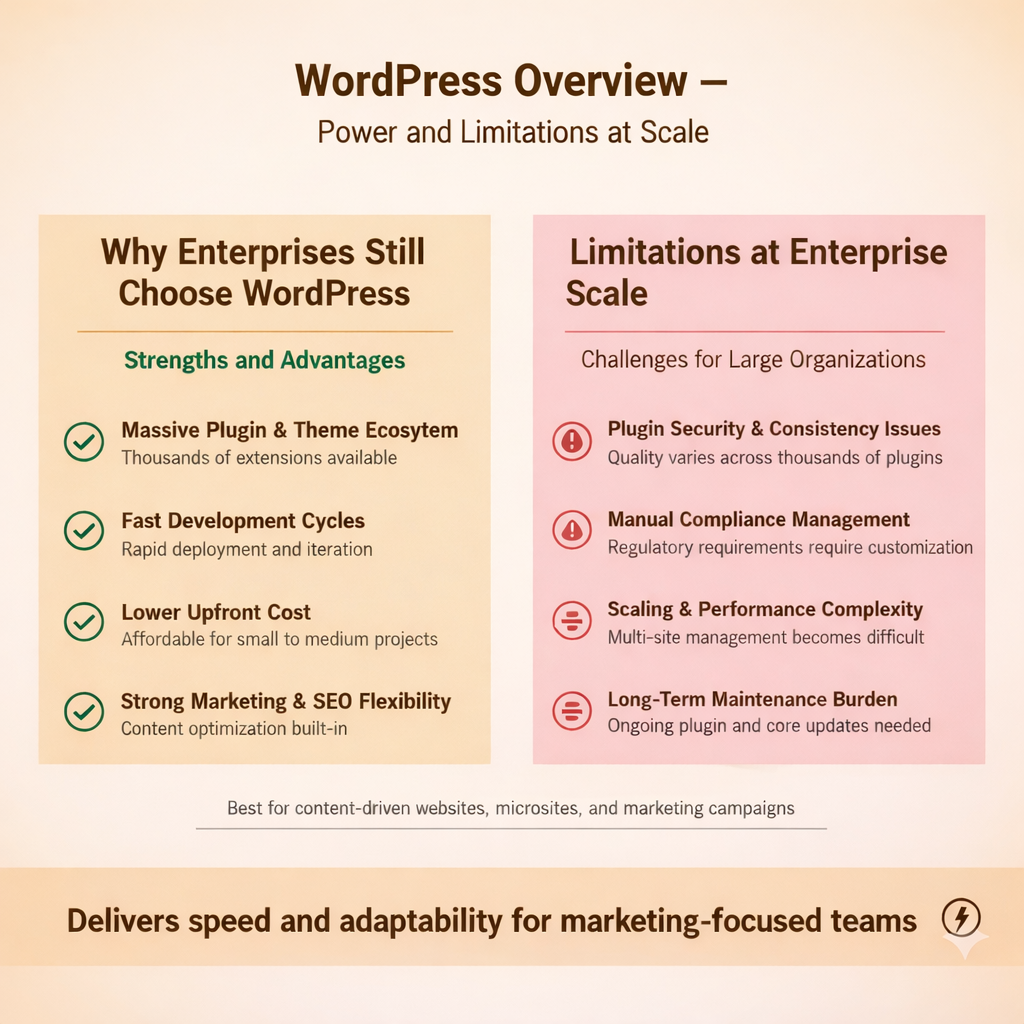
Why Enterprises Still Choose WordPress
**WordPress **remains the world’s most widely used CMS because of its massive plugin ecosystem, fast development cycles, and strong marketing flexibility.
In Simple Terms: WordPress is like a “Lego set” for the internet. It’s incredibly flexible. If you want a new feature, there is almost certainly a “brick” (plugin) you can download to add it. It’s perfect for speed and creative freedom.
For content-driven websites, microsites, and marketing campaigns, WordPress continues to deliver speed and adaptability.
Where WordPress Struggles in 2026
However, at enterprise scale, WordPress faces structural challenges:
In 2026, enterprises increasingly question whether WordPress can meet long-term security and compliance requirements without significant customization and operational overhead.
Sitefinity vs WordPress: Enterprise CMS Comparison
- Security & Compliance Comparison
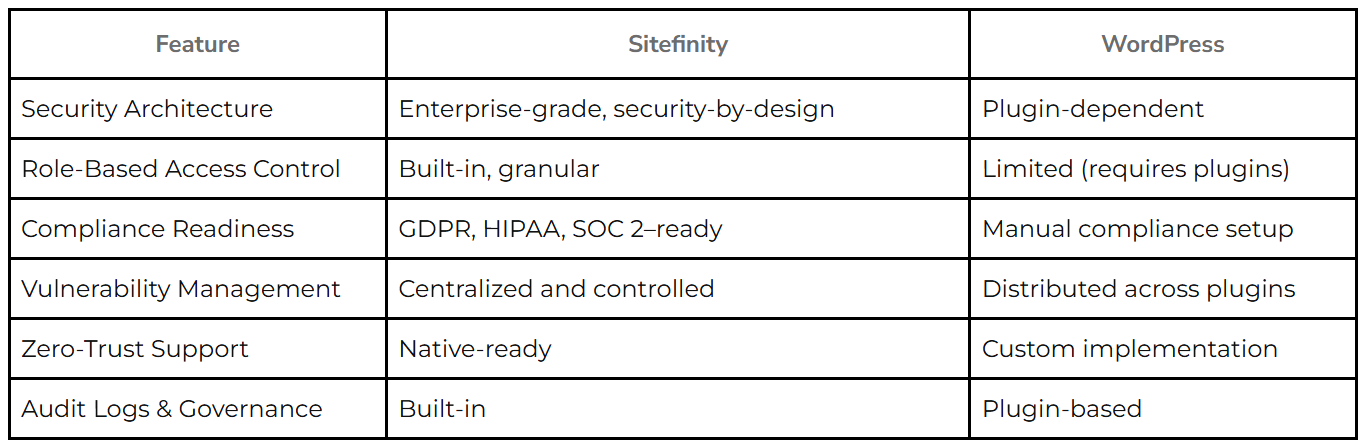
Winner: 🏆 Sitefinity (Lower enterprise risk)
2. Scalability & Performance Comparison
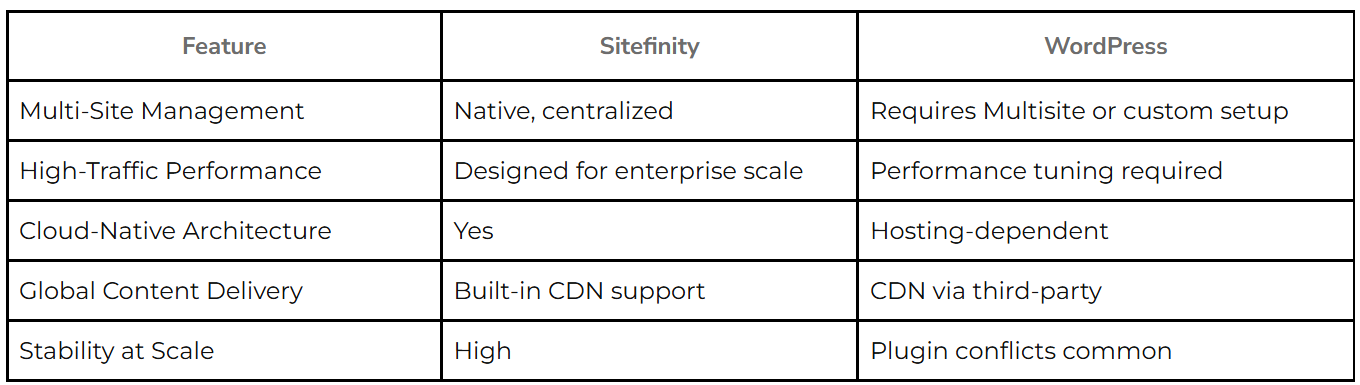
Winner: 🏆 **Sitefinity** (Predictable enterprise scalability)
3. Governance & Content Control Comparison
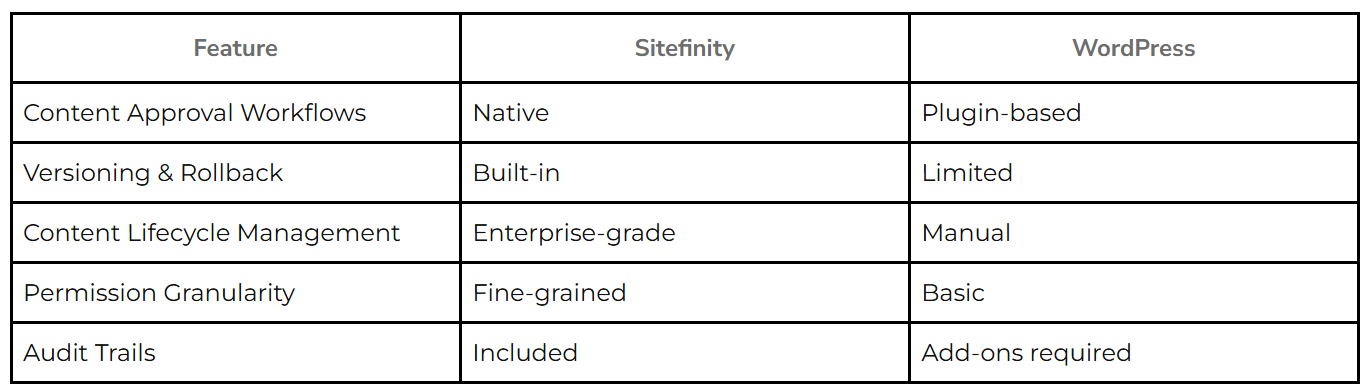
Winner: 🏆 Sitefinity (Compliance-first governance)
4. AI & Future Readiness Comparison
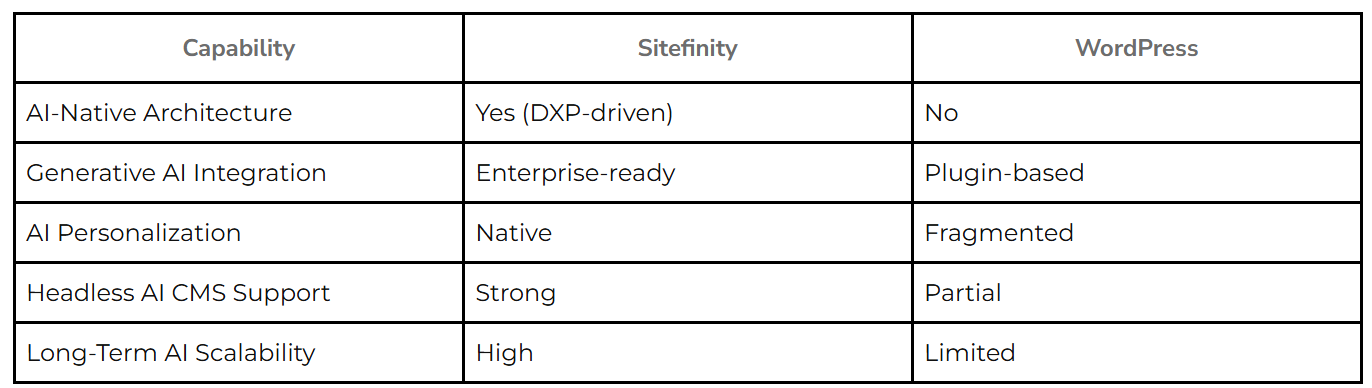
Winner: 🏆 Sitefinity (Future-ready DXP)
5. Total Cost of Ownership (3–5 Years)
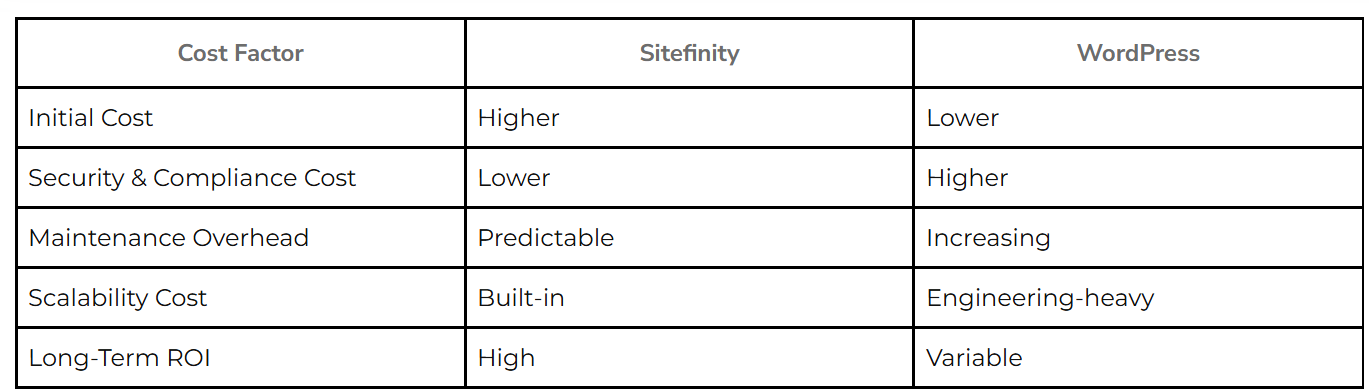
Winner: 🏆 Sitefinity (Lower long-term enterprise cost)
Which CMS Is Right for Your Enterprise in 2026?
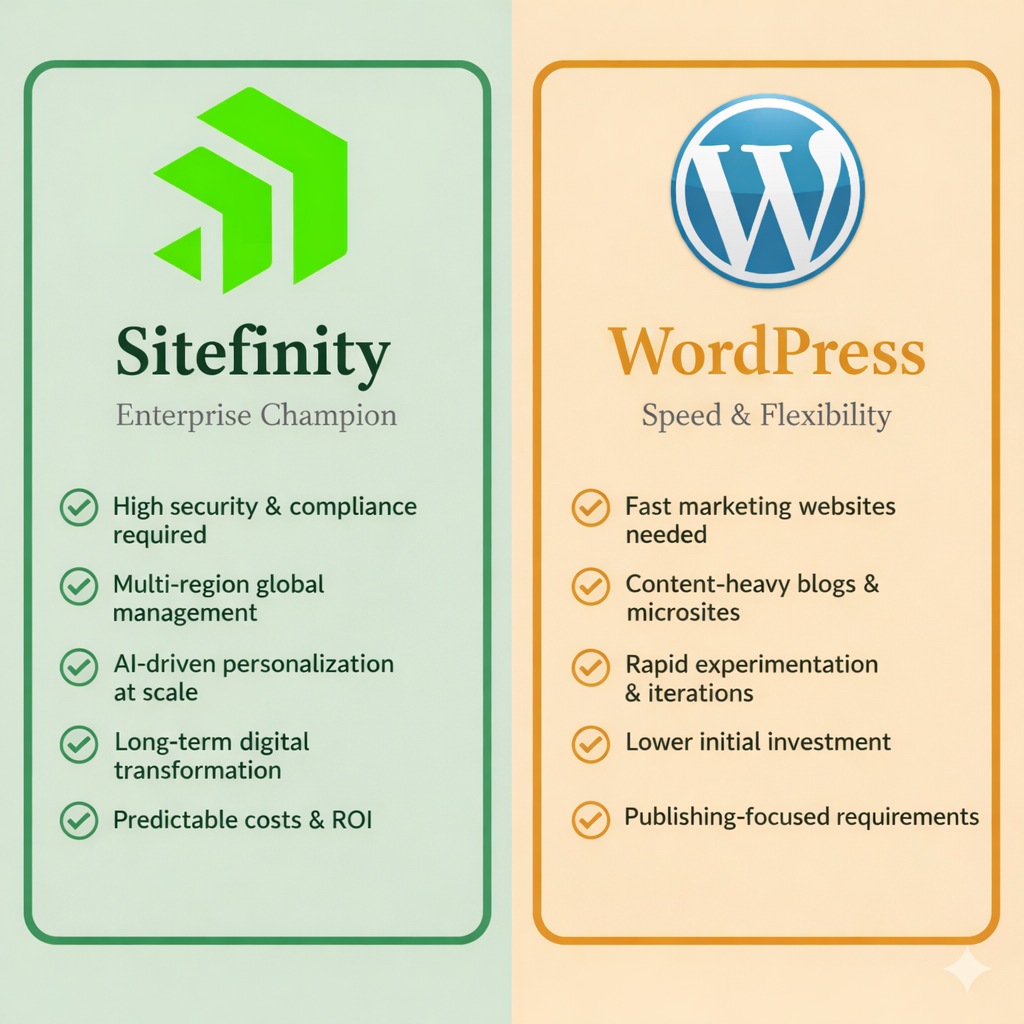
Choose Sitefinity If You Need:
- High security and compliance
- Multi-site or global content management
- AI-driven personalization at scale
- Long-term digital transformation platform
Choose WordPress If You Need:
- Fast marketing websites
- Content-heavy blogs or microsites
- Flexibility and rapid experimentation
- Lower upfront investment
Quick Decision Guide: Which One Fits Your Priority?

Conclusion: 2026 Is About Control, Not Just Content
CMS selection is no longer just about features-it’s about control, risk, and readiness.
- Choose Sitefinity if you need: High security, multi-site global management, and AI-driven personalization at scale.
- Choose WordPress if you need: Fast marketing websites, content-heavy blogs, and rapid experimentation with lower upfront costs.
The right choice depends on your organization’s digital maturity and risk tolerance. In 2026, WordPress is for organizations that need Agility and Speed, while Sitefinity is for those that need Authority and Security.
Key Takeaway
This comparison evaluates Sitefinity and WordPress across five dimensions critical for enterprise CMS decisions in 2026: security posture (vulnerability history, patching cadence, built-in hardening), scalability architecture (multi-site, CDN integration, database optimization), AI-readiness (native AI features vs. plugin ecosystems), governance and compliance (GDPR, WCAG, SOC 2), and total cost of ownership over a 3-year horizon. The verdict: Sitefinity wins for regulated enterprises needing built-in governance; WordPress wins for flexibility and ecosystem breadth at lower initial cost.
Originally published at https://www.kernshell.com on February 13, 2026.
메타데이터
- post_id
- e793e0b7cb9c
- slug
- sitefinity-vs-wordpress-2026-enterprise-security-scalability-e793e0b7cb9c
- url
- https://medium.com/kernshell/sitefinity-vs-wordpress-2026-enterprise-security-scalability-e793e0b7cb9c
- canonical_url
- https://medium.com/kernshell/sitefinity-vs-wordpress-2026-enterprise-security-scalability-e793e0b7cb9c
- author_url
- https://medium.com/@dwagh
- status
- ok
- fetched_at
- 2026-06-10 08:17:25