Ford GT: Not a tribute act
The Ford GT40 is a legend of the racing world. So for Ford to truly honour its legacy, it was going to have to build a spectacular car.
Ford GT: Not a tribute act
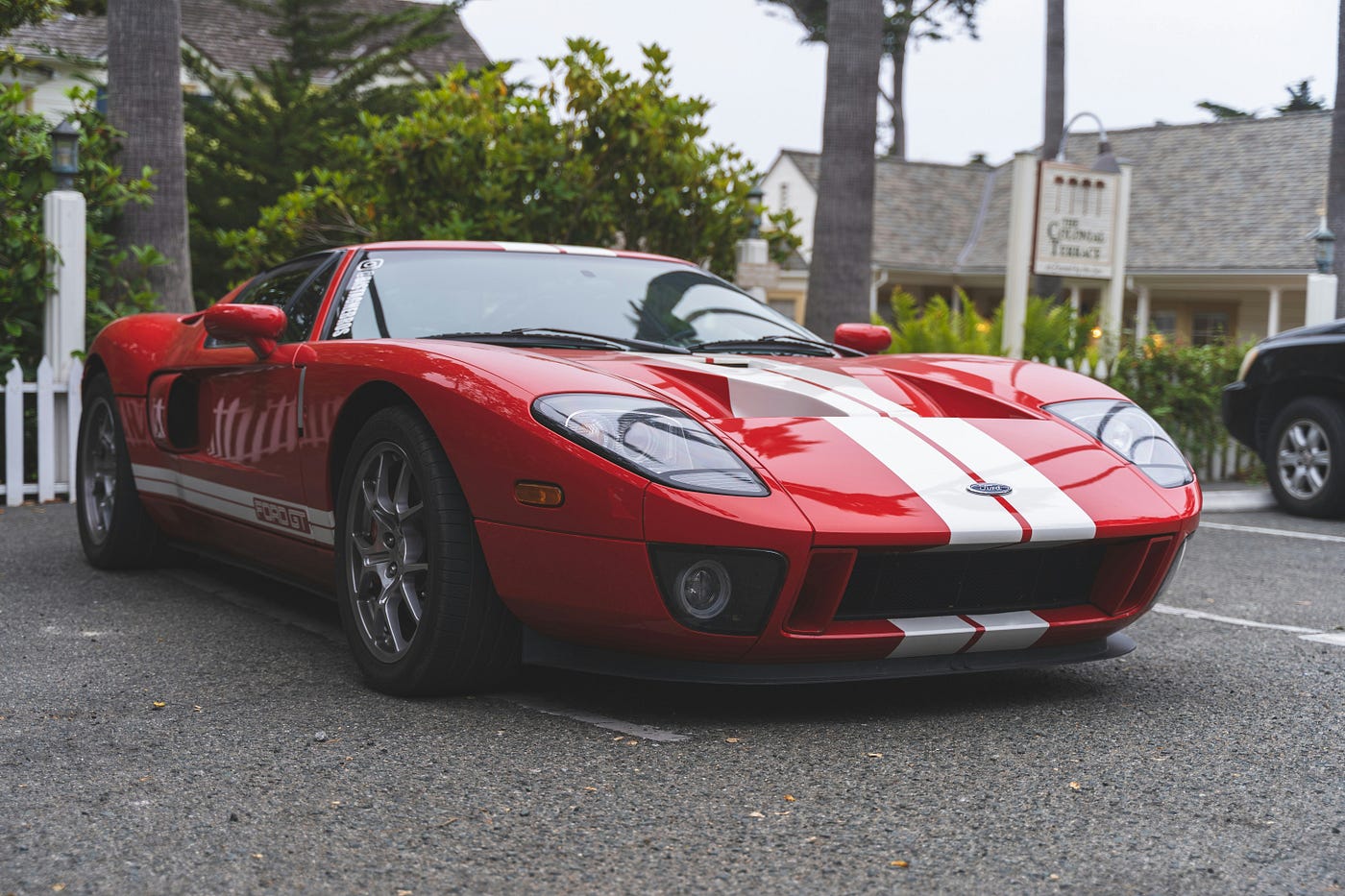
Photo by Y S on Unsplash
I have mixed feelings about tributes or nostalgia projects.
If done right, they can be good. However, most of the time, the smell of clinging onto the past and unoriginality is as strong as those early 4D cinema experiences.
It is very important to highlight the past and celebrate the good times, but there is a fine line between celebration and dragging something out.
The Ford GT40 is a motorsport and automotive icon. It is, therefore, no wonder Ford, over the years, has tried to recapture that magic. In 1995, Ford released the GT90, which, out of the two ends of the spectrum in tribute acts mentioned above, definitely fits into the latter category.
But in 2004, with the GT40 celebrating its 40th anniversary, it seemed like the perfect opportunity to give it another go.
Let’s hope it was more successful.
A 60s legend
Ford is known as one of the originators of the automobile. The Ford Model T is one of the first mass-produced cars ever made, and in the decades following this, it established itself as one of the biggest manufacturers on the planet.
But there was one table they wanted a seat at.
Racing. At one of the most prestigious racing events in history, Ford’s European rivals were sweeping up the accolades each and every year at Le Mans. But Ford wanted a piece.
Ford set to work on a car that could rival the best of the best that was being built across the Atlantic, most notably Ferrari. The result was of course, the Ford GT40.
Adorning those iconic blue and orange Gulf colours, the GT40 was an out-and-out race car. A ton or less in weight, a series of mid-engine V8s, and one of the sleekest and aerodynamic body shapes to ever feature on a car.
This clearly paid off; despite the experience and expertise of Ferrari in this field, the GT40 won 4 Le Mans titles between 1966 and 1969. A legend in everyone’s eyes.
The GT40, therefore, had every quality of a hero. A great story. An underdog. A great performer. A winner. Unforgettable.
So, if Ford is going to try and do a new GT. It has got to be done correctly this time. No odd concepts. Actually drivable. And a rightful owner of the GT badge.
A proper GT was needed.
Ford GT
Yes.
I could just leave it at that, but as this is an article about cars, I should probably explain why it was spot on.
Let’s start with the looks. The silhouette is pure GT40, the low but not as low roofline, meaning people can actually get in it, the sleek front nose, and is accompanied by two classic white stripes down the middle.
In the middle, it was what you expected. A V8. To be specific, a 5.4L naturally aspirated V8, developing 550 bhp, a top speed of 205 mph, and can get to 60 in around 3.5 seconds.
But as the GT40 was an out-and-out race car, the GT took a different approach. As a road-going throwback of the GT40, the GT combined the savage power and the brutal engine note, with a calm and civilised nature when it needed to be.
You got that old-school, raw, manual, rear-wheel-drive layout, but still more than capable of completing a comfortable cross-country journey.
It seems that it was an almost perfect modern supercar. Yes, it was never as technically brilliant as a 911 GT3 or an F430, and didn’t have the same jaw-dropping effect of a Gallardo or Murcielago, but as an all-rounder, the big Ford was there with the best.
It therefore begs a big question, one I was curious about when researching this car. Why was that production run so short?
The Ford GT was first available in 2005 and was then discontinued in 2006. And it wasn’t as if there was no demand, with waiting lists as long as the ones for a Manchester United season ticket, and a car that was the modern-day representation of an icon, the GT’s short production run was truly baffling.
Well, it wasn’t until I used my brain, and about two minutes of thought, and then the 4,038 models made a whole world of sense.
It’s just a very good tribute
Like I said in the introduction, getting any form of tribute right is a very fine line. But as they go, Ford did a stellar job.
It kept that recognisable shape without going overboard. It was usable for its purpose as a road car. It wasn’t trying to be too futuristic. It didn’t try to rewrite the formula. It just did it right.
With many tribute acts, you’ll be sitting in a bar watching someone trying to live in and be something that has been and gone. With this GT, it was as if the GT40 sat down with the GT and mentored it before going out on stage.
And to actually get round to the point, its lack of commercial intent is because it’s a tribute. It wasn’t trying to be a mass-produced supercar to go up against Porsche, Ferrari, and Lamborghini.
It was just there to pay homage to a legend. Give people an opportunity to learn about the history of the GT40, bring back in a modern form one of the most unique shapes seen on a car. Show the world what one of the biggest car manufacturers can do when they aren’t just chasing sales and profits.
Its short run did the job exquisitely. It allowed the world to remember the GT40 and gave the lucky few an opportunity to drive the closest thing to a racing legend.
Living up to the legacy of the GT40 is an incredibly hard job, especially on its 40th anniversary. But Ford went and did it.
메타데이터
- post_id
- e7c0cd121875
- slug
- ford-gt-not-a-tribute-act-e7c0cd121875
- url
- https://medium.com/prologue-menus/ford-gt-not-a-tribute-act-e7c0cd121875
- canonical_url
- https://medium.com/prologue-menus/ford-gt-not-a-tribute-act-e7c0cd121875
- author_url
- https://medium.com/@jamesdunn3072
- status
- ok
- fetched_at
- 2026-07-14 17:36:55