Your New Build Air Con Can Pass the Walkthrough and Still Be Wrong
A new home can look finished and still hide the one thing you will feel every day.
Your New Build Air Con Can Pass the Walkthrough and Still Be Wrong
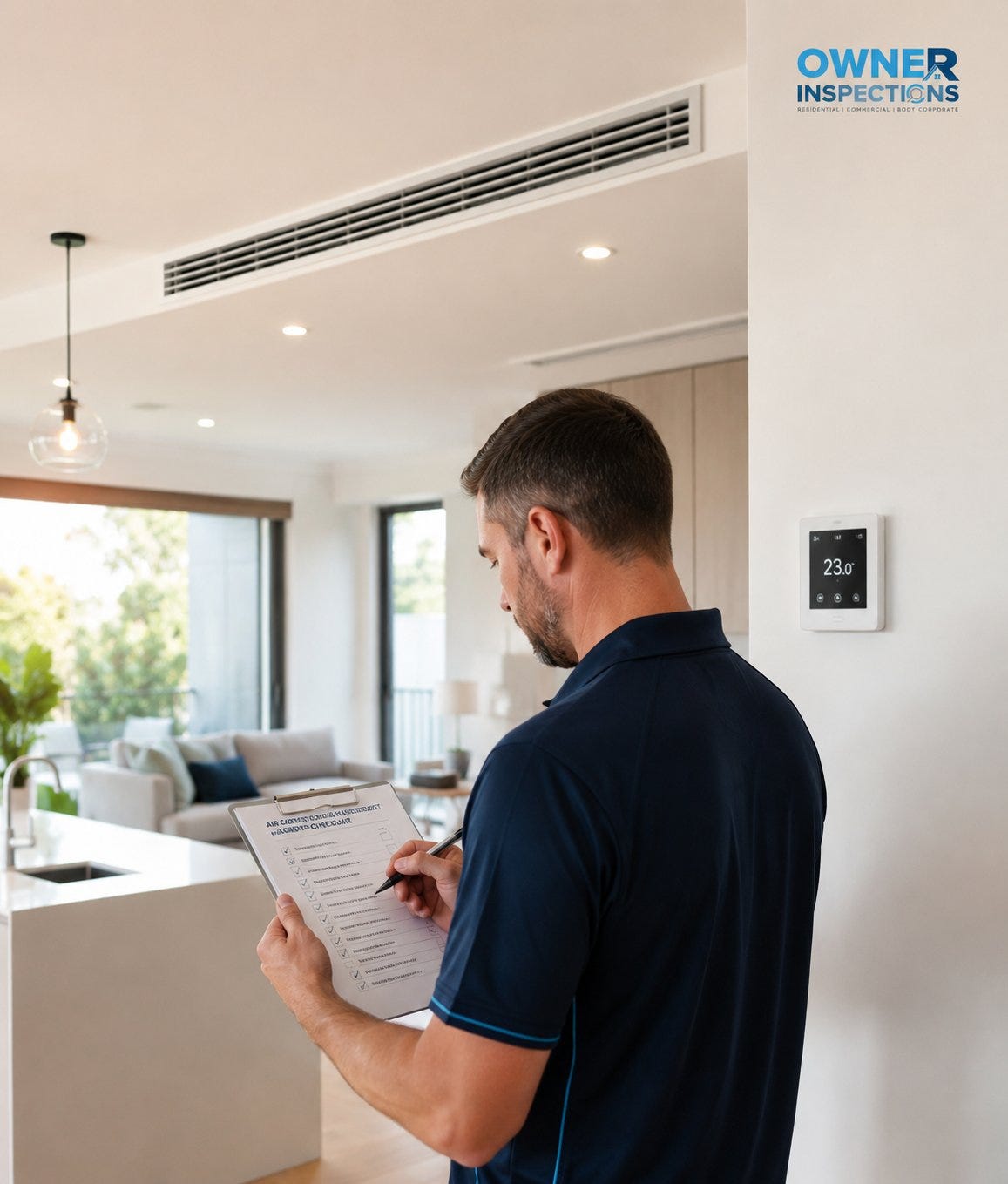
A new home can look finished and still hide the one defect you’ll feel every day.
A new home can look finished and still hide the one thing you will feel every day.
The air con may turn on.
That does not mean it has been installed well.
At handover, your attention gets pulled everywhere.
Paint touch-ups.
Tile chips.
Door handles.
Benchtops.
The visible stuff usually wins.
Air conditioning is different.
A lot of the problems sit above ceilings, inside roof spaces, behind bulkheads, around the outdoor unit, or inside the way the system has been set up.
The system can switch on during a quick walkthrough and still have weak airflow, poor zoning, noisy operation, drainage issues, or missing paperwork.
Owner Inspections has published a new article on this exact topic:
Air Conditioning Installation in New Builds: What to Check Before Handover
It breaks down the air conditioning checks you should run before handover, especially if you are close to practical completion and trying to work out what is worth raising with the builder.
Because once the keys are handed over, furniture moves in, and final payment is sorted, small air con problems can become much harder to prove.
The handover trap most buyers miss
Brand-new does not mean problem-free.
An air conditioning system depends on a few moving parts.
The builder, electrician, air conditioning installer, plasterer, insulation crew, and sometimes a smart home contractor can all affect the final result.
If one part is rushed or poorly checked, you may feel it later through heat, noise, damp smells, stained plasterboard, or rooms that never feel quite right.
And the annoying part?
Many air con issues do not scream for attention on day one.
They show up during a hot week.
Or when you try to sleep beside a noisy outdoor unit.
Or when one bedroom stays warm while the rest of the house feels fine.
So the better question at handover is not, “Does it turn on?”
The better question is, “Would I be happy living with this every day?”
What you should check before sign-off
Use this as a simple starting point during your walkthrough.
- Test cooling in every room
- Set the system to cooling and let it run long enough to feel a real change.
- Then walk the home.
- Check bedrooms, living areas, studies, media rooms, and any upstairs or downstairs spaces.
- If one room has weak airflow, write it down.
- Test heating too
- Reverse cycle systems should be checked in heating mode as well.
- Do not assume cooling means heating works.
- A system can behave differently once it changes mode.
- Check each ducted zone by itself
- Do not run the whole house and call it done.
- Test each zone on its own.
- Make sure the controller labels match the rooms.
- If “Bedroom” turns on the living area, that is not a small detail. It may point to a setup or wiring issue.
- Listen for noise and vibration
- Stand near the outdoor unit.
- Then stand inside near bedrooms, walls, return air grilles, and ceiling outlets.
- Rattling, buzzing, grinding, knocking, or vibration through the frame should be recorded.
- Noise can feel harmless for five minutes during handover.
- It can feel very different at midnight.
- Look at the outdoor unit
- The outdoor unit should sit level, stable, and have space for airflow and future servicing.
- A unit jammed beside fencing, boxed into a tight spot, or placed too close to a bedroom window can create comfort, noise, and maintenance problems later.
- Check drainage
- Air conditioners remove moisture from the air.
- That water needs somewhere safe to go.
- Look for dripping, pooling, stains, damp smells, or an unclear discharge point.
- Poor drainage can lead to plasterboard damage, ceiling marks, and mould risk.
- Ask for the paperwork
- You should receive the right documents before final sign-off.
- Ask for manuals, warranty details, installer information, model and serial numbers, commissioning records, controller guides, and relevant licence or electrical documents.
- Missing paperwork can make warranty claims and servicing harder later.
The best time to raise defects is before handover
Finding a defect does not mean the build has failed.
It means the issue needs to be recorded clearly before you accept the home as complete.
- Take photos.
- Record short videos for noise, vibration, leaks, weak airflow, or controller faults.
- Note the room, zone name, setting, and what you noticed.
Then send your defect list to the builder in writing.
This is where an independent pre-handover inspection can help.
Owner Inspections checks visible and functional air conditioning items as part of the wider property condition.
The aim is not to service the system or replace a licensed HVAC technician.
It is to help identify issues, document them with photos, and give you a clear defect list you can raise before final sign-off.
Because the worst air con defect is the one you only notice after moving day.
Before you sign off on your new build, book a pre-handover inspection online.
NewBuild #PreHandoverInspection #BuildingInspection #AirConditioning #PropertyTips
메타데이터
- post_id
- e7e6a56672b7
- slug
- your-new-build-air-con-can-pass-the-walkthrough-and-still-be-wrong-e7e6a56672b7
- url
- https://medium.com/@ownerinspections/your-new-build-air-con-can-pass-the-walkthrough-and-still-be-wrong-e7e6a56672b7
- canonical_url
- https://medium.com/@ownerinspections/your-new-build-air-con-can-pass-the-walkthrough-and-still-be-wrong-e7e6a56672b7
- author_url
- https://medium.com/@ownerinspections
- status
- ok
- fetched_at
- 2026-07-10 18:30:51