Hydronic Infrastructure 101: Key Considerations for Greenhouse Upgrades
Hydronic Heating Systems: Key Design Tips for Greenhouses
Hydronic Infrastructure 101: Key Considerations for Greenhouse Upgrades
Hydronic Heating Systems: Key Design Tips for Greenhouses

Key Considerations for Upgrading Hydronic Heating Systems
- Introduction
Growers face big choices when they buy new greenhouse heating systems. These tools demand a substantial amount of your investment. You might retrofit an old site. You might expand your current grow bays. Your goal remains the same. You want precision. You want consistency.
Expanding your **hydronic heating systems** is a smart long-term move. This strategy protects your crop safety. It also ensures top harvest quality.
2. Evaluating Your Facility’s Thermal Needs
Run a thorough check before you buy equipment. Start by calculating the peak heat loss. Base this math on your glazing type. Factor in your local climate zone. Look close at your crop needs. Forced-air units often suffer from uneven heat.
In contrast, modern hydronic heating systems provide a modular fix. You can tailor this setup to different areas. Understand your facility’s unique heat loss. This step prevents a costly mistake. You will not over-specify your loop. You will not under-power your loop. This path ensures that your cash matches your yield goals.
3. Strategic Design Choices: Piping & Distribution
The layout of your plumbing is key for a successful upgrade. An intelligent design separates the site into distinct zones. This layout allows you to manage inputs with precision.
The Logic of Zonal Control
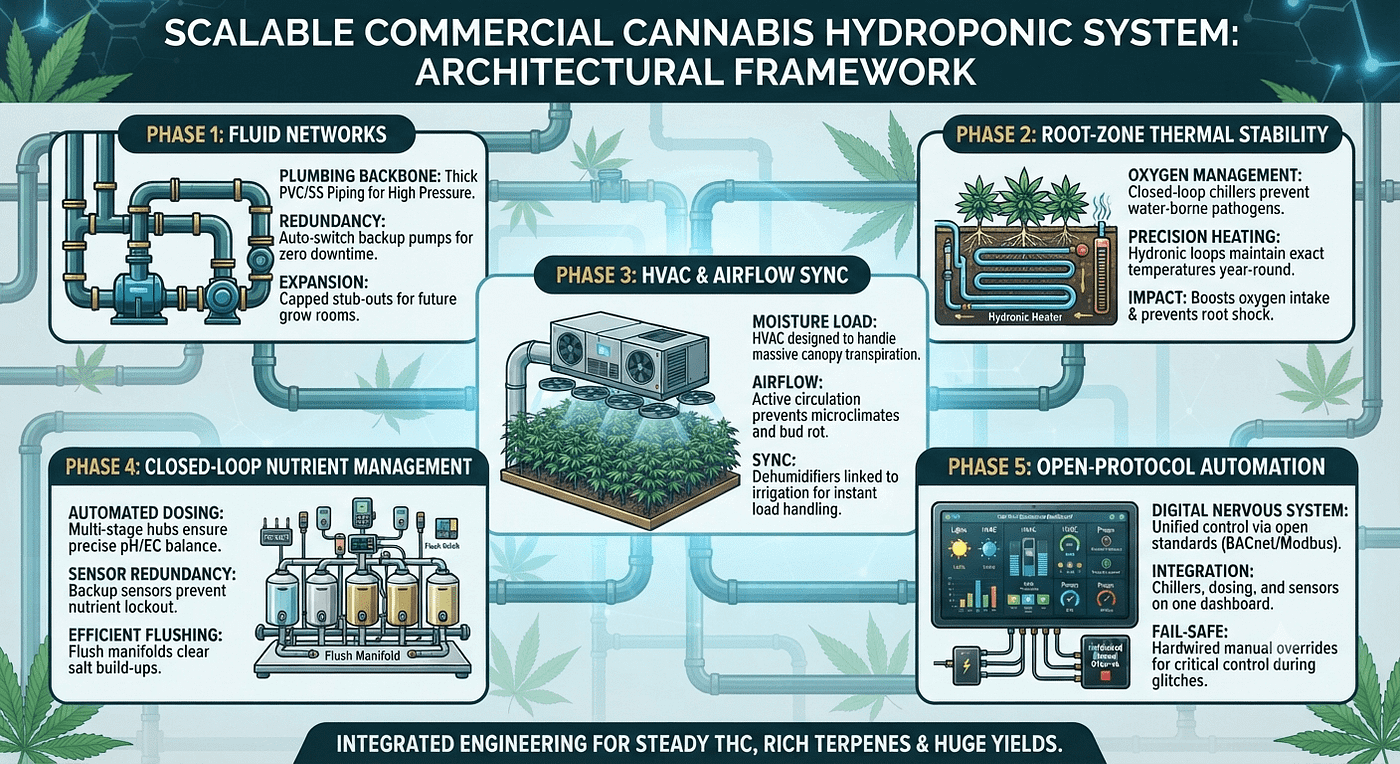
Segment your greenhouse into specific zones. Create separate areas for propagation. Build separate zones for main production. Keep office areas separate too. This layout allows you to prioritize heat. You send it where it is needed most. This method is highly effective for root zone heating. It allows you to warm the soil media directly. This warms the roots to stimulate growth. You avoid the high expense of heating the entire overhead air.
Optimizing Distribution
Efficiency is built into the physics of your piping. Correct pipe sizing is vital. Intelligent pump selection is also key. These are not just minor installation details. They act as major factors in your ongoing electrical load.
Precision Heat Delivery
Space is often tight in specialized zones. Also, heat needs can be highly specific. In these areas, integrate a high-efficiency heat pipe setup. This step optimizes energy transfer. This focused approach ensures that your loop works hard. It fits your specific crop needs. It minimizes energy waste throughout the loop.
4. Future-Proofing with Automation
The modern greenhouse is a data-driven space. Your heating infrastructure must integrate with your digital control systems.
Building Management Compatibility
Ensure your new controllers match your current climate computers. Do this during the upgrade. This step allows for real-time monitoring. It also creates automated responses to external weather shifts. This care ensures your facility remains stable. You can run it without constant manual work.
Scalable Architecture
Choose a greenhouse heating design that allows for modular growth. Select a header system that supports future boilers. It should support new sensors too. By doing this, you win a major benefit. You will not face a complete system overhaul when you decide to expand your footprint later.
The Role of Mixing Valves
Automated mixing valves are essential for protecting your plants. These components modulate the water temperature in your secondary loops. They ensure that the water pumped to the benches is always safe. It stays within the proper range for your specific plant varieties.
5. Long-Term Reliability: Maintenance-First Design
An upgrade is not just about performance today. It must reduce the labor required to maintain that performance for years to come.
Designing for Maintenance
Always prioritize accessibility. Place pumps, valves, and air purgers in easy-to-reach locations. This might seem like a minor design choice. However, it saves money. It cuts down on labor costs during routine service calls.
Initial System Chemistry
Do not overlook the initial fill. A well-planned upgrade includes a water treatment system. It also requires the correct glycol mixture. This stops rust and scale buildup. Implementing these measures early is the most effective way to protect your hydronic heating systems from internal damage.
By prioritizing these factors, you win a major benefit. You ensure that your hydronic heating systems offer the lowest possible long-term maintenance costs. They easily outperform legacy air-based options.
6. The “Invisible” ROI
The true value of a robust system is found in hidden savings. Better thermal tools reduce your per-crop energy costs. They act as a massive buffer against weather volatility. Well-planned hydronic heating systems provide superior thermal buffering. Therefore, they protect your business assets. They stop the spikes and dips that otherwise threaten your bottom line. Investing in these greenhouse heating setups provides the security necessary to operate confidently in any season.
7. Final Thoughts
Upgrading your infrastructure is about building a foundation for growth. Focus on smart design. Prioritize future-proof automation. Stick to a maintenance-first approach. If you do this, you position your facility for long-term agricultural success. As the industry evolves, hydronic heating systems will remain the premier choice. They are the top option for modern, scalable, and resilient commercial greenhouses.
메타데이터
- post_id
- e7e9dc4491cd
- slug
- hydronic-infrastructure-101-key-considerations-for-greenhouse-upgrades-e7e9dc4491cd
- url
- https://medium.com/@biotherm.solutions360/hydronic-infrastructure-101-key-considerations-for-greenhouse-upgrades-e7e9dc4491cd
- canonical_url
- https://medium.com/@biotherm.solutions360/hydronic-infrastructure-101-key-considerations-for-greenhouse-upgrades-e7e9dc4491cd
- author_url
- https://medium.com/@biotherm.solutions360
- status
- ok
- fetched_at
- 2026-07-13 06:23:13