Sustainable Engineering: Turning “Invisible Losses” Into Measurable Impact
Factories, utilities, warehouses, and large facilities are built to deliver output: products shipped, energy delivered, and uptime…
Sustainable Engineering: Turning “Invisible Losses” Into Measurable Impact
Factories, utilities, warehouses, and large facilities are built to deliver output: products shipped, energy delivered, and uptime maintained. But inside even the best-run operations, there’s a category of waste that rarely shows up clearly on a dashboard — until it becomes expensive, non-compliant, or catastrophic.
These are “invisible losses”: compressed air leaks that quietly inflate energy bills, steam traps that fail open for weeks, chilled water systems that drift out of spec, pumps that run inefficiently after a minor process change, or water losses that never quite trigger an alarm. Individually, they look like noise. Collectively, they erode margin, increase emissions, and undermine performance.
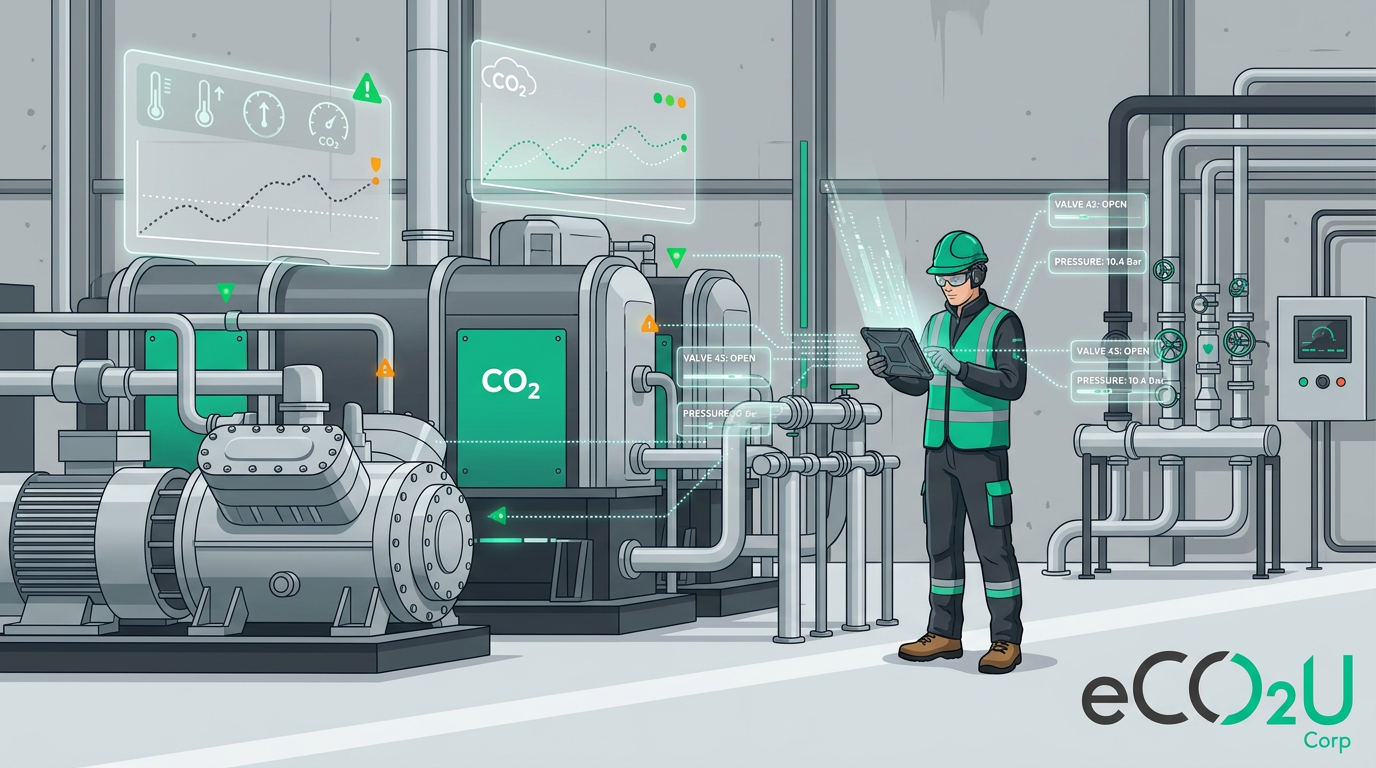
This is where sustainable engineering becomes a practical advantage. By combining IoT monitoring, real-time alerts, and prevention workflows, organizations can reduce losses, strengthen operational efficiency, and convert hidden waste into measurable impact.
This article is written for industrial sustainability and operations audiences — especially those exploring IoT-enabled monitoring, reliability programs, and data-driven energy and water management.
The problem: sustainability goals don’t fail — measurement does
Many industrial teams have ambitious targets: energy reduction, water stewardship, waste minimization, and emissions cuts. Yet progress can stall because losses aren’t tracked at the resolution needed for action.
Common patterns include:
- Monthly utility bills that arrive too late to prevent waste
- Manual checks that miss intermittent faults
- Isolated sensors with no integrated alerting
- Maintenance teams are overloaded with false alarms or unclear priorities
- Operational changes (shift schedules, throughput, product mix) that quietly change baseline consumption
Sustainable engineering addresses these gaps by creating a system where waste is detectable, attributable, and preventable — day by day, not quarter by quarter.
What counts as an “invisible loss” in industrial operations?
Invisible losses are typically:
- Small per hour, large per month
- Distributed across many assets
- Not tied to a single failure event
- Hard to see in aggregate consumption data
- Often normalized as “just how the plant runs.”
Examples across common utilities and processes:
Energy losses
- Compressed air leaks and excessive pressure setpoints
- Fans/pumps running outside efficient ranges
- Heat loss from uninsulated lines or poorly controlled boilers
- Idle equipment that never fully powers down
- Power factor issues and demand peaks that trigger higher tariffs
Water and wastewater losses
- Undetected leaks, valve drift, and overflows
- Excess rinse cycles and inefficient CIP processes
- Cooling tower blowdown misconfiguration
- High inflow-and-infiltration leading to higher treatment loads
Materials and yield losses
- Off-spec batches due to temperature or humidity drift
- Scrap from equipment misalignment or wear
- Overdosing of chemicals due to conservative setpoints
- Inventory spoilage due to poor cold chain performance
In each case, the “loss” can be reduced with visibility plus actionability.
Sustainable engineering approach: monitor → alert → prevent
Think of sustainable engineering as a closed-loop system:
1) Monitor: IoT monitoring that matches the physics of loss
To reduce losses, you need signals that represent real operating conditions — not just total consumption.
That often means combining:
- Flow (water, steam, air)
- Pressure differentials
- Temperature profiles
- Vibration and motor current for rotating equipment
- Runtime states and control signals (on/off, setpoints)
- Environmental context (humidity, ambient temperature)
IoT monitoring works best when instrumentation is selected based on the loss mechanism you’re trying to detect (leakage, drift, inefficiency, abnormal cycling), rather than deploying sensors generically.
2) Alert: actionable thresholds, not noise
Alerts fail when they are either too sensitive (alarm fatigue) or too late (damage already done).
A sustainable engineering alerting strategy usually includes:
- Baseline models that account for production level, shifts, and weather
- Tiered severity (informational vs urgent)
- Root-cause hints (what changed, where, and when)
- Clear owners and response expectations
The goal is not “more alerts.” It’s fewer alerts that drive fast, correct action.
3) Prevent: embed fixes into operations and maintenance
Monitoring without prevention becomes an expensive dashboard.
Prevention means:
- Standard response playbooks (what to check first)
- Work-order automation for repeatable issues
- Verification steps (prove the loss is resolved)
- Continuous improvement loops (adjust thresholds, fix recurring causes)
This is how sustainable engineering translates data into measurable impact.
Service spotlight: Sustainable Engineering Monitoring & Alerts for Operational Efficiency
Industrial teams often need a packaged approach that bridges engineering, data, and operations. A strong service offering typically includes:
Sustainable engineering assessment: where losses hide
A structured assessment identifies:
- Highest-cost loss categories (energy, water, yield)
- Which systems lack adequate instrumentation
- Where process baselines are unstable or unknown
- What can be fixed through controls vs maintenance vs operator routines
This produces a prioritized roadmap — because not every problem deserves IoT.
IoT monitoring architecture and integration
Implementing IoT monitoring in industrial environments requires:
- Sensor selection and placement
- Connectivity and cybersecurity considerations
- Data quality checks and calibration routines
- Integration with SCADA/PLC data where appropriate
- A single source of truth for operations + sustainability reporting
Alerts, anomaly detection, and operational workflows
The “last mile” is operational:
- Alert logic that reflects real constraints
- Routing alerts to the right role (operator vs reliability vs energy manager)
- Ticketing/work-order integration
- Weekly review routines to prevent recurrence
This is where operational efficiency becomes measurable and repeatable.
For a deeper look at this approach — especially how to translate hidden waste into decision-ready metrics — see eCO2U’s article here: Sustainable Engineering — Turning Invisible Losses into Measurable Impact.
What to measure: KPIs that prove you reduce losses (not just “track data”)
To align sustainable engineering with business value, track metrics that connect directly to outcomes:
Reduce losses (utilities + process)
- kWh per unit output (normalized)
- Water use per unit output (normalized)
- Steam/thermal efficiency proxies (e.g., delta-T performance, condensate return rate)
- Compressed air leak rate or compressor-specific power
- Peak demand events per month
Operational efficiency (reliability + uptime)
- Unplanned downtime tied to utilities/process instability
- Mean time to detect (MTTD) and mean time to resolve (MTTR) losses
- % of alerts resolved within SLA
- Recurrence rate of top 10 losses (should trend down)
Sustainability impact (reporting-ready)
- Estimated CO₂e avoided from reduced energy waste
- Water savings (volume and cost)
- Waste reduction (scrap, off-spec, landfill diversion)
- Verified savings vs baseline (with documented assumptions)
The point is to make sustainability as measurable as uptime.
Prevention in practice: three high-leverage use cases
1) Compressed air: the “silent utility tax.”
Compressed air is often one of the least efficient energy uses in a facility — and leaks are common.
IoT monitoring + alerts can detect:
- Abnormal compressor cycling
- Pressure drift and setpoint creep
- Night/weekend baseload indicating leaks
- Line-specific flow anomalies (where metering exists)
Prevention actions include leak hunts, pressure optimization, and verifying the post-fix baseline.
2) Cooling and refrigeration: drift becomes waste
Chillers, cooling towers, and refrigeration systems can drift gradually — adding cost without obvious failures.
Monitoring can track:
- Approach temperatures and heat rejection performance
- Runtime patterns and short cycling
- Setpoint deviations and control instability
Prevention includes tuning controls, cleaning heat exchangers, correcting sensor calibration, and updating SOPs.
3) Water loss and process overuse: small deviations, big bills
Water losses often appear as “normal variance.” But variance is exactly what monitoring can explain.
IoT monitoring can flag:
- Unusual night flow (leaks)
- Overuse during cleaning cycles
- Blowdown misconfiguration in cooling towers
- Abnormal effluent patterns indicate process waste
Prevention focuses on control tuning, operator guidance, and targeted maintenance — validated with post-fix data.
Why this matters for industrial sustainability outlets: measurable impact beats promises
Industrial sustainability messaging can drift into broad commitments and long-term visions. Sustainable engineering is a different story: it is immediate, operational, and verifiable.
When you build monitoring, alerts, and prevention into daily operations:
- You reduce losses continuously — not as a one-time audit
- You improve operational efficiency and reliability
- You generate defensible sustainability results for stakeholders
- You create a culture of measurement that sustains improvement
In a world where both margins and climate expectations are tight, “invisible losses” are one of the best places to look for fast wins.
If your organization is ready to move beyond monthly bills and manual checks, sustainable engineering can help you identify invisible losses, implement IoT monitoring, and build alert-and-prevention workflows that deliver measurable results.
Learn more here: Sustainable Engineering — Turning Invisible Losses into Measurable Impact. If you’d like tailored guidance for your facility or portfolio, schedule a consultation with eCO2U to discuss your biggest loss categories and the fastest path to operational efficiency.
메타데이터
- post_id
- e830c2a52498
- slug
- sustainable-engineering-turning-invisible-losses-into-measurable-impact-e830c2a52498
- url
- https://medium.com/@gbarrosjournalist/sustainable-engineering-turning-invisible-losses-into-measurable-impact-e830c2a52498
- canonical_url
- https://medium.com/@gbarrosjournalist/sustainable-engineering-turning-invisible-losses-into-measurable-impact-e830c2a52498
- author_url
- https://medium.com/@gbarrosjournalist
- status
- ok
- fetched_at
- 2026-06-23 21:39:52