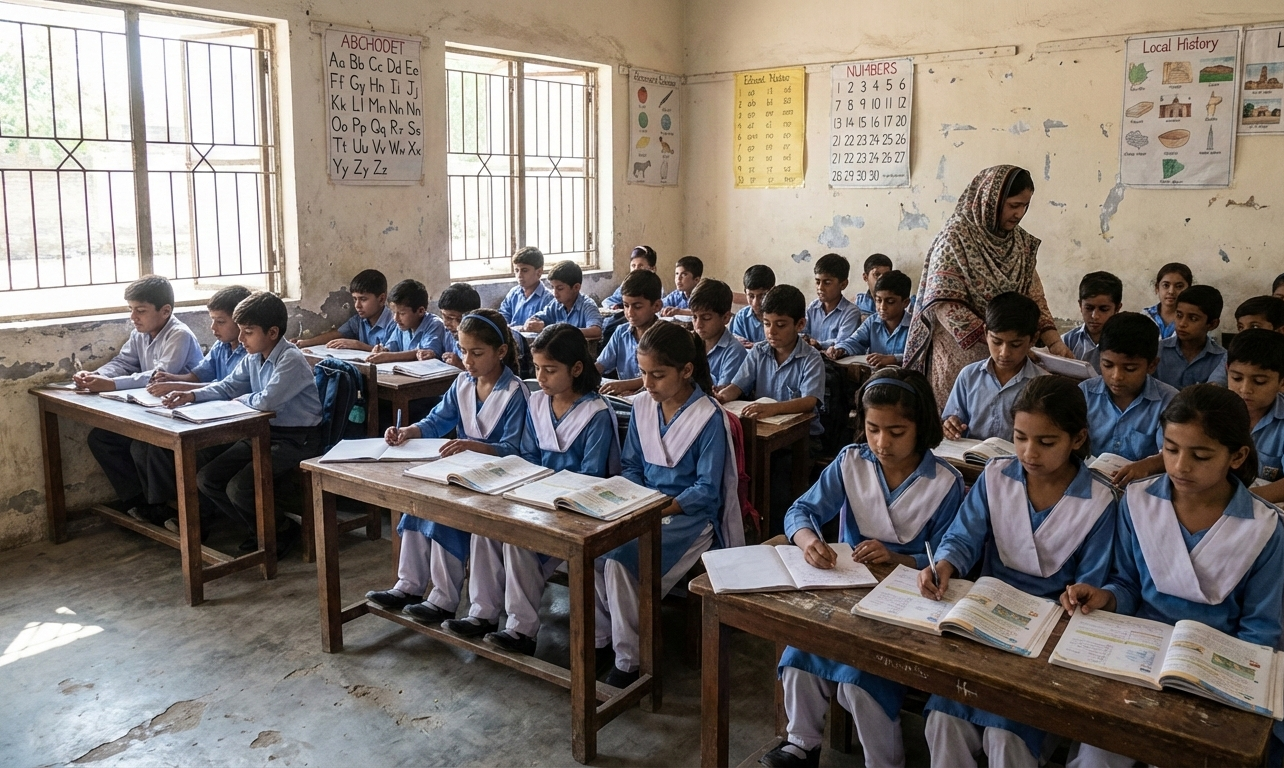
Barriers Preventing Marginalized Children from Learning
Introduction
Barriers Preventing Marginalized Children from Learning

Introduction
Education is widely recognized as one of the most powerful tools for breaking cycles of poverty and inequality. Yet for millions of children worldwide, access to learning remains limited or inconsistent due to systemic challenges that extend beyond individual effort or ability. These challenges are especially severe for children from marginalized backgrounds, where social, economic, and institutional factors intersect to restrict opportunity.
The **barriers to education for marginalized children** are often complex and deeply rooted. They are not caused by a lack of interest in learning, but by conditions that shape daily life and limit access to safe, supportive, and effective educational environments. These barriers influence enrollment, attendance, learning outcomes, and long-term stability.
For millions of marginalized children, access to education remains fragile and inconsistent. Structural poverty, social discrimination, limited infrastructure, and ineffective policies continue to shape educational inequality, preventing many children from fully participating in formal learning systems.
Understanding Marginalization in Education
Marginalization in education refers to the exclusion of specific groups from full participation in learning systems. These groups may include children from low-income families, religious or ethnic minorities, rural communities, displaced populations, or socially stigmatized groups.
Marginalized children often experience multiple disadvantages at once. Economic hardship, social discrimination, and geographic isolation combine to create barriers that are difficult to overcome without targeted support. As a result, education becomes inconsistent, interrupted, or inaccessible altogether.
The barriers to education for marginalized children are rarely visible in isolation. Instead, they operate together, reinforcing inequality across generations.
Economic Hardship and Financial Constraints
Poverty is one of the most significant factors limiting educational access. Even where public education is technically free, indirect costs place heavy pressure on marginalized families. School uniforms, books, transportation, examination fees, and digital access create financial burdens that many households cannot consistently manage.
Children from marginalized communities are often expected to contribute to household income or labor. This leads to irregular attendance or early withdrawal from school, particularly during periods of economic stress.
Financial instability reinforces education challenges by forcing families to prioritize immediate survival over long-term learning. Without financial safety nets, education becomes vulnerable to disruption.
Geographic Isolation and Infrastructure Gaps
For many marginalized children, especially those in rural or remote areas, physical access to schools is a major obstacle. Long distances, unsafe travel routes, and lack of transportation make daily attendance difficult.
Schools in marginalized regions often lack basic infrastructure. Overcrowded classrooms, limited sanitation facilities, and outdated learning materials directly affect educational quality. These conditions discourage sustained attendance and weaken learning outcomes.
Infrastructure gaps are a central component of the barriers to education for marginalized children, as they shape both access and experience within the education system.
Social Discrimination and Exclusion
Social exclusion remains a powerful barrier to learning. Marginalized children may face discrimination based on religion, ethnicity, language, caste, or social status. This discrimination can occur both within schools and in the broader community.
Exclusion may appear subtle, such as reduced teacher attention or limited participation opportunities. In other cases, it manifests as bullying, stigmatization, or unequal discipline. These experiences damage confidence, emotional well-being, and motivation to learn.
Persistent social exclusion reinforces education challenges by creating environments where children feel unsafe or undervalued.
Language Barriers and Curriculum Mismatch
Language differences often place marginalized children at a disadvantage. When the language used in schools differs from the language spoken at home, students struggle to understand lessons and engage fully in learning.
Curriculum design can also contribute to exclusion. Educational content that reflects only dominant cultural or religious perspectives may marginalize children whose identities are not represented. This disconnect reduces engagement and sense of belonging.
Addressing language and curriculum gaps is essential to reducing exclusion, education challenges and improving learning outcomes.
Gender-Based Inequality Within Marginalized Communities
Gender inequality often compounds marginalization. Girls from marginalized backgrounds frequently face additional barriers related to cultural expectations, safety concerns, and household responsibilities.
In economically constrained households, girls’ education may be deprioritized, leading to early dropout. This limits future opportunities and reinforces cycles of inequality.
Gender-based barriers interact with other education challenges, making inclusive policy design critical for long-term impact.
Psychological and Emotional Impact of Educational Exclusion
The emotional consequences of educational exclusion are often overlooked. Repeated exposure to barriers can lead children to internalize feelings of failure, anxiety, or low self-worth.
Marginalized children who face discrimination or instability may disengage from learning even before leaving school. Stress and emotional distress interfere with concentration, participation, and academic performance.
These psychological effects deepen the barriers to education for marginalized children, making re-engagement increasingly difficult over time.
Family Awareness and Support Limitations
Parental engagement plays a key role in educational success. However, marginalized families may lack access to information about enrollment procedures, academic pathways, or available support services.
Limited literacy, language barriers, and distrust of institutions reduce families’ ability to advocate for their children. Without guidance, small challenges can escalate into permanent disengagement from education.
Community-level awareness initiatives help reduce education challenges by supporting families through complex education systems.
Policy Gaps and Implementation Failures
While many governments promote inclusive education policies, implementation gaps remain widespread. Marginalized communities are often underserved due to weak enforcement, insufficient funding, or lack of local data.
Education systems frequently prioritize enrollment metrics over retention and learning quality. Without addressing lived realities, policies fail to remove practical barriers faced by marginalized children.
Closing these gaps is essential to reducing exclusion, education challenges and ensuring equitable access.
Intergenerational Consequences of Educational Barriers
Educational exclusion rarely affects only one generation. When marginalized children lack access to learning, the effects extend into adulthood through limited employment opportunities and income instability.
Parents who experienced educational disruption may struggle to support their children academically, reinforcing cycles of disadvantage. These intergenerational effects strengthen structural inequality and slow social progress.
Breaking this cycle requires sustained investment and targeted interventions.
Community and Civil Society Responses
In many regions, community organizations and nonprofits help address gaps left by public systems. They provide learning materials, financial assistance, and awareness programs that support continuity in education.
These efforts play a supportive role in reducing barriers to education for marginalized children, particularly where public resources are limited.
Long-Term Benefits of Inclusive Education
Reducing educational barriers benefits society as a whole. Inclusive education strengthens economic development, social cohesion, and civic participation.
When marginalized children gain access to quality learning, communities experience improved stability, innovation, and intergenerational mobility. Education remains one of the most effective tools for reducing inequality over time.
Conclusion
The barriers to education for marginalized children are shaped by economic hardship, social exclusion, infrastructure gaps, and policy limitations. These challenges do not reflect a lack of potential, but a lack of equitable opportunity.
Addressing exclusion, education challenges requires coordinated efforts from governments, communities, and support organizations. When barriers are reduced, education becomes a pathway to dignity, stability, and long-term social progress.
메타데이터
- post_id
- e83ba99c4fb4
- slug
- barriers-preventing-marginalized-children-from-learning-e83ba99c4fb4
- url
- https://medium.com/@minorcarefoundation/barriers-preventing-marginalized-children-from-learning-e83ba99c4fb4
- canonical_url
- https://medium.com/@minorcarefoundation/barriers-preventing-marginalized-children-from-learning-e83ba99c4fb4
- author_url
- https://medium.com/@minorcarefoundation
- status
- ok
- fetched_at
- 2026-07-27 09:11:26