The Original Slow Fashion: Celebrating the Art and Resilience of India’s Weavers
The Indian handloom saree is not just six yards of fabric; it is a living history book, a masterpiece of engineering, and a testament to…
The Original Slow Fashion: Celebrating the Art and Resilience of India’s Weavers
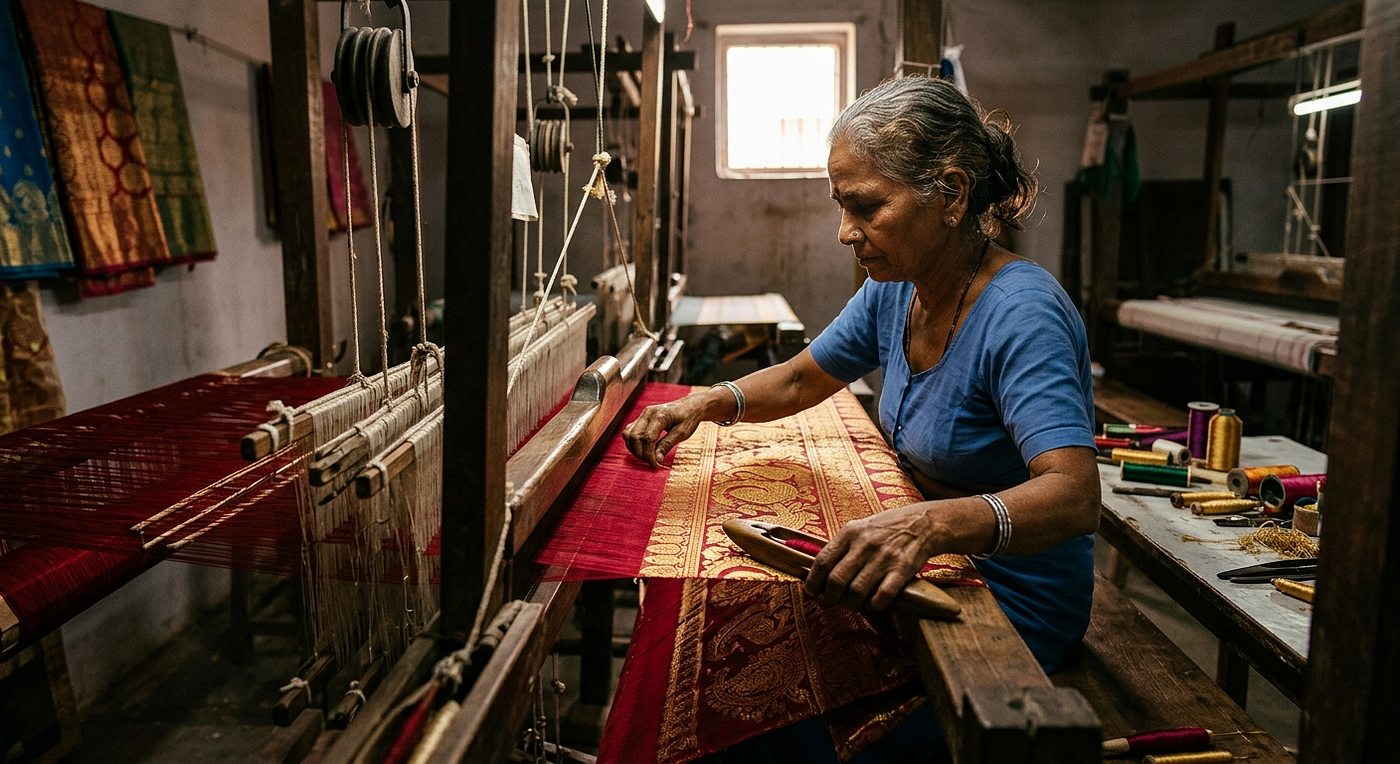
The Indian handloom saree is not just six yards of fabric; it is a living history book, a masterpiece of engineering, and a testament to generations of unbroken craftsmanship.
In an era dominated by fast fashion and machine-made uniformity, the true luxury lies in the slight imperfections of a hand-loomed weave. Behind every saree is a weaver whose hands translate stories, geography, and culture into threads.
Here is a celebration of India’s iconic weaving clusters, the magic behind the loom, and why supporting handloom is a conscious choice for the future.
The Anatomy of a Handloom Saree
To truly appreciate a handwoven saree, one must understand the immense skill required to build its three core components:
- The Warp and the Weft: The warp consists of the longitudinal threads stretched tightly across the loom, while the weft represents the horizontal threads woven through them. A weaver coordinates their hands and feet rhythmically to interlace these perfectly.
- The Pallu (Anchal): The crowning glory of the saree. This is where the weaver showcases their highest level of artistry, often transitioning from the body design into complex, dense storytelling motifs like the Kalka (paisley) or sacred geometry.
- The Selvedge: The finished edge of the fabric. In a genuine handloom saree, the selvedge is rarely perfectly straight — it carries tiny pinpricks or slight variations where the shuttle turned back, acting as the artisan’s unique signature.
Why Handloom Matters Today
Choosing a handwoven saree over a powerloom counterfeit isn’t just about aesthetics; it is an environmental and economic stance.
- Zero-Carbon Footprint: Traditional handlooms operate entirely on human energy, relying on the physical rhythm of the weaver rather than electricity.
- Sustaining Rural Livelihoods: Textile weaving is one of the largest unorganized economic sectors in India. Supporting genuine handlooms directly ensures fair wages reach artisan families, keeping ancient clusters alive.
- Preserving Intangible Heritage: When a master weaver passes away without an apprentice, a centuries-old visual vocabulary disappears. Buying handloom keeps the demand for these rare skills viable for the next generation.
Every time you drape a handwoven saree, you aren’t just wearing clothes. You are wearing a piece of art, wrapped in the resilience, patience, and soul of an Indian weaver.
SlowFashion #SustainableFashion #EthicalFashion #ConsciousConsumerism #WearHandloom
메타데이터
- post_id
- e8825916bb01
- slug
- the-original-slow-fashion-celebrating-the-art-and-resilience-of-indias-weavers-e8825916bb01
- url
- https://medium.com/@theweaversshopbyraavi/the-original-slow-fashion-celebrating-the-art-and-resilience-of-indias-weavers-e8825916bb01
- canonical_url
- https://medium.com/@theweaversshopbyraavi/the-original-slow-fashion-celebrating-the-art-and-resilience-of-indias-weavers-e8825916bb01
- author_url
- https://medium.com/@theweaversshopbyraavi
- status
- ok
- fetched_at
- 2026-07-15 16:48:10