From Pindar to Pixels — the lipogram in the digital age
How an ancient literary constraint found its most radical expression on the internet
From Pindar to Pixels — the lipogram in the digital age
How an ancient literary constraint found its most radical expression on the internet

I. A constraint older than the printing press
In the sixth centuryBCE, the Greek poet Lasus of Hermione, composed an ode to Demether without a single use of the letter sigma — the most common consonant in ancient Greek, because its hissing sound was considered ungraceful.
Pindar, a student of Lasus, mentions this innovation in a fragment, where he alludes to the dithyramb and the absence of “s”.
Whether this was a philosophical statement, a technical feat, or simply a game, historians cannot say with certainty. What is certain is that the impulse to write around a letter — to make absence itself meaningful — is as old as literature.
The word comes from the Greek: leipogrammatos — leipo meaning to lack, gramma meaning letter. A lipogram is, literally, a text that lacks a letter. Over two millennia, the form surfaced and submerged across literary history.
Tryphiodorus wrote a 24-book Odyssey in which each book avoided one letter of the Greek alphabet. The Spanish Golden Age playwright Lope de Vega produced five novels, each excluding one vowel — a — e — i — o — u — as if working through a linguistic scale. The 17th-century writer Gregorio Silvestre composed poems without the letter a; others without r, without s, without the letters that most challenged them.
For most of literary history, the lipogram was considered a curiosity. A parlour trick for scholars. Evidence of virtuosity, perhaps — but not of serious artistic intent. Then came the Oulipo.
II. The Oulipo and the rehabilitation of constraint
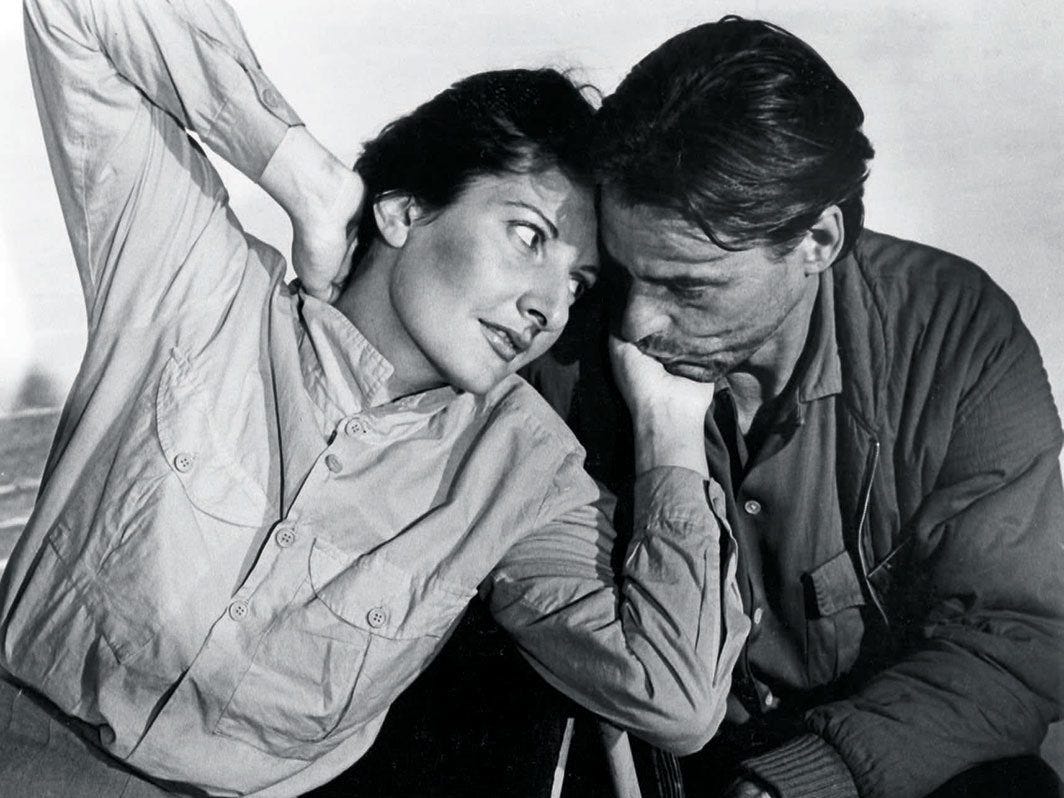
In November 1960, the mathematician François Le Lionnais and the novelist Raymond Queneau founded a small, semi-secret collective in Paris. They called it the Ouvroir de Littérature Potentielle — the Workshopof Potential Literature. Its members, over the decades, would include Italo Calvino, Marcel Duchamp, and Georges Perec.
The Oulipo’s central conviction was radical and, at the time, deeply unfashionable: constraints do not imprison the writer. They liberate them. The surrealists had sought freedom through the unconscious — automatic writing, dreams, the dissolution of rational control.
The Oulipians sought freedom through its opposite: rigorous, self-imposed, mathematical structure. The constraint forces the writer off the well- worn paths of language. It generates surprise. It produces what Queneau called potential literature — works that exist not just in what is written, but in the vast unexplored space of what could be written under the same rules.
Georges Perec took this philosophy to its extreme. In 1969, he published La Disparition — a detective novel of over 300 pages written entirely without the letter e. In French, where e is the most common letter in the language, this is a staggering achievement. The novel’s title itself — La Disparition, meaning The Disappearance or The Void — enacts what it describes. The missing letter haunts every sentence. Characters die searching for something they cannot name. The reader who does not know the constraint may finish the book without ever noticing. The reader who does cannot stop seeing the absence everywhere. Raymond Queneau reviewed the manuscript. His verdict, according to Oulipo legend: “I didn’t notice the e was missing until page 90.” La Disparition was translated into English by Gilbert Adair in 1994 as A Void — itself a lipogram, maintaining the constraint throughout.
The translation is considered one of the most extraordinary feats in the history of literary translation.
III. The digital turn
The internet arrived. And with it, a new space of inscription: the URL.
A Uniform Resource Locator is, at its most basic, a string of characters that points to a location on a network. But it is also, unavoidably, a text. It is read. It is shared. It carries meaning beyond its technical function. A URL can be beautiful, ugly, cryptic, poetic, or absurd.
Could it be lipogrammatic?
The question, as far as we know, was never formally posed — until a small Iranian digital media agency, following the removal of their video channel by a major technology platform, registered a domain name that answered it definitively.
The URL: abcdijkmnpqrstuvwxyz.com. The constraint: the 26 letters of the Latin alphabet, minus the four distinct letters of a technology company’s name — E, G, L, O.
The message: the alphabet, without that company. The internet, as it might exist, were that presence subtracted. In a single registered domain, an act of Oulipian logic had migrated from the page to the address bar.
IV. What changes — and what does not
The digital lipogram inherits everything essential from its literary ancestor. The constraint is generative. Just as Perec’s missing e forced him to find disparaître instead of disparaître, abscence instead of absence, the URL’s missing letters force a kind of meaning that direct statement could never achieve.
To say “this company dominates the internet” is commonplace.
To show an alphabet from which its letters have been quietly removed is something else entirely.
The absence is the message.
In La Disparition, the missing e is never mentioned. Characters search for something they cannot name. The void is present everywhere except on the page.
In the digital lipogram, the missing brand is never named. The URL points toward it through what it lacks. The constraint is total. Perec did not omit the e most of the time. He omitted it without exception, across every sentence, every chapter, every page. The digital lipogram admits no compromise: every letter of the brand must be absent, no more and no less.
But something changes too.
Perec needed 300 pages. The digital lipogram needs 22 characters. Perec needed a reader willing to invest hours. The digital lipogram reveals itself — to those with eyes to see — in seconds. Perec’s constraint was invisible to the uninitiated. The digital lipogram’s constraint is equally invisible — but once seen, it cannot be unseen. And Perec’s novel required a publisher, a distributor, a bookshop. The digital lipogram requires only a domain registrar and approximately ten euros per year.
V. The Ou-X-Po dimension
The Oulipo did not remain alone for long. Its model — applying systematic constraints to a creative discipline — proved irresistible across the arts.
The Ou-X-Po principle emerged: replace the X with any creative domain, and a new workshop is born. The OuPeinPo for painting. The OuMuPo for music. The OuBaPo for comics. The OuPhoPo for photography.
Each Ou-X-Po asks the same question: what happens when you apply Oulipian rigour to this medium? What is liberated? What is revealed?
The digital lipogram suggests a new workshop: the OuURLPo — the Ouvroir d’URL Potentielle, or Workshopof Potential URLs. A space in which the address itself is the constrained text. In which the alphabet, systematically reduced, becomes a statement. In which the domain name system — designed for navigation — becomes a medium for expression. Queneau and Le Lionnais could not have imagined it.
But they would, one suspects, have approved.
VI. The question of authorship
Perec knew he was writing a lipogram. He constructed the constraint deliberately, painstakingly, over years.
Did the creator of abcdijkmnpqrstuvwxyz.com know they were creating a digital lipogram? Did they intend an Oulipian gesture — or a political protest — or a hidden signature — or simply an unusual domain name that happened to be available? We do not know. They have not said.
This uncertainty is not unique to the digital lipogram.
Duchamp’s Fountain — a urinal submitted to an art exhibition in 1917 — derived much of its power from the question of whether it was art at all, and whether the artist’s intention was required to make it so. The conceptual art tradition that followed Duchamp largely concluded: the idea is the work.
The intention, while interesting, is not essential. If the digital lipogram is understood as a form — as a category of expression with its own logic and its own history — then the intention of any individual practitioner matters less than the form itself.
The URL abcdijkmnpqrstuvwxyz.com is a digital lipogram whether or not its creator had ever heard of Perec. That is, perhaps, the most Oulipian thing about it.
VII. What Perec might have said
Perec died in 1982, a decade before the World Wide Web existed. He never saw a URL. He never registered a domain. But he understood, perhaps better than anyone, that language is not only what we say.
It is what we do not say. The shape of the silence. The outline of the void.
La Disparition ends — spoiler, if a 55-year-old novel can have spoilers — without resolution. The missing letter (certainly an allusion to his father, killed at the front in June 1940) was never found. The disappearance is never explained. The void remains.
The URL abcdijkmnpqrstuvwxyz.com also ends without resolution. The missing letters are never mentioned in the address itself. The company they represent is never acknowledged. The void remains. Somewhere between the 6th century BCE and the internet age, the lipogram found its minimalist, digital form. It took 2,500 years. Now it fits in an address bar.
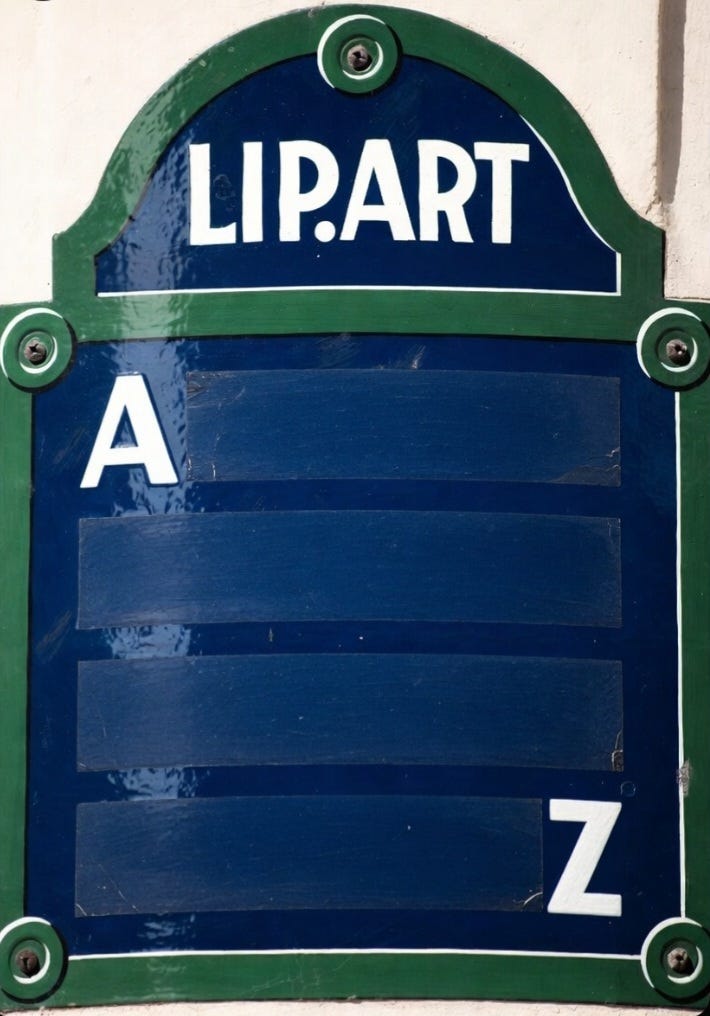
This article is part of an ongoing series on digital lipograms and lip.art.
Read: abcdijkmnpqrstuvwxyz.com — lipogram or signature? The founding example.
What is a digital lipogram? A formal definition.
What if every great brand had its own digital lipogram? 22 brands erased from the alphabet — a lip.art puzzle.
Please share your thoughts on the digital lipogram. Do you know of any other examples of digital lipograms?
Thank you for your shares.
메타데이터
- post_id
- e897c52eb1dd
- slug
- from-pindar-to-pixels-the-lipogram-in-the-digital-age-e897c52eb1dd
- url
- https://medium.com/@gui__/from-pindar-to-pixels-the-lipogram-in-the-digital-age-e897c52eb1dd
- canonical_url
- https://medium.com/@gui__/from-pindar-to-pixels-the-lipogram-in-the-digital-age-e897c52eb1dd
- author_url
- https://medium.com/@gui__
- status
- ok
- fetched_at
- 2026-06-10 12:26:30