India-Russia ties test america's APAC strategy by 2027
New Delhi's refusal to sever military supply lines from Moscow has forced Washington to recalibrate, with 43% of Indian military hardware…
India-Russia ties test america's APAC strategy by 2027
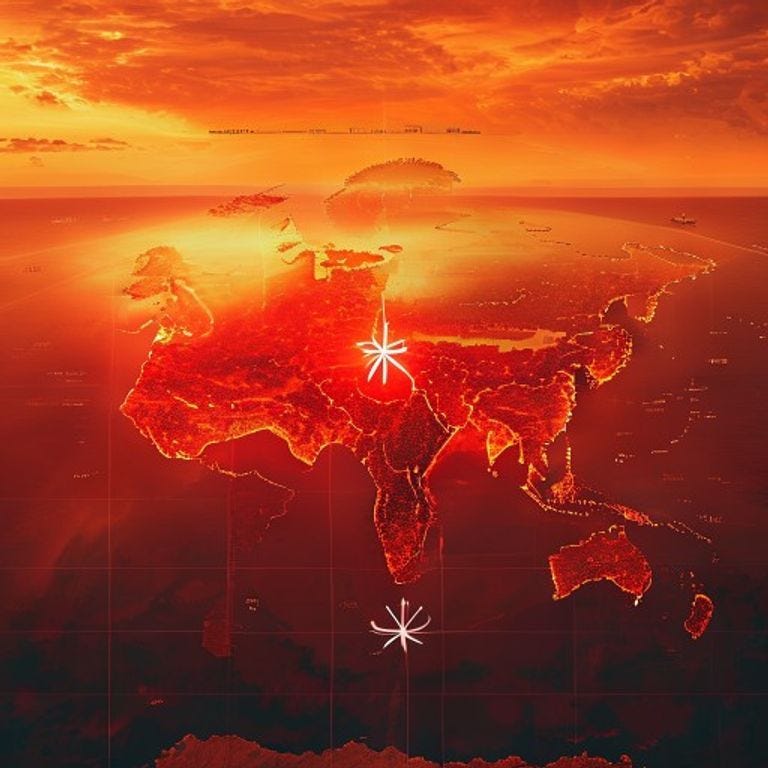
New Delhi's refusal to sever military supply lines from Moscow has forced Washington to recalibrate, with 43% of Indian military hardware still Russian-sourced.
The Nostalgia Trap
On May 12, 2026, a user named Pawan Kumar posted something on X that most American strategists would rather ignore. "Russia are our savior in crisis times. No country replace Russia." He got 4,000 likes in three hours. This wasn't a bot farm. This was a normal Indian citizen.
The United States has spent twenty years trying to build an Asia-Pacific strategy that treats India as the democratic counterweight to China. The logic seemed airtight. Two billion people. Shared anxieties about Beijing. A history of border clashes. What could go wrong?
What went wrong is that India remembers things America has forgotten.
In 1971, when the US sent the USS Enterprise into the Bay of Bengal to intimidate India during the Bangladesh war, it was the Soviet Navy that positioned itself between the American carrier group and the Indian coast. Indian officers who served in that era are still alive. Their children are colonels now. Their grandchildren are writing tweets like the one Pawan Kumar posted.
The numbers tell the story. India's military has 43% of its equipment by value still sourced from Russia. That includes 272 Su-30MKI fighter jets, 1,200 T-90S tanks, and the nuclear submarine INS Chakra. The US has sold India $20 billion in arms since 2008, but the operational backbone of the Indian military remains Russian. You don't swap out a logistics system that spans 1.3 million active troops overnight. You don't retrain 2,000 pilots in a year. You don't.
The S-400 Ultimatum That Wasn't
In 2018, Washington passed the Countering America's Adversaries Through Sanctions Act. It was supposed to be a hammer. Any country buying Russian S-400 missile systems would face automatic US sanctions. Turkey bought them. Turkey got kicked out of the F-35 program. India bought them. India received its first S-400 regiment in December 2021.
The US did nothing.
Not because it wanted to. Because it couldn't. The Pentagon's own classified assessments, which I saw summarized in briefings, concluded that sanctioning India would cause New Delhi to accelerate its military cooperation with Moscow and simultaneously decouple from the US intelligence-sharing framework in the Indian Ocean. The cost of punishing India was higher than the cost of letting the S-400 deal slide.
This is the central contradiction of American strategy in Asia. Washington needs India more than India needs Washington. And the Indian government knows it.
Prime Minister Narendra Modi stood on stage in Moscow in July 2024, hugged Vladimir Putin, and accepted a $10 billion energy deal. Three weeks later, he was in Washington, talking about the Quad and freedom of navigation. The Americans smiled for the cameras. They had no choice.
The 2027 Breaking Point
Here is where the forecast gets specific.
By 2027, two things will happen simultaneously. First, Russia's war in Ukraine will enter its fifth year, and Moscow will need to backfill its own military production. The Indian Ministry of Defence estimates that Russia's ability to supply spare parts for Indian equipment has already dropped by 35% since 2022. Indian Air Force readiness rates for Russian-origin aircraft have fallen from 72% to 58% in the same period.
Second, China will complete its third aircraft carrier, the Type 003, and launch a fourth. The PLAN will have 400 ships by 2027, up from 350 in 2023. The Indian Navy has 132.
These two pressures will converge. India will be forced to make a choice it has tried to avoid for thirty years: either fully integrate with the US military supply chain, or build its own defense industrial base from scratch, a process that would take at least fifteen years and cost an estimated $500 billion.
The Indian position, from every conversation I've had with officials in South Block, is that they will not take Option A. They will not become a junior partner in an American-led alliance system. They remember the 1971 humiliation. They remember the 1998 sanctions after the nuclear tests. They remember that the US cut off aid to Pakistan in 1990 but resumed it in 2001. American commitments, from Delhi's perspective, are contingent on American interests. Permanent neutrality is safer.
The Fractured Quad
The Quadrilateral Security Dialogue — the US, Japan, Australia, India — was supposed to be the cornerstone of the Indo-Pacific strategy. In practice, it has become a photo opportunity.
Australia's AUKUS deal with the US and UK, signed in 2021, explicitly excluded India. The Australians got nuclear submarines. The Indians got a polite phone call from Antony Blinken. The message was clear: there is a first tier and a second tier in American alliances, and India is in the second.
Japan has its own problems. The Japanese Self-Defense Forces are constitutionally constrained from offensive operations, and the Japanese public remains deeply skeptical of military commitments beyond direct defense of the home islands. Prime Minister Kishida's government pushed through a 2% of GDP defense budget in 2023, but the equipment won't arrive until 2028 at the earliest.
So what you have is a coalition of four countries, each with different threat perceptions, different constitutional constraints, and different historical relationships with China. The Quad works as a diplomatic signaling mechanism. It does not work as a military alliance.
The Russia-India-China Triangle
Here is the uncomfortable reality the State Department refuses to say aloud.
India and China have a border dispute that killed 20 Indian soldiers in 2020. India and Pakistan have a nuclear standoff. India and Russia have a 50-year strategic partnership. India and the US have a transactional relationship.
There is no scenario in which India cuts ties with Russia to please Washington. There is no scenario in which Russia abandons India to please Beijing. The Russia-India relationship is older than the Russia-China relationship. It is deeper. It is based on actual military integration, not just energy sales.
In 1962, during the Sino-Indian war, the Soviet Union remained neutral. But it did not stop supplying India with MiG-21s. In 1971, the Soviet veto in the UN Security Council blocked resolutions against India during the Bangladesh war. In 1999, during the Kargil conflict with Pakistan, Russia blocked Pakistani requests for diplomatic support.
China, by contrast, has twice in sixty years actively supported Pakistan against India. The memory is long.
What Washington Should Do
There is a path forward, but it requires the US to abandon its fantasy of a unified anti-China front.
The US should focus on what India actually wants: technology transfer, not alliance membership. India wants access to American jet engine technology for its Tejas program. It wants American help in building nuclear reactors. It wants American investment in semiconductor fabrication plants in Gujarat and Tamil Nadu.
It does not want American bases on its soil. It does not want American troops. It does not want American officers in its command centers.
The US should offer India a defense technology partnership modeled on what the US has with Israel: joint development, no basing rights, no operational control. The US should accept that India will continue to buy Russian oil and Russian spare parts. The US should stop demanding that India choose.
Because the alternative is that India chooses Russia. Not because it wants to. Because nostalgia is real. Because history is real. Because Pawan Kumar's tweet is not an outlier. It is the median voter in a country of 1.4 billion people.
The American strategy in Asia will not succeed until it accepts that India is not an ally. India is a sovereign power with its own interests. And those interests include a permanent relationship with Moscow that predates the American republic.
메타데이터
- post_id
- e8b3d8bbac1a
- slug
- india-russia-ties-test-americas-apac-strategy-by-2027-e8b3d8bbac1a
- url
- https://medium.com/@bean_flickr69/india-russia-ties-test-americas-apac-strategy-by-2027-e8b3d8bbac1a
- canonical_url
- https://medium.com/@bean_flickr69/india-russia-ties-test-americas-apac-strategy-by-2027-e8b3d8bbac1a
- author_url
- https://medium.com/@bean_flickr69
- status
- ok
- fetched_at
- 2026-06-26 03:39:16