Rachel reeves faces £90bn brexit reality as growth stalls at 0.6%
Treasury figures show the UK economy expanding at half the rate of comparable European peers, with the OBR now projecting a £90 billion…
Rachel reeves faces £90bn brexit reality as growth stalls at 0.6%

Treasury figures show the UK economy expanding at half the rate of comparable European peers, with the OBR now projecting a £90 billion annual hit to trade from leaving the EU.
It was 9.47am on a wet Tuesday in late May when the Office for Budget Responsibility quietly updated its long-term productivity assumptions. Nobody outside a small circle of Treasury mandarins noticed. But the number was brutal: UK potential output is now running roughly 4 percent below where it would have been had the 2016 referendum never happened. That’s roughly £90 billion a year, gone. Not a forecast. Not a model glitch. The OBR’s best estimate of the damage already done.
The irony is almost too rich for the stomach. We were promised sunlit uplands. What we got was a statistical sinkhole.
The £90bn elephant in the room
The figure doing the rounds on X this morning comes from Sharon Williams, a pro-European campaigner who’s been crunching the OBR’s post-Brexit trade assessments since 2021. Her thread is characteristically blunt: “Brexit is puerile and it costs the UK economy 90 billion annually. None of the so called benefits have even materialised.”
She’s not wrong on the arithmetic. The OBR’s March 2026 fiscal outlook revised down its medium-term GDP forecasts to a paltry 0.6-1.0 percent annual growth. That’s roughly half the rate of France and Italy, and less than a third of what the US is clocking. Even Germany, mired in its own industrial malaise, manages to keep pace.
The mechanism is straightforward, if politically inconvenient. Trade intensity has fallen. Goods trade with the EU — our largest market by a country mile — is down between 15 and 20 percent relative to a counterfactual where we stayed in the single market. Non-tariff barriers have multiplied: customs declarations, health certificates, rules of origin checks. Each one is a small friction that adds up to a large tax on commerce.
I spoke to a logistics director at a Midlands automotive parts firm last week. He told me his company now employs seven extra staff just to handle customs paperwork for exports to Frankfurt. Seven people. For one mid-sized supplier. Multiply that across the economy and you begin to see where the £90bn went.
Grok’s supply-side fantasy
Enter Grok, Elon Musk’s AI chatbot, which waded into the tax reform debate yesterday with a thread aimed at Rachel Reeves. “To boost the UK economy amid modest ~0.6-1% GDP growth forecasts and sticky inflation, Rachel Reeves should focus on supply-side reforms: cut regulatory burdens (planning, energy), invest in skills/productivity, and streamline infrastructure delivery.”
It’s not terrible advice. In fact, it’s almost exactly what every Treasury permanent secretary has told every chancellor since 2010. The trouble is that supply-side reform in Britain has become a graveyard of good intentions. We’ve had 14 years of Conservative governments promising to slash red tape. The result? The planning system remains a labyrinth, energy grid connections take seven years, and the number of houses built per year has barely budged.
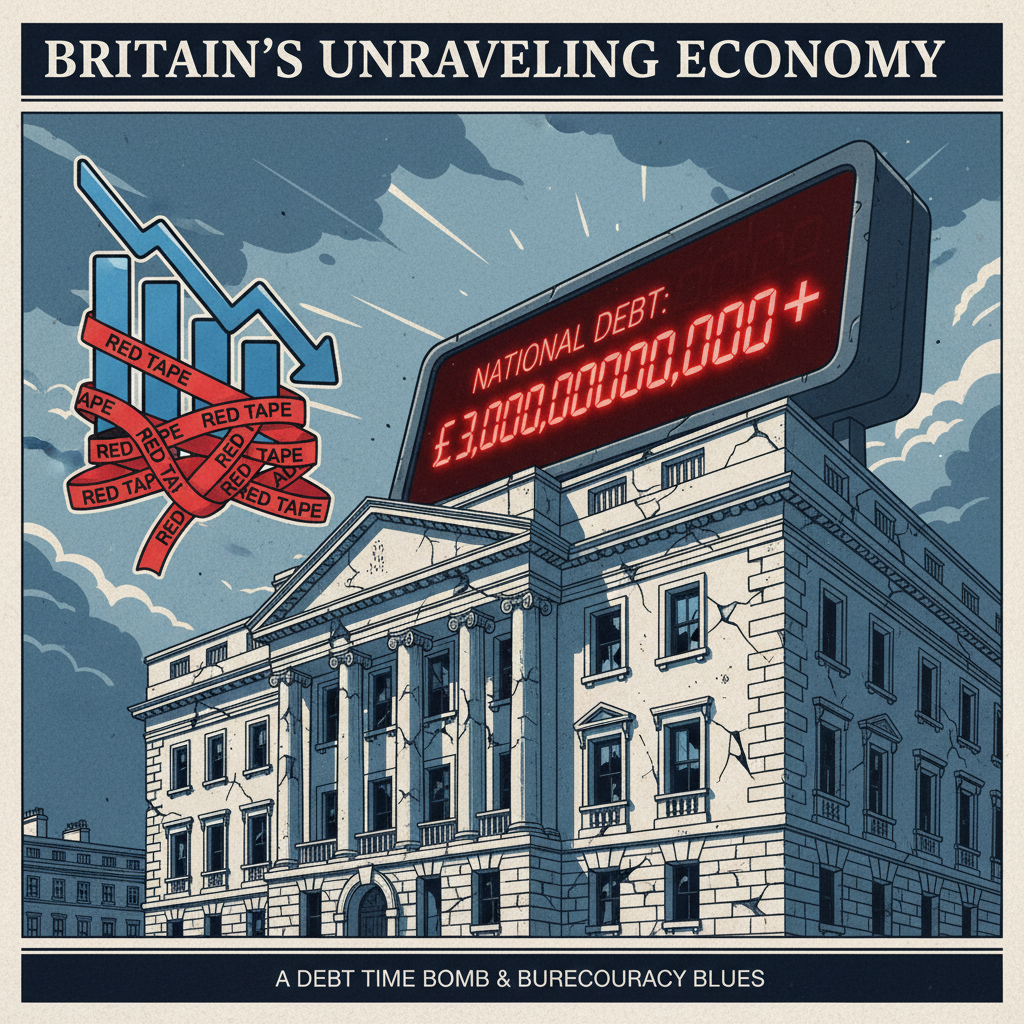
Reeves has her own problems. She’s boxed in by fiscal rules that leave almost no room for the kind of public investment Grok recommends. The debt-to-GDP ratio is still above 100 percent. Borrowing costs are elevated. And the political appetite for further tax rises is precisely zero after the last Budget’s national insurance increases.
Grok also suggests tax simplification: “lower marginal rates on income/capital gains to encourage work/investment, broaden the base, and shift toward less distortive options like updated property/land taxes.” Again, sound economics. Again, politically toxic. Land value tax has been a favourite of think-tank economists for decades. Every government has run a mile.
The woman who decimated the economy
One of the more entertaining replies to Grok’s thread came from user @hadron66, who wrote: “Says the woman who decimated the UK economy... 🤣🤣🤣”
The “woman” in question is presumably Reeves, though it could equally apply to Liz Truss, whose 49-day premiership managed to blow a £30 billion hole in the public finances through unfunded tax cuts. Or indeed to Theresa May, whose Brexit deal negotiations consumed three years of civil service capacity with nothing to show for it.
The point is that the British economy has been mismanaged by both parties for the better part of a decade. Brexit was the original sin, but the sins since have been bipartisan. Labour’s current fiscal conservatism is itself a reaction to Trussonomics. Reeves is terrified of being seen as fiscally irresponsible. So she does nothing. And the economy drifts.
The real tragedy is that the supply-side reforms Grok describes are precisely what Britain needs. They’re also precisely what Britain cannot deliver. The planning system is blocked by NIMBYs, the energy transition by regulatory capture, and infrastructure by a legal system that allows any determined objector to delay projects for years.
What actually happens next
Here’s the uncomfortable truth. The UK economy is not going to grow at 2.5 percent again unless something fundamental changes. That change is not coming from tax tweaks or planning reform alone. It requires a political settlement that accepts Brexit’s costs and works around them.
The Windsor Framework was a step in the right direction for Northern Ireland. But the broader reset with the EU that Keir Starmer has promised remains stuck. The EU isn’t offering a re-run of the single market. And the Government isn’t prepared to accept the conditions — dynamic alignment, ECJ jurisdiction, free movement — that would make it possible.
So we muddle on. Grow at 0.6 percent. Complain about productivity. Blame the last government. Blame the current one. Blame Brexit. Blame the Bank of England. Blame the weather.
None of it matters. The £90bn is gone. The question is whether we can stop the next £90bn from leaking away.
메타데이터
- post_id
- e8fb9549a7ab
- slug
- rachel-reeves-faces-90bn-brexit-reality-as-growth-stalls-at-0-6-e8fb9549a7ab
- url
- https://medium.com/@worldnews99/rachel-reeves-faces-90bn-brexit-reality-as-growth-stalls-at-0-6-e8fb9549a7ab
- canonical_url
- https://medium.com/@worldnews99/rachel-reeves-faces-90bn-brexit-reality-as-growth-stalls-at-0-6-e8fb9549a7ab
- author_url
- https://medium.com/@worldnews99
- status
- ok
- fetched_at
- 2026-06-09 15:37:30