Aviation Training in 2026: Six Ways Gamification Is Solving Aviation’s Biggest Training Challenge
The aviation industry is entering one of the most demanding phases in its modern history. Fleet expansion, accelerated retirements…
Aviation Training in 2026: Six Ways Gamification Is Solving Aviation’s Biggest Training Challenge
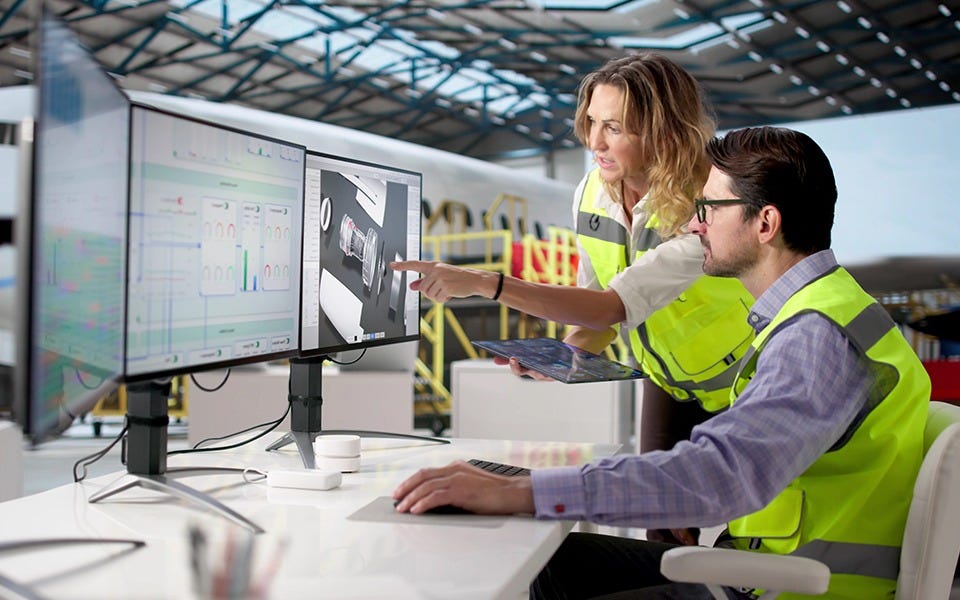
Reinventing Aviation with Gamification Solutions: Six Proven Strategies
The aviation industry is entering one of the most demanding phases in its modern history. Fleet expansion, accelerated retirements, automation-heavy cockpits, sustainability mandates, and tightening safety regulations are all converging at the same time. According to Boeing’s Pilot and Technician Outlook 2025–2044, the global aviation ecosystem will require approximately 660,000 new pilots and hundreds of thousands of technicians to keep operations running safely and efficiently over the next two decades. That scale of hiring automatically creates an even larger challenge: how to train, upskill, and reskill talent faster without compromising safety.
Traditional aviation training has always been rigorous, but now it’s increasingly constrained by cost, time. Classroom instruction and static eLearning depend heavily on passive consumption — reading manuals, watching videos, or memorizing procedures. This approach struggles in high-stakes environments because aviation professionals are expected to recall and apply knowledge under stress, time pressure, and uncertainty. When learning isn’t practiced actively, retention drops and decision-making slows.
This is where gamification solutions combined with simulation-based learning and custom content development are changing the equation. These approaches don’t replace regulatory training — rather, they strengthen it by turning knowledge into repeatable, measurable performance.
Below are six ways gamification is transforming aviation training and workforce readiness in 2026.
1. Turning Passive Training into High-Engagement Skill Practice
Aviation training is information-dense by necessity, but density alone doesn’t guarantee learning. Long classroom sessions and slide-heavy LMS courses often overload working memory, especially for new hires or transitioning professionals. When engagement drops, so does retention.
Gamification solutions address this by converting learning objectives into clear challenges with feedback loops. Points, progress indicators, and levels aren’t just cosmetic features; rather, they create structure, signal progress, and prompt learners to make decisions rather than simply move through content.
This shift from consumption to decision-making is precisely why gamified approaches work. Research published in Frontiers in Education (2025) reveals that interactive, feedback-driven learning environments significantly outperform non-interactive formats in both motivation and knowledge retention. When learners are required to choose an action, see its consequences, and adjust their response in real time, the learners’ judgment is thus actively tested, thereby strengthening their memory pathways and improving their knowledge transfer to real-world performance.
For aviation roles such as pilots, cabin crew, and maintenance engineers — whose decisions are made under time pressure and ambiguity — this distinction is critical: Active training that demands attention, delivers immediate feedback, and rewards demonstrated mastery thus preparing professionals for operational reality rather than simply course completion.
2. Mastering Emergency Response Through High-Stakes Narrative
Traditional safety training often involves reading manuals or watching videos of emergency protocols. This approach explains procedures, but it does not recreate the cognitive load or stress under which those procedures must be executed.
Through strategic custom content development airlines can design branching, scenario-driven experiences where every decision creates a new operational path.
In this model, the “game” is not merely the final outcome — it is the decision-making process itself. Each choice triggers a consequence that reshapes the scenario: selecting the wrong checklist sequence may escalate system failures; delayed communication may increase passenger risk; correct prioritization may stabilize the event.
In other words, every action generates a new branch in the scenario tree. The learner must then adapt to the consequences of that branch, reinforcing situational awareness and judgment under pressure.
For example, a cabin crew member using a VR-based simulation-based learning module may face a “smoke-in-the-cabin” scenario. If they prioritize crowd control before locating the source, smoke density increases and visibility decreases. If they deploy equipment correctly but delay passenger communication, panic escalates. Each decision alters the environment in real time — requiring continuous reassessment rather than memorized recall.
This is what builds operational readiness: repeated exposure to evolving consequences in a controlled environment, not passive review of static procedures.
3. Closing the Talent Gap with Strategic Reskilling
Nor can the aviation industry’s talent shortage be solved by hiring alone. Rather, it also demands more rapid reskilling of adjacent talent like ground operations staff, former military personnel, and technicians with transferable skills who lack commercial aviation certifications.
This is where many traditional training and automation efforts fall short. A report by GrayMatter Robotics indicates that 65% of MRO providers saw disappointing outcomes from conventional automation, largely due to rigid structures and implementation friction. Hence, the takeaway is clear: Inflexible systems struggle in environments where roles, prior knowledge, and certification needs vary widely.
And gamification-based reskilling addresses this gap by design.
For example, by using level-based progression and pre-assessments, a trainee can bypass modules they already know to focus purely on new competencies. This respects the professional’s time and significantly reduces the “time-to-cockpit.” Thus, by treating training like a progression map, learners are motivated to reach the next “rank” of their career.
4. Making Recurrent Training Data-Driven with CBTA/EBT-Aligned Game Loops
Traditional recurrent training relies heavily on pass/fail checks that confirm task completion but offer little insight into underlying competencies. Over time, this can reduce training to repetitive maneuvers without clearly identifying why performance gaps persist, thus limiting both instructional value and evidence of progression beyond compliance.
Yet when implemented through Evidence-Based Training (EBT) and Assessment (CBTA), Competency-Based Training reframes recurrence as a continuous improvement cycle. Learners are herein assessed in realistic operational scenarios, specific competency gaps are identified, training is targeted to those gaps, and performance is reassessed — as a result keeping training relevant to real-world operations rather than rote repetition.
Thus, when gamification is aligned directly to CBTA criteria, each cycle produces structured performance data. Scores, progress indicators, and achievement markers are tied to observable behaviors and proficiency standards, which gives instructors clearer diagnostic insight and learners transparent expectations focused on mastery.
And because this data is traceable and repeatable, it also supports regulatory oversight requirements for consistency and evidence of competence. The result is a closed-loop recurrent training system in which learning, measurement, and compliance reinforce each other — thereby replacing static checks with actionable performance insight.
5. Creating Real-World Readiness for Ground Operations
Ground handling — from baggage to refueling — is the backbone of on-time performance. Yet traditional training on the ramp is dangerous, expensive, and disrupts active flight schedules.
A more effective approach is simulation-based learning for ground staff. Hence, through custom content development, an airline can create a virtual “digital twin” of a specific airport (e.g., London Heathrow or Singapore Changi).
This way, trainees can practice docking a jet bridge or navigating a fuel truck in a high-traffic virtual environment. This builds spatial awareness and “ramp-readiness” before they ever step onto the tarmac.
This reduces the likelihood of ground collisions — which cost the industry billions annually — by allowing workers to fail safely in a digital world before they’re responsible for a multi-million dollar aircraft.
6. Making Onboarding Intelligent with Micro-Feedback Loops
For new aviation hires, onboarding often feels like drinking from a firehose. The information is essential — regulatory frameworks, safety protocols, SOPs, compliance standards — but the speed and volume at which it is delivered make it difficult to absorb effectively. Long, uninterrupted sessions overload working memory, leading to reduced retention and lower confidence in early operational performance.
A more effective approach is structured gamified microlearning delivered in focused learning sprints. Instead of compressing hours of instruction into a single block, onboarding can be divided into a sequenced series of short challenges distributed across days or weeks. Each five-minute challenge targets one concept, procedure, or decision point.
Every module creates a micro-feedback loop: the learner makes a choice, receives immediate evaluation, and sees a clear explanation tied to operational standards. This tight action-feedback cycle strengthens recall because understanding is reinforced at the moment of decision, not hours later in a cumulative test.
When onboarding is designed as a progressive series of structured challenges — rather than a single information-heavy event — new hires build regulatory fluency incrementally. Confidence grows alongside competence, reducing early-stage errors and accelerating operational readiness.
Conclusion: The New Standard for Aviation Industry Training
The transition from passive instruction to active, simulation-based has become a competitive necessity. Gamification solutions, strengthened by simulation-based learning, reskilling frameworks, and custom content development, provide exactly what modern aviation demands: high-engagement practice, deeper retention, real-world realism, and continuous, data-driven improvement.
As the aviation industry navigates rapid change, the organizations that transform their training ecosystems today will build safer, more resilient, and future-ready teams for the decade ahead.
Visit Us : https://ozemio.com/
메타데이터
- post_id
- e9117c5ccacc
- slug
- aviation-training-in-2026-six-ways-gamification-is-solving-aviations-biggest-training-challenge-e9117c5ccacc
- url
- https://medium.com/@KadamberiDarad/aviation-training-in-2026-six-ways-gamification-is-solving-aviations-biggest-training-challenge-e9117c5ccacc
- canonical_url
- https://medium.com/@KadamberiDarad/aviation-training-in-2026-six-ways-gamification-is-solving-aviations-biggest-training-challenge-e9117c5ccacc
- author_url
- https://medium.com/@KadamberiDarad
- status
- ok
- fetched_at
- 2026-06-09 15:37:30