How Larger Companies Build More Accurate Growth Forecasts
For many businesses, growth forecasting feels less like science and more like educated guesswork.
How Larger Companies Build More Accurate Growth Forecasts

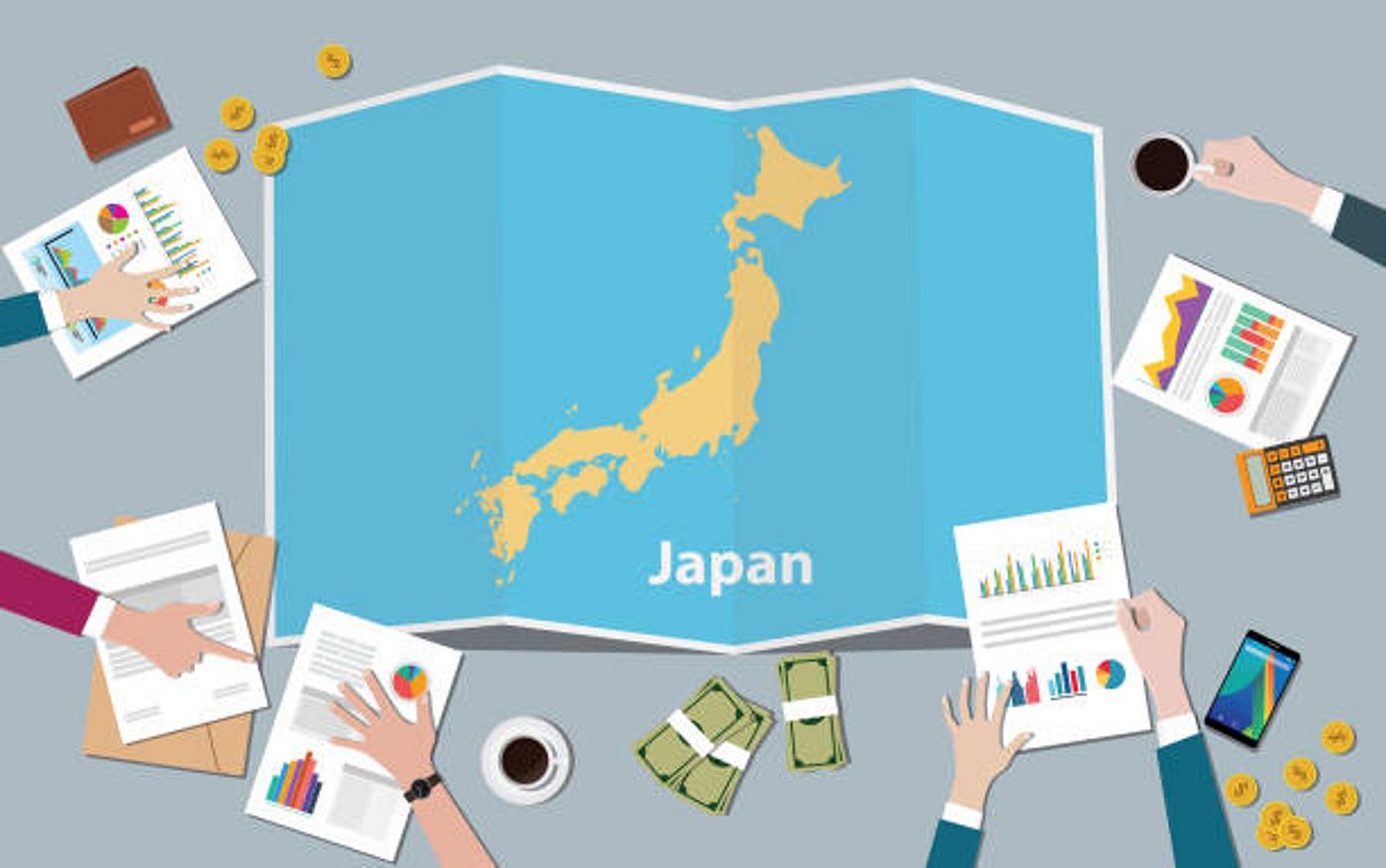
Photo by IR_Stone iStock
For many businesses, growth forecasting feels less like science and more like educated guesswork.
One quarter, projections look strong. The next, market volatility, supply chain disruptions, labor shortages, or shifting consumer behavior suddenly derail expectations. Leadership teams are then forced into reactive decision-making — cutting budgets, delaying investments, or revising strategy midstream.
Yet despite operating in the same uncertain economy, many larger companies consistently produce more accurate growth forecasts than their smaller counterparts.
Why?
The answer is not simply that large enterprises have bigger finance departments or access to more sophisticated software. The real difference lies in how they approach forecasting strategically, operationally, and culturally.
Large organizations understand something many businesses overlook:
Forecasting is not merely a finance exercise. It is a decision-making framework that drives long-term growth.
And in today’s increasingly complex business environment, organizations that master forecasting gain a significant competitive advantage.
The Forecasting Problem Most Companies Face
Many companies still rely on forecasting models built for a much simpler economy.
Static spreadsheets. Annual budgets. Historical trend assumptions. Limited cross-department collaboration.
The challenge is that modern markets no longer behave predictably enough for outdated forecasting methods to remain effective.
Economic conditions shift rapidly. Interest rates fluctuate. Consumer demand changes overnight. Global events impact supply chains instantly. Regulatory environments evolve continuously.
In this environment, relying solely on historical financial data creates dangerous blind spots.
This is where larger companies separate themselves.
Instead of asking:
“What happened last year?”
They ask:
“What signals are shaping the future right now?”
That shift in thinking fundamentally changes the accuracy of their projections.
Accurate Forecasting Begins With Better Data Integration
One of the greatest advantages larger organizations possess is integrated data visibility.
High-performing enterprises consolidate information across departments — including sales, operations, procurement, HR, treasury, and customer analytics — to create a more dynamic forecasting environment.
Rather than viewing forecasting as a quarterly accounting function, they treat it as a real-time operational intelligence system.
For example, a sophisticated forecast may incorporate:
- Pipeline conversion trends from sales teams
- Labor cost projections from HR
- Supply chain lead-time risks from procurement
- Customer retention metrics from CRM platforms
- Macroeconomic indicators impacting demand
When these data points are connected, forecasts become significantly more reliable.
Many smaller businesses object to this approach because they believe advanced forecasting requires enormous technology investments.
It does not.
While enterprise-level systems certainly help, the true differentiator is process discipline — not software alone.
Even mid-sized companies can dramatically improve forecasting accuracy by integrating core operational metrics into financial planning conversations.
The organizations that forecast best are simply the organizations that eliminate information silos fastest.
Larger Companies Forecast Multiple Scenarios — Not One Outcome
Another critical distinction is that large companies rarely rely on a single forecast.
Instead, they build multiple scenario models simultaneously.
This approach recognizes an uncomfortable truth many executives resist:
The future is uncertain, and precision alone is not enough.
Sophisticated finance leaders understand forecasting is not about predicting one exact outcome. It is about preparing leadership for multiple plausible outcomes.
This is why enterprise organizations frequently develop:
- Base-case scenarios
- Best-case growth projections
- Downside risk scenarios
- Stress-test models
- Liquidity preservation plans
This scenario-based approach allows leadership teams to make faster decisions when conditions change.
For instance, if revenue softens unexpectedly, the organization already understands:
- Which expenses can be reduced
- Which investments should continue
- How cash flow will be affected
- What operational adjustments are necessary
Without scenario planning, companies are forced to react emotionally under pressure.
With scenario planning, they respond strategically.
That distinction often determines whether businesses survive volatility — or capitalize on it.
Forecast Accuracy Depends on Organizational Alignment
Here is another often-overlooked reality:
Even the most advanced forecasting model fails when departments operate independently.
Many forecasting inaccuracies originate from internal misalignment rather than external economic conditions.
Sales teams may produce overly optimistic projections. Operations teams may underestimate production constraints. Finance departments may lack visibility into customer behavior changes.
Larger companies mitigate this risk by making forecasting collaborative.
Finance leaders work closely with operational stakeholders to validate assumptions continuously.
This creates a more balanced forecast rooted in operational reality — not isolated departmental expectations.
Importantly, leading organizations also establish accountability around forecast quality.
Forecasts are not treated as “best guesses.”
They are measured, reviewed, and refined consistently.
This culture of accountability strengthens forecasting precision over time because teams learn from prior variances instead of repeating them.
The Role of Technology in Forecasting Accuracy
Technology absolutely matters — but perhaps not in the way most people assume.
Many organizations mistakenly believe forecasting accuracy comes from purchasing expensive AI platforms or implementing highly complex analytics tools.
In reality, technology only enhances the quality of existing financial processes.
If assumptions are flawed, data is incomplete, or departments are disconnected, even advanced software produces unreliable outputs.
However, when organizations combine strong processes with modern forecasting technology, the results can be transformative.
Leading enterprises increasingly leverage:
- Predictive analytics
- AI-driven demand modeling
- Real-time dashboard reporting
- Automated variance analysis
- Cloud-based FP&A platforms
These tools allow finance teams to identify trends faster and respond proactively.
Perhaps more importantly, automation reduces the time finance departments spend gathering data manually — allowing more time for strategic analysis.
And that is where real forecasting value is created.
Not in producing reports. But in interpreting what those reports mean for future growth.
Why Forecasting Accuracy Is Becoming a Competitive Advantage
Historically, forecasting was viewed primarily as a budgeting exercise.
Today, it has become a strategic weapon.
Organizations with stronger forecasting capabilities can:
- Allocate capital more effectively
- Respond faster to market disruptions
- Improve investor confidence
- Optimize staffing decisions
- Protect liquidity during uncertainty
- Pursue growth opportunities more aggressively
In contrast, organizations with weak forecasting processes often remain trapped in reactive management cycles.
They overhire during temporary spikes. Underspend during growth opportunities. Delay strategic investments. Mismanage cash flow. And ultimately lose operational agility.
This is one reason larger companies often emerge from economic uncertainty stronger than competitors.
Their forecasting systems allow them to make informed decisions while others are still trying to understand what happened.
A Common Misconception About Forecasting
Many executives still believe forecasting is primarily about achieving exact numerical accuracy.
It is not.
The real objective of forecasting is improving strategic preparedness.
No organization can predict every disruption perfectly.
However, companies can absolutely improve:
- Visibility
- Responsiveness
- Decision-making speed
- Risk awareness
- Financial resilience
The organizations that thrive are not necessarily those with perfect forecasts.
They are the organizations best prepared to adapt when forecasts change.
That mindset shift is critical.
Forecasting should not create false certainty.
It should create organizational readiness.
How Mid-Sized Businesses Can Apply Enterprise Forecasting Principles
The good news is businesses do not need Fortune 500 resources to strengthen forecasting capabilities.
Several enterprise forecasting practices can be implemented immediately:
Move Beyond Annual Forecasting
Static annual budgets become outdated quickly. Implement rolling forecasts updated monthly or quarterly.
Integrate Operational Data
Include non-financial indicators such as customer churn, pipeline activity, labor metrics, and supply chain performance.
Build Scenario Models
Prepare for multiple economic outcomes instead of relying on a single projection.
Increase Cross-Department Collaboration
Finance should work closely with operations, sales, HR, and procurement teams.
Focus on Forecast Agility
The goal is not perfection. The goal is faster adaptation.
Organizations that embrace these practices often discover forecasting becomes less stressful and significantly more strategic.
The companies producing the most accurate growth forecasts are not necessarily those with the biggest budgets.
They are the organizations that understand forecasting is fundamentally about visibility, adaptability, and strategic alignment.
As economic uncertainty continues to reshape industries, forecasting accuracy will increasingly separate proactive businesses from reactive ones.
The future will not reward organizations that simply analyze historical performance.
It will reward organizations that can anticipate change, evaluate risk intelligently, and adapt with confidence.
And that begins with building smarter forecasting systems today.
Sources
- Deloitte Insights — “The CFO’s Guide to Scenario Planning”
- Gartner Finance Research — Forecasting and FP&A Trends
- McKinsey & Company — Financial Planning and Analytics Research
- PwC Global CFO Survey
- Harvard Business Review — Data-Driven Forecasting and Strategic Planning
- Association for Financial Professionals (AFP) Research Reports
If you find this article helpful and have further questions regarding this subject or other accounting issues, reach out to us at the link below this paragraph. Together, we can navigate these challenges and help your firm thrive in an increasingly complex financial world.
Connect with ROI Accounting Consultants to learn more.
Please remember to clap (feel free to clap up to 50 times per person), highlight key points in the article that you think other readers will find interesting, leave a comment, and follow me. If you enjoy my articles on Medium and want to stay updated on upcoming exciting content, be sure to subscribe and receive an email whenever I publish a new post. Simply click the email icon to join! Your support is greatly appreciated, and these actions help the algorithms, making it easier for more readers to discover my articles. Thank you!
Click on the link below to read additional articles
메타데이터
- post_id
- e91653bccf02
- slug
- how-larger-companies-build-more-accurate-growth-forecasts-e91653bccf02
- url
- https://medium.com/@toverstreet_54150/how-larger-companies-build-more-accurate-growth-forecasts-e91653bccf02
- canonical_url
- https://medium.com/@toverstreet_54150/how-larger-companies-build-more-accurate-growth-forecasts-e91653bccf02
- author_url
- https://medium.com/@toverstreet_54150
- status
- ok
- fetched_at
- 2026-06-09 15:37:30