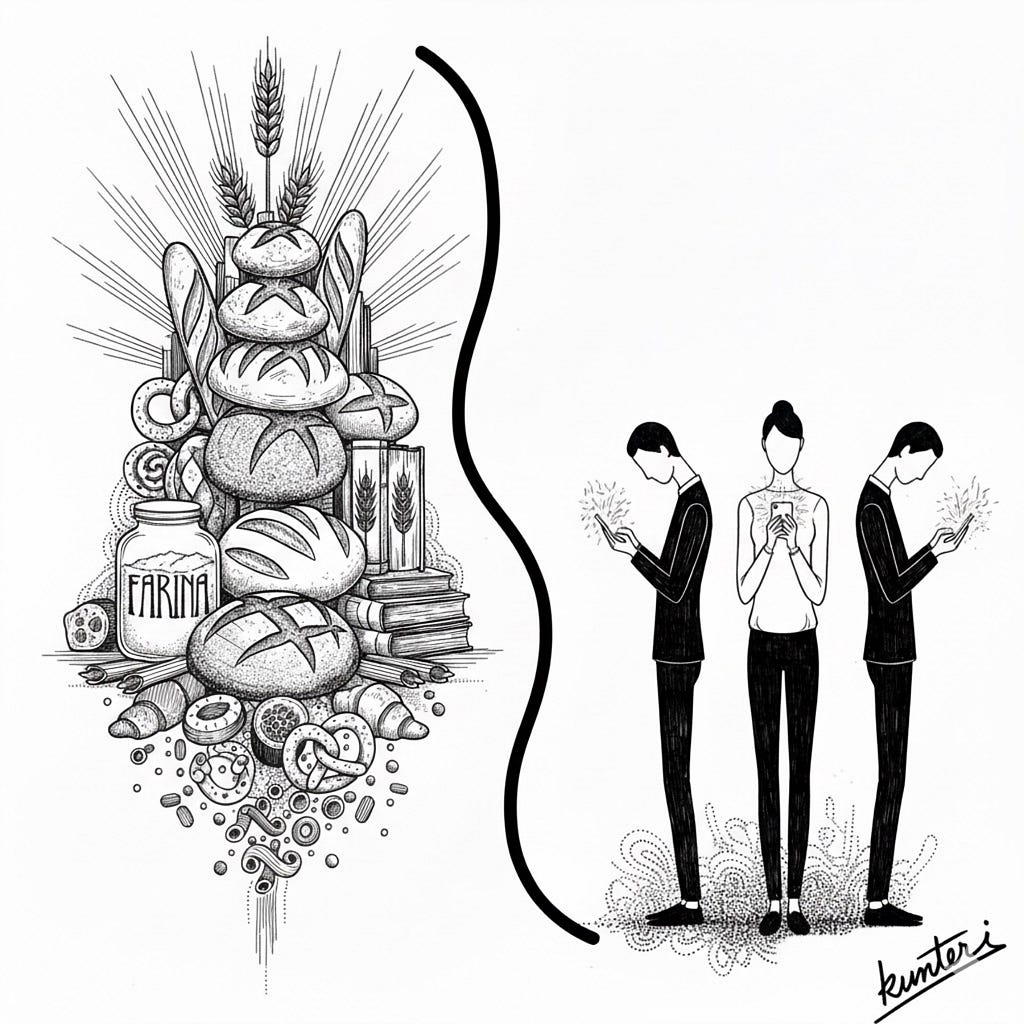
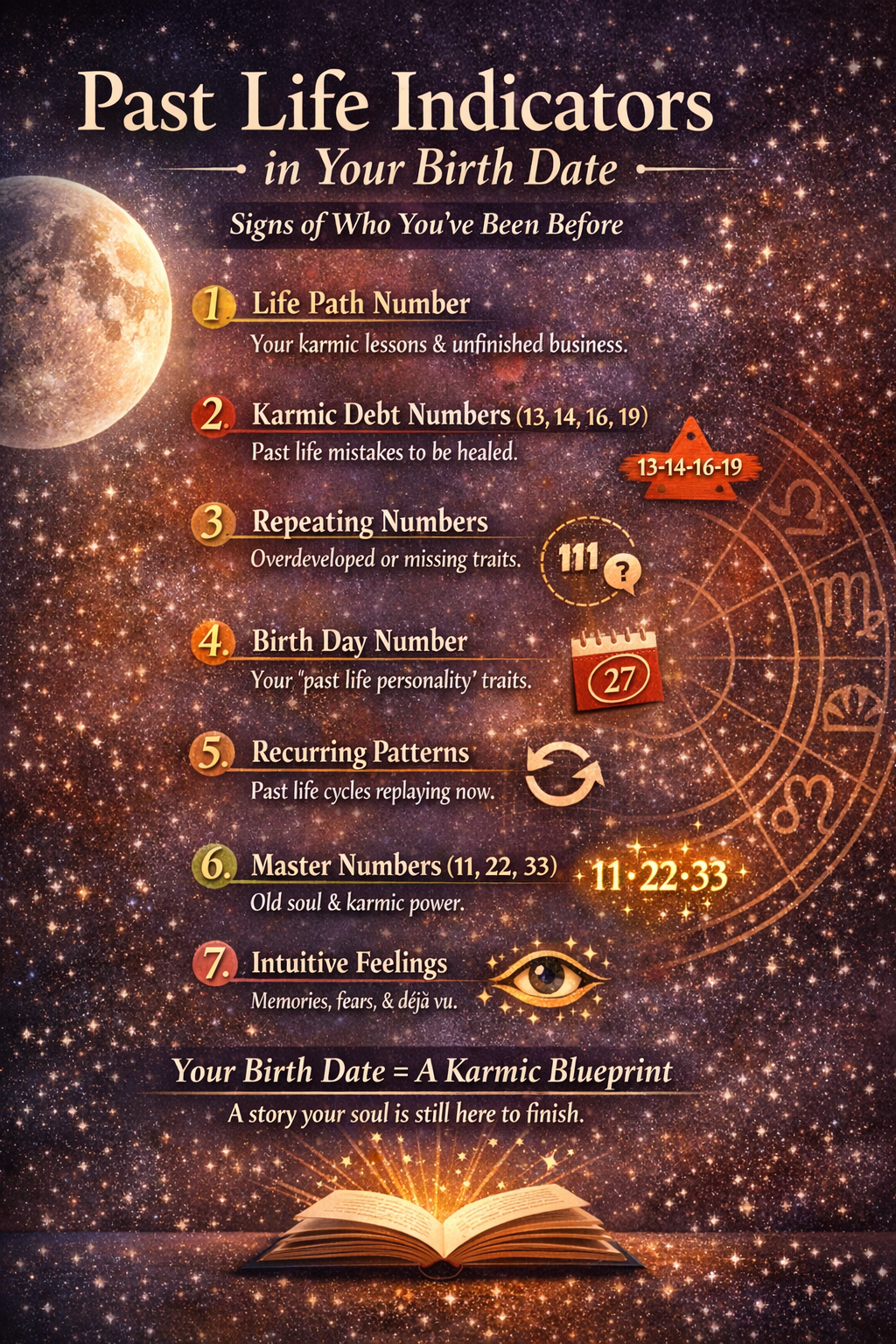
The Stars Don’t Care
What Astrology’s Survival Reveals About Modern Life
The Stars Don’t Care
What Astrology’s Survival Reveals About Modern Life

…
“Today, unexpected news may shift your perspective. Trust your instincts when making important decisions. A friend’s advice proves valuable. Your patience will be tested, but the outcome benefits you in ways you can’t yet see.” This is not wisdom. It is not prophecy. It is the daily horoscope for Libra, published this morning in a major metropolitan newspaper alongside stock quotes and weather forecasts, presented without irony as information worth printing. Somewhere, a woman in a coffee shop reads it on her phone before a job interview and feels momentarily steadied. Somewhere, a man checks his horoscope after an argument with his wife and finds in its bland reassurances a permission structure for whatever he was going to do anyway. And somewhere, an editor who knows better — who understands that the stars exert no influence on human affairs, that the zodiac is a fiction, that astrology fails every controlled test ever designed — greenlights another month of this content because it is cheap to produce, habitual to consume, and somehow, inexplicably, still matters to millions of people in the year 2025.
This is the paradox at the heart of modern astrology: it persists not because it predicts anything real, but because it satisfies psychological needs, narrative hunger, and cultural anxieties that have little to do with celestial mechanics. Its popularity reveals far more about contemporary life — about loneliness, uncertainty, identity formation, and the hunger for meaning in a disenchanted world — than it does about the stars. To understand why horoscopes still appear in newspapers that pride themselves on fact-checking, why astrology apps generate billions in revenue despite being demonstrably false, and why otherwise rational people consult the zodiac before making major life decisions, is to understand something fundamental about human cognition, social ritual, and the peculiar vulnerabilities of modern existence. The stars don’t care about us. But we desperately need to care about something, and in the absence of traditional meaning-making structures, we have turned to a cosmology that flatters our desire for significance while demanding nothing of us except attention.
The scientific consensus on astrology is unambiguous and has been for decades. Astrology has no predictive value, no empirical mechanism, fails controlled tests with statistical regularity, and is classified as pseudoscience by every major scientific organization. The most rigorous test, conducted by physicist Shawn Carlson in 1985 and published in Nature, involved both scientists and astrologers in the design process. Professional astrologers with an average of ten years’ experience were asked to match natal charts to detailed personality descriptions. They performed no better than random chance. In 2024, researchers led by Spencer Greenberg enlisted one hundred and fifty-two experienced astrologers and asked them to identify correct natal charts from among five options, given extensive life and personality information. The astrologers averaged 2.49 correct matches out of twelve — essentially identical to the 2.4 expected by random guessing. No astrologer managed more than five correct matches, even though many believed they had performed significantly better. A meta-analysis pooling forty studies with seven hundred astrologers and over one thousand birth charts found that agreement among astrologers’ predictions measured at a dismal 0.1 correlation coefficient — meaning astrologers don’t even agree with each other about what the charts supposedly reveal.
Large-scale population studies offer similarly deflating results. Sociologist David Voas examined census data for more than twenty million individuals in England and Wales to determine whether star signs corresponded to marriage patterns. No effect was detected. A 2011 study tracked sets of people born within five minutes of each other to see if astrological “time twins” shared any discernible personality traits or life outcomes. Again, nothing. A comprehensive Danish-German study analyzing over fifteen thousand individuals compared birth dates and astrological positions to results from intelligence and personality tests. The conclusion was definitive: there was no correlation between date of birth and individual differences in personality or intelligence. Astrology’s defenders, when confronted with this mountain of negative evidence, typically retreat to vague claims about complexity, intuition, and the limitations of scientific methods — arguments that conveniently render their beliefs unfalsifiable and therefore definitionally unscientific.

The absence of any plausible mechanism for astrological influence completes the case. Planets and stars, however beautiful and distant, exert no measurable force on human biology or consciousness beyond the negligible gravitational effects that dissipate with distance. The gravitational pull of the obstetrician delivering a baby exceeds that of Mars. The electromagnetic radiation from a nearby lamp dwarfs anything received from Jupiter. The zodiac itself — that band of constellations supposedly aligned with our fates — has shifted substantially since astrology was codified in Babylonian times, due to the precession of the equinoxes. Western astrology still uses constellation positions from two thousand years ago, meaning that when you’re told you’re a Leo, the sun was actually passing through Cancer at your birth. This is not a minor technical problem; it is a fundamental disconnect between the system’s claims and physical reality.

So, astrology doesn’t work, has never worked, and cannot work. So why does it thrive?
The answer begins with a phenomenon that psychologist Bertram Forer discovered in 1948, now known as the Forer effect or Barnum effect, after P.T. Barnum’s famous assertion that “there’s a sucker born every minute.” Forer gave his students a personality test and then provided them with supposedly individualized analyses. The students rated the accuracy of their assessments at 4.3 out of 5. What Forer didn’t tell them was that every student received the exact same description: “You have a great need for other people to like and admire you. You have a tendency to be critical of yourself. While you have some personality weaknesses, you are generally able to compensate for them. At times you are extroverted, affable, sociable, while at other times you are introverted, wary, reserved.” This description could apply to virtually anyone — it contains no specific information, balances opposing traits, and leans heavily toward positive or neutral statements. Yet people believe it describes them uniquely.
When Michel Gauquelin replicated this experiment in 1979 with astrological readings, ninety percent of participants reported that the horoscope matched their personality remarkably well. The reading was, in fact, identical for everyone, based on the birth chart of a serial killer. This is the core of how horoscopes function: they are exercises in universalization disguised as personalization. The statements they offer are sufficiently vague, contradictory, and generally applicable that almost anyone can find elements that resonate. “You tend to be hard on yourself” applies to most people. “Unexpected opportunities may arise” is true simply because life is unpredictable. “You value deep connections but also need independence” describes the fundamental tension of human social existence. The trick is in the framing — the horoscope is “for you,” based on “your” sign, delivered with the implicit authority of ancient wisdom and celestial knowledge. The personalization is pure illusion, but it is a powerful illusion because we desperately want to believe we are being seen.
The Barnum effect is strengthened by several cognitive biases that astrology exploits with inadvertent precision. Confirmation bias leads us to remember the hits and forget the misses: when a horoscope mentions challenges at work during a week when we happen to have a difficult meeting, we register it as accurate; when it predicts romantic opportunities during a lonely stretch, we conveniently forget it. We actively seek out evidence that confirms the prediction and discard or rationalize evidence that contradicts it. This is not conscious deception but the normal operation of motivated reasoning. We project our own concerns onto ambiguous statements, finding our current preoccupations reflected in generic language about change, growth, and relationships. A horoscope that mentions “communication issues” will resonate with someone worried about their marriage, their boss, or their estranged sibling — not because the horoscope identified the specific problem, but because communication issues are nearly universal and the reader does the work of mapping the vague language onto their particular situation.
The positivity bias — our tendency to accept favorable descriptions more readily than negative ones — ensures that horoscopes rarely predict disaster. They hint at challenges, certainly, but frame them as opportunities for growth. They warn but ultimately reassure. This is not accidental. Research consistently shows that people are far more likely to believe statements about themselves when those statements are flattering or at least neutral. A horoscope that told Capricorns they were boring, rigid, and emotionally stunted would be rejected immediately, no matter how “accurate” it might be according to astrological theory. Instead, Capricorns are described as disciplined, ambitious, and responsible — the same traits, reframed as virtues. Everyone gets to be the hero of their own cosmic story, with their flaws recast as complexities and their mundane behaviors elevated to personality traits written in the stars.

The need for uncertainty reduction, identified by communication theorists, provides another piece of the puzzle. Human beings are notoriously uncomfortable with ambiguity. We evolved in environments where quick pattern recognition often meant survival, and we retain a cognitive apparatus biased toward finding meaning even in randomness. When facing an unclear situation — a new job, a fragile relationship, a health scare, an uncertain economy — people turn to anything that promises to reduce ambiguity. Horoscopes provide a narrative framework, however specious, for organizing the chaos of existence. They say: this is what’s happening, and here’s why, and here’s what might come next. The fact that these explanations are false matters less than the psychological comfort they provide. A bad map is better than no map, our ancient brains insist, even when the territory keeps contradicting the directions.
This hunger for pattern and meaning intersects with what researchers call the illusion of control. Studies show that people are more likely to consult astrology during periods of stress, uncertainty, or lack of control over their circumstances. A landmark 1982 study by psychologist Graham Tyson found that belief in astrology spiked during times of personal or societal crisis. The COVID-19 pandemic vindicated this finding spectacularly: astrology apps saw extraordinary growth in downloads and engagement during lockdowns, with many companies reporting surges in users seeking celestial guidance as the world fell apart. When your material circumstances are chaotic and your future genuinely unknowable, the promise that the universe has a plan — even a plan you access through an app for $4.99 a month — is profoundly appealing. Astrology offers the reassuring fiction that randomness is actually order we haven’t decoded yet, that suffering has cosmic meaning, that chaos is choreographed. This is, of course, exactly backwards: the universe is indifferent, suffering is usually meaningless, and chaos is just chaos. But these truths are unbearable.
The contemporary resurgence of astrology, particularly among young adults, cannot be understood outside the context of modern loneliness and the collapse of traditional community structures. Religious affiliation in the United States has declined sharply over the past two decades, with the “nones” — people claiming no religious affiliation — now representing roughly a quarter of the population. This disaffiliation often means the loss of ready-made community, shared ritual, moral frameworks, and existential comfort. Nature, as they say, abhors a vacuum, and so does the human psyche. Into the space left by declining religion has rushed a buffet of substitute spiritualities: mindfulness, crystals, wellness culture, and, prominently, astrology. Unlike traditional religion, modern astrology demands no orthodoxy, no sacrifice, no collective worship, no moral accountability. It is spirituality drained of the challenging bits — all meaning and identity and cosmic connection, none of the discipline or commitment or judgment. It is religion designed for the swipe-right generation: personalized, on-demand, affirming, and utterly consequence-free.

Astrology also functions as a form of identity signaling and social bonding, particularly among millennials and Generation Z. To identify as a Scorpio or describe someone as “such a Taurus” is to participate in a shared vocabulary, a cultural shorthand that facilitates connection in an atomized world. It provides conversation starters, in-group markers, and a framework for discussing personality without the clinical coldness of psychology or the moral freight of traditional character assessment. When someone says “I’m an Aries with a Libra rising,” they are not making an empirical claim about celestial influence; they are performing an identity and inviting recognition. This is social grooming disguised as cosmology, bonding through shared symbolic language. The popularity of astrology memes on social media — “Capricorns refusing to cry at funerals,” “Geminis in group chats,” “Virgos organizing their pantries” — demonstrates that astrology’s primary function is no longer (if it ever was) divination but rather community formation through stereotyping and in-jokes. It is a form of light tribalism that harms no one and helps people feel less alone.
The gender dynamics of astrology are impossible to ignore. Nearly every contemporary survey shows that women are far more likely than men to read horoscopes, believe in astrology, and engage with zodiac content. While nearly all women’s magazines feature horoscopes, virtually no men’s magazines do. When Esquire UK attempted “intellectual” horoscopes for male readers in 1991, the column was quietly killed due to reader indifference. This disparity is not evidence of some innate female credulity, as sexist critics have suggested, but rather a reflection of differing socialization around emotions, relationships, and the acceptable sources of guidance and self-knowledge. Women are socialized to attend to emotional dynamics, to seek frameworks for understanding interpersonal relationships, and to turn to peer-validated sources of wisdom rather than purely technical or scientific expertise. Astrology, with its emphasis on feelings, compatibility, and self-understanding, fits this framework perfectly. It offers a language for discussing emotional life that doesn’t pathologize or medicalize, that feels intimate rather than clinical, and that is collectively validated through women’s culture. Men, conversely, are often socialized to reject such introspection as weakness, to prize certainty over ambiguity, and to resist anything that smacks of the irrational or feminine — which explains both their lower engagement with astrology and their disproportionate hostility toward it.
The question remains: why do mainstream news organizations continue to publish horoscopes? The answer is not belief but business. Horoscope columns have been a staple of newspapers since 1930, when British astrologer R.H. Naylor’s predictions for Princess Margaret’s life became a sensation. By the 1960s, horoscopes were standard in virtually every newspaper and women’s magazine. The format — twelve brief paragraphs, one per sun sign — was cheap to produce, required no reporting, and took up minimal space. More importantly, horoscopes created habitual readers. People would buy a paper partly to check their horoscope, the same way they’d check the comics or the crossword. This habit-forming content was valuable even if no one truly believed it. Today, despite falling print circulation and rising emphasis on journalistic credibility, seventy-one percent of American newspapers still run astrology columns. Some publications, like The Guardian and The Telegraph, dropped them in the 2000s and 2010s, presumably to protect their reputations as serious news sources. But many others — the Sun, the Daily Mail, the Mirror, regional papers, and countless magazines — keep them for the same reason they always did: engagement.

Horoscopes are digital catnip, perfect for the attention economy. They are shareable, personal-feeling, algorithmically friendly, and generate consistent traffic at almost zero cost. A newspaper can license a syndicated horoscope column for a fraction of what it costs to employ a beat reporter, and while the horoscope will never win a journalism prize, it will reliably attract a subset of readers who might not otherwise visit the site. In an industry desperate to monetize every click, horoscopes function as what economists call “loss leaders” or “complementary goods” — low-value content that draws in readers who might then consume high-value journalism. The irony is thick: newspapers that consider themselves guardians of truth and fact continue to publish content they know is false, justified by the same economic pressures that drive clickbait and sensationalism. The cognitive dissonance is resolved through compartmentalization — horoscopes are filed under “lifestyle” or “entertainment,” physically and conceptually separated from the news sections, allowing editors to tell themselves this is harmless fun rather than institutional hypocrisy. But this compartmentalization is a fiction. When a publication lends its credibility to astrology, it softens readers’ critical faculties and normalizes pseudoscientific thinking.
The deeper issue is what horoscopes do to thinking patterns over time. Regular consumption of astrological content subtly reinforces an external locus of control — the belief that outcomes are determined by outside forces rather than personal agency. When you repeatedly encounter messages suggesting that your day will be influenced by Mercury’s position or Saturn’s transit, you are being trained to attribute causation externally. This doesn’t necessarily produce fatalism in the classical sense, but it does shift the perceived center of gravity for explanation and decision-making. If the stars are partly responsible for your moods, your luck, or your relationship dynamics, then you bear correspondingly less responsibility, for better or worse. The language of astrology is the language of inevitability and cosmic design: things happen because of planetary movements, not because of choices, consequences, or chance. This is a narrative style that discouraged agency and critical thinking while encouraging passivity and credulity.
Horoscopes also function as what psychologists call “permission structures” — socially acceptable rationales for doing what you were inclined to do anyway. The horoscope that tells you to “take a risk today” or “trust your intuition” isn’t actually guiding your behavior; it’s providing external validation for an impulse you already had. This is why horoscope readers so often feel that the predictions are eerily accurate: they are reading their own desires back to themselves in externalized form, mistaking self-recognition for prophecy. The horoscope doesn’t need to be right; it only needs to be sufficiently ambiguous that you can bend it toward whatever outcome you’re hoping for. This creates a feedback loop where the act of consulting the horoscope becomes its own self-fulfilling prophecy: you read that good things are coming, you feel more confident, you act more boldly, and then attribute any positive outcome to the horoscope rather than your altered behavior. The stars get credit for your own courage.
The contemporary astrology industry — particularly the app ecosystem — represents the full commercialization of this psychological dynamic. The global astrology app market was valued at approximately three billion dollars in 2024 and is projected to reach nine billion by 2030, growing at a compound annual rate of twenty percent. Apps like Co-Star, which has raised millions in venture capital funding and claimed over twenty million downloads, combine NASA astronomical data with AI-generated interpretations to create hyper-personalized horoscopes delivered in real-time. The Pattern, another popular app, promises to reveal your “true self” through algorithmic analysis of your birth chart. These are not fringe products consumed by the credulous elderly; they are sleek, well-designed, venture-backed startups targeting tech-savvy millennials and Gen Z users. The branding is minimalist, the user experience intuitive, the tone wry and self-aware. The apps know their audience doesn’t “really” believe in astrology — or at least, doesn’t want to be seen as believing — so they package cosmic determinism in the language of self-care, therapy, and personal growth. It’s astrology for people too sophisticated to admit they’re consulting astrology.
This sophisticated irony is itself a defense mechanism. By approaching horoscopes with a knowing smirk — “I don’t actually believe this, but it’s fun” — users protect themselves from the accusation of credulity while still deriving the psychological benefits. This is having your cake and eating it too: the meaning without the embarrassment, the ritual without the commitment, the community without the vulnerability. But this ironic distance is thinner than participants might like to believe. Studies consistently show that even people who claim not to believe in astrology are influenced by it. They check their horoscopes more frequently during stressful periods. They make financial decisions based on astrological advice. They use zodiac compatibility as a factor — even if not the only factor — in evaluating romantic partners. One survey found that one in five American adults have made financial decisions based on horoscopes. The ironic frame allows people to engage in magical thinking while maintaining a self-image as rational and skeptical. It is a form of cognitive quarantine: the irrational belief is contained within quotation marks, rendered harmless through performative disbelief, yet active nonetheless.
What all of this reveals is not that people are stupid or gullible, but that they are human. We are meaning-making creatures living in a world increasingly stripped of ready-made meaning. We are social animals navigating unprecedented levels of isolation and atomization. We are pattern-seeking organisms confronting a universe that is fundamentally indifferent to our needs for coherence, justice, or significance. Astrology persists not because it is true but because it is functional. It provides psychological comfort, social currency, narrative structure, and the illusion of cosmic care at a price point — both financial and cognitive — that many people find acceptable. The stars don’t care about us, but horoscopes do, or at least pretend to, and in an age of algorithmic alienation and existential drift, that pretense is enough.

The survival and indeed flourishing of astrology in the twenty-first century should alarm anyone who cares about information hygiene, critical thinking, and the health of democratic discourse. We live in an era of widespread scientific illiteracy, rampant conspiracy thinking, and collapsing trust in institutions and expertise. Against this backdrop, the normalization of pseudoscience — even supposedly harmless pseudoscience like astrology — is not benign. It contributes to a broader cultural climate where empirical evidence is optional, where subjective feelings trump objective facts, where the distinction between true and false erodes into the distinction between “my truth” and “your truth.” When major newspapers publish horoscopes without disclaimers, they are implicitly telling readers that distinguishing truth from fiction is less important than engagement metrics. When astrology apps raise millions in venture capital, they are validating a business model predicated on monetizing irrationality. When celebrities and influencers casually cite their rising signs as explanations for behavior, they are modeling a style of reasoning that is antithetical to the Enlightenment values that underpin science, democracy, and progress.
The deeper truth that astrology’s persistence reveals is this: people don’t believe in the stars. They believe in stories about themselves. Astrology survives because it is the cheapest, easiest, most widely available narrative technology for constructing identity, explaining experience, and imagining connection in a fragmented world. It survives because the alternatives — therapy, community, religion, philosophy, genuine self-knowledge — are harder, costlier, more demanding. It survives because late capitalism has learned to monetize every human vulnerability, and our hunger for meaning is perhaps the most profitable vulnerability of all. It survives because we would rather consult a chart than confront the terrifying freedom of a universe that offers us no script, no destiny, no cosmic justification. The stars are silent. The silence is unbearable. So we fill it with stories we know aren’t true but can’t bring ourselves to abandon.
What astrology’s endurance finally demonstrates is the insufficiency of facts to change minds or shape culture. Decades of scientific debunking have done nothing to diminish astrology’s popularity; if anything, belief in astrology is rising, not falling, especially among young people who have had more education than any previous generation. This is not a failure of science but a testament to the limits of empiricism in addressing existential needs. You cannot fact-check loneliness. You cannot peer-review despair. You cannot run a controlled trial on the human need to feel that someone, somewhere — even if it’s only a computer algorithm pretending to read the stars — is paying attention. Astrology fills needs that science was never designed to address, and until we develop secular institutions and cultural practices that can provide meaning, community, and cosmic comfort without recourse to the supernatural, people will continue to scroll through horoscopes on their lunch breaks, seeking answers in patterns that aren’t there. The tragedy is not that people consult the stars; it’s that we’ve built a world where consulting the stars feels necessary.
Appendix: Data and Evidence
Scientific Studies Debunking Astrology
— tabular data to be inserted
Barnum Effect Research Findings
— tabular data to be inserted
Factors Enhancing Barnum Effect:
- Statements labeled “for you” (personalization)
- Statements primarily positive or neutral (+35% acceptance)
- High-status source presenting information (+40% acceptance)
- Recipient has authoritarian or neurotic personality traits
- Presence of phrases like “at times” (allows contradiction)
Astrology Industry Market Data
— tabular data to be inserted
Public Belief in Astrology
— tabular data to be inserted
Newspaper Horoscope Publishing
— tabular data to be inserted
Demographics and Usage Patterns
— tabular data to be inserted
Psychological Mechanisms
Cognitive Biases Exploited by Astrology:
- Barnum Effect: Acceptance of generic statements as personally meaningful
- Confirmation Bias: Remembering hits, forgetting misses
- Projection: Mapping personal concerns onto vague statements
- Positivity Bias (Pollyanna Principle): Preferring positive self-descriptions
- External Locus of Control: Attributing outcomes to external forces
- Illusion of Control: Seeking patterns to reduce uncertainty
- Subjective Validation: Accepting information that feels personally relevant
Characteristics of Effective Barnum Statements:
- Universally applicable
- Balance contradictory traits
- Include hedging phrases (“at times,” “sometimes”)
- Predominantly positive or neutral
- Reference common human experiences
- Sufficiently vague to permit projection
- Imply hidden depth or unused potential
Cost-Benefit Analysis of Horoscope Publishing
Why Newspapers Continue Publishing Horoscopes:
— tabular data to be inserted
Traffic and Engagement:
- Horoscope sections generate consistent, predictable traffic
- Shareable on social media (personal relevance)
- Algorithmic favorability (short, personal, habitual)
- Cross-sells to other lifestyle content
- No fact-checking or legal review required
- Evergreen content (recyclable, no dating)
This data compilation represents publicly available research and market analysis. The consistency across multiple independent studies over decades confirms the scientific consensus: astrology has no predictive validity, exploits known cognitive biases, and persists due to psychological and commercial factors rather than accuracy.
메타데이터
- post_id
- e92fe9604886
- slug
- the-stars-dont-care-e92fe9604886
- url
- https://medium.com/@ilalan/the-stars-dont-care-e92fe9604886
- canonical_url
- https://medium.com/@ilalan/the-stars-dont-care-e92fe9604886
- author_url
- https://medium.com/@ilalan
- status
- ok
- fetched_at
- 2026-06-11 11:25:07