How to Effectively Deal with Self-Victimizers (Part II)
A method to help you and the people around you who always play the victim role
RELATIONSHIPS
How to Effectively Deal with Self-Victimizers (Part II)
A method to help you and the people around you who always play the victim role
Photo by Tanusree Mitra on Unsplash
Not a member? No problem — you can read the full article here.
This is a continuation of my first article on self-victimization, which I linked at the end of this story.
You have the power to choose your friends and partners, and you can assert your control by limiting your interaction with them when they abuse your empathy. However, with family, it’s a different dynamic that requires a different approach.
One of the most difficult situations is dealing with a parent or a partner who constantly complains.
You feel guilty that you feel good and your mother, for example, is suffering, even though you have given her the solution to the problem she is complaining about countless times.
In fact,
this is the unconscious mechanism of emotional blackmail that the victim applies to the others: it makes them feel guilty that they don’t suffer as much for her suffering.
At a point in time, you realize you can’t help them more than you have already tried, and thus, irritation and conflict appear: you can’t bear to listen to the same useless pity complaint forever, and they reproach you don’t understand them.
It’s an impossible situation.
Break the vicious circle for a harmonious relationship
You can apply some steps to avoid this vicious circle and keep a decent relationship.
It’s a method I decided to follow with my ex-mother-in-law, who fits perfectly into this pattern of the eternal victim. She is not a bad person but a scaffolding of hypocrisies, victimizations, and errors of logic: everyone around her is evil and/or ignorant; no one has suffered as much as she has; she has some eternal diseases to which she is very attached and which have been “incurable” for years, even if she diligently consults with all the doctors in her town.
When I looked for logic, justice, and common sense in my interaction with her, I did not understand that harmony is more important than justice. I didn’t understand that I was not dealing with a rational person but with an emotional one who only wanted to complain.
I became exasperated when I tried to give her solutions to her problems. The discussions inevitably ended abruptly, as I lost my patience and she felt misunderstood.
Photo by Ýlona María Rybka on Unsplash
I decided that I wanted peace and harmony, and not justice
When I decided that I wanted harmony in the family and not justice, I started to listen to her without giving her solutions.
This can be painful as it means accepting that the other person will suffer forever, even if they do it because of their own imagination, ridiculous expectations, or lack of action. However, you should stop feeling guilty about not suffering with them.
I started to agree with her in everything she said because I no longer wanted to solve her problems.
I understood that her suffering helped her increase her sense of importance as compensation for the injustices and failures she experienced in her life.
I genuinely sympathize with her, even if not for the reasons she stated, but because she suffers for nothing. And sometimes I even slightly exaggerate the sympathy: “damn, Mom, I don’t even know how you can endure so much.”
This phrase actually has another purpose. Sometimes, when the “victim” receives validation for their suffering and even praise for their ability to endure, automatically and unconsciously, they begin to find hope and even give themselves answers: “eh, that it’s not really that bad, that’s life” —but this is valid only when she gets to affirm it herself.
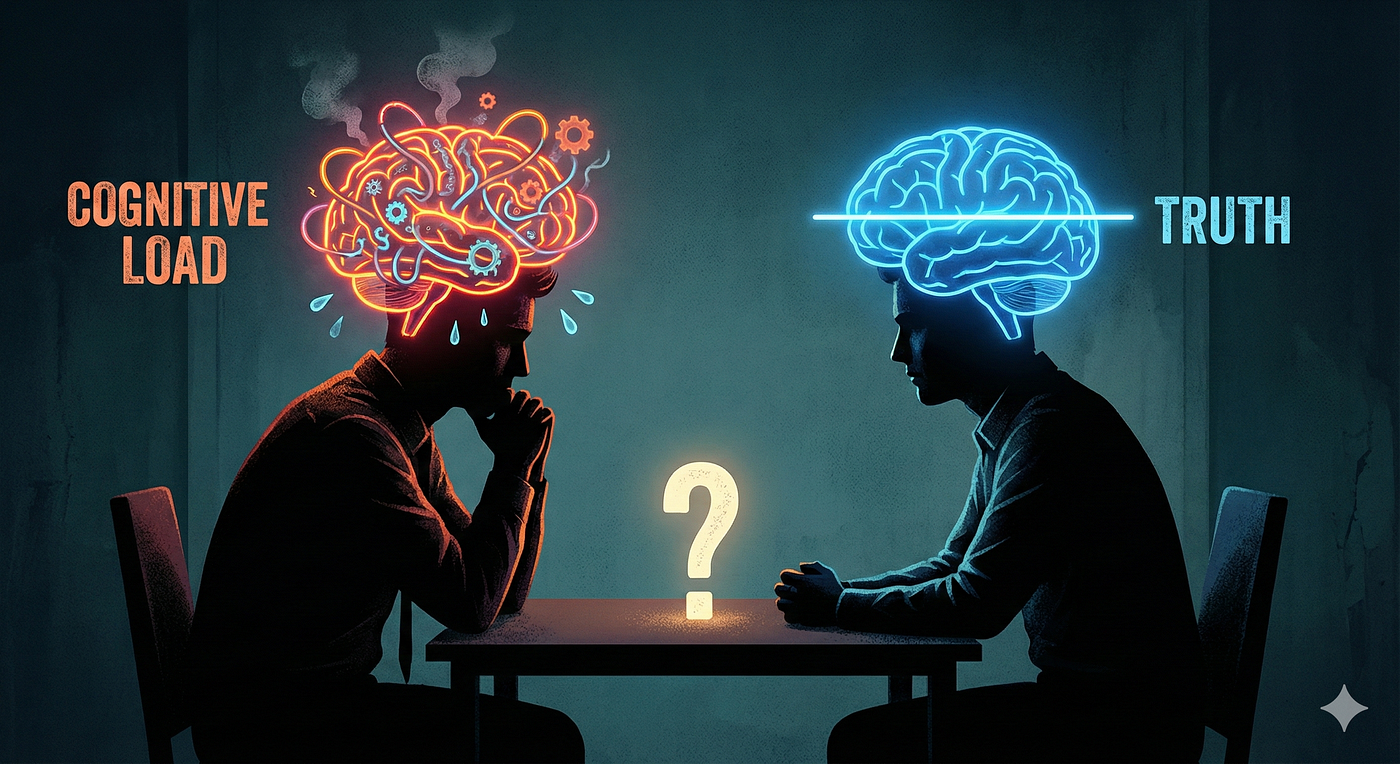
A principle of psychology says that “Truth can only be tolerated if you discover it yourself” — so all you can do is guide their thinking to give their own answer.
You can help people by offering them solutions only when they explicitly ask you for advice. Only then do they trust you as the one able to offer a solution? Yes.
When they only complain, they are not looking for solutions but validation for their own suffering and even appreciation for their ability to endure.
As they receive the validation, their hunger to be understood by someone will be satisfied, and their minds can start working to find solutions.
Emotional versus rational thinkers
People have 2 types of narrative: predominantly emotional or predominantly logical.
If the person is emotional, it is useless to respond with logical solutions — it is guaranteed to lead to conflict because the emotional one will use his reason to argue his emotion, and the one who gives logical solutions ends up in frustration and revolt.
On the contrary, you must offer one of the desired emotions that those who victimize themselves expect: concern, compassion, and appreciation for the ability to suffer.
How we live our lives and the behavioral reactions to what happens to us are determined by the following:
- the inclination towards optimism or pessimism (innate)
- the emotional or logical discourse (self-educable)
- the attitude of victimization or problem-solving/empowerment (self-educable)
These traits can be quickly identified in others. Consequently, you can adapt your reaction without feeling guilty or responsible — if people are capable of change, they will change when they have been offered the solution 2–3 times. If they don’t, they will repeat the same reaction pattern at infinite, and eventually, we must admit that many people never change.
As I said at the beginning of the first part, it’s our responsibility to help our loved ones overcome their suffering, but if the mechanism of victimization cannot be changed, it is useless to suffer with them. If we do this, with time, we become the victim of other victims.
[embed]How To Effectively Support Self-Victimizers (Part I) Don’t become a drama queen, toomedium.com
Thank you for reading, and may love accompany you everywhere,
Eva
Hi, I’m Eva, a psychology graduate who loves to explore the human mind and behavior. I have a background in HR, where I learned how to connect with people and help them achieve their goals.
Leave 👏 or ✍️ if you like it.
**Follow me** to stay updated with my latest posts. Or consider fueling my creativity.
메타데이터
- post_id
- e96516636474
- slug
- how-to-effectively-deal-with-self-victimizers-part-ii-e96516636474
- url
- https://medium.com/@evajoy/how-to-effectively-deal-with-self-victimizers-part-ii-e96516636474
- canonical_url
- https://medium.com/@evajoy/how-to-effectively-deal-with-self-victimizers-part-ii-e96516636474
- author_url
- https://medium.com/@evajoy
- status
- ok
- fetched_at
- 2026-07-19 18:36:54