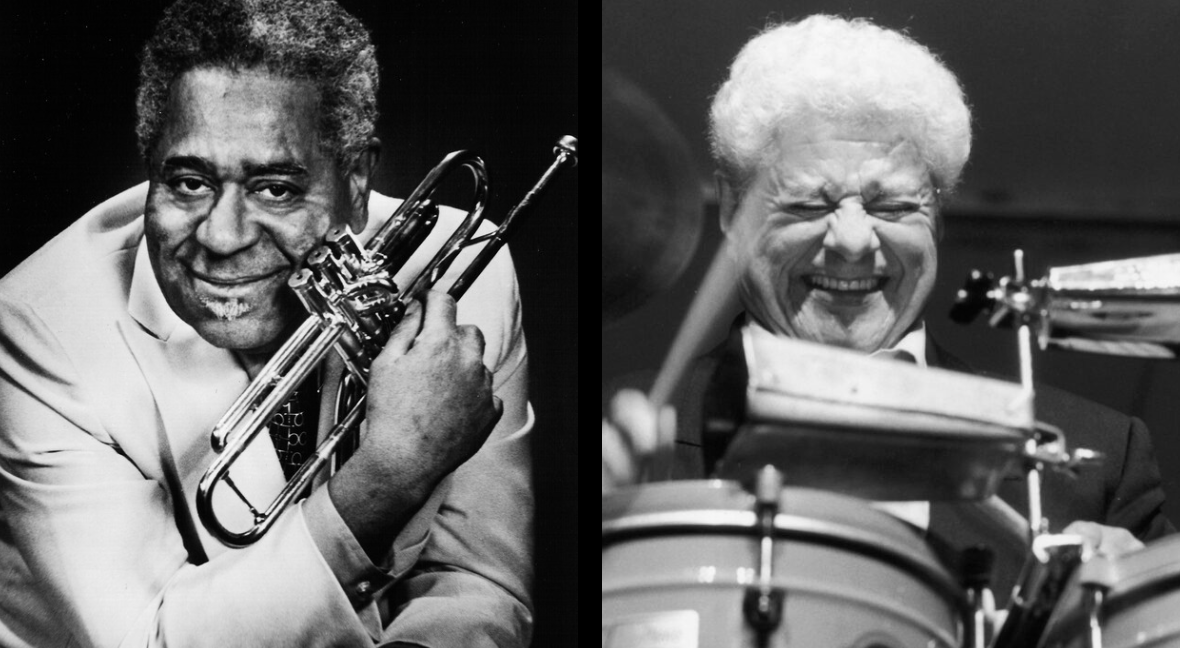
Financial Fluency for the Long Haul: Deepening the Entrepreneurial Toolkit for Creative Artists
Financial Fluency for the Long Haul: Deepening the Entrepreneurial Toolkit for Creative Artists

From Foundational Literacy to Generational Fluency
When I wrote my previous editorial on financial literacy for creative entrepreneurs, my mission was clear: equip emerging artists with the fundamentals — budgeting, investing, and strategic decision-making — to sustain their ventures. But financial wisdom doesn’t end with the basics.
In fact, the true challenge emerges after you’ve found some success.
What happens when a few big commissions arrive? Or when your audience grows, and your business expands beyond your capacity? Or when your creative pursuits begin supporting not just you — but your family, collaborators, and community?
This is where many creatives hit a wall — not because they aren’t talented or hardworking, but because their financial system was built for survival, not scalability.
Part two of this editorial series is about deepening financial fluency for the long haul. It’s about evolving from someone who manages money reactively to someone who wields it strategically — not just to sustain a career, but to build a legacy.

The Growth Plateau: Why Mid-Career Creatives Burn Out
Many artists assume that once they reach a certain income level or visibility, the stress will go away. But as revenue increases, so do:
- Taxes and compliance complexity
- Operational costs and subcontractor management
- Emotional demands of leadership and legacy-building
This phenomenon is what I call the growth plateau — a deceptive phase where financial challenges don’t disappear but become more abstract and psychological. Burnout isn’t caused solely by under-earning; it can also stem from lack of systems and clarity at higher levels of income.
Solution: Mid-career creatives need to shift from hustle mode to enterprise mode. That means building frameworks, automation, and delegation processes that preserve mental energy while scaling revenue.

Financial Infrastructure: Systems Over Scramble
Artists are used to improvisation — creatively and financially. But long-term success requires the exact opposite: infrastructure.
Here are six components of financial infrastructure for creative entrepreneurs:
- Monthly P&L Report (Profit & Loss Statement)
- Track all revenue streams (commissions, royalties, teaching, licensing)
- Categorize expenses (fixed vs. variable)
- Analyze net profit trends quarterly
2. Dedicated Business Bank Accounts
- Separate your personal and professional finances
- Use digital banks like Mercury or Bluevine that cater to creatives and freelancers
3. Quarterly Tax Withholding System
- Estimate your tax obligation every 3 months (IRS Form 1040-ES)
- Allocate 25–30% of all income into a tax account
4. Cloud-Based Receipt Management
- Use software like Expensify, QuickBooks Self-Employed, or even a shared Google Drive
- Organize by category and date for smooth audits
5. Emergency Operating Fund (3–6 months)
- Not just for rent, but for business continuity: project delays, health issues, tech replacements
6. Cash Flow Projection Dashboard
- Forecast income and expenses for the next 6–12 months
- Color-code months as Green (surplus), Yellow (break-even), or Red (deficit) to plan action
🎓 Teaching Moment: Assign students to build a one-page P&L report from their last 3 months of activity and reflect on the patterns they discover.

Revenue Stacking: Diversifying Without Dilution
When creatives hear “multiple streams of income,” they often assume it means doing more things — taking on more clients, more gigs, more roles.
But smart revenue stacking is not about quantity — it’s about layered monetization of existing assets.

This model turns one effort into three revenue channels — without burnout. The key is intellectual property (IP) leverage.
🎓 Teaching Moment: Challenge students to list all their creative works and imagine 3 ways each could be monetized.

Behavioral Finance: Conditioning the Creative Mind for Wealth
Financial fluency isn’t just technical — it’s psychological. Many creatives carry deep-rooted beliefs such as:
- “Money is unpredictable, so I just spend it while I have it.”
- “I don’t want to look greedy, so I’ll undercharge.”
- “If I earn more, people will expect more, and I’ll burn out.”
These scripts are self-protective but ultimately sabotaging. Artists need emotional literacy around money — the ability to notice, name, and reframe their financial triggers.
Try These Reframes:

🎓 Teaching Moment: Facilitate a class discussion around financial beliefs students inherited and how they’re evolving.

Intergenerational Wealth: From Creative Career to Creative Legacy
It’s time to challenge the myth that artists can’t build generational wealth. In reality, we’re uniquely positioned to do so because:
- We own our IP (songs, books, designs)
- We often work beyond retirement age
- We can leverage royalties and licensing as passive income
But to turn our creativity into legacy, we must think in decades — not weeks.

Legacy Framework for Creatives:
- Estate Planning:
- Assign beneficiaries for royalties, trademarks, and copyrights
- Draft a will and/or trust (yes, even in your 30s or 40s)
2. Business Succession Plan:
- Who will run your brand, company, or platform if you step away?
3. Teaching Assets:
- Package your expertise into evergreen courses, books, or tools
4. Philanthropic Vehicles:
- Create a scholarship, donor-advised fund, or nonprofit arm of your enterprise
🎓 Teaching Moment: Have students write a “Creative Legacy Letter” — a one-page vision of how they want their work to impact others in 50 years.

High-Level Contracting to Protecting Yourself at Scale
At the early stage, a handshake deal might suffice. At the growth stage, contracts become your currency of protection.
Key Clauses Creatives Must Understand:
- Kill Fee: Compensation if the client cancels the project mid-way
- Scope of Work (SOW): Defines exact deliverables, deadlines, and revisions
- Usage Rights: Clarifies where, how long, and in what media your work can be used
- Payment Schedule: Avoid “net 60” traps — aim for 50% upfront, 50% on delivery
Too many artists learn the hard way. I’ve worked with creatives who’ve lost five figures from vague agreements. Don’t wait for that lesson. Read every word, even if it’s uncomfortable.
🎓 Teaching Moment: Review real contract templates in class and practice negotiating key clauses.

Teaching Financial Literacy: Pedagogical Approaches for Arts Educators
If you’re an arts educator, your job isn’t just to “prepare students for a gig” — it’s to prepare them for a sustainable life in the arts.
Here are evidence-based strategies to teach financial literacy in creative curricula:
- Embed, Don’t Append
- Don’t relegate financial literacy to one optional workshop. Embed it in your core courses, recitals, and project-based learning.
2. Use Story-Driven Learning
- Use real artist case studies — failures and wins — to make finance tangible and relatable
3. Simulate Real-World Scenarios
- Assign mock grants, budgets, crowdfunding campaigns, and client proposals
4. Normalize Financial Conversations
- Model vulnerability: share your own challenges and evolving strategies
5. Assess Application, Not Just Theory
- Let students track their own finances or pitch financial plans as part of their final projects
🎓 Teaching Prompt: Have students reflect on this prompt: “How will my money decisions this year affect my art five years from now?”

Financial Fluency is a Creative Rite of Passage
Financial fluency isn’t about becoming an accountant. It’s about honoring your creativity enough to protect it, sustain it, and scale it responsibly.
Whether you’re booking your first $500 gig or signing a $50,000 licensing deal, your relationship with money will shape every artistic decision you make. The goal isn’t to become rich for the sake of ego — it’s to become resourceful for the sake of legacy.
And let me be clear: you are not “less of an artist” for thinking like an entrepreneur. You are more equipped. More empowered. More free.

What’s Your Financial Frontier?
As we close, I offer this invitation:
What’s your next financial frontier?
- Launching your first course?
- Negotiating a higher commission?
- Opening a retirement account?
- Hiring your first assistant?
Whatever it is — name it, plan it, and move toward it.
Because creative freedom without financial fluency is just a short-lived spark. But with both? It becomes a sustainable fire — warming generations to come.
Author
Jose Valentino Ruiz, Ph.D.
메타데이터
- post_id
- e96ae6f2e70f
- slug
- financial-fluency-for-the-long-haul-deepening-the-entrepreneurial-toolkit-for-creative-artists-e96ae6f2e70f
- url
- https://medium.com/creativity-commerce-journal/financial-fluency-for-the-long-haul-deepening-the-entrepreneurial-toolkit-for-creative-artists-e96ae6f2e70f
- canonical_url
- https://medium.com/creativity-commerce-journal/financial-fluency-for-the-long-haul-deepening-the-entrepreneurial-toolkit-for-creative-artists-e96ae6f2e70f
- author_url
- https://medium.com/@berisheetpress
- status
- ok
- fetched_at
- 2026-06-15 20:49:13