Is Planogram Automation the Key to Scaling Retail Operations Efficiently?
Is Planogram Automation the Key to Scaling Retail Operations Efficiently?
Is Planogram Automation the Key to Scaling Retail Operations Efficiently?
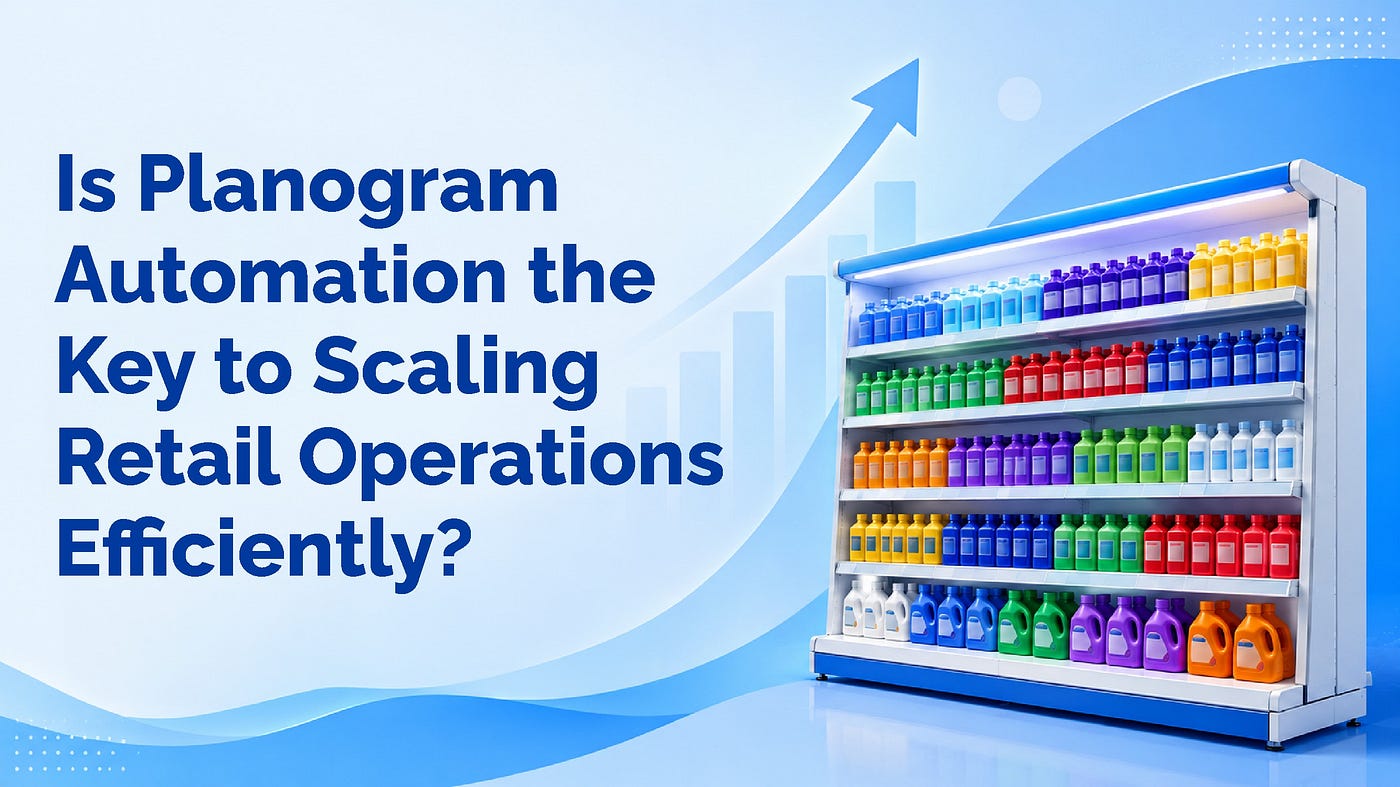
Is Planogram Automation the Key to Scaling Retail Operations Efficiently?
Is Planogram Automation the Key to Scaling Retail Operations Efficiently?
Retailers today face growing pressure to manage larger product assortments, maintain consistent store execution, and meet customer expectations across multiple locations. As businesses expand, manually creating and updating planograms becomes increasingly time-consuming and prone to errors. This is where planogram automation is transforming retail operations.
By automating the creation, updating, and distribution of planograms, retailers can streamline merchandising processes, improve compliance, and scale operations more efficiently. But is planogram automation truly the key to sustainable retail growth? Let us explore.
Understanding Planogram Automation
Planogram automation uses software, artificial intelligence (AI), and data-driven algorithms to automatically generate and optimize shelf layouts. Instead of manually placing products on shelves, retailers can use automation tools to create merchandising plans based on sales data, inventory levels, customer behavior, store formats, and category objectives with the help of planogram services.
Automated planograms help retailers make faster decisions while maintaining consistency across stores.
Why Is Scaling Retail Operations Challenging?
As retailers grow, they often encounter several operational challenges:
- Managing hundreds or thousands of SKUs is important.
- Maintain consistent product placement across locations.
- Adapting layouts for different store sizes and formats.
- Responding quickly to seasonal and promotional changes.
- Ensuring shelf compliance and execution accuracy.
- Reducing labor-intensive merchandising tasks.
Without automation, these challenges can slow down expansion efforts and increase operational costs.
How Planogram Automation Supports Retail Growth?
- Faster Planogram Creation: Traditional planogram development can take hours or even days for a single category. Automation significantly reduces this workload by generating optimized layouts in minutes. Retailers can quickly create planograms for multiple stores, product categories, or promotional campaigns without requiring extensive manual effort.
- Improved Consistency Across Stores: One of the biggest challenges for multi-store retailers is maintaining consistency. Automated planogram systems ensure that merchandising standards are applied uniformly across all locations. This consistency strengthens brand presentation and improves customer shopping experience.
- Better Shelf Space Optimization: Planogram automation uses real-time data to allocate shelf space more effectively. Products with higher sales potential receive appropriate visibility, while slow-moving items can be adjusted accordingly. Optimized shelf allocation helps maximize sales per square foot and improve category performance.
- Faster Response to Market Changes: Consumer demand can change rapidly due to seasonal trends, local preferences, or promotional activities. Automated systems allow retailers to update planograms quickly and distribute new layouts across stores. This agility enables retailers to remain competitive while reducing delays in execution.
- Reduced Operational Costs: Manual merchandising processes require significant labor and administrative resources. By automating repetitive tasks, retailers can reduce planning time, minimize errors, and lower operational costs. Teams can focus more on strategic decision-making rather than routine planogram maintenance.
The Role of AI in Planogram Automation
Modern planogram automation solutions increasingly rely on AI and machine learning to improve decision-making.
AI can analyze:
- Historical sales data.
- Inventory performance.
- Customer shopping patterns.
- Regional demand variations.
- Product affinities and cross-selling opportunities.
Using these insights, AI-powered systems can recommend optimal product placements that maximize sales and improve shopper engagement.
Enhancing Shelf Compliance and Execution
Even the most effective planogram provides little value if it is not implemented correctly. Automated planogram solutions often integrate with shelf auditing and compliance tools that monitor execution at the store level. Retailers can:
- Identify non-compliant shelves quickly.
- Compare store layouts against approved planograms.
- Monitor compliance across multiple locations.
- Improve execution consistency.
This visibility helps ensure merchandising strategies are properly executed.
Supporting Multi-Store and Omnichannel Retailing
Retailers operating across multiple formats — including supermarkets, convenience stores, specialty stores, and e-commerce fulfillment centers require flexible merchandising solutions.
Planogram automation supports:
- Store-specific planograms.
- Regional assortment variations.
- Promotional displays.
- Omnichannel inventory strategies.
- Dark store and micro-fulfillment center layouts.
This flexibility allows retailers to scale without sacrificing operational efficiency.
Key Benefits of Planogram Automation
Retailers adopting planogram automation often experience:
- Faster merchandising execution.
- Improved shelf productivity.
- Greater store consistency.
- Enhanced category performance.
- Better use of labor resources.
- Reduced human error.
- Increased compliance rates.
- Improved scalability across locations.
These benefits contribute directly to operational efficiency and long-term profitability.
Considerations Before Implementing Planogram Automation
To maximize success, retailers should evaluate:
- Integration with existing POS and ERP systems.
- Scalability for future store growth.
- AI and analytics capabilities.
- Ease of use for merchandising teams.
- Compliance monitoring features.
- Vendor support and training options.
Choosing the right solution ensures retailers can fully leverage automation benefits.
Conclusion
As retail operations become more complex, manual merchandising processes are no longer sufficient for sustained growth. Planogram automation enables retailers to create, optimize, and execute merchandising strategies faster and more accurately across multiple locations.
By improving consistency, optimizing shelf space, reducing operational costs, and supporting data-driven decision-making, planogram automation has become a powerful tool for scaling retail operations efficiently. For retailers looking to expand while maintaining strong execution standards, investing in automated planogram solutions can provide a significant competitive advantage and lay the foundation for future growth.
메타데이터
- post_id
- e985e8b9f2ce
- slug
- is-planogram-automation-the-key-to-scaling-retail-operations-efficiently-e985e8b9f2ce
- url
- https://medium.com/@nexgenwebmaster1/is-planogram-automation-the-key-to-scaling-retail-operations-efficiently-e985e8b9f2ce
- canonical_url
- https://medium.com/@nexgenwebmaster1/is-planogram-automation-the-key-to-scaling-retail-operations-efficiently-e985e8b9f2ce
- author_url
- https://medium.com/@nexgenwebmaster1
- status
- ok
- fetched_at
- 2026-07-23 17:46:46