Risks of DIY Mold Removal
Most people don’t plan to become mold removal experts on a Saturday afternoon. They spot a dark patch behind a dresser, notice a musty…
Risks of DIY Mold Removal
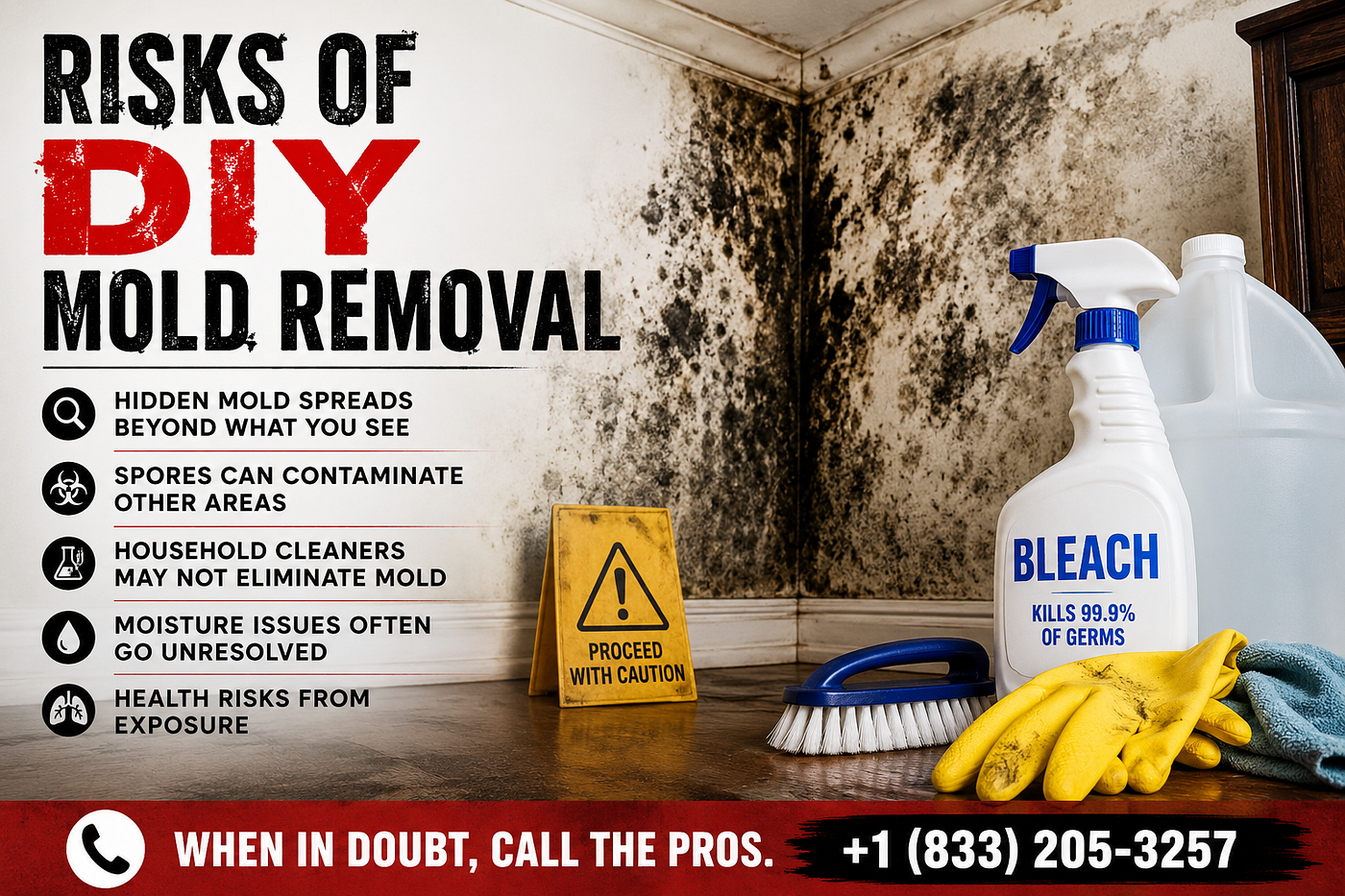
Most people don’t plan to become mold removal experts on a Saturday afternoon. They spot a dark patch behind a dresser, notice a musty smell in the basement, watch a couple of videos online, grab a spray bottle, and figure they can handle it themselves.
Sometimes they get lucky.
A lot of times they don’t.
📞 Need professional mold removal? Call: ☎️ +1 (833) 205–3257
🚨 +1 (833) 205–3257
I’ve seen plenty of situations where someone spent an entire weekend scrubbing mold off walls only to find it coming back a few weeks later. Not because they didn’t work hard. Usually because the actual problem was hiding somewhere they never thought to check.
The Mold You See Is Often the Smallest Part of the Problem
One thing that catches people off guard is how little visible mold can tell you.
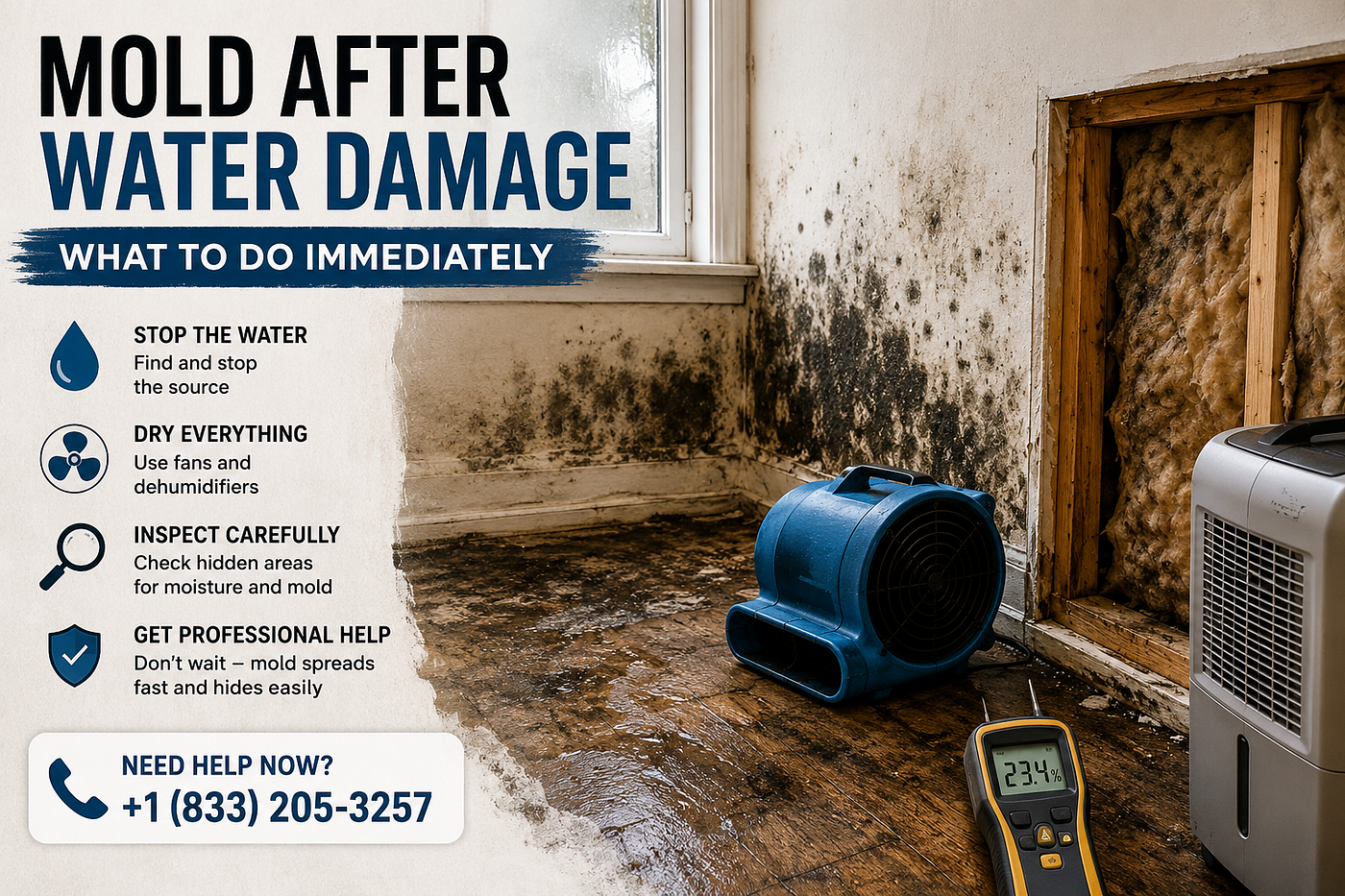
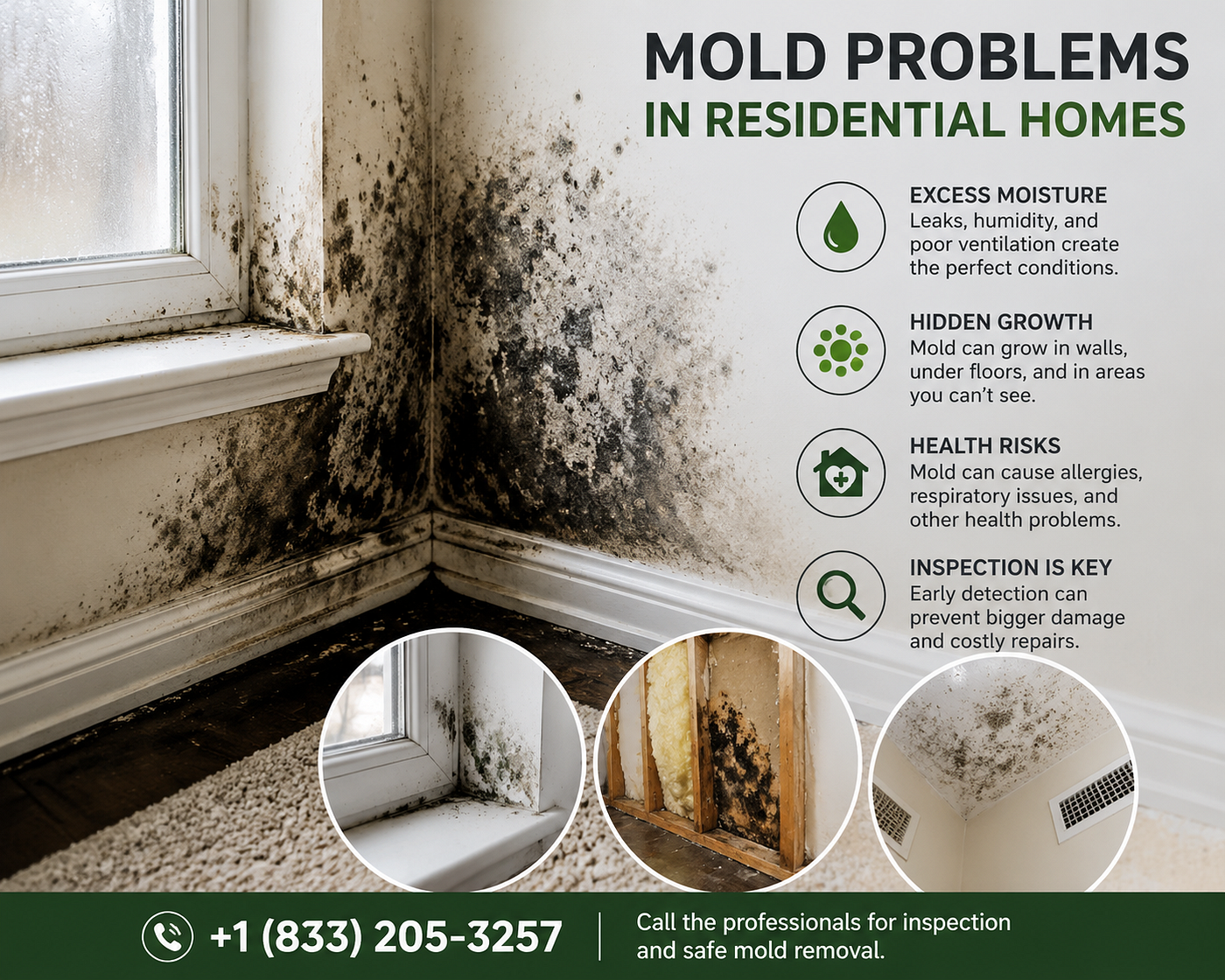
That black patch in the corner might look like a small issue. The problem is that mold doesn’t always grow where it’s easiest to see. It grows where moisture stays trapped.
Inside drywall.
Behind cabinets.
Under flooring.
Around plumbing penetrations.
Inside insulation.
I’ve pulled apart walls where a homeowner thought they had a two-foot mold problem. Behind the drywall was an entire section covered in growth that had probably been there for months.
Cleaning the surface didn’t solve anything because the source was still active.
Scrubbing Can Actually Spread Mold
This is probably one of the biggest DIY mistakes.
People attack mold aggressively.
Scrub it.
Sand it.
Brush it.
Spray it with a pressure washer.
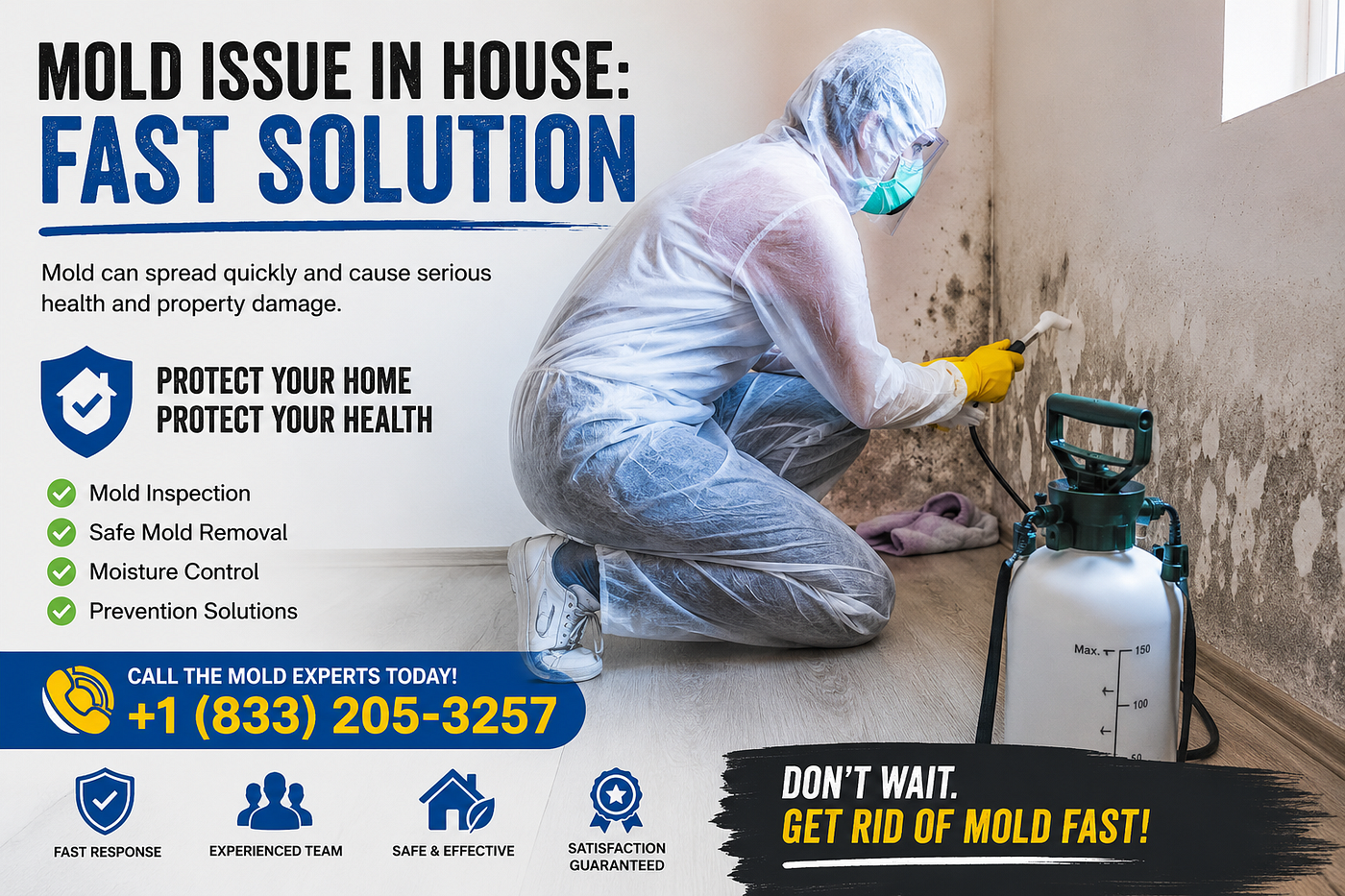
The issue is that mold reproduces through microscopic spores. When you disturb a contaminated area without proper containment, those spores can spread throughout the home.
A small isolated issue can suddenly become a much bigger cleanup.
You don’t necessarily notice it right away either.
Weeks later, mold starts appearing in other rooms and nobody understands why.
Sometimes the cleaning process itself becomes the reason the contamination spreads.
Bleach Isn’t the Magic Solution People Think It Is
I can’t count how many times I’ve heard someone say:
“I sprayed bleach on it and it looked gone.”
The key word there is looked.
Bleach may remove staining from some surfaces. That doesn’t always mean the mold colony has been eliminated.
Porous materials are especially tricky.
Drywall, wood framing, carpet backing, insulation, ceiling materials… moisture can penetrate below the surface. Bleach often doesn’t reach deep enough to address what’s happening underneath.
The discoloration disappears.
The mold doesn’t.
A month later it’s back.
Sometimes worse.
Hidden Moisture Gets Ignored
Mold is usually a symptom.
Water is usually the cause.
A leaking pipe.
Poor ventilation.
Condensation.
Roof issues.
A crawl space with high humidity.
An HVAC problem.
Many DIY projects focus entirely on removing visible growth while completely ignoring why the mold developed in the first place.
Even a perfect cleaning job won’t matter if moisture levels remain elevated.
That’s like pulling weeds without removing the roots.
Health Risks Are Hard to Predict
This area gets complicated because everybody reacts differently.
I’ve seen people spend hours cleaning mold and feel completely fine.
I’ve also seen others develop headaches, sinus irritation, coughing, itchy eyes, or respiratory issues after relatively short exposure.
There isn’t a universal reaction.
What makes DIY removal risky is that homeowners often underestimate how much contamination they’re disturbing.
Without proper respiratory protection, exposure can increase significantly during removal.
Especially in enclosed spaces.
Bathrooms.
Attics.
Basements.
Utility rooms.
Those areas can trap airborne particles more than people realize.
Cross Contamination Happens Faster Than You Think
Here’s something I rarely see discussed.
You clean mold in one room.
Then you walk through the house carrying contaminated clothing, gloves, tools, and debris.
Without realizing it, you’re transporting spores everywhere.
Furniture.
Hallways.
Vehicles.
Storage areas.
Professional remediation crews spend a surprising amount of effort preventing contamination from leaving the work zone.
Most homeowners understandably don’t think about that part.
Damaging Building Materials Is Easier Than Expected
I’ve watched people destroy perfectly salvageable materials while trying to remove mold.
Over-scrubbing drywall.
Soaking wood framing.
Using harsh chemicals incorrectly.
Removing large sections of material unnecessarily.
What starts as mold cleanup sometimes turns into expensive repairs that never needed to happen.
The irony is that the mold damage may have been relatively minor.
The DIY cleanup created the major expense.
Mold Behind Walls Is a Different Game
Visible mold on a bathroom ceiling is one thing.
Mold inside a wall cavity is something else entirely.
Once growth extends into hidden building assemblies, the project becomes much harder to evaluate without opening materials and inspecting what’s happening underneath.
That’s where many homeowners hit a wall, literally.
You don’t know how far contamination extends.
You don’t know what’s wet.
You don’t know what’s dry.
And guessing can get expensive.
The Cost of Doing It Twice
A lot of people choose DIY removal to save money.
That makes sense.
Nobody wants unnecessary expenses.
The problem is when the cleanup doesn’t fully solve the issue.
Then you buy more products.
Spend another weekend cleaning.
Replace damaged materials.
Possibly hire professionals anyway.
At that point you’ve paid for both approaches.
I’ve seen that happen more than once.
Actually, more than a few dozen times.
When Calling a Professional Usually Makes Sense
🔹 Mold keeps returning after cleaning
🔹 The affected area is larger than expected
🔹 You notice a persistent musty odor
🔹 Water damage is involved
🔹 Mold is inside walls, ceilings, or flooring
🔹 Family members are experiencing respiratory irritation
🔹 You aren’t sure how long the growth has been present
Those situations tend to become much more complicated than they first appear.
A Final Thought
Most homeowners are capable of handling basic maintenance around the house. Mold is different because the visible growth rarely tells the whole story.
The biggest risk isn’t failing to clean the mold.
The biggest risk is believing you’ve solved the problem when moisture, hidden contamination, or airborne spores are still active somewhere you can’t see.
If you’re dealing with recurring mold, widespread growth, or contamination that seems larger than a simple surface issue, it’s usually worth getting professional eyes on it before spending another weekend fighting the same problem.
📞 Professional Mold Removal Help Available 24/7
☎️ +1 (833) 205–3257
💬 A quick inspection today can save a lot of frustration, damaged materials, and repeat cleanup later.
메타데이터
- post_id
- e9d059e03f0c
- slug
- risks-of-diy-mold-removal-e9d059e03f0c
- url
- https://medium.com/@mold-remediation/risks-of-diy-mold-removal-e9d059e03f0c
- canonical_url
- https://medium.com/@mold-remediation/risks-of-diy-mold-removal-e9d059e03f0c
- author_url
- https://medium.com/@mold-remediation
- status
- ok
- fetched_at
- 2026-07-25 23:01:09