Palestine Scarf: One Scarf Worn Across Many Cultures
Introduction
Palestine Scarf: One Scarf Worn Across Many Cultures
Introduction
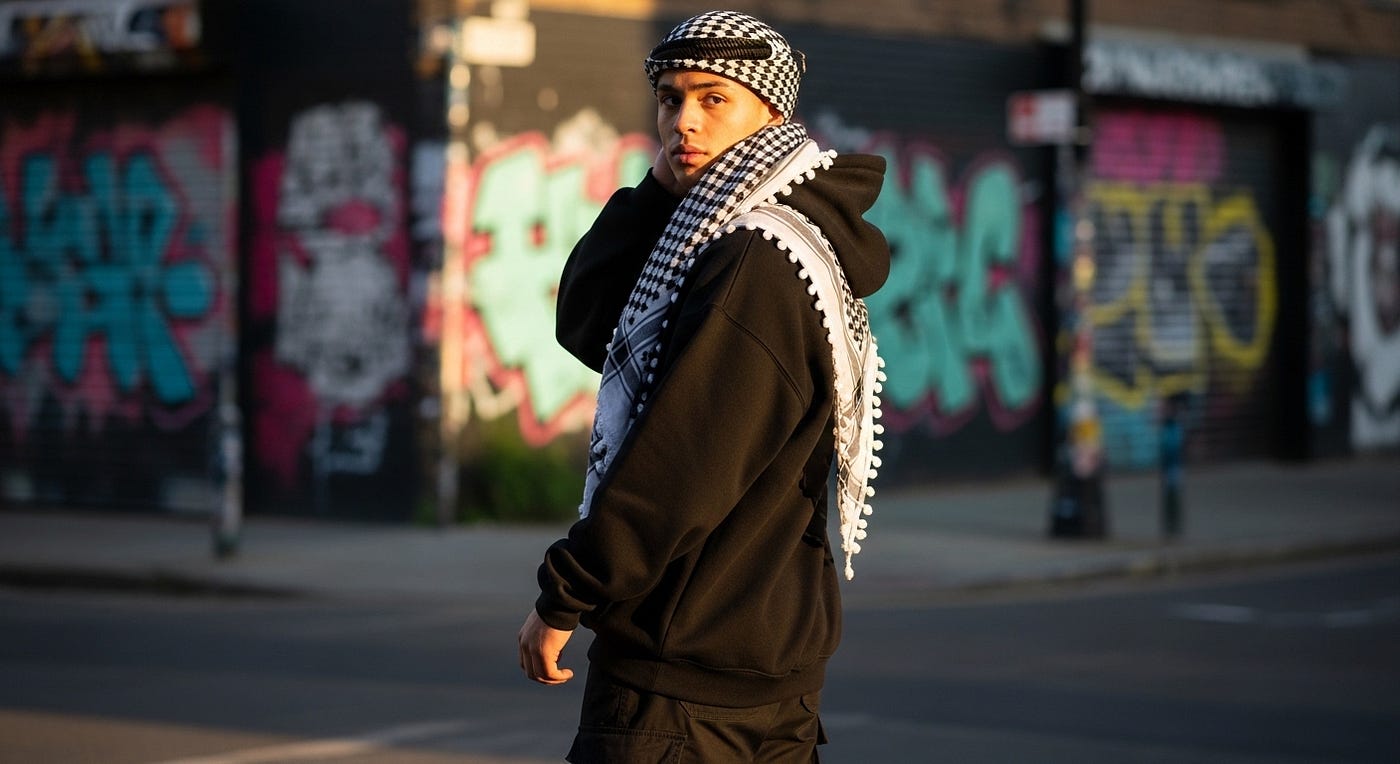
There are a few articles of clothing that carry as much history, meaning, and versatility as the iconic black-and-white scarf known around the world. Originally woven to shield farmers from the Middle Eastern sun, this simple square of cotton has traveled far beyond its origins. You can spot it draped elegantly on runways in Paris, wrapped protectively around activists at global protests, and tied casually around the necks of street-style stars from Tokyo to Toronto. It’s rare to find one piece that connects rural tradition, political resistance, and high fashion, yet here it is, worn by people across cultures who each bring their own meaning to its threads.
This guide explores the many lives of this cultural wrap, from its deep roots in Palestinian heritage to its adoption by diverse communities worldwide. You’ll discover what different cultures call it, how to style it respectfully, and where to find authentic pieces that honor its legacy.
What Is the Palestine Scarf Called
The names for this scarf are as varied as the people who wear it. If you have ever wondered what is the palestine scarf called, the answer depends entirely on where you are and who you are talking to.
In the Arab world, it is most commonly known as a keffiyeh (pronounced kuf-fee-yeh), which refers to its role as a traditional headdress. The ***palestine scarf name*** shifts across borders and dialects. In Jordan and among Bedouin communities, it is often called a shemagh, typically in the red-and-white checkered pattern that has become a national symbol there. In the Gulf countries, you will hear the term ghutrah, which tends to be pure white and worn with a black rope cord called an igal.
To understand the terminology, here are the key names you will encounter:
- Keffiyeh: The most widely used Arabic term, derived from the word for “coif” and associated with the head covering worn across the Levant
- Shemagh: A variation typically featuring red and white checks, strongly linked to Jordanian and Bedouin culture
- Hattah: Another Arabic term used interchangeably with keffiyeh, particularly in Palestine
- Kufiya: An alternate spelling you will see in English-language publications
When discussing the ***shemagh kufiya, you are essentially combining two of the most common regional terms to describe this versatile square scarf. The [keffiyeh and shemagh](https://kuvrd.ca/blogs/stories/keffiyeh-vs-shemagh-key-differences-explained)*** are often mentioned together because they share the same basic form but carry different color associations, the black-and-white being distinctly tied to Palestinian nationalism, while the red-and-white evokes Jordanian heritage.
The Black and White Pattern Story
What Is the Black and White Scarf Palestine
The instantly recognizable black-and-white pattern on the ***palestine scarf*** is not just decorative; it is a visual language woven into fabric. When people ask what is the black and white scarf palestine, they are really asking about the story embedded in those geometric lines.
The pattern carries layers of meaning that connect the wearer to the land. The bold, thick lines represent trade routes that once passed through Palestine, including the ancient Silk Road. The fishnet patterns symbolize the connection between Palestinian fishermen and the Mediterranean Sea, honoring a traditional livelihood. Scattered throughout the design, you will find shapes resembling olive leaves, a powerful emblem of resilience, strength, and the deep roots of olive trees that have sustained families for generations.
While the classic black-on-white is the most famous, other color variations exist. The red-and-white keffiyeh was adopted by Palestinian Marxist groups like the Popular Front for the Liberation of Palestine, giving it a distinct political association. Today, you will find scarves in purple, blue, and even neon hues ***as fashion*** houses reinterpret the pattern, though purists maintain that the traditional colors carry the deepest cultural weight.
How Different Cultures Wear It
The journey of this textile across cultures is fascinating. What began as a practical garment for rural farmers has become a global phenomenon worn for vastly different reasons.

Traditional Use in the Middle East
In the Middle East, men traditionally wear the ***palestinian keffiyeh*** folded into a triangle and secured with a black rope, protecting the head and face from sun and sand. This practical use continues among Bedouin communities and farmers who value its function as much as its symbolism. During the 1930s, the scarf took on political meaning. In the 1936–1939 Arab revolt in Palestine, urban dwellers replaced their Ottoman-style fez hats with this heritage piece to show unity with rural rebels and to help fighters blend into cities. This moment transformed the garment from simple peasant clothing into a nationalist symbol.
The Keffiyeh as a Political Symbol
In Europe and North America, the ***Keffiyeh Scarf*** gained visibility through pro-Palestinian activists in the 1970s and again during the First Intifada in the late 1980s. Today, you will see it at solidarity marches, draped around the shoulders of students, and worn by public figures like Colombian President Gustavo Petro, who appeared in New York’s Times Square wearing one during the 2025 United Nations General Assembly.
The question why do muslim wear headscarf often comes up in discussions about the ***keffiyeh***, but it is important to distinguish this scarf from religious head coverings. This Arab cultural scarf is worn by Muslims, Christians, and Jews alike across the Middle East. Early Jewish migrants to Palestine adopted it as part of embracing local life, and it was only after it became a symbol of Palestinian nationalism that it lost popularity among Israeli Jews.
Global Fashion and Activism
The fashion world has embraced this heritage wrap, too. At Copenhagen Fashion Week, models and influencers have styled it as skirts, dresses, and handbags, while celebrities like Bella Hadid have worn keffiyeh-inspired designs on the red carpet. This mainstream adoption brings both visibility and controversy, raising questions about cultural appropriation versus appreciation.
As for hijab for men, Islamic tradition does include guidelines for modesty that apply to both genders, but this traditional wrap is not a religious garment. It is a cultural headdress that also serves the practical needs of Muslims during prayer or outdoor activities.
Here is how different groups currently wear the scarf:
- Palestinians and diaspora: As a symbol of identity, heritage, and resistance, often worn around the neck or draped over one shoulder in honor of Yasser Arafat’s signature style
- Jordanians: Wear the red-and-white shemagh as a national symbol, with larger tassels indicating higher social status
- Western activists: Typically knot it loosely around the neck as a sign of solidarity with Palestine
- Fashion enthusiasts: Experiment with it as a shawl, headwrap, or even transformed into clothing items like skirts and tops
- Outdoor enthusiasts: Use it practically for sun and dust protection, especially military personnel in desert environments
How to Wear Palestine Scarf
If you are new to wearing this scarf, you might feel unsure about where to start. The beauty of this piece is its incredible versatility. The question of ***how to wear palestine scarf*** has dozens of answers depending on your style, climate, and comfort level.
The most common approach in Western countries is to wear it as a neck scarf. Simply fold it into a triangle, drape it over your shoulders with the point hanging down your back, and tie the two ends loosely in front. This style works with casual jackets, sweaters, or even blazers for a touch of cultural texture.
For a more dramatic look, try wearing it as a shawl. Open the scarf fully and drape it across both shoulders like a wrap. This works beautifully over solid-colored dresses or tops and adds an element of storytelling to evening wear.
How to Tie Palestine Scarf
Learning how to tie palestine scarf opens up a world of styling possibilities. Here are simple methods to get you started:
- The Classic Neck Knot: Fold the square diagonally into a triangle. Place the folded edge around your neck with the triangle point at the back. Cross the two ends in front, bring them behind your neck, and tie a small knot. Adjust so the fabric sits comfortably
- The Headwrap: Fold into a triangle and place the long edge across your forehead. Bring the two ends to the back of your head, cross them, and then bring them forward to tie above your forehead. Tuck in any loose fabric for a secure fit
- The Shoulder Drape: For a relaxed look, simply fold the scarf into a triangle and let it hang loosely over one shoulder, inspired by the late Yasser Arafat, who made this style iconic
- The Tote Bag Trick: Fold into a triangle, then tie the two bottom corners together. Tie the third corner (the triangle point) separately. Turn the whole thing inside out to hide the knots, and flip it right-side up. You now have an instant, sturdy tote bag perfect for markets or beach days
These methods take practice, so do not worry if your first attempts feel awkward. Within a few tries, you will find a style that feels natural.
Authentic Pieces and Social Impact
Wearing this scarf comes with a responsibility to understand its meaning. Authentic pieces matter because they support the communities that created this tradition and keep cultural knowledge alive.
Why Authenticity Matters
The term ***Original Palestinian Keffiyehs*** refers specifically to scarves woven in Palestine using traditional methods, most notably at the Hirbawi factory in Hebron, the last remaining Palestinian producer. For decades, Hirbawi operated 16 looms producing up to 750 scarves daily. By 2010, competition from cheaper imports had reduced that to just two looms making 300 per week. Today, demand has surged again, but the factory can only produce around 5,000 pieces monthly, a fraction of what the market wants. This scarcity makes authentic Palestinian-made scarves precious.
Many mass-produced versions now come from China, which dominates the global market for these Arab heritage scarves. While these offer affordability, they lack the cultural connection and economic benefit to Palestinian communities. When you buy a scarf made in Hebron, you are directly supporting artisans who have kept this craft alive through occupation and economic hardship.
Social Impact Beyond the Scarf
Social impact extends beyond the scarf itself. Many organizations now sell merchandise like free palestine shirt proceeds to charity items, where a portion of sales supports humanitarian aid in Gaza or the West Bank. If you want your purchase to make a difference, look for sellers who transparently state where the money goes.
Where to Buy Palestine Scarf
Knowing where to buy palestine scarf authentically requires some research. You have several options depending on your priorities:
- Hirbawi Kufiya: The only remaining Palestinian factory. Buy directly from their website or authorized retailers to guarantee Hebron-made quality. Expect higher prices but absolute authenticity
- Fair trade cooperatives: Organizations like the Hebron Women’s Cooperative produce scarves while providing sustainable income for local artisans
- Ethical retailers: Companies like ***KUVRD*** partner with Palestinian factories to bring authentic pieces to international customers while supporting fair wages and cultural education
- Solidarity shops: Many activist organizations sell scarves with proceeds funding humanitarian work in Palestine. Check their transparency reports before buying
When you buy a palestine scarf, look for 100% cotton construction, hand-finished edges, and clear origin information. Authentic pieces should feel substantial and show slight irregularities that prove human hands made them.
Caring for Your Cultural Wrap
A quality heritage piece can last decades if you treat it right. These scarves are made to withstand sun and sand, but modern washing machines can damage them quickly if you are not careful.
Washing Instructions
Always hand-wash your cultural wrap in cold water with mild soap. Harsh detergents break down natural fibers and fade the distinctive patterns. If you must use a machine, place the scarf in a mesh laundry bag and select the delicate cycle.
Never use bleach or fabric softener. Bleach destroys color, while softener coats fibers and reduces breathability. For tough stains, soak in cold water with a little white vinegar; this actually helps set natural dyes.
Drying and Storage Tips
Air dry your Palestinian textile flat away from direct sunlight. Heat weakens cotton fibers over time, and sun exposure can fade those meaningful black-and-white patterns. If you need to iron, do it while the scarf is still slightly damp using medium heat.
When storing, fold neatly and keep in a breathable cotton bag. Plastic traps moisture and can lead to mildew. With proper care, your heritage scarf will remain beautiful and meaningful for years to come.
Conclusion
One piece of cloth, countless stories. The journey of this simple scarf from the fields of Palestine to the streets of Copenhagen, Tokyo, and New York speaks to something universal: our desire to connect, to express identity, and to stand with one another. Whether you wear it as a nod to heritage, a statement of solidarity, or simply because you find beauty in its pattern, you become part of that ongoing story.
The key is wearing it with awareness. Understand its history, respect its meaning, and when possible, choose authentic pieces that support the communities that gave this scarf to the world. Fashion trends come and go, but some things, like the olive branches woven into every genuine keffiyeh, remain rooted forever.
FAQs
What is the palestine scarf called in different cultures? In Palestine, it is primarily called a keffiyeh or hattah. In Jordan, the red-and-white version is known as a shemagh, while Gulf countries use the term ghutrah for the plain white headdress. These names reflect regional variations of the same basic garment.
What does the black and white pattern on a palestine scarf mean? The pattern symbolizes key elements of Palestinian life: the fishnet represents connection to the Mediterranean Sea, the old lines evoke ancient trade routes, including the Silk Road, and olive leaf shapes stand for strength and rootedness to the land.
Where can I buy an authentic palestine scarf that supports Palestinian artisans? The Hirbawi Textile Factory in Hebron is the last remaining Palestinian producer, and you can purchase directly from their website. Fair trade cooperatives and ethical retailers like KUVRD also offer authentic scarves while ensuring fair wages and cultural integrity.
메타데이터
- post_id
- e9d7c77c5b69
- slug
- palestine-scarf-one-scarf-worn-across-many-cultures-e9d7c77c5b69
- url
- https://medium.com/@kuvrdKeffiyeh/palestine-scarf-one-scarf-worn-across-many-cultures-e9d7c77c5b69
- canonical_url
- https://medium.com/@kuvrdKeffiyeh/palestine-scarf-one-scarf-worn-across-many-cultures-e9d7c77c5b69
- author_url
- https://medium.com/@kuvrdKeffiyeh
- status
- ok
- fetched_at
- 2026-08-05 00:41:11





