Design sprint feel overwhelming? Try this instead
Protect your valuable time with a leaner alternative.
Design sprint feel overwhelming? Try this instead
Does this sound like your workday? Meeting followed by meeting, with an hour fit in there somewhere to knock out as many items as you can from your to-do list. Maybe 30 minutes for lunch. You’re caught in the wheel of meeting OKRs and getting the next release out and extinguishing small fires. When do you have time to take a breath, step back, and actually try to make your product or experience better?
You may have heard of a design sprint. Product teams clear their calendars for a week and really dig into finding solutions for a problem. I’ve been part of a few of these in my time at CarMax, and they can be fun. You bring in guest speakers, take time to compile inspiration from other companies, and go through different sketching exercises. At the end of the week, you could come up with a really great solution that you want to start developing.
So, what’s the problem? When was the last time you had a whole week to focus on just one thing? While you’re spending all this time in your design sprint, you’re thinking about everything else you have to do that isn’t getting done. And if you’re one of the organizers, you’re not just dedicating time to it during that week. It takes a lot of time to create a valuable agenda.
Find a happy medium
How can you find a happy medium? Try this: Set aside two hours each day for a week. Have a very focused and time-boxed agenda. Call it a workshop. You’ll be surprised how much you can get done. A couple of keys here right off the bat:
-
It should be a problem space that you’re highly familiar with. You aren’t starting from scratch. You’ve built this product, and it’s been out in the wild for a couple of years. You just want to make it better.
-
Keep the guest list short. Having a lot of heads together working to come up with ideas can be great, but also takes up a lot of time. Limit the workshop to just your product team (no stakeholders).
Planning your workshop
Now that you know that you want to have a workshop, how should you structure it to make the best use of your time? Feel free to customize the schedule to your needs, but this is a good place to start:
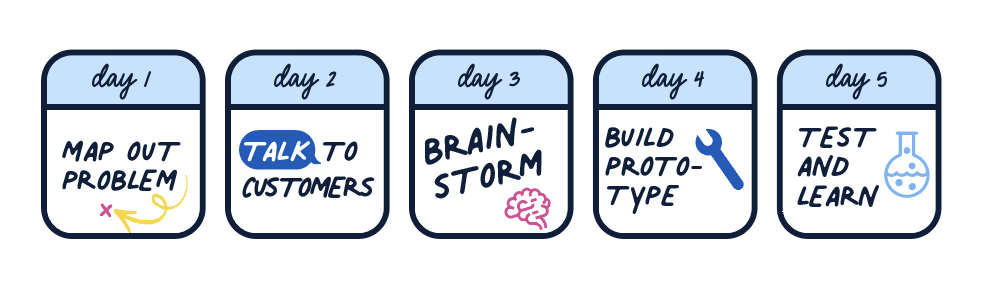
Day 1: Map out the problem
You probably have a good idea going into the workshop what space you want to tackle. But this is where you take the time to make sure the whole group knows what direction you want to head. Does this work tie in with an OKR? Review the exact language of the OKR with the group. Remind everyone what your current experience looks like. And lean on your analyst. Have them prepare an analytics share-out so the group can see where the opportunities lie.
Day 2: Talk to your customers
The team is aligned on what you’re going after, so now you can talk to your customers. Use this time to identify any pain points you might not have considered. Use a variety of methods to get customer feedback. Do a mix of moderated and unmoderated discovery. Talk to customers on the phone. Start with more general questions about their experience. You might get some valuable insights just by letting them talk instead of asking a lot of specific questions. Having trouble getting customers who are willing to talk with you? Grab a co-worker from a different part of the company and get their thoughts. Watch people use your website. Where are they rage-clicking? Where are they getting stuck? Encourage the whole team to take notes on what they see and hear as you go through discovery. The goal is to build a good list of problems and ideas.
Day 3: Brainstorm solutions
Now that you’ve gathered all the information you need, it’s time to start thinking of solutions. Narrow down the problems you’ve identified to one or two that you want to solution for. Have each team member work on a sketch of what that solution would look like. Say you’re an e-commerce business that’s having trouble getting customers to convert from putting an item in their cart to checking out. You’ve identified the problem as a confusing payment information screen. Give each team member 20 minutes to sketch out their idea for a better payment screen. Let them work with whatever medium they feel most comfortable with — that could be anything from Photoshop to pen and paper. Have each team member share their sketch. Take note of what you like about their ideas, because you’re going to use those best ideas to build your prototype in day 4.
Day 4: Build a prototype
Start the day by revisiting those best ideas from the team’s sketches. You should be able to incorporate a lot of them into your prototype. Depending on how your ideas landed, you could have the whole team work on one prototype or break the team in half to work on two prototypes. Don’t be afraid to break out of your normal product team roles, especially if you’re splitting into two groups. Your developers may end up designing and writing copy, and that’s okay. You don’t need something that’s super high fidelity. Your primary goal is to get feedback. Once your prototypes are done, plan how you’re going to do round two of discovery. You can put it before users on a site like UserTesting. Or you could just show the prototype to your friends and family and get their feedback.
Day 5: Test and learn
The last day is all about finding out what people think of your prototype. If you put it into UserTesting, watch the videos of the UserTesting sessions with your team. Make note of any positives or negatives you hear. If you had your team do friends and family feedback, have each person share what they learned. Understand that you aren’t going to get everything right on the first try. Use this as a starting point from which you can keep iterating until you get the solution you want. Take whatever you decide to move forward with and pull it into your regular product discovery life cycle. And keep testing and learning!
Adapt to fit your team’s needs
As you’re trying to decide how to tackle the next opportunity space with your team, know that this is just one possible solution. Want something that takes only three days instead of five? You can take elements of what I outlined above to create your custom schedule. Maybe you’d rather combine mapping out the problem and talking to customers in one day. Maybe you have a recent discovery session you can refer to and don’t need to do fresh calls. Hopefully you’ll find that you don’t have to take up too much time to break out of your weekly sprint rut and come up with some inspired solutions.
메타데이터
- post_id
- e9ff09375fcb
- slug
- design-sprint-feel-overwhelming-try-this-instead-e9ff09375fcb
- url
- https://medium.com/carmax-ux/design-sprint-feel-overwhelming-try-this-instead-e9ff09375fcb
- canonical_url
- https://medium.com/carmax-ux/design-sprint-feel-overwhelming-try-this-instead-e9ff09375fcb
- author_url
- https://medium.com/@sjw102984
- status
- ok
- fetched_at
- 2026-06-10 13:37:17