Stu1 ASM3 RMIT Sound in Unity Lecture
Invisible Sound Design Video
Stu1 ASM3 RMIT Sound in Unity Lecture
Invisible Sound Design Video
- Materials Sound
- SFX
- temperature theme for transition
- 3D music area, music increases along with deepening into the environment
- Field theme for high space and low space, separated differently (piano).
- Playing with a high-pass filter for the piano theme to describe the vibe, for example, from a cold winter to a breeze (kind of like easing in and easing out between music, audio, etc.).
- Texture soup is diverse for different objects, textures, etc.
- UX research for utilizing this game for what?
- 2D map using color for emotional and musical vibe for specific environment and sub area for details, transitions, etc. -> placing them in order.
- Layers for sound generally.
- Ambient increase until the peak.
- Keep the musical background interesting.
- Repetitive loop for musical mental map for players recognizing, tied to location, and subdivided into places.
Implementing Audio in Unity
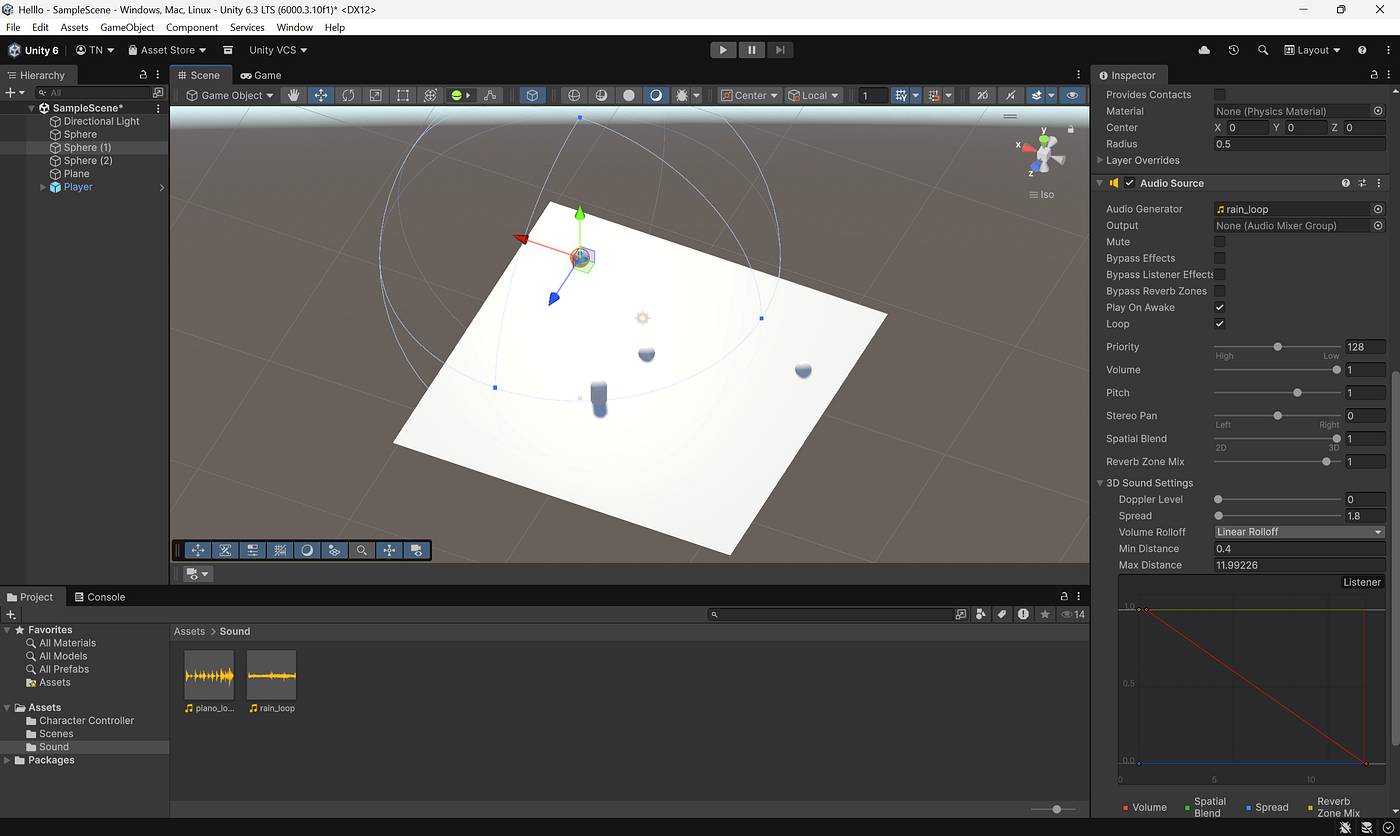
- Loop.
- Pitch, negative for turning music back.
- Spatial Blend max for 3D sounds for 3D objects.
- Doppler level, similar to the echo in the mountain, min 0.
- Spread keep 1.8.
- Volume Rolloff for Linear.
- Min max based on the object’s size overall, keep them overlapping for the fade-in and fade-out effect transition between environments.
메타데이터
- post_id
- ea29f49d20c7
- slug
- stu1-asm3-rmit-sound-in-unity-lecture-ea29f49d20c7
- url
- https://medium.com/@thinnhntrndng/stu1-asm3-rmit-sound-in-unity-lecture-ea29f49d20c7
- canonical_url
- https://medium.com/@thinnhntrndng/stu1-asm3-rmit-sound-in-unity-lecture-ea29f49d20c7
- author_url
- https://medium.com/@thinnhntrndng
- status
- ok
- fetched_at
- 2026-06-09 15:37:30