Two Rooms, One Lie
The Architecture of a Dream
Two Rooms, One Lie
The Architecture of a Dream
My subconscious did not give me a metaphor. It built me a house.
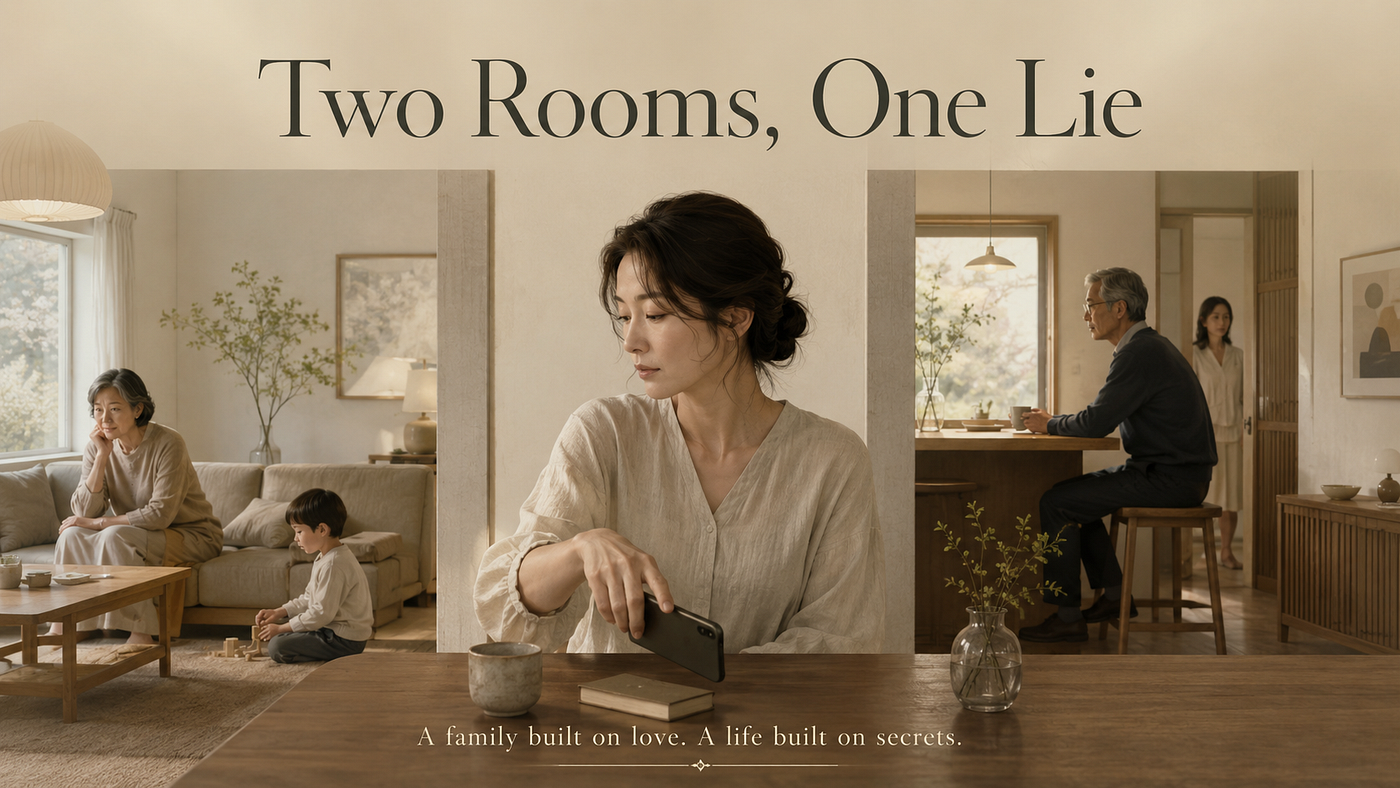
There were two living rooms, open to each other, joined without a door. In the first, her mother slept on the sofa. One of my children was nearby. A few of her friends lingered there too, not quite guests, not quite witnesses, already arranged by the dream into the shape of an audience.

In the second room, her father sat on a stool at a high table. He was awake, technically. His eyes were open. But he had the serene vacancy of a man who had learned, over many years, that peace is often purchased by not looking too closely at the thing happening directly beside him.
And there she was, seated near him, phone in hand.
Then came the old gesture: the Pancake Flip.
Not the casual turning over of a device. Not privacy. Not a person simply setting a phone down. It was the reflexive little violence of concealment — the screen seized, hidden, pressed toward the body as if the truth itself had suddenly become contraband.
I saw the panic before I understood the facts. The body always confesses first.
Cornered, she admitted there was someone else. A man in Minami Fukuoka. It had begun, she said, after I had flown out of Japan, under the cover of an ordinary errand — a Mercari transaction, perhaps, one of those banal little openings through which an entire life can collapse.
The Costume of Outrage
In the dream, I did what wounded men do when pain offers them a costume.
I became righteous.
I shouted. I occupied the high ground of betrayal. I reached, almost eagerly, for the ancient crown of the wronged man. There is a narcotic hidden inside moral outrage. For a few seconds, it lets you feel clean.
She knew her role too. She ran from the high table into the other room, toward the sleeping mother, toward the friends, toward the available court of public sympathy.
“See?” she cried, pointing back at me. “He is abusive.”
And then something in the dream broke.
Not because she was innocent. Not because I was. But because the architecture had become too visible to keep pretending it was a home.
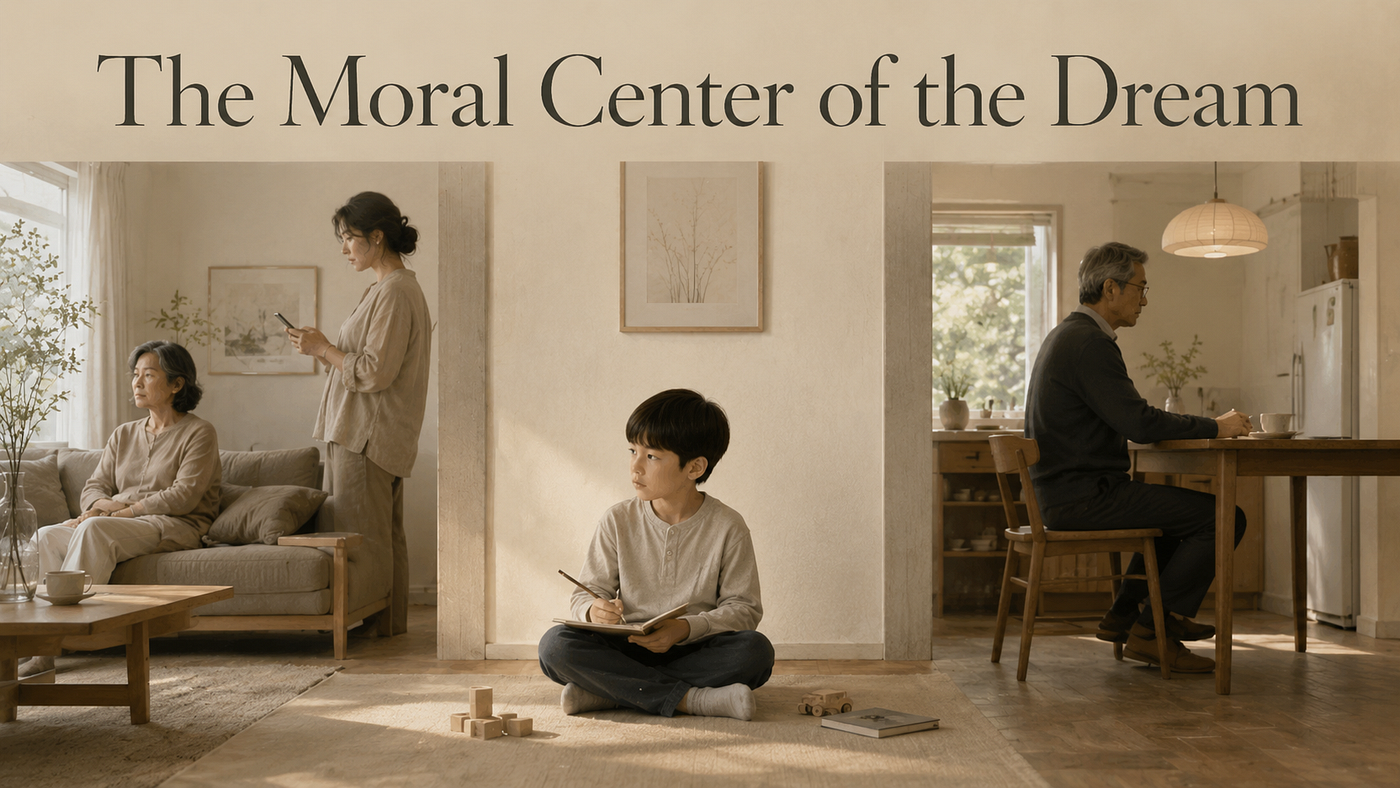
I looked at the sleeping mother, the father still perched in his careful blindness, the friends preparing their verdict, the child absorbing the grammar of adult deceit. And suddenly my rage lost its oxygen.
I laughed.
“Wait,” I said. “You were not only cheating on me. You were cheating on him too — with me.”
That was the obscene little revelation. The other man was not the only secret. I was also the secret. I was the physical life she returned to, the body in the room, the father of the children, the man who kept arriving from overseas and mistaking access for truth.
Everyone had been assigned a false role. He was the digital beloved. I was the domestic fact. She was the victim when watched, the strategist when unwatched. Her parents were arranged like furniture around the denial. The friends were the jury. The child was the inheritance.
We were not people anymore.
We were rooms.
And each room had its own lie.
The Rooms We Build
It is easy to theorize about digital ghosts and the split-screen self. It is easy to coin words like integris and demand an undivided life. But the dream forced a harsher question: What good is a manifesto if, when the house lights come on, I am still standing there in costume?
Because I know the Pancake Flip. I know the hidden screen. I know the thrill of being elsewhere while pretending to be here. I brought my own divided self into the marriage long before I had the language to condemn anyone else’s. I entered family life carrying the habits of a man who had once treated attention as conquest, romance as strategy, desire as a game to be optimized.
I wanted the innocence of the betrayed without surrendering the history of the betrayer.
That is the secret bargain of the wounded ego: let me use your sin to erase mine.
But no family can survive that bargain. It only creates more rooms: one for what happened, one for what we admit, one for what the children sense but cannot name, and one for the version we perform when other people are watching.
In Japan, I encountered this through the language of harmony — the exquisite social art of not disturbing the surface. Read the air. Avoid shame. Keep the room intact. Let the sleeping mother sleep. Let the father remain peacefully untroubled on his stool. Do not force the private rot into public speech.
But this is not only Japan. Every culture has its own way of protecting the lie. Some do it with politeness. Some with therapy language. Some with religion. Some with individualism. Some with the word “privacy.” Some with the word “family.”
The method changes. The fear does not.
And yet I understand the temptation. Harmony feels merciful in the moment. Silence looks like kindness when the truth would detonate the room. Parents tell themselves they are protecting the children. Partners tell themselves they are avoiding unnecessary pain. Everyone becomes curator, diplomat, stagehand.
But children are not fooled by architecture. They may not know the names of the ghosts, but they know which rooms are haunted.
That is what made the dream unbearable. Not the cheating. Not the phone. Not even the absurdity of being transformed into the villain at the exact moment I had discovered the betrayal.
It was the child.
The child in the room is the moral center of the dream. Not me. Not her. Not the sleeping mother, the oblivious father, or the friends waiting to decide which adult looked more convincing.
The child.
Because when adults live divided lives, they do not merely betray each other. They teach division as a survival skill. They teach that love means performance, that peace means suppression, that truth is something to be managed rather than inhabited.
And then we wonder why the next generation cannot build anything whole.
Start With the End First
When we look at the wreckage of modern intimacy, we like to tell ourselves that raising children in an open, honest family is just a Disney fantasy.
But the fantasy was never honesty.
The fantasy was effortlessness.
The fantasy was the belief that a family could remain pure without daily acts of courage. That vows could substitute for discipline. That love, once declared, would somehow maintain itself.
A real family is not a castle. It is not a brand. It is not a photograph where everyone smiles in coordinated colors while the adults bleed quietly off-camera.
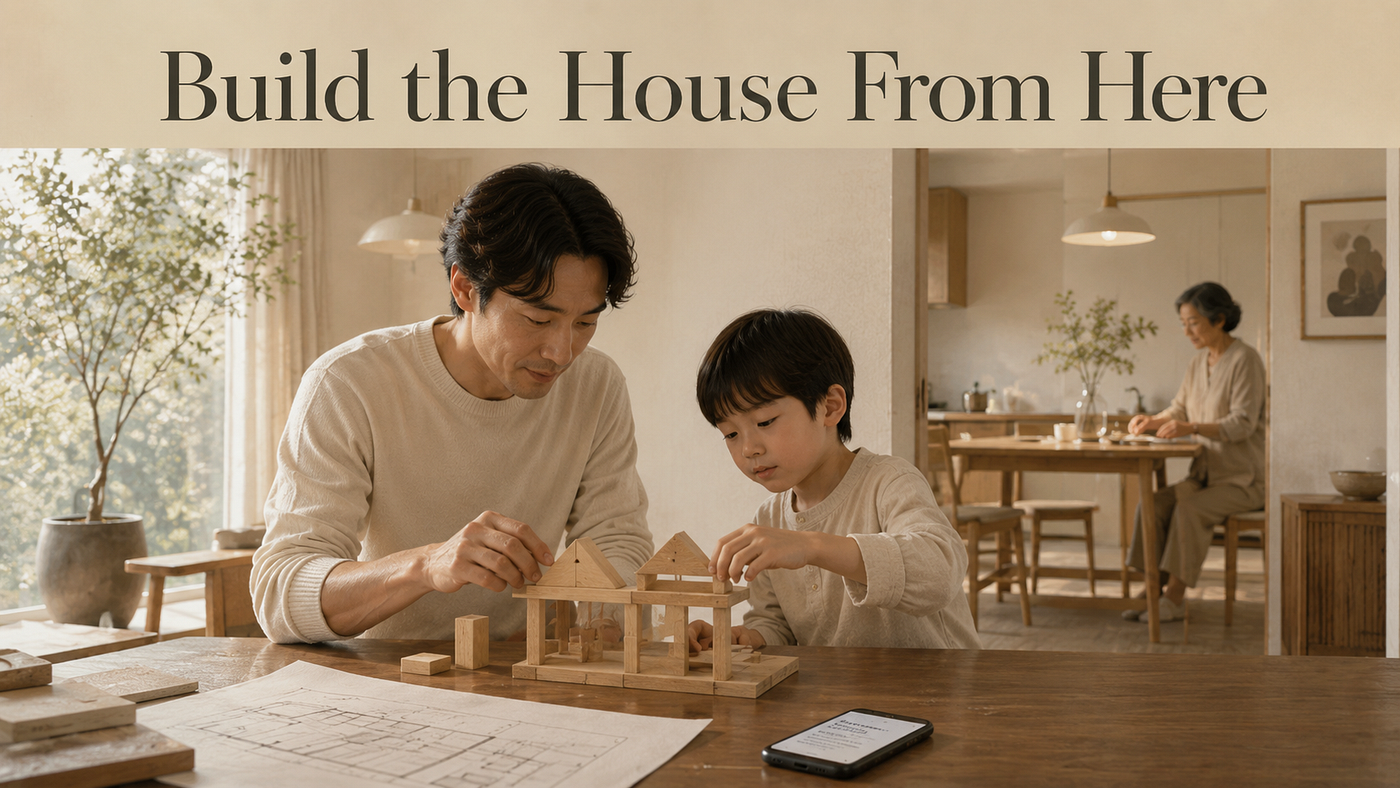
A real family is a practice. It is the phone placed face-up on the table. It is the sentence spoken before the secret becomes a second life. It is the humility to confess desire before desire hardens into betrayal. It is the refusal to call concealment privacy. It is the willingness to disappoint someone with the truth rather than comfort them with a lie.
And it is also this: the father admitting that he was not merely injured by the house. He helped build it.
To my children, if you ever read this, I do not offer it as a monument to my pain. I offer it as evidence. Evidence of what happens when adults become clever instead of honest. Evidence of how quickly love curdles when everyone is managing appearances. Evidence of how a home can contain two rooms, two stories, two selves, and still call itself intact.
Do not inherit our architecture.
Start with the end first. Before you bind your life to another person, ask what kind of ending your daily habits are building. If the goal is comfort, you will eventually lie to preserve it. If the goal is admiration, you will become whatever earns applause. If the goal is control, you will confuse secrecy with freedom.
But if the goal is wholeness, then live in such a way that no one has to discover you.
Be one person.
Not perfect. Not desireless. Not immune to temptation. Just undivided enough that the people who love you are not forced to compete with ghosts.
Do not live in two rooms.
Let the mother wake. Let the father look. Let the friends leave. Let the child see at least one adult tell the truth without costume.
Place the phone face-up on the table.
Then build the house from there.
메타데이터
- post_id
- ea2cc1eaa470
- slug
- two-rooms-one-lie-ea2cc1eaa470
- url
- https://medium.com/@fcarbullido/two-rooms-one-lie-ea2cc1eaa470
- canonical_url
- https://medium.com/@fcarbullido/two-rooms-one-lie-ea2cc1eaa470
- author_url
- https://medium.com/@fcarbullido
- status
- ok
- fetched_at
- 2026-06-09 15:37:30