How Can a BIS Consultant Help Foreign Manufacturers?
For foreign manufacturers eyeing the Indian market, the opportunity is hard to ignore — a massive consumer base, growing purchasing power…
How Can a BIS Consultant Help Foreign Manufacturers?
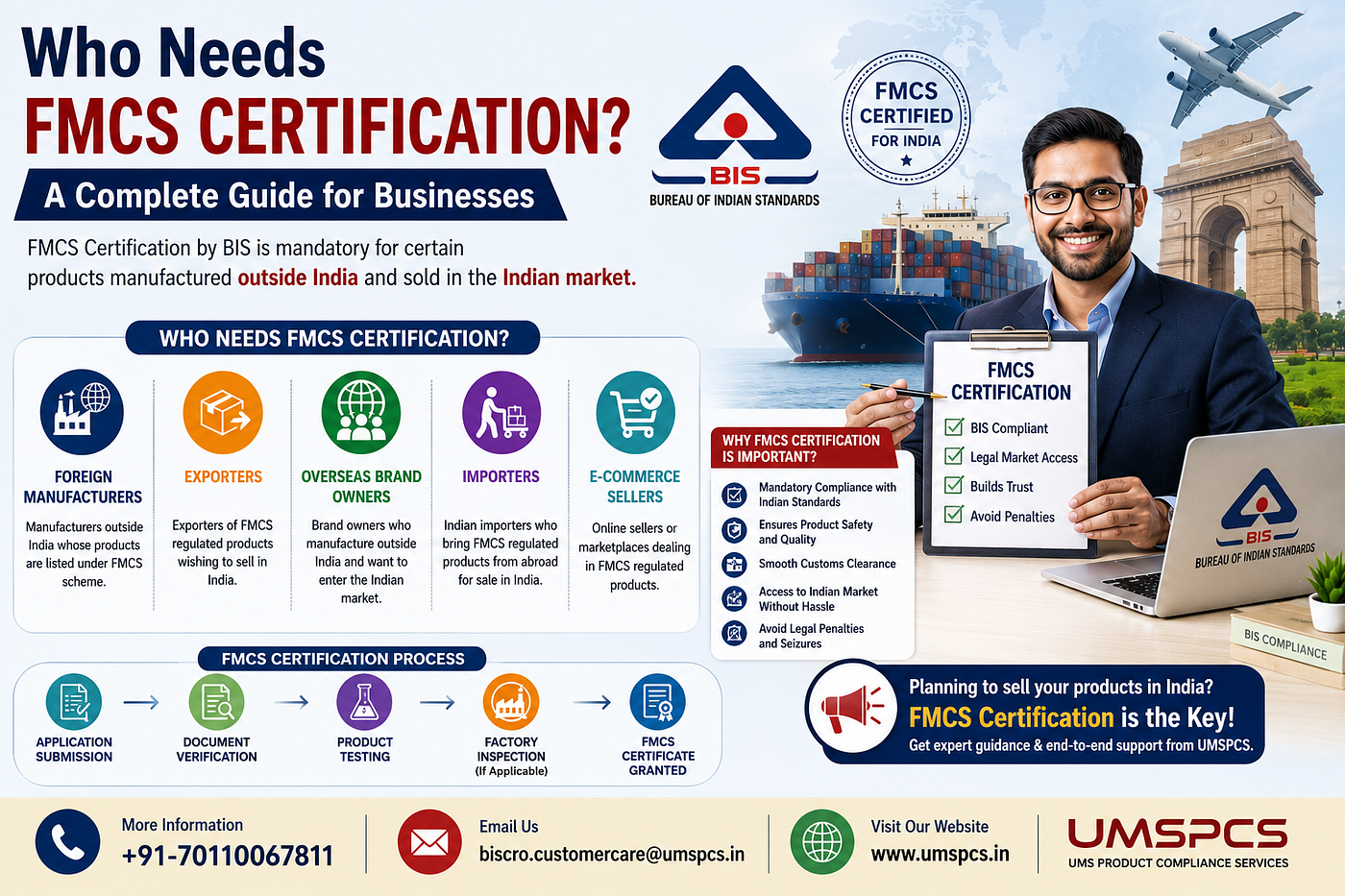
For foreign manufacturers eyeing the Indian market, the opportunity is hard to ignore — a massive consumer base, growing purchasing power, and rising demand across electronics, appliances, industrial equipment, and consumer goods. But entering this market isn’t as simple as shipping products across the border. India regulates a wide range of product categories through the Bureau of Indian Standards (BIS), and for manufacturers based outside the country, this regulatory layer can feel unfamiliar and, at times, genuinely confusing. This is exactly the gap a specialized BIS consultant like UMSPCS is built to close.
Why Foreign Manufacturers Face Unique Challenges
Domestic Indian manufacturers deal with BIS requirements as part of their regular operating environment — they understand the local regulatory office, the documentation conventions, and the general rhythm of the certification process. Foreign manufacturers, on the other hand, are often encountering India’s regulatory system for the first time, and several factors make this genuinely harder to navigate from abroad:
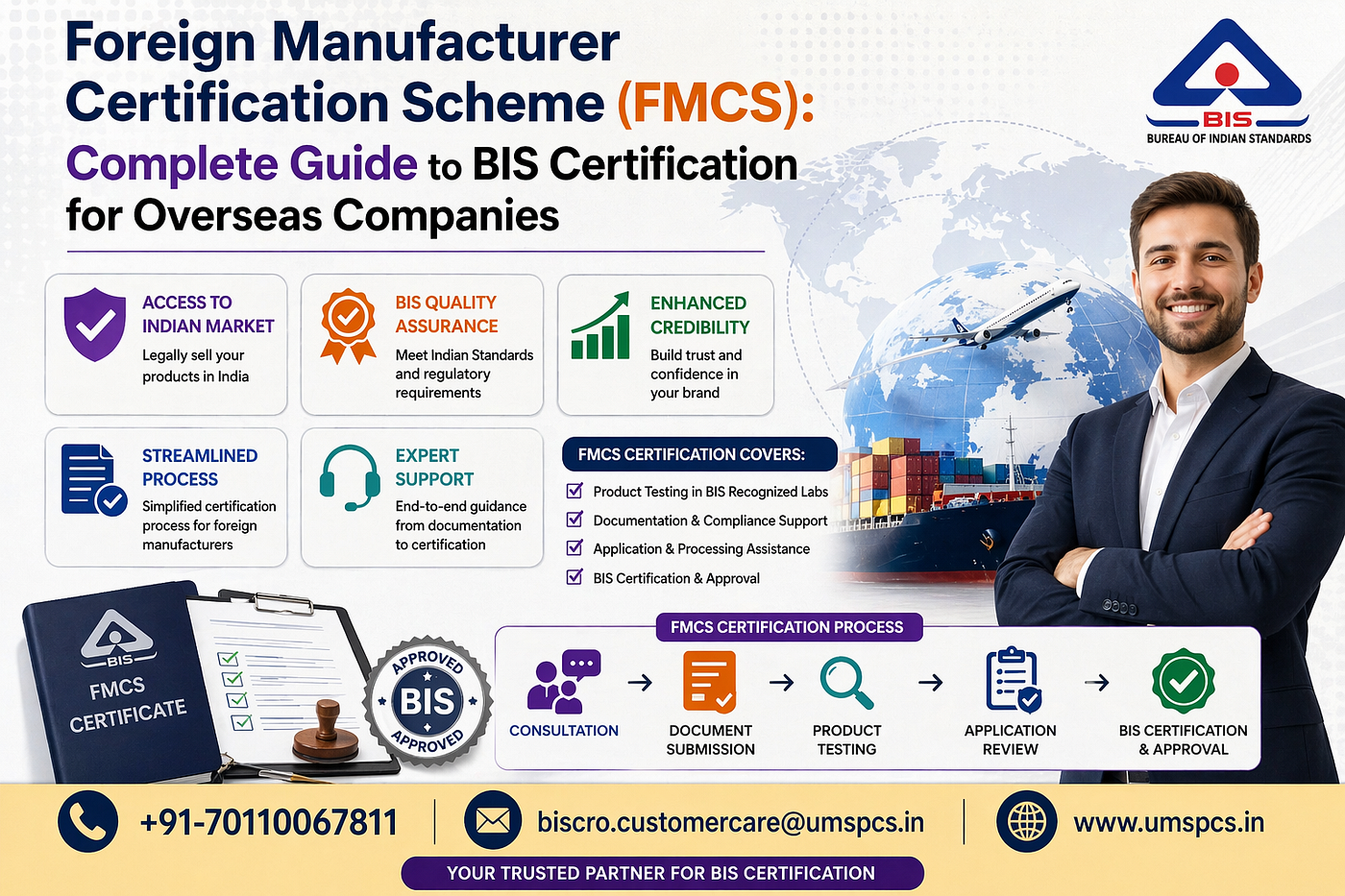
Unfamiliar Regulatory Structure. BIS operates through multiple schemes — ISI Mark, Compulsory Registration Scheme (CRS), and the Foreign Manufacturers Certification Scheme (FMCS) — each with different applicability rules. Determining which one applies to your specific product isn’t always obvious without local expertise.
Cross-Border Documentation Requirements. Many BIS applications require notarized and apostilled documents, translated technical files, and specific formatting that aligns with Indian regulatory expectations — details that are easy to get wrong from outside the country.
Read more about Bis consultant in USA.
Time Zone and Communication Gaps. BIS reviewers may raise queries that need prompt responses, and coordinating this across time zones without a local point of contact often introduces unnecessary delays.
Mandatory Local Representation. Certain schemes legally require appointing an Authorized Indian Representative, which is a structural requirement foreign manufacturers can’t bypass, and one they typically need help setting up correctly.
Key Ways a BIS Consultant Supports Foreign Manufacturers
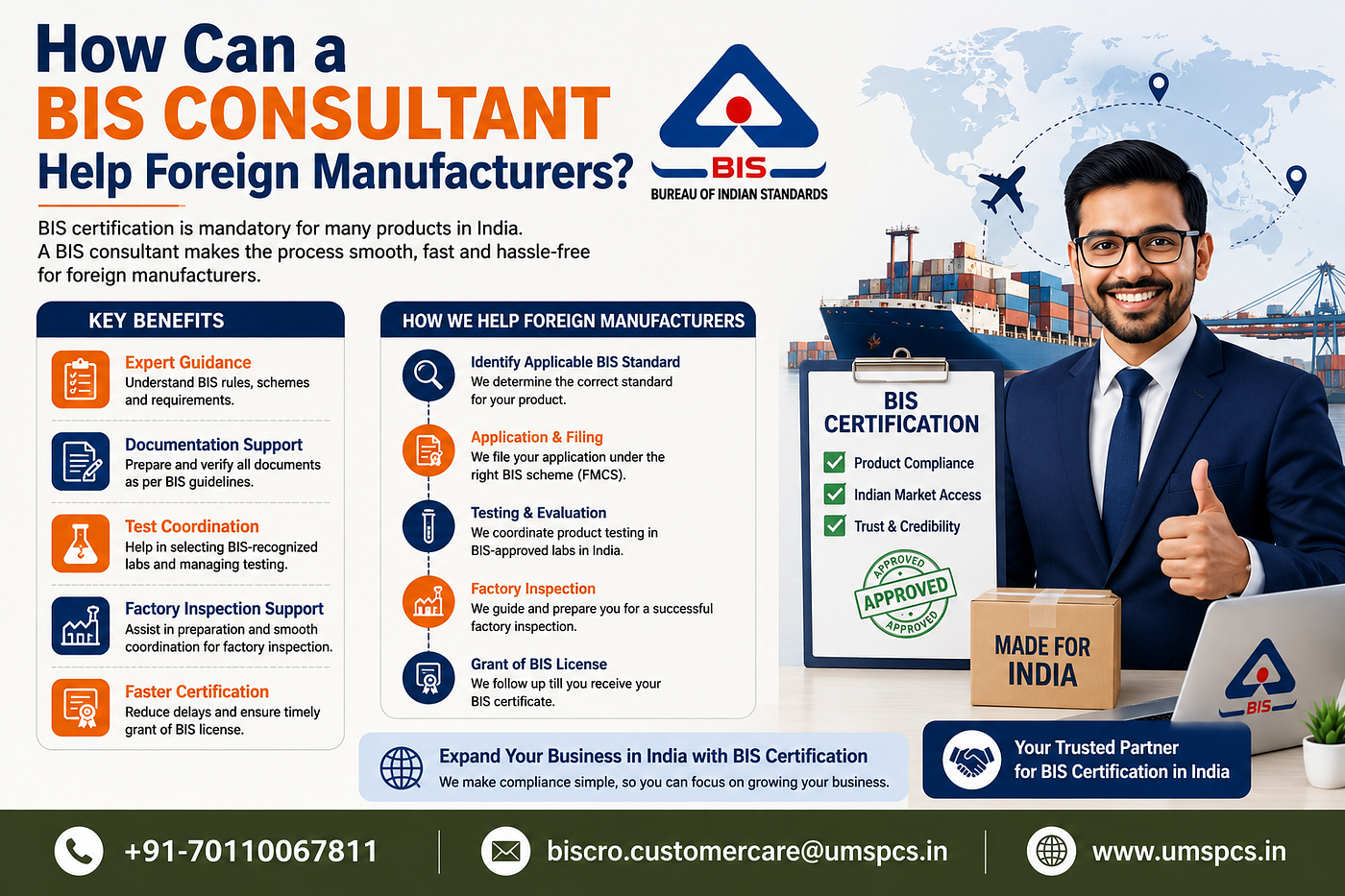
1. Identifying the Right Certification Pathway
Before anything else, a consultant determines exactly which BIS scheme applies to your product — whether that’s FMCS for goods manufactured entirely overseas, or another pathway if you have partial manufacturing or assembly operations within India. Getting this right at the outset prevents wasted time on an incorrect application track.
2. Managing the Full Documentation Process
From technical specifications to quality management certificates and manufacturing process details, a consultant compiles, reviews, and formats every document according to BIS’s exact expectations — including handling the notarization and apostille requirements that often trip up first-time applicants.
3. Appointing and Coordinating With an Authorized Indian Representative
Since foreign manufacturers are required to have a formal Indian point of contact for regulatory purposes, consultants either provide this representation directly or help structure the relationship with a qualified representative, ensuring all legal responsibilities are properly assigned.
4. Coordinating Overseas Factory Audits
Many BIS certification pathways for foreign manufacturers involve an on-site audit at the manufacturing facility abroad. Consultants prepare the facility for this inspection — covering quality systems, documentation, and process verification — and coordinate logistics with the inspection team.
5. Managing Testing and Lab Coordination
Depending on the product, samples may need to be tested at labs either in India or at approved facilities elsewhere. A consultant manages this testing pipeline, including sample shipment logistics and follow-up on test reports, keeping the process moving without unnecessary back-and-forth.
Read more about Bis consultant in Taiwan.
6. Handling Communication With BIS on Your Behalf
Rather than a foreign manufacturer’s team trying to interpret and respond to BIS queries across time zones and potential language barriers, a consultant serves as the direct communication bridge — translating regulatory language into clear action items and ensuring responses are accurate and timely.
7. Reducing Risk of Costly Rejections
A rejected application doesn’t just cost time; for foreign manufacturers, it can mean redoing overseas testing, re-coordinating audits, or restarting parts of an already resource-intensive process. Consultants review every element before submission specifically to avoid this outcome.
8. Supporting Long-Term Market Compliance
BIS certification isn’t a one-time achievement — most schemes require periodic renewals, surveillance audits, or reporting when product specifications change. A consultant provides continuity so that a manufacturer’s certification status doesn’t lapse simply because it’s easy to lose track of from outside India.
9. Providing Market Entry Clarity
Beyond the certification mechanics, an experienced consultant can help foreign manufacturers understand realistic timelines, cost expectations, and sequencing — information that’s valuable for planning product launches, distributor agreements, and shipment schedules into India.
The Bigger Picture: Why This Matters for Market Entry Strategy
For foreign manufacturers, BIS compliance isn’t just a legal formality to clear before shipping products — it directly affects business timelines, distributor confidence, and how quickly a product can actually generate revenue in the Indian market. A delayed or rejected application can push back launch dates by months, disrupt agreements with Indian partners, and create friction with customs authorities if products arrive without valid certification in hand.
Working with a consultant transforms this from an unpredictable variable into a manageable, well-sequenced process — something that matters enormously when a company is coordinating manufacturing, logistics, and market entry across two countries simultaneously.
How UMSPCS Supports Foreign Manufacturers
UMSPCS specializes in guiding foreign manufacturers through India’s BIS certification requirements, whether that involves FMCS certification, CRS registration for electronics product, or other applicable schemes. This includes pathway identification, full documentation management, Authorized Indian Representative coordination, factory audit preparation, and ongoing liaison with BIS throughout the review process. By managing the regulatory complexity end to end, UMSPCS allows foreign manufacturers to focus on their production and business strategy while their path into the Indian market stays firmly on track.
For any manufacturer serious about entering India, a knowledgeable BIS consultant isn’t an added expense — it’s the difference between a predictable, well-managed market entry and months of avoidable uncertainty.
Frequently Asked Questions
1. Is BIS certification mandatory for all foreign manufacturers selling in India?
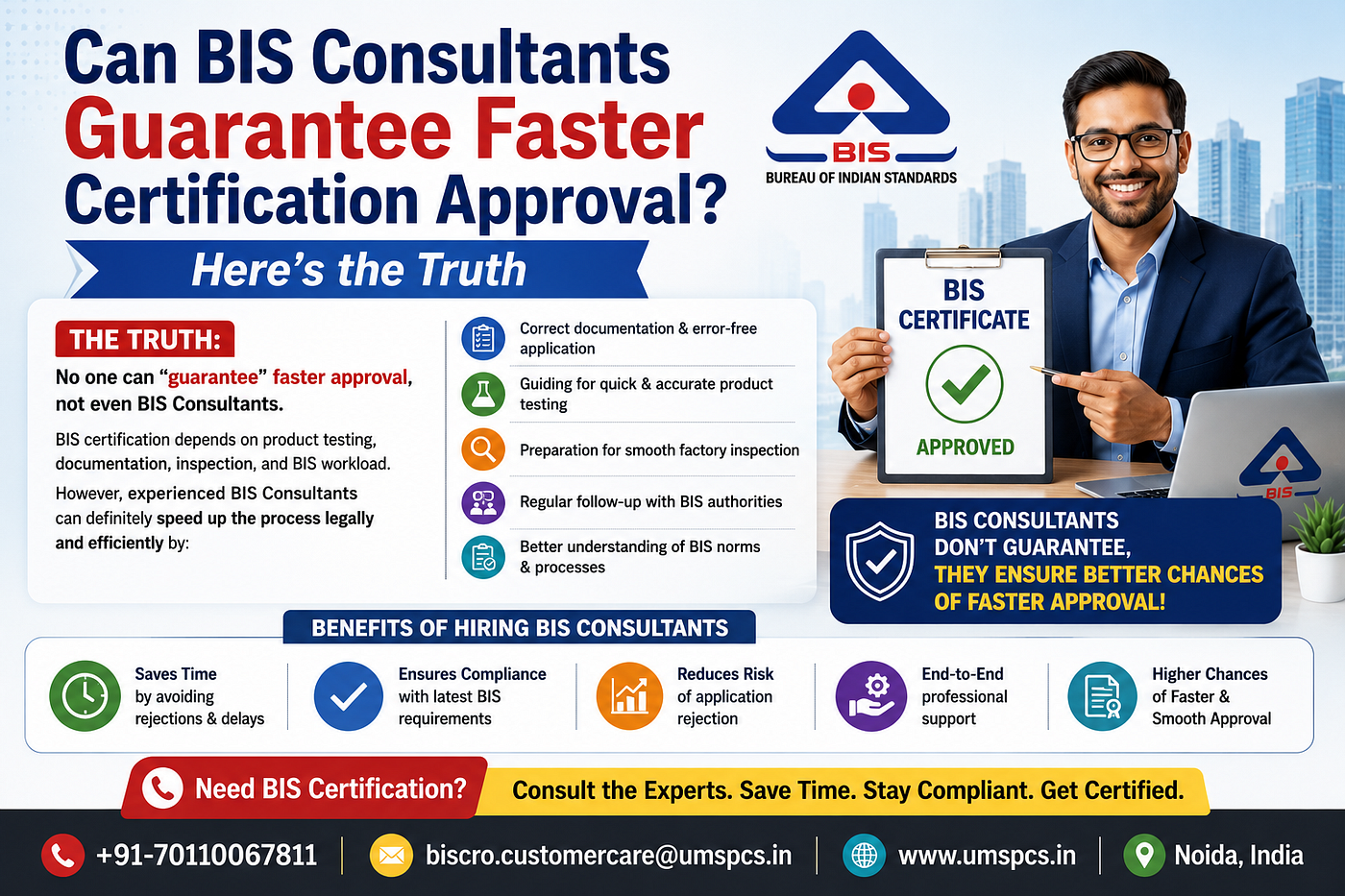
It’s mandatory only for products falling under BIS’s regulated categories, such as certain electronics, electrical appliances, and industrial goods. Not every product requires it, but many commonly traded categories do.
2. What is an Authorized Indian Representative, and why is it required?
An Authorized Indian Representative is a mandatory local point of contact that BIS requires foreign manufacturers to appoint for regulatory communication and compliance responsibilities within India.
3. Do foreign manufacturers always need a factory audit for BIS certification?
In most cases, yes, particularly under schemes like FMCS, where BIS or its appointed inspection agency verifies manufacturing and quality control processes at the overseas facility.
4. How long does BIS certification typically take for foreign manufacturers?
Timelines vary by product and scheme but generally take several months, factoring in documentation preparation, testing, and audit scheduling. Working with a consultant helps minimize avoidable delays.
5. Can a foreign manufacturer manage BIS certification without a consultant?
It’s possible, but the combination of cross-border documentation, mandatory local representation, and unfamiliar regulatory processes makes independent navigation considerably more time-consuming and risk-prone.
6. How does UMSPCS help foreign manufacturers with BIS certification?
UMSPCS provides end-to-end support, including pathway identification, documentation management, representative coordination, audit preparation, and ongoing communication with BIS, helping foreign manufacturers enter and stay compliant in the Indian market.
============================================================
메타데이터
- post_id
- ea2f7a4f4e5d
- slug
- how-can-a-bis-consultant-help-foreign-manufacturers-ea2f7a4f4e5d
- url
- https://medium.com/@isimarkindia/how-can-a-bis-consultant-help-foreign-manufacturers-ea2f7a4f4e5d
- canonical_url
- https://medium.com/@isimarkindia/how-can-a-bis-consultant-help-foreign-manufacturers-ea2f7a4f4e5d
- author_url
- https://medium.com/@isimarkindia
- status
- ok
- fetched_at
- 2026-07-16 09:36:51