Cross-Cutting Concerns in Java: Why AOP Matters
Modern software systems often grow into complex ecosystems. As developers, we aim to write clean, focused business logic — yet real-world…
Cross-Cutting Concerns in Java: Why AOP Matters
Modern software systems often grow into complex ecosystems. As developers, we aim to write clean, focused business logic — yet real-world requirements constantly introduce extra responsibilities: logging, security checks, performance monitoring, error tracking, transactions, auditing, and more.
These concerns appear everywhere, across many classes and methods. Over time, they clutter codebases, making systems harder to maintain and reason about.
This is exactly the problem that Aspect-Oriented Programming (AOP) was created to solve.
Why AOP Exists?
In traditional object-oriented design, cross-cutting concerns spread across multiple classes. This leads to:
- Duplicate code
- Reduced readability
- Increased maintenance cost
- Hard-to-change system-wide behaviors
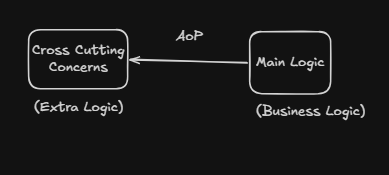
AOP separates these concerns into dedicated modules called aspects.
Aspect-Oriented Programming (AOP) is a way of organising code so that common tasks like logging, security checks, or transaction handling are separated from the main business logic. It allows us to automatically run extra code before, after, or around certain methods, without changing the original method’s code.
How AOP Works Internally (Conceptual View)
In many frameworks like Spring, AOP works by introducing a proxy layer.
Normal execution:
Client → Service → Method execution
With AOP:
Client → Proxy → Aspect logic → Real service → Aspect logic → Client
The proxy intercepts method calls and applies additional behaviour before or after execution.
Terminologies
- Aspect: A module in AOP that contains code of cross-cutting concerns.
- Advice: action taken by an aspect at a particular point in execution.
- Join Point: A join point is a place in your program (usually a method execution) where an aspect can run extra code.
- PointCut: A pointcut is an expression that selects which join points (places in the program) an aspect should apply to.
Types of Advice (Behaviour Applied by Aspects)
Common types include:
- Before advice — runs before method execution (e.g., security checks)
- After advice — runs after completion (e.g., logging)
- Around advice — wraps entire execution (e.g., performance monitoring)
- After throwing advice — runs when exceptions occur (e.g., error tracking)
Example:
1. Add dependency
<dependency>
    <groupId>org.springframework.boot</groupId>
    <artifactId>spring-boot-starter-aop</artifactId>
</dependency>
2. Business Logic
package com.example.demo.service;
import org.springframework.stereotype.Service;
@Service
public class UserService {
    public void createUser(String name) {
        System.out.println("Creating user: " + name);
    }
}
3. Create Aspect
package com.example.demo.aspect;

import org.aspectj.lang.JoinPoint;
import org.aspectj.lang.annotation.*;
import org.springframework.stereotype.Component;

@Aspect
@Component
public class LoggingAspect {
    // Pointcut: apply to all methods inside service package
    @Pointcut("execution(* com.example.demo.service.*.*(..))")
    public void serviceMethods() {}

    // Before advice
    @Before("serviceMethods()")
    public void logBefore(JoinPoint joinPoint) {
        System.out.println("Method started: " + joinPoint.getSignature().getName());
    }

    // After advice
    @After("serviceMethods()")
    public void logAfter(JoinPoint joinPoint) {
        System.out.println("Method finished: " + joinPoint.getSignature().getName());
    }
}
If I call:
userService.createUser("Raj");Output will be:
Method started: createUser
Creating user: Raj
Method finished: createUser
Notice:
- We never added logging inside
UserService. - The aspect automatically applies logging.
- Spring created a proxy behind the scenes.
In the code:
- Aspect →
LoggingAspect - Join Point →
createUser()execution - Pointcut → execution (
*com.example.demo.service.*.*(..)) - Advice →
@Beforeand@After
In this example, the logging behaviour is separated from the business logic. The aspect intercepts method execution in the service layer and automatically injects logging, demonstrating how AOP modularises cross-cutting concerns.
AOP is widely used in enterprise systems for:
- Logging and auditing
- Security authorization
- Transaction management
- Performance monitoring
- Metrics collection
- Retry logic
- Distributed tracing
Final Thoughts
Aspect-Oriented Programming (AOP) is not just a coding technique — it’s a smarter way to organise your code.
Instead of repeating common tasks like logging, security checks, or transaction handling in many places, AOP keeps them in one central place and applies them automatically where needed.
This keeps your main business logic clean and easy to understand.
When you understand AOP, you’re not just learning a feature of a framework — you’re learning how large, well-designed systems stay organised and maintainable.
메타데이터
- post_id
- ea387ee477e1
- slug
- cross-cutting-concerns-in-java-why-aop-matters-ea387ee477e1
- url
- https://medium.com/@rajrsharma2004/cross-cutting-concerns-in-java-why-aop-matters-ea387ee477e1
- canonical_url
- https://medium.com/@rajrsharma2004/cross-cutting-concerns-in-java-why-aop-matters-ea387ee477e1
- author_url
- https://medium.com/@rajrsharma2004
- status
- ok
- fetched_at
- 2026-06-21 07:44:09