Whittier Trees (Almost) Go to Court
A legal battle over the future of Uptown Whittier’s iconic ficus tree canopy has entered a decisive stage as a Los Angeles County Superior…
Whittier Trees (Almost) Go to Court

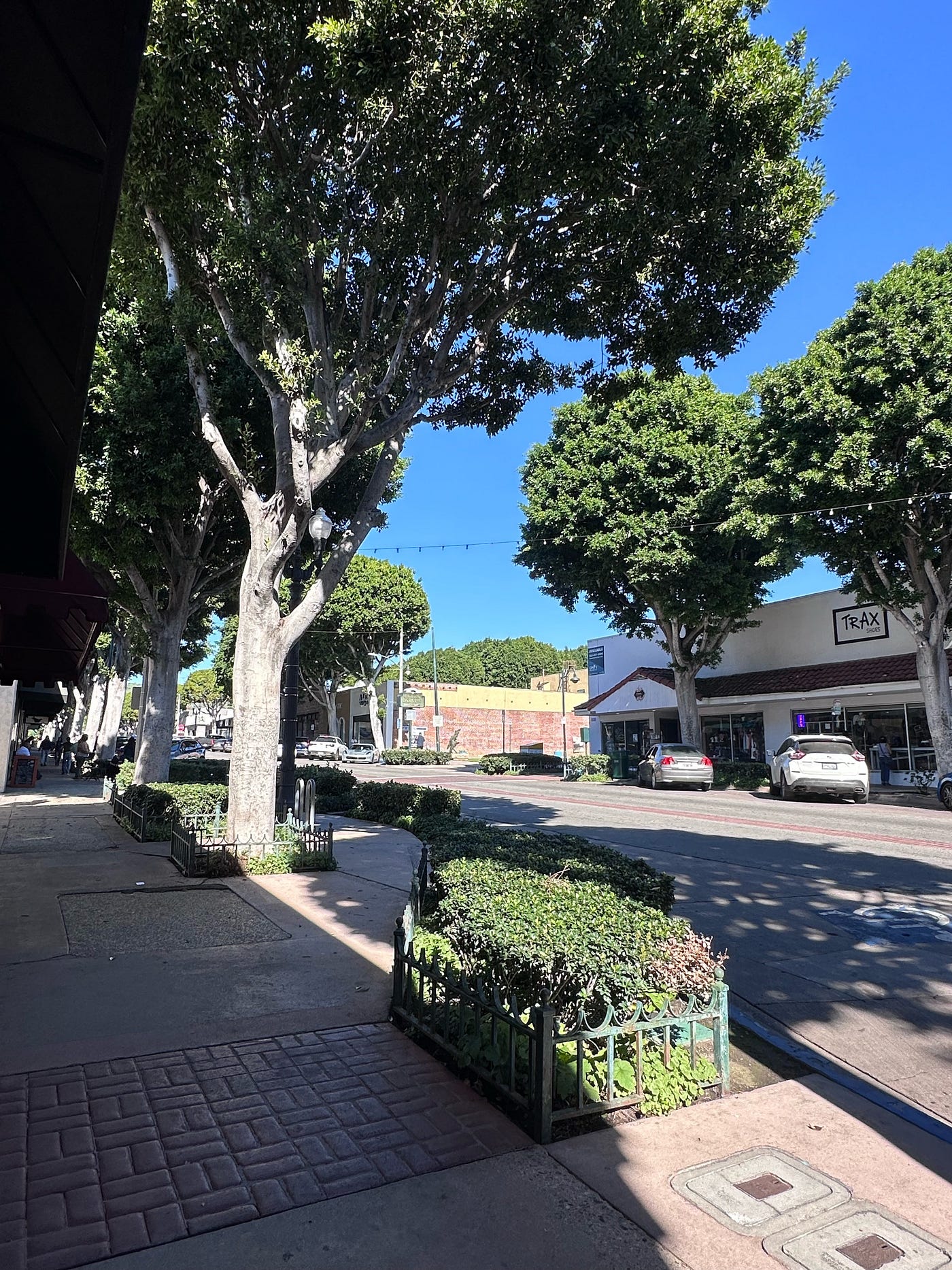
The City of Whittier is facing a lawsuit over the 180 ficus trees. / Courtesy of the Los Angeles Times
A legal battle over the future of Uptown Whittier’s iconic ficus tree canopy has entered a decisive stage as a Los Angeles County Superior Court judge reviews whether the City of Whittier followed environmental law when approving plans to remove 180 trees along Greenleaf Avenue from Penn Street to Hadley Street.
The lawsuit, filed by the Whittier Conservancy, challenges the city’s Greenleaf Promenade redevelopment project and argues officials failed to adequately study environmental impacts before approving sweeping changes to one of the city’s most recognizable public spaces.
The case has evolved into one of the most consequential local environmental disputes in recent Whittier history, drawing residents, activists, business owners, and students into an ongoing debate about redevelopment, climate responsibility, and civic participation. As of now, the trial has been postponed until further notice.
Greenleaf Avenue functions as a social and commercial hub located just minutes from Whittier College, meaning the outcome could reshape a space frequently used by students for dining, gatherings, and community events.
City officials have consistently framed the Greenleaf Promenade project as a much-needed modernization effort intended to revitalize Uptown Whittier’s economy and infrastructure. According to city statements and reporting by the *Los Angeles Times,* leaders argue that ficus tree roots have damaged sidewalks and underground utilities, creating accessibility barriers and safety risks that make preservation incompatible with planned construction.
Mayor Pro Tem Cathy Warner previously acknowledged public concern but maintained that addressing Americans with Disabilities Act compliance and pedestrian safety required significant changes to the streetscape, stating officials wished there were “another solution” but believed removal was necessary to improve accessibility and mobility in the area.
In 2018, Justine Gurrola was walking in Uptown when she tripped on a raised sidewalk. She sustained severe head and bodily injuries: fractured wrists and elbow, bruising and abrasions to her left knee, a slit lip, and acute nasal bone fractures. She sued the City of Whittier for not maintaining their sidewalks and won the case and was awarded $7.5 million.
Opponents of the project argue that the City’s approach prioritizes redevelopment over environmental preservation and community identity. The ficus canopy, planted decades ago, provides continuous shade that reduces heat and supports wildlife habitats in Uptown’s dense commercial corridor. Environmental advocates claim removing mature trees would immediately reduce carbon capture and cooling benefits, effects replacement trees may take decades to restore.
The lawsuit alleges that the City violated the California Environmental Quality Act (CEQA), which requires agencies to fully analyze environmental consequences before approving major projects. Under CEQA, courts evaluate whether proper procedures were followed rather than deciding whether a project itself is good or bad policy, making documentation and environmental review central to the case.
Community organizer Conny McCormack, founder of Save Our Trees Whittier, has emerged as one of the most vehement voices opposing the removal. McCormack argues the conflict is not simply about aesthetics but about transparency and long-term environmental planning. Speaking about community reaction, she described widespread frustration among residents who view the trees as integral to daily life, explaining that people were “so outraged […] sitting under the trees on their favorite street, on Greenleaf.” Her organization has gathered thousands of petition signatures and organized outreach efforts aimed at slowing or halting the project while legal challenges proceed.
McCormack has also questioned the effectiveness of proposed replacements such as shade structures and smaller trees, arguing they fundamentally change how public space functions. In interviews discussing alternatives, she criticized the idea that tarps or artificial shade could replace a mature canopy, asking why the city would invest in temporary structures instead of repairing sidewalks and preserving existing trees.
She has further suggested that infrastructure problems attributed to ficus roots could be addressed through targeted repairs rather than full removal, reflecting a broader disagreement between residents and city officials over whether preservation and redevelopment must be mutually exclusive.
The controversy has mobilized residents beyond traditional environmental activism, drawing in workers, families, and local business patrons who see the trees as part of Whittier’s cultural identity.
Maggie Mo, a Whittier resident and employee at Galaxy Kids, framed the issue in ecological and moral terms, emphasizing the role trees play in everyday community life.
“God had created the trees; they give free oxygen,” Mo said, “why would anyone want to remove them?” Adding that families enjoy the space and that the canopy supports bird habitats and local ecosystems. She questioned the rationale behind removal, asking why a system that benefits residents and wildlife alike should be dismantled.
The lawsuit itself stems from decisions made between late 2023 and mid-2024, when the Whittier City Council approved revisions expanding the Greenleaf Promenade into a roughly $20-million project that included infrastructure upgrades such as water main and storm drain improvements.
Preservation groups argue those infrastructure components should have been evaluated together under environmental review rather than treated separately. According to the Whittier Conservancy, litigation became necessary only after compromise proposals were rejected despite extensive public testimony and study sessions.
Legal observers note that conflicts like Whittier’s are increasingly common across California, where cities attempting to modernize aging infrastructure face growing scrutiny over climate resilience and urban tree preservation. Similar lawsuits in Beverly Hills and Burbank have challenged tree removals tied to redevelopment projects, reflecting a broader statewide tension between economic revitalization and environmental protection. Courts have sometimes required additional environmental review, demonstrating how CEQA litigation can reshape planning timelines even when projects ultimately proceed.
For Whittier College students, the case offers a real-time example of how local governance decisions intersect with environmental policy and civic engagement.
As of now, the court has not issued a final ruling. If the judge sides with the Whittier Conservancy, the City could be required to complete a more extensive environmental review before moving forward, potentially delaying construction and reopening design discussions. If the City prevails, redevelopment may proceed, and tree removal could begin once permitting timelines are finalized. Either outcome may be appealed, meaning the dispute could continue well beyond the initial decision.
Until then, the ficus trees remain standing along Greenleaf Avenue, their future uncertain as legal arguments unfold. For supporters and opponents alike, the case represents more than a planning disagreement; it reflects competing visions of how cities should evolve in an era shaped by climate change, economic pressure, and community activism. As residents await the court’s decision, the debate surrounding Whittier’s canopy continues to raise larger questions about who shapes public space and whose voices ultimately guide the future of a city.
메타데이터
- post_id
- ea4f7e96a79c
- slug
- whittier-trees-almost-go-to-court-ea4f7e96a79c
- url
- https://medium.com/quaker-campus/whittier-trees-almost-go-to-court-ea4f7e96a79c
- canonical_url
- https://medium.com/quaker-campus/whittier-trees-almost-go-to-court-ea4f7e96a79c
- author_url
- https://medium.com/@pruiz3
- status
- ok
- fetched_at
- 2026-07-29 20:10:56