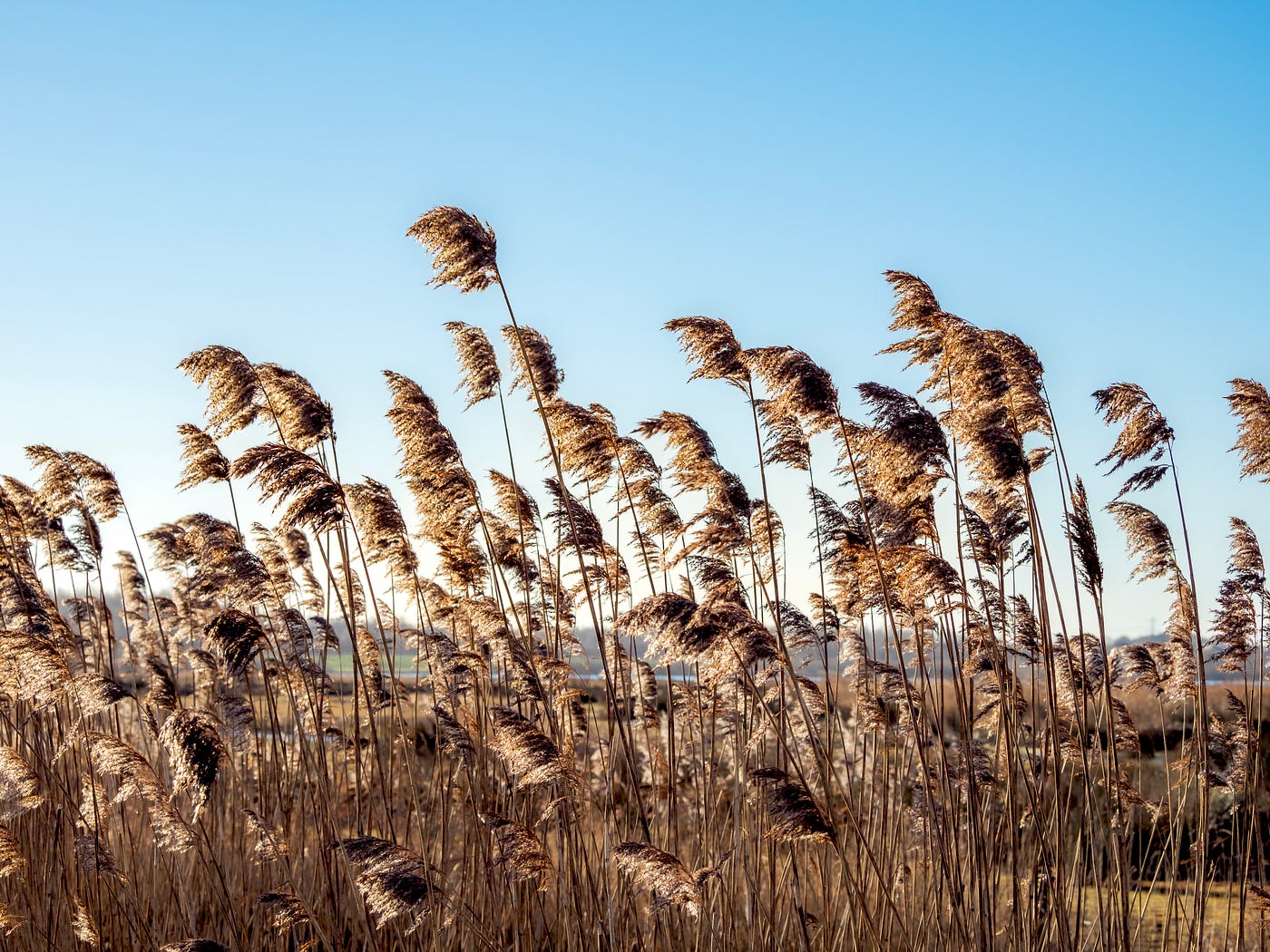
Malaysia — Tanjung Piai National Park, Tanjung Piai, 82300 Kukup, Johor, Malaysia
The most southerly point in mainland Asia
Malaysia — Tanjung Piai National Park, Tanjung Piai, 82300 Kukup, Johor, Malaysia
The most southerly point in mainland Asia
May 2015
Tanjung Piai National Park is located in Tanjung Piai, 82300 Kukup, Johor, Malaysia, and is a mangrove swamp nature reserve.
The park also contains the most southerly point in mainland Asia. Don’t believe all the claims that the most southerly point is in Sentosa, Singapore. Singapore is an island — it is not part of mainland Asia.
I first visited the park in 2012, and the Mangrove swamp wowed me — I have been back many times since.
The park is not that big, but it contains a lot to see. Trees, butterflies, Mud Clams (also called Marsh Clams; Polymesoda expansa), Mudskippers (Periophthalmodon spp), crabs (numerous types of crab, including Fiddler Crabs and the Tree Climbing Crab, Episesarma spp)), lizards (Mangrove Skink, Emoia atrocostata), Monitor lizards (also called Malayan Water Monitor; Varanus salvator), cicadas, Berongan (a shellfish, Telescopium telescopium) and monkeys (Long-tailed Macaque (Macaca fascicularis), also called Crab-eating macaques, and Dusky Leaf Monkey (Trachypithecus obscurus)). I have also seen Horse Shoe crabs (Carcinoscorpius rotundicauda), but only dead ones.

Photo by Author — local boats pulled up on the bank

Photo by Author — the road towards Tanjung Piai National Park

Photo by Author — the entrance to Tanjung Piai National Park
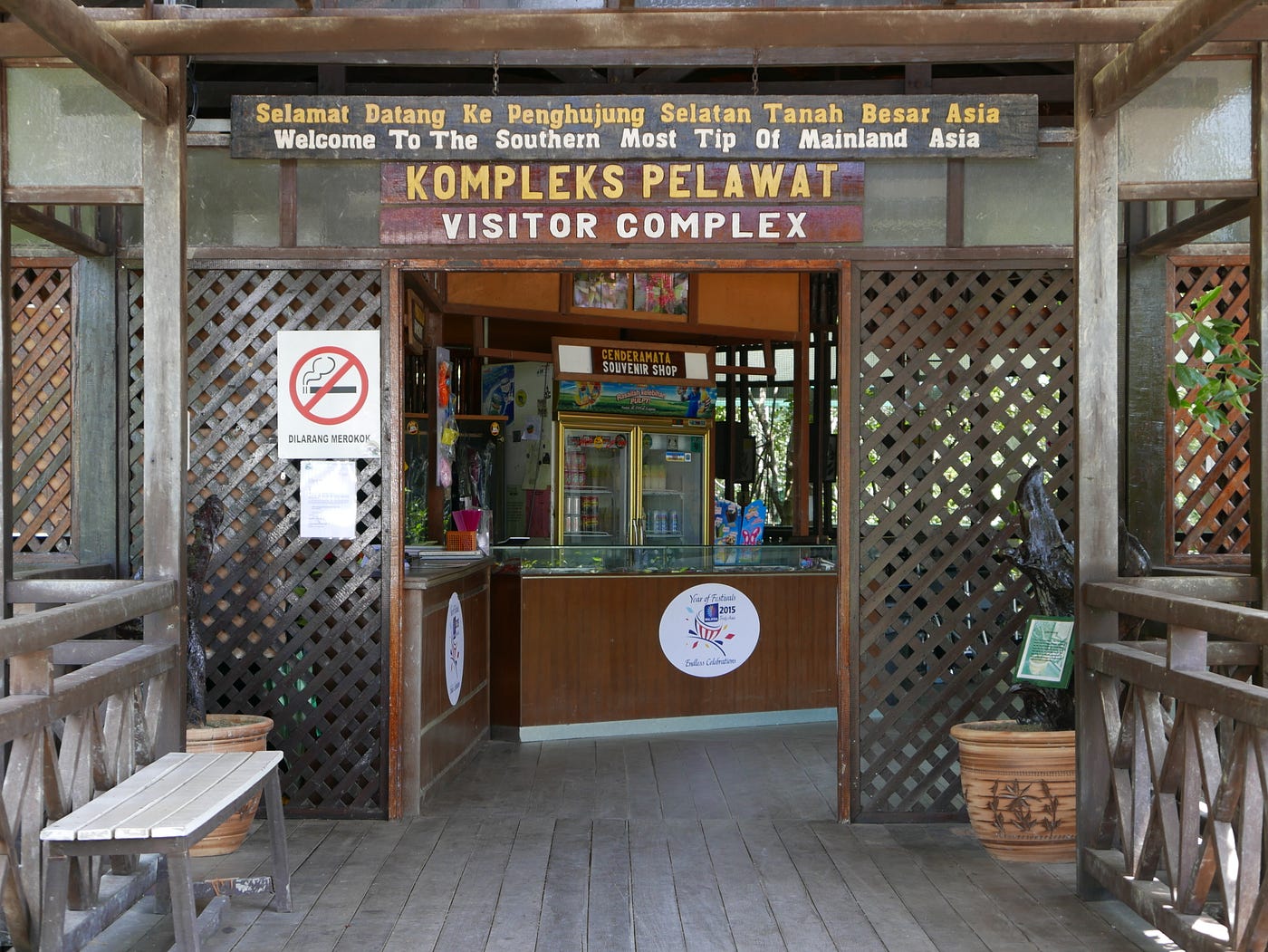
Photo by Author — Tanjung Piai National Park

Photo by Author — main walkway — Tanjung Piai National Park

Photo by Author — Tanjung Piai National Park

Photo by Author — mangrove swamp — Tanjung Piai National Park

Photo by Author — main walkway — Tanjung Piai National Park

Photo by Author — Tanjung Piai National Park

Photo by Author — mangrove tree roots — Tanjung Piai National Park

Photo by Author — Tanjung Piai National Park

Photo by Author — Tanjung Piai National Park

Photo by Author — you’ll never walk alone — Tanjung Piai National Park

Photo by Author — Tanjung Piai National Park — the most southerly point in mainland Asia
One thing visiting Tanjung Piai National Park proves is how much rubbish there is in the seas. The mangrove swamp catches a lot of rubbish in its roots.

Photo by Author — pollution — Tanjung Piai National Park

Photo by Author — pollution in the mangrove swamp — Tanjung Piai National Park
The park also has a problem with the erosion of the coast.
To protect the swamp, giant sandbags had been placed at the shoreline. Unfortunately, this hasn’t worked. The sandbags have leaked sand into the swamp and damaged the ecosystem.

Photo by Author — waterfront repairs — Tanjung Piai National Park
More of the failed sandbags.

Photo by Author — coastal protection — failed sandbags — Tanjung Piai National Park
The ruptured giant sandbags had spilt sand into the swamp, and it was now turning it into a beach.

Photo by Author — sand from ruptured coastal protection sandbags — Tanjung Piai National Park
The sand from the ruptured bags has also spilt over the walkways. It is possible that the new rocky breakwater (see below) is not helping and is trapping the sand.
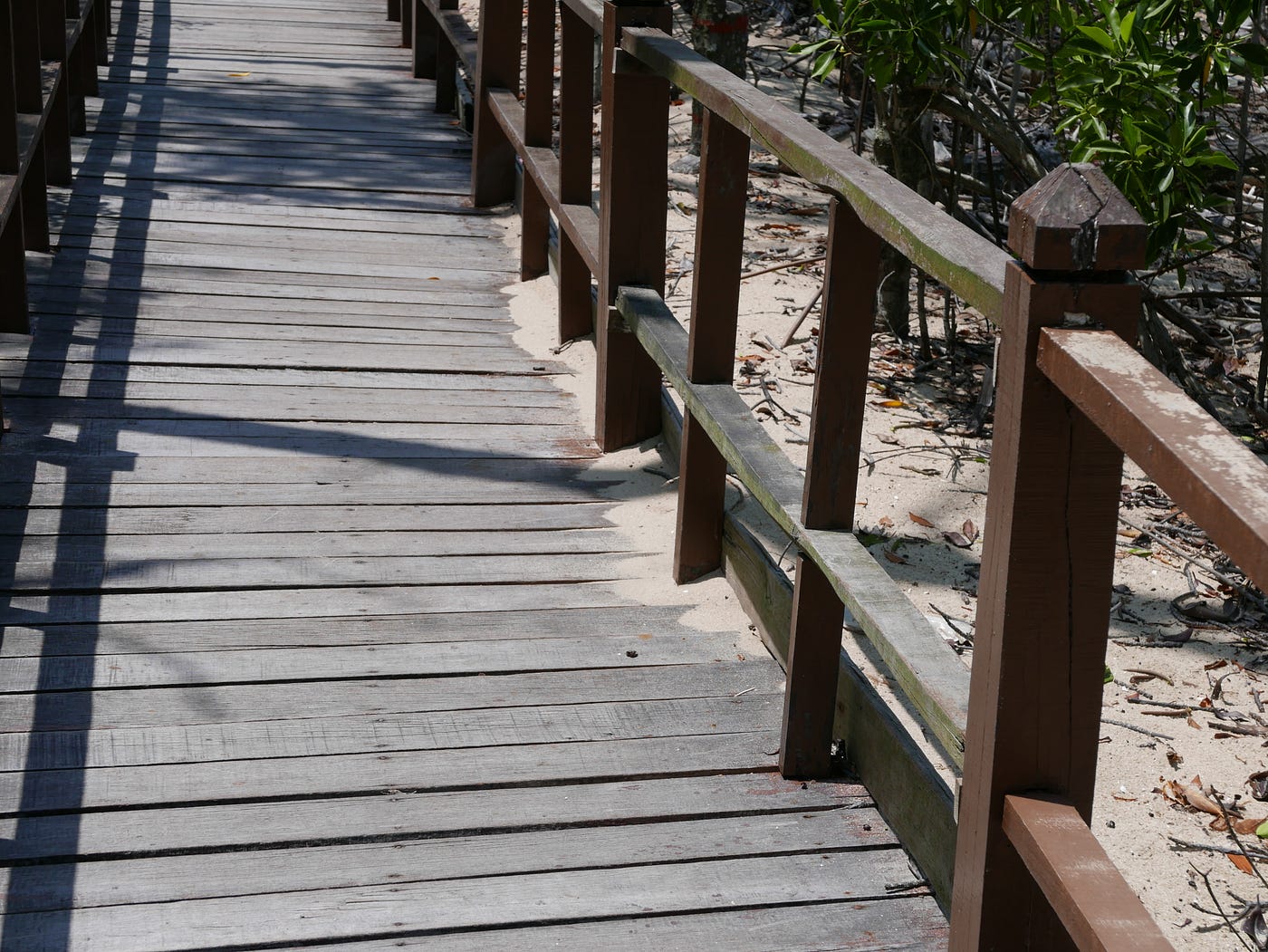
Photo by Author — sand from ruptured coastal protection sandbags — Tanjung Piai National Park
Some areas I remember as muddy swamps when I first visited in 2012 now look like a beach.

Photo by Author — sand from ruptured coastal protection sandbags — Tanjung Piai National Park
More coastal protection.

Photo by Author — coastal protection — Tanjung Piai National Park
Some new walkways have been put in and seem to be better constructed than the old all-wood walkways. Hopefully, these will last a bit longer.

Photo by Author — walkway — Tanjung Piai National Park
One of the old collapsed walkways next to the new.

Photo by Author — coastal erosion and collapsed walkway — Tanjung Piai National Park
The photo below shows the new walkway and sea defences (May 2015).

Photo by Author — coastal protection — Tanjung Piai National Park
The new sea defences are ugly.

Photo by Author — sea defences — Tanjung Piai National Park
Sadly, I couldn’t visit the most southerly point on this trip as a walkway had collapsed just before the main platform. You can see the collapsed walkway in the photos below.

Photo by Author — the most southerly point of mainland Asia with a collapsed walkway — Tanjung Piai National Park
The most southern point of mainland Asia with a collapsed walkway. This was as close as I could get.

Photo by Author — the most southerly point in mainland Asia with a collapsed walkway — Tanjung Piai National Park
I had to settle for going out on the fishing pier on this visit.

Photo by Author — fishing pier — Tanjung Piai National Park

Photo by Author — looking back down the fishing pier — Tanjung Piai National Park
Now for some wildlife.
On this short visit to the park, I spotted all the animals photographed below.
The mangrove swamp is home to the Mangrove Skink (Emola atrocostata). These are typically found in sunning themselves, and they will rapidly dive for cover if disturbed.

Photo by Author — Mangrove Skink (Emoia atrocostata) — Tanjung Piai National Park

Photo by Author — Mangrove Skink (Emola atrocostata) — Tanjung Piai National Park

Photo by Author — Mangrove Skink (Emola atrocostata) — Tanjung Piai National Park

Photo by Author — Mangrove Skink (Emola atrocostata) — Tanjung Piai National Park
Another lizard found in the mangrove swamp is the Malayan Water Monitor (Varanus salvator). These are impressive beasts, and there is something of the dinosaur about them. I find the way they walk, with their tongue flicking, quite disturbing.

Photo by Author — Malayan Water Monitor (Varanus salvator) — Tanjung Piai National Park

Photo by Author — Malayan Water Monitor (Varanus salvator) — Tanjung Piai National Park

Photo by Author — Malayan Water Monitor (Varanus salvator) — Tanjung Piai National Park
In Tanjung Piai National Park, it is worth looking at the swamp’s mud, as it is full of life. In the mud, you will see numerous crabs (e.g., Fiddler Crabs and Tree Climbing Crabs, Episesarma spp), shellfish such as Berongan (Telescopium telescopium) and Mudskippers (Periophthalmodon spp).

Photo by Author — crab — Tanjung Piai National Park
Crabs made the small holes and balls of sand in the photo below. On previous visits to the park, I saw no sign of this activity, as there wasn’t any sand.

Photo by Author — crab activity — Tanjung Piai National Park
And then you see things as shown in the photo below. I have no idea what made these marks.

Photo by Author — squiggles in the mud — Tanjung Piai National Park
Fidler crabs — beautiful colours and one ridiculously oversized claw.

Photo by Author — Fidler Crab — Tanjung Piai National Park

Photo by Author — Fidler Crab — Tanjung Piai National Park
The park also has Tree Climbing Crabs (Episesarma spp).
The photograph below is, I believe, of a Tree Climbing Crab, Episesarma spp. These crabs are much larger than the Fiddler Crabs and not so brightly coloured. However, they are still magnificent-looking creatures.

Photo by Author — crab — Tanjung Piai National Park
The Tree Climbing Crabs (Episesarma spp) photographed below also show one of the significant problems in the mangrove swamps — plastic washed in from the sea.

Photo by Author — crab and pollution — Tanjung Piai National Park
Below is a Berongan (Telescopium telescopium), which is so called because it looks like a telescope. The Berongan is edible. I liked this particular Berongan as the shell was clean and ideally positioned in the sun so that the beautiful structure and colours of the shell could be seen (usually, the shells are covered in mud and algae).

Photo by Author — Berongan (Telescopium telescopium) — Tanjung Piai National Park

Photo by Author — Berongan (Telescopium telescopium) — Tanjung Piai National Park
In the shallow waters, moving across the mud, or sitting in shallow circular pools, you will also see Mudskippers (Periophthalmodon spp).

Photo by Author — Mudskippers (Periophthalmodon spp) — Tanjung Piai National Park
I like Mudskippers as they always make me think about the first time life hauled itself out of the sea and onto dry land.
Tanjung Piai National Park is a great place to visit for wildlife.
I visited Tanjung Piai National Park many times and saw something new on each visit.
On some visits, I saw monkeys, and on two occasions, I saw the rare Dusky leaf monkey (Trachypithecus obscurus).
Oddly, I rarely saw any birds, they were around as I could hear them, but I never got a good look.
Originally published at https://www.nickswanderings.com/
메타데이터
- post_id
- ea52f9bfcb5
- slug
- malaysia-tanjung-piai-national-park-tanjung-piai-82300-kukup-johor-malaysia-ea52f9bfcb5
- url
- https://medium.com/@NicksWanderings/malaysia-tanjung-piai-national-park-tanjung-piai-82300-kukup-johor-malaysia-ea52f9bfcb5
- canonical_url
- https://medium.com/@NicksWanderings/malaysia-tanjung-piai-national-park-tanjung-piai-82300-kukup-johor-malaysia-ea52f9bfcb5
- author_url
- https://medium.com/@NicksWanderings
- status
- ok
- fetched_at
- 2026-08-28 00:54:48