A Brief History Of Calculus
Calculus is usually associated with Isaac Newton and Gottfried Wilhelm Leibniz, who are commonly called its founders. This is true in the…
A Brief History Of Calculus
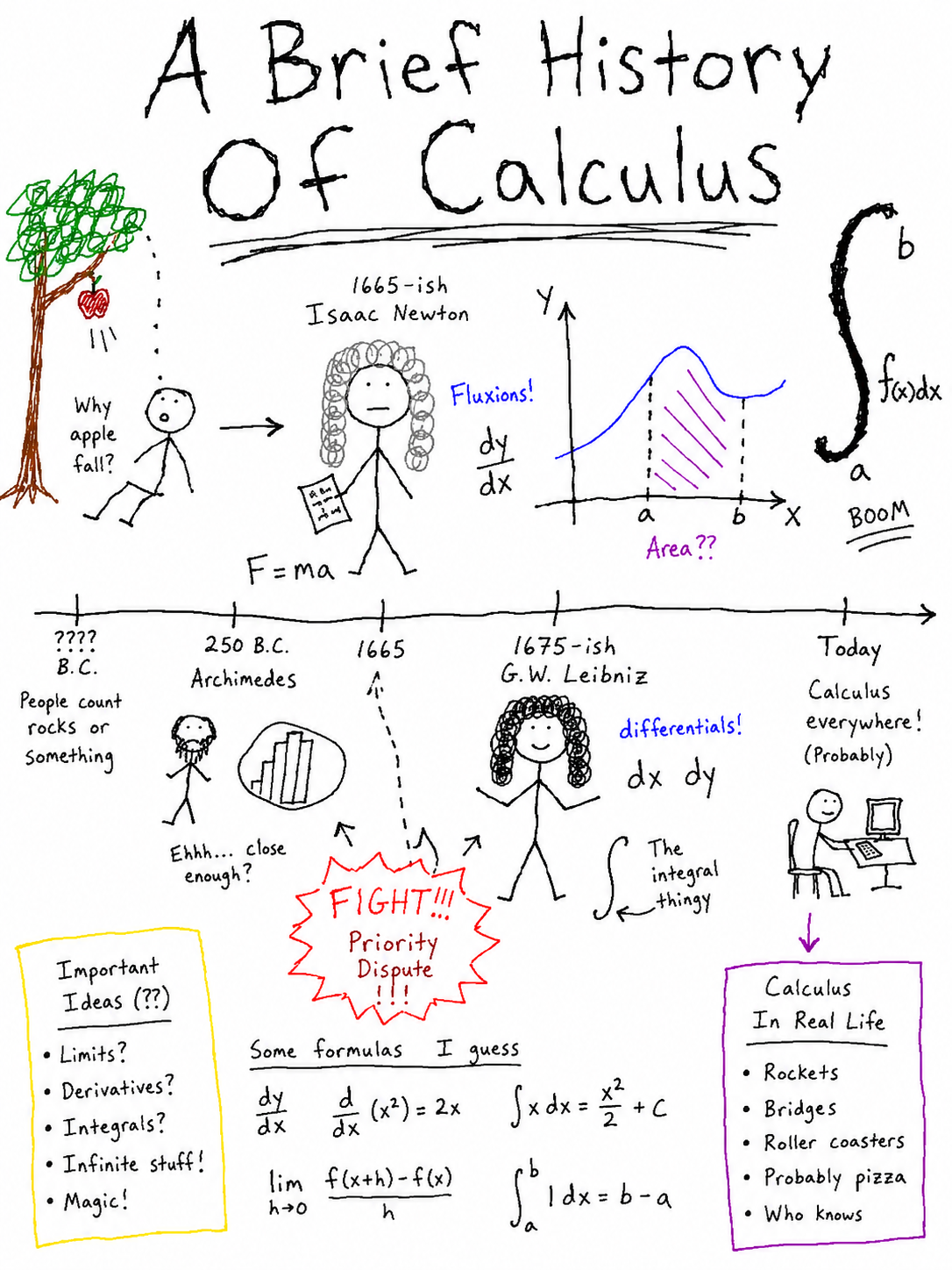
Calculus is usually associated with Isaac Newton and Gottfried Wilhelm Leibniz, who are commonly called its founders. This is true in the sense that they created calculus as a general symbolic method, but the ideas behind calculus developed over many centuries. Long before Newton and Leibniz, mathematicians were already studying problems involving areas, volumes, tangents, curves, limits, and infinite processes.
In modern calculus courses, differentiation is often introduced before integration because derivatives are usually easier to understand and compute. Historically, however, the development went in the opposite direction. The earliest calculus-like problems were problems of integration: finding areas, volumes, and lengths of curved figures.
Archimedes and the Beginning of Integral Ideas
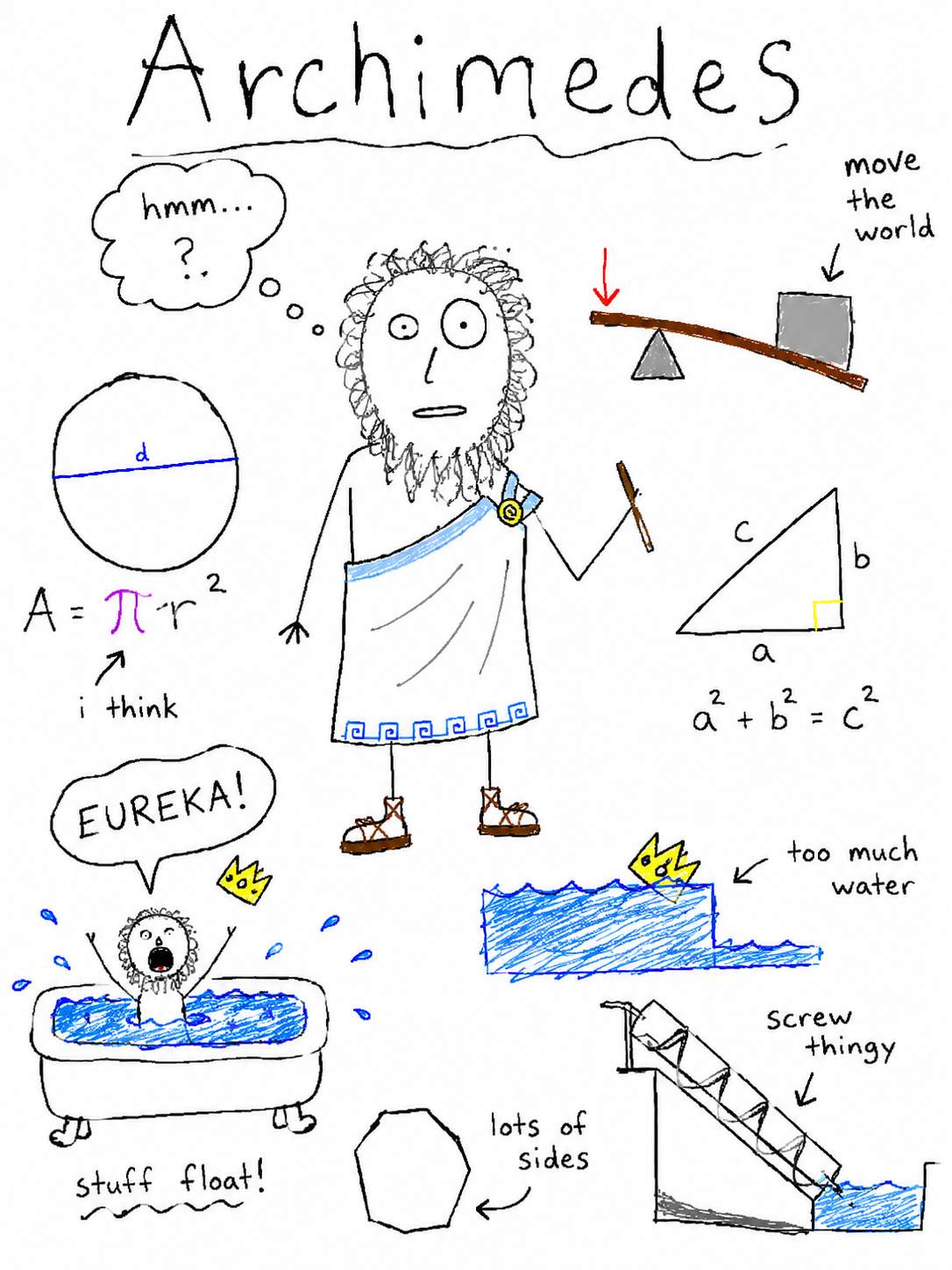
The first major steps toward calculus were made by ancient Greek mathematicians, especially Archimedes. His work represents the peak of ancient mathematics and the beginning of what later became integration.
Archimedes used the method of exhaustion, which involved approximating curved figures by simpler shapes, such as inscribed and circumscribed polygons. By increasing the number of sides, these approximations became closer and closer to the desired area or volume. This method was made rigorous through a double reductio ad absurdum argument, first developed by Eudoxus and later used by Euclid and Archimedes.
Using such methods, Archimedes found approximations for π\piπ, calculated areas and volumes involving circles, spheres, cylinders, cones, parabolas, ellipses, spirals, and solids of revolution. For example, he found the area of a parabolic segment and volumes of solids formed by rotating curves.
However, Archimedes also had another method, revealed in a manuscript rediscovered in 1906: The Method Concerning Mechanical Theorems, also called Archimedes’ Method. In this work, Archimedes used mechanical reasoning, especially the principle of the lever, to discover results before proving them rigorously by exhaustion.
Archimedes’ Mechanical Method
Archimedes’ mechanical method can be called an early infinitesimal method. He treated a plane figure as if it were made of many line segments and balanced those segments using the law of the lever.
One of his famous examples concerns the area of a parabolic segment.
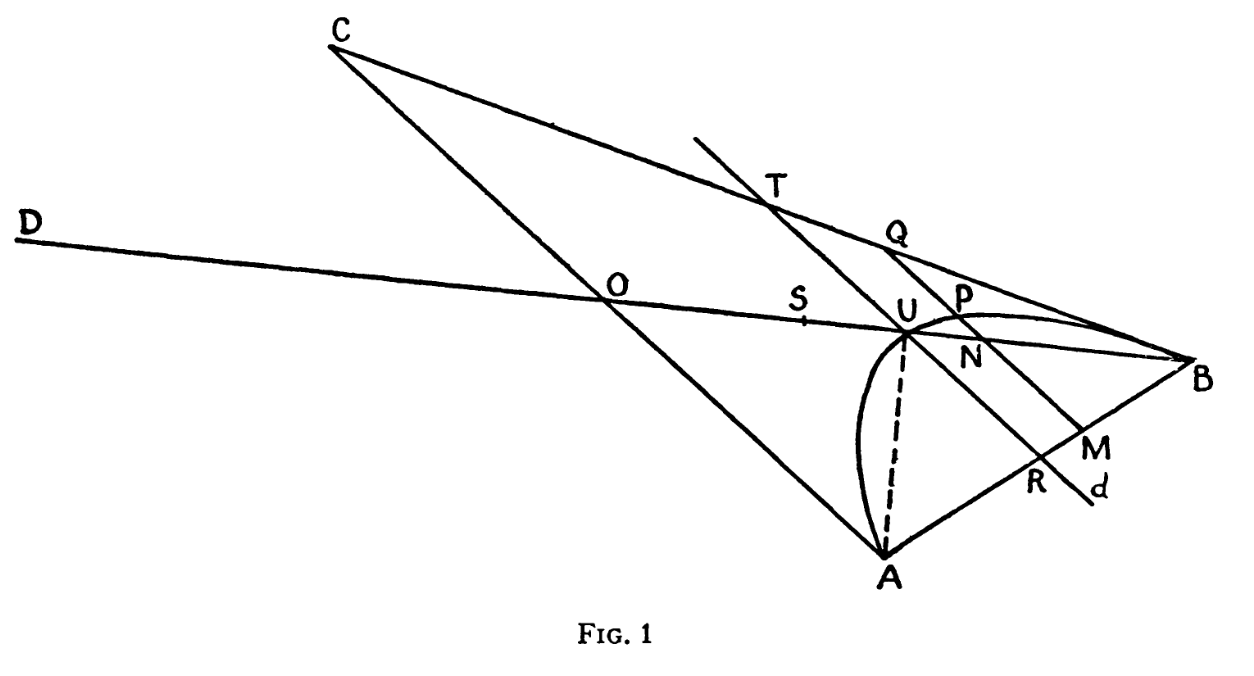
Source
Figure 1 shows a parabolic arc AUB, a triangle △ABC, and several auxiliary points used to compare the area of the parabolic segment with the area of the triangle.
The setup is as follows:
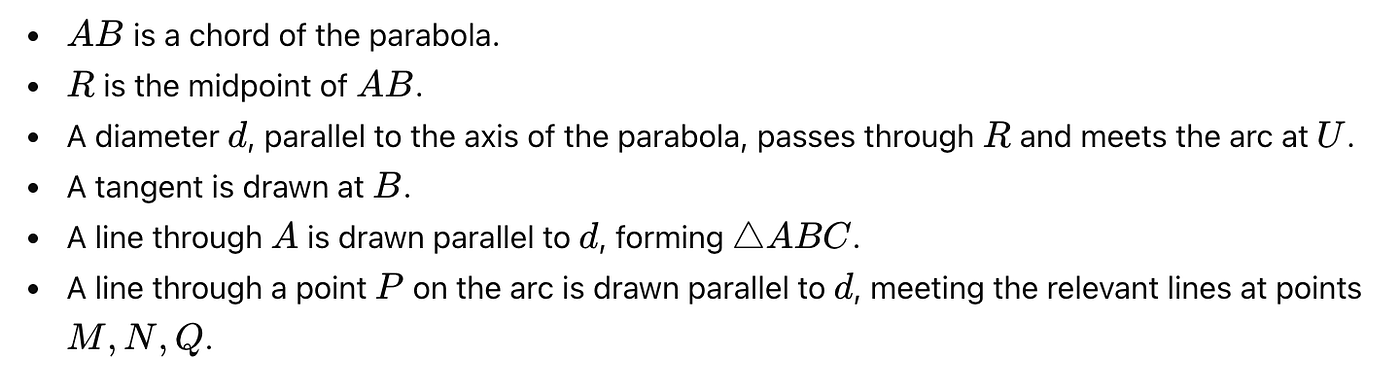
Archimedes proves that

This relation allows him to compare small line segments in the parabolic segment with corresponding line segments in the triangle.
Using the principle of the lever, he shows that the parabolic segment balances a triangle in such a way that the area of the segment is one-third of the area of △ABC:

He then observes that
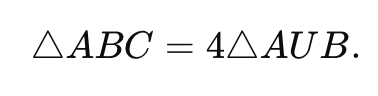
Therefore,

This is one of the most famous results of Archimedes.
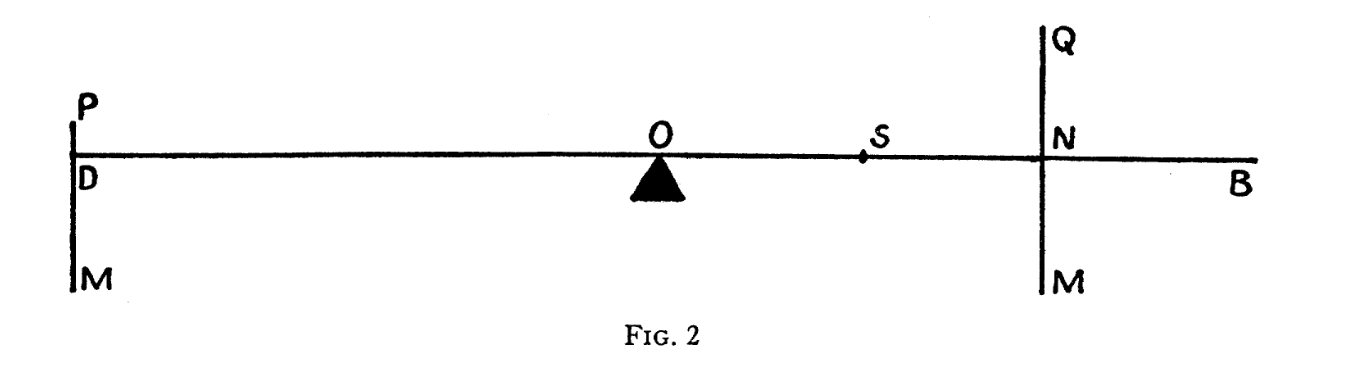
Figure 2 shows the mechanical balancing idea. A line segment is imagined as suspended at one point and balanced against another segment on the opposite side of a fulcrum. The essential idea is that if two quantities balance on a lever, then

Archimedes did not consider this mechanical reasoning a proof. Instead, he used it to discover the result and then gave a rigorous proof using exhaustion.
After Greek Mathematics
One might expect Archimedes’ achievements to have immediately inspired a long continuation of Greek mathematics. Surprisingly, this did not happen. After Archimedes, Greek mathematics declined. Some work continued, especially through Apollonius, Pappus, and later mathematicians, but the development of calculus-like ideas slowed.
When the Roman Empire declined, much mathematical knowledge was preserved in Byzantium, Persia, and the Arab world. From about 800 to 1200 A.D., mathematics flourished in the Islamic world. One important mathematician, Ibn al-Haytham, studied problems involving volumes generated by rotating parabolic segments.
Later, mathematical interest returned to Europe, especially in the twelfth and thirteenth centuries. By the Renaissance, European mathematicians were once again studying Greek works, including those of Archimedes.
Kepler and Cavalieri
At the beginning of the seventeenth century, the development of calculus-like ideas accelerated.
Johannes Kepler used intuitive infinitesimal reasoning to study volumes. In 1615 he published Nova stereometria doliorum vinariorum, a work about measuring wine barrels. Kepler wanted to determine which barrel shapes were most economical. Although his reasoning was not fully rigorous, it emphasized the essential infinitesimal ideas.
A major step was made by Bonaventura Cavalieri, who published his work on indivisibles in 1635. Cavalieri thought of a plane figure as being made of infinitely many lines and a solid as being made of infinitely many planes. His principle says that two solids have the same volume if every plane parallel to a fixed plane cuts the two solids in equal areas.
This is now called Cavalieri’s principle. It is closely related to integration because it compares volumes by comparing cross-sectional areas.
Analytic Geometry: Descartes and Fermat
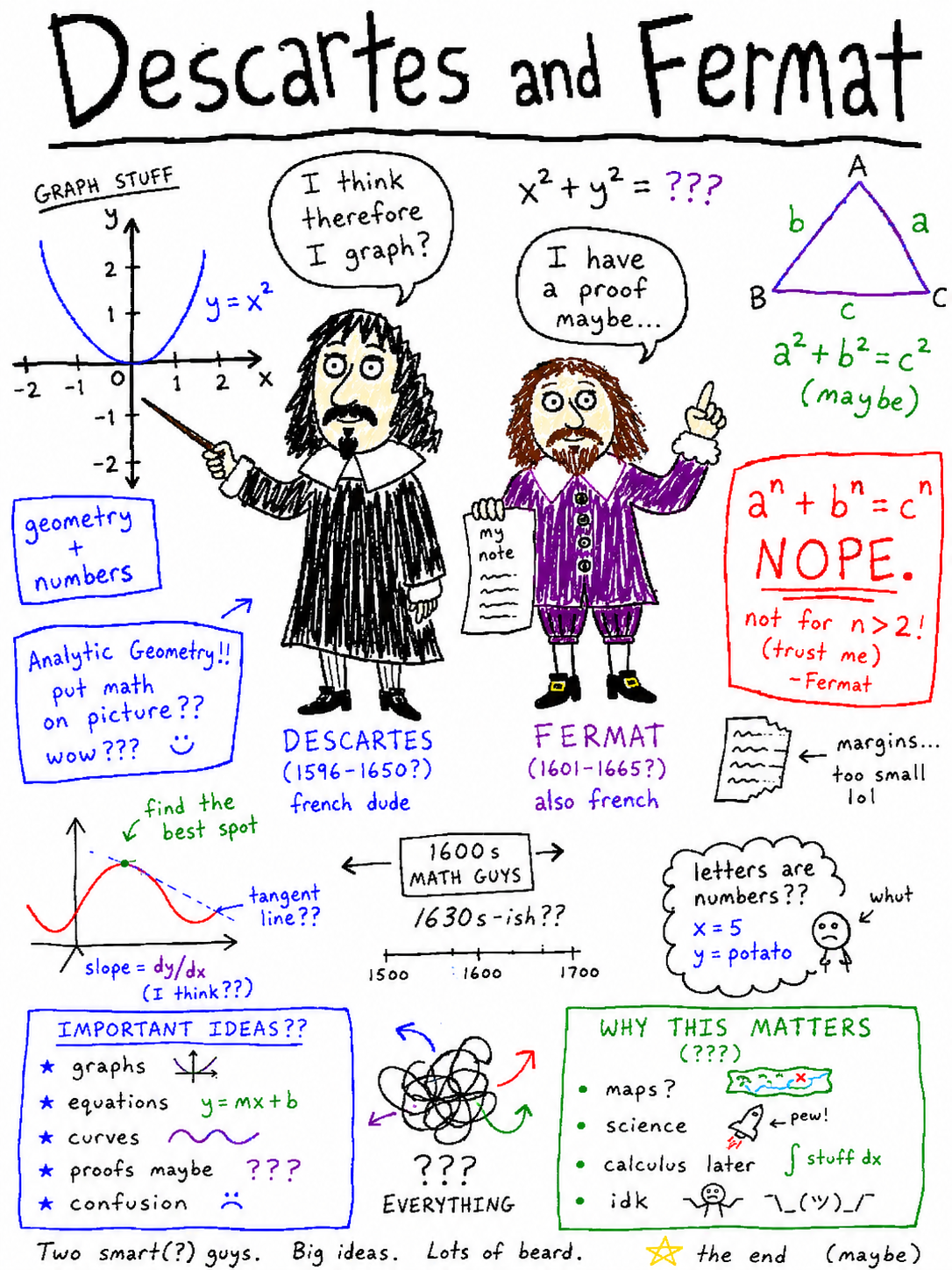
Another crucial development was the invention of analytic geometry by René Descartes and Pierre de Fermat around 1637. Analytic geometry connected algebra and geometry by representing curves using equations. This made it possible to study curves by algebraic methods.
Descartes developed a method for finding normals and tangents to algebraic curves. His method involved drawing circles that intersected a curve and studying the case where two intersection points coincide. This reduced the tangent problem to the problem of finding double roots of algebraic equations.
Fermat’s work was even more important for calculus. He developed a method for finding maxima, minima, and tangents. His method was close to the modern derivative.
To find the maximum or minimum of an expression F(A), Fermat replaced A by A + E, compared F(A+E) with F(A), canceled common terms, divided by E, and then set E = 0. In modern notation, this amounts to solving
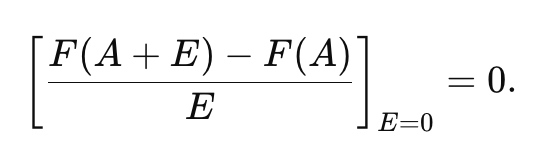
This is essentially the modern condition
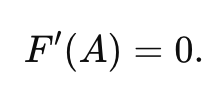
Fermat’s method worked especially well for polynomials, though he did not yet have the full modern concept of derivative.
Fermat’s Tangent Method
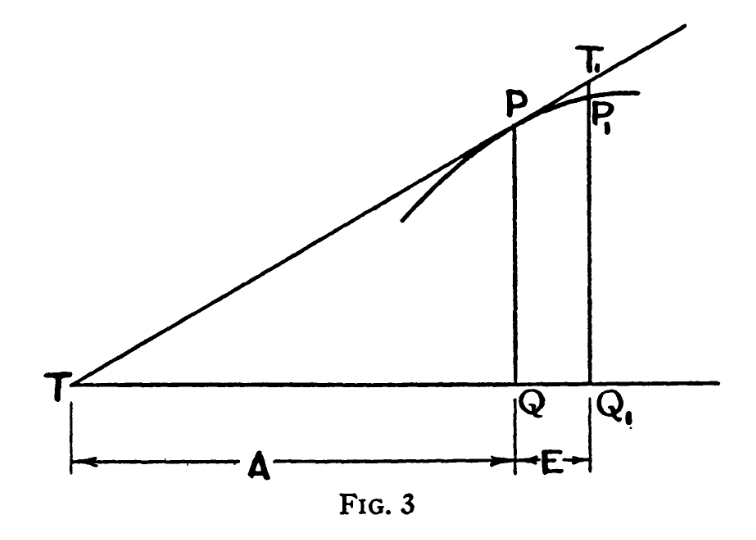
Fermat also used a similar idea to find tangents.
In figure 3, PT is the tangent line to a curve at point P. The point P1 is another point on the curve near P. The points Q and Q1 are projections of P and P1 onto the x-axis. Fermat studied the small horizontal difference E = QQ1.
The subtangent is
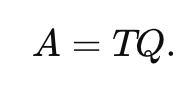
Using similar triangles, Fermat obtained approximately

Thus,
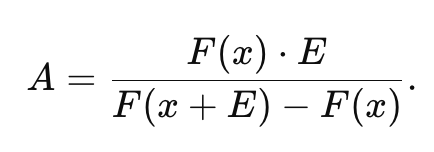
Then, as in his method for maxima and minima, he divided by E and set E = 0. This gave a way to determine the tangent line.
In modern terms, since
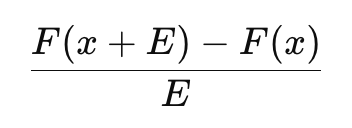
approaches F′(x), Fermat’s subtangent formula becomes
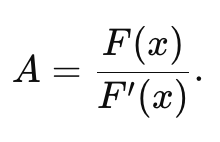
This shows how close Fermat came to differential calculus.
Early Integration Formulas
Fermat also made major contributions to integration. By 1636 or earlier, he had found the power formula for positive integer exponents:
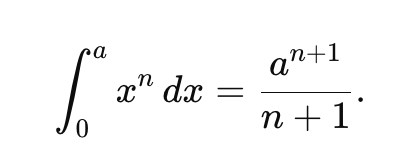
Later, this formula was extended to rational exponents n ≠ −1. Fermat studied curves he called “general parabolas” and “general hyperbolas,” which in modern notation involve equations such as
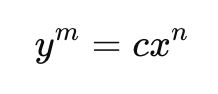
and
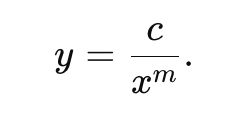
These led to integrals such as
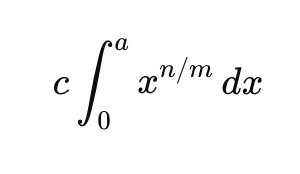
and
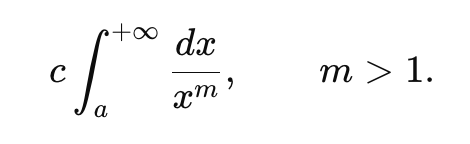
An important feature of Fermat’s method was that he did not always divide intervals into equal parts. Instead, he sometimes used subdivisions based on a geometric progression, which was a clever technique for evaluating areas under curves.
Pascal, Wallis, Mengoli, and Huygens
Other mathematicians continued to develop integration and limits.
Blaise Pascal studied integration, especially of trigonometric functions and certain algebraic functions. He also used geometric arguments related to what we would now call changing the order of integration in double integrals.
John Wallis, in Arithmetica infinitorum of 1656, emphasized the idea of limits and generalized the power formula for integration to any real exponent n ≠ −1.
Pietro Mengoli gave a more precise representation of areas under curves as limits of sums of rectangles. This brought the idea of definite integration closer to its modern form.
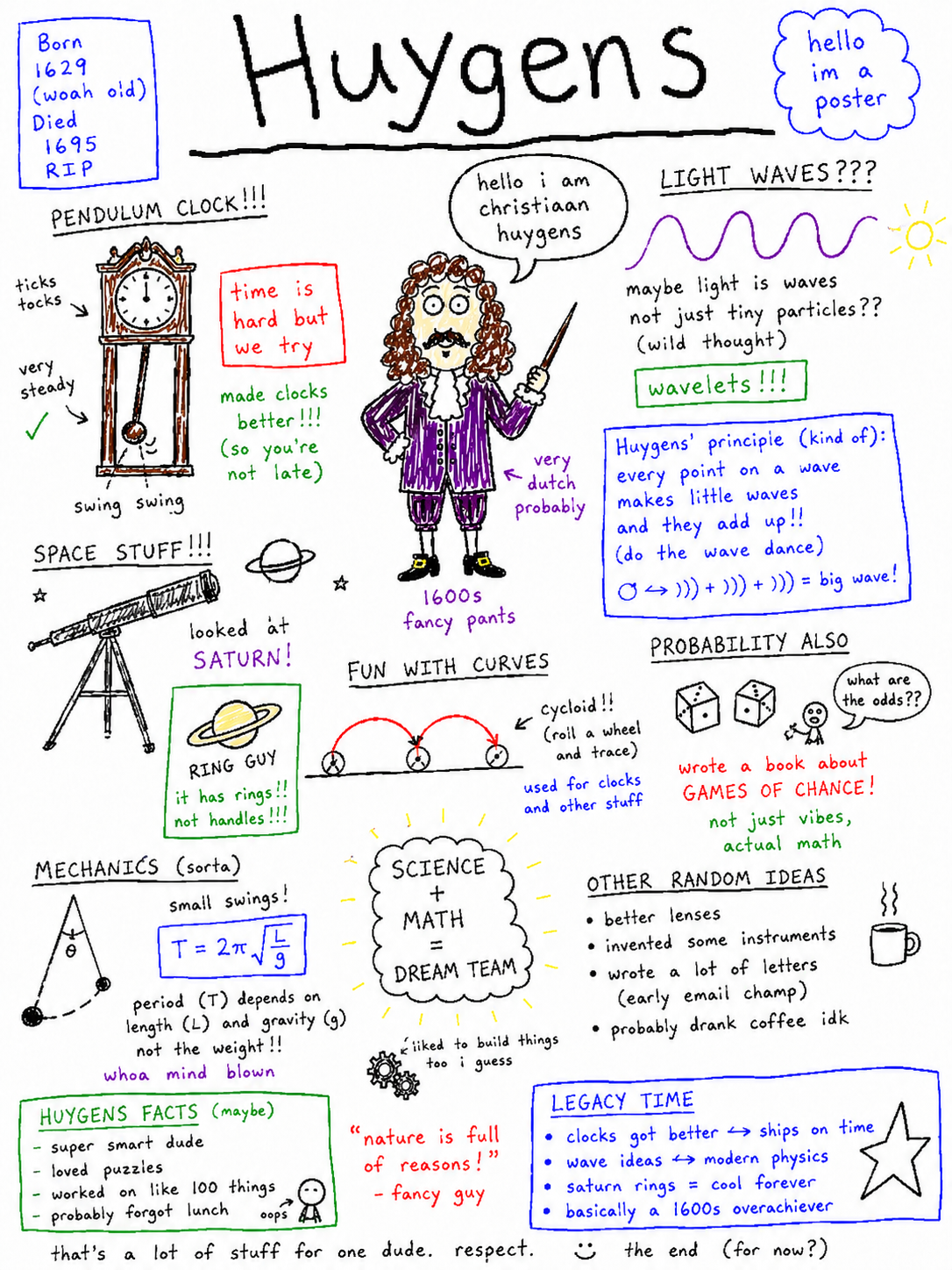
Christiaan Huygens contributed to geometry and differentiation, especially through his work on evolutes and involutes. He often used classical Greek methods but also employed Fermat’s ideas for differentiation.
Infinite Series: Mercator, Gregory, and Newton
The theory of infinite series became another important path toward calculus.
Nicolaus Mercator discovered the logarithmic series in 1668 by integrating a geometric series term by term. Newton independently discovered similar methods, although he did not publish them immediately.
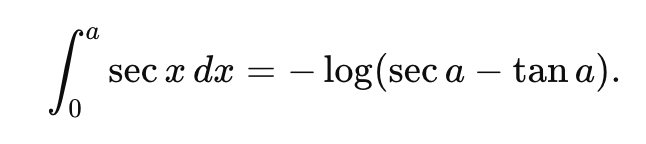
James Gregory made important contributions to integration and series. He found several trigonometric integrals, such as
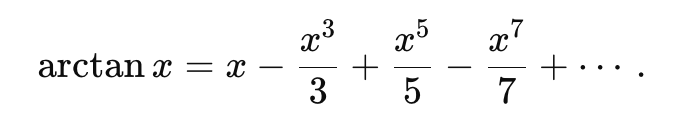
Gregory also found series for inverse trigonometric functions, including the arctangent series:
A famous special case is
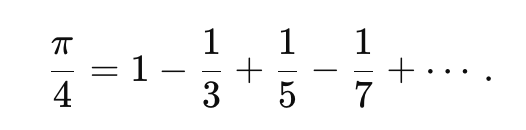
This series was later found independently by Leibniz.
Gregory also obtained more complicated series for functions such as tanx, secx, and logsecx, using differentiation to determine coefficients. In this way, he anticipated later work by Brook Taylor.
The Missing Link: Differentiation and Integration as Inverses
By the time of Newton and Leibniz, many pieces of calculus already existed:
- methods for finding areas,
- methods for finding tangents,
- formulas for powers,
- infinite series,
- ideas of limits,
- methods for volumes and arc lengths.
However, one major idea was still missing: the clear general statement that differentiation and integration are inverse processes.
Some mathematicians came close. Torricelli related distance and velocity. Fermat connected the rectification of curves with areas. Gregory studied problems where one curve’s length was equal to the area under another curve.
But the first mathematician to state and prove the inverse relationship clearly and generally was Isaac Barrow, Newton’s teacher. In his Lectiones Geometricae, published in 1670, Barrow showed explicitly that differentiation and integration are inverse operations. This result is now known as the fundamental theorem of calculus.
Newton’s Calculus
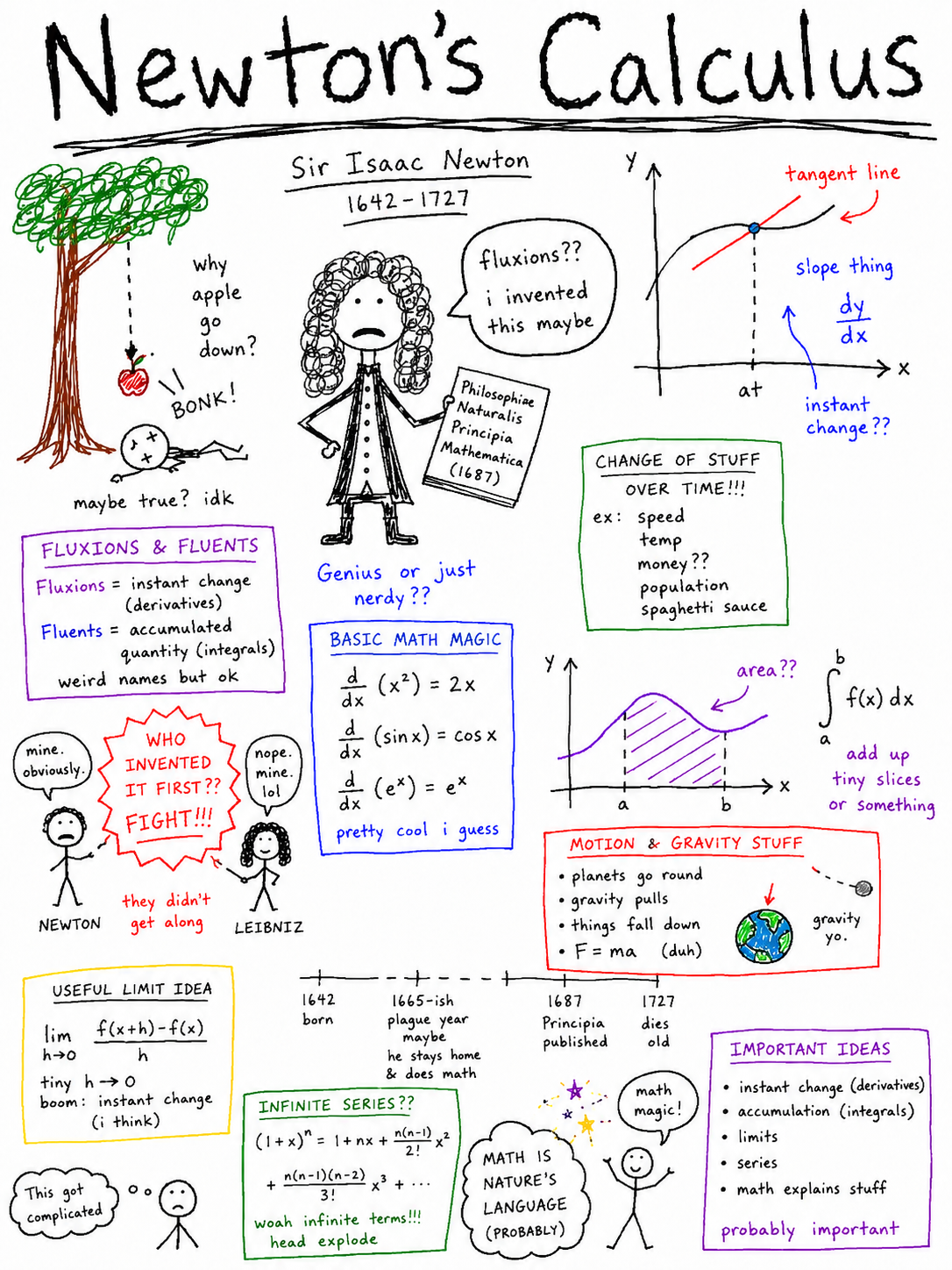
Newton developed his calculus, which he called the method of fluxions, around 1665–1666. He was influenced by Barrow and Wallis.
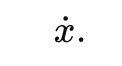
Newton thought of quantities as changing with time. He called a changing quantity a fluent and its rate of change a fluxion. If xxx was a fluent, Newton wrote its fluxion as
Higher fluxions were written as
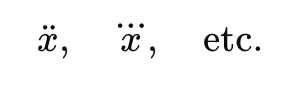
Newton used the letter ooo for a small increment of time and called x dot the “moment” of x. For inverse operations, he used notations for fluents or antiderivatives, though his notation was not as convenient as Leibniz’s.
Newton’s great achievement was that he systematically used differentiation to find antiderivatives and evaluate integrals. His work connected motion, curves, tangents, areas, and infinite series into one powerful method.
Although Newton made his discoveries earlier than Leibniz, he published them later. His Methodus fluxionum et serierum infinitarum was written around 1670–1671 but published only in 1736. In the Principia Mathematica of 1687, Newton avoided much of his fluxion notation and presented his results mainly in classical geometric form.
Leibniz’s Calculus and Notation
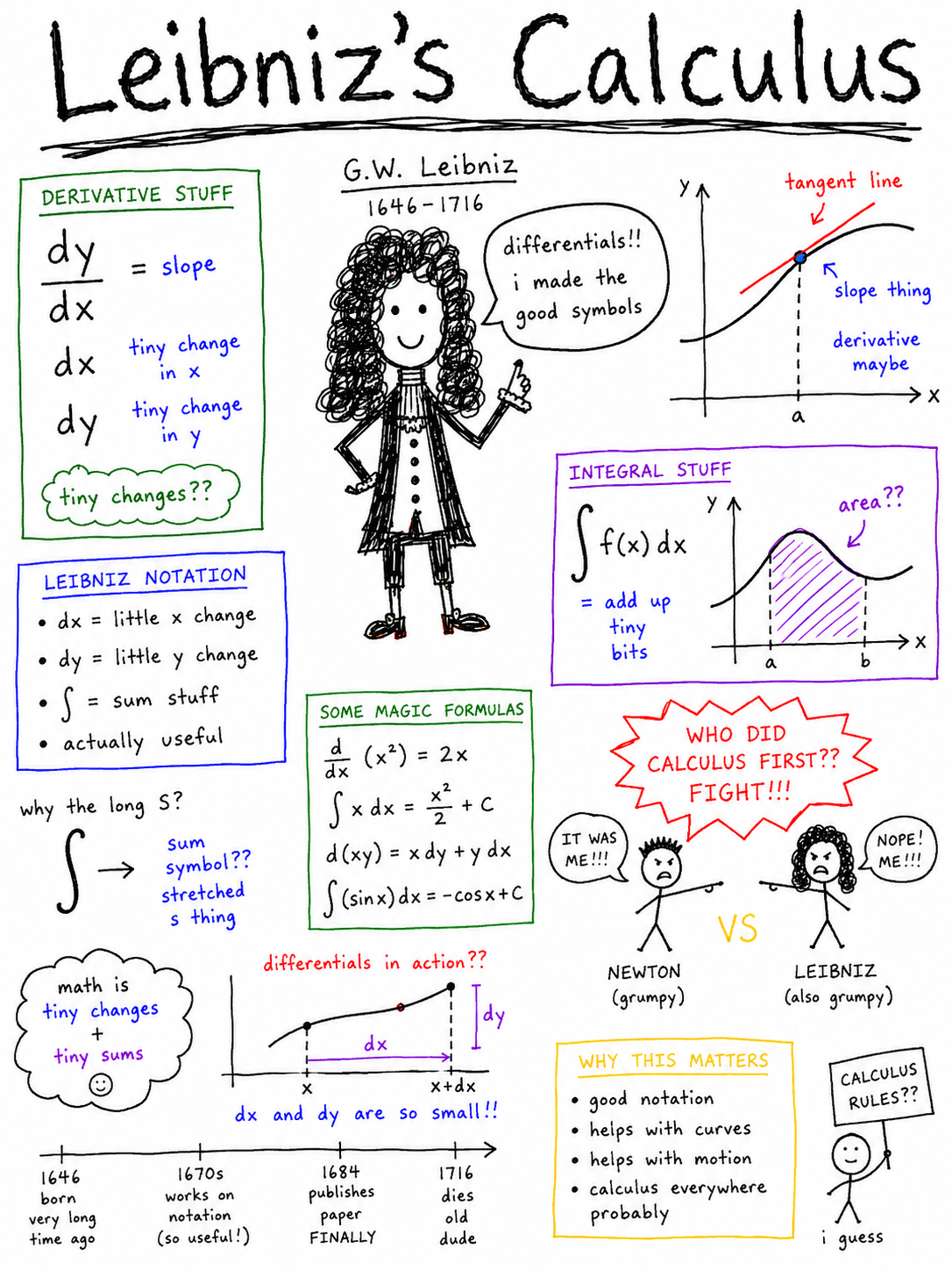
Gottfried Wilhelm Leibniz developed calculus independently. He was influenced by earlier mathematicians, especially Pascal and Huygens. His manuscripts show clearly how his notation developed.
In 1675, Leibniz introduced the integral sign
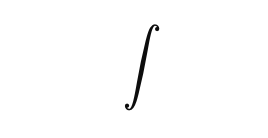
as an elongated S, standing for summa, meaning “sum.” This reflected the idea that integration is a summing process.
He also introduced the differential notation
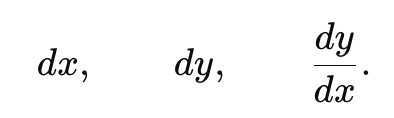
This notation proved far more useful and flexible than Newton’s notation, especially for general calculus. In 1684, Leibniz published his differential calculus in the paper Nova methodus pro maximis et minimis, itemque tangentibus. In 1686, he published his notation for integration.
Leibniz originally thought of dx as an arbitrary small finite interval and defined dy by a proportional relation involving ordinates and subtangents. Over time, his notation became the standard language of calculus.
Although Newton’s followers later accused Leibniz of plagiarizing Newton, modern historians generally agree that Newton and Leibniz discovered calculus independently.
After Newton and Leibniz
The invention of calculus led to rapid mathematical progress. In England, Taylor and Maclaurin developed important results. On the European continent, the Bernoulli brothers, Euler, D’Alembert, and Lagrange greatly expanded calculus and applied it to mechanics, geometry, astronomy, and physics.
New fields developed from calculus, including:
- differential equations,
- calculus of variations,
- differential geometry,
- advanced mechanics,
- infinite series.
However, the foundations of calculus were not immediately rigorous. Newton and Leibniz had useful ideas about infinitesimals and limits, but later mathematicians often used these concepts carelessly. Euler, for example, was extraordinarily successful but sometimes treated infinite processes informally.
Some mathematicians, including D’Alembert, emphasized the need to base calculus on the concept of the limit. Finally, in the nineteenth century, Augustin-Louis Cauchy and his successors gave calculus a more systematic and rigorous foundation.
Calculus was not created suddenly by Newton and Leibniz. It was the result of a long historical development beginning with Greek mathematics, especially Archimedes’ work on areas and volumes. Later mathematicians such as Kepler, Cavalieri, Descartes, Fermat, Pascal, Wallis, Mengoli, Huygens, Gregory, Mercator, and Barrow each contributed essential ideas.
Newton and Leibniz deserve their special place because they transformed these scattered methods into a general calculus. Newton emphasized changing quantities, motion, and fluxions. Leibniz created the notation and symbolic methods that became standard. Together, their work turned centuries of geometric and infinitesimal reasoning into one of the most powerful tools in mathematics.
The later work of Cauchy and others finally gave calculus the rigorous foundation based on limits that is used today.
메타데이터
- post_id
- ea5f7db47b5e
- slug
- a-brief-history-of-calculus-ea5f7db47b5e
- url
- https://medium.com/math-puzzles/a-brief-history-of-calculus-ea5f7db47b5e
- canonical_url
- https://medium.com/math-puzzles/a-brief-history-of-calculus-ea5f7db47b5e
- author_url
- https://medium.com/@mathgames
- status
- ok
- fetched_at
- 2026-06-18 00:10:23