Benefits of Remote Staffing for HR Functions: How Global Capability Centers and Offshoring Are…
Human Resources has always been the backbone of organizational performance. From recruitment and onboarding to employee engagement and…
Benefits of Remote Staffing for HR Functions: How Global Capability Centers and Offshoring Are Transforming People Operations
Human Resources has always been the backbone of organizational performance. From recruitment and onboarding to employee engagement and compliance, HR functions shape how companies attract, develop, and retain talent.
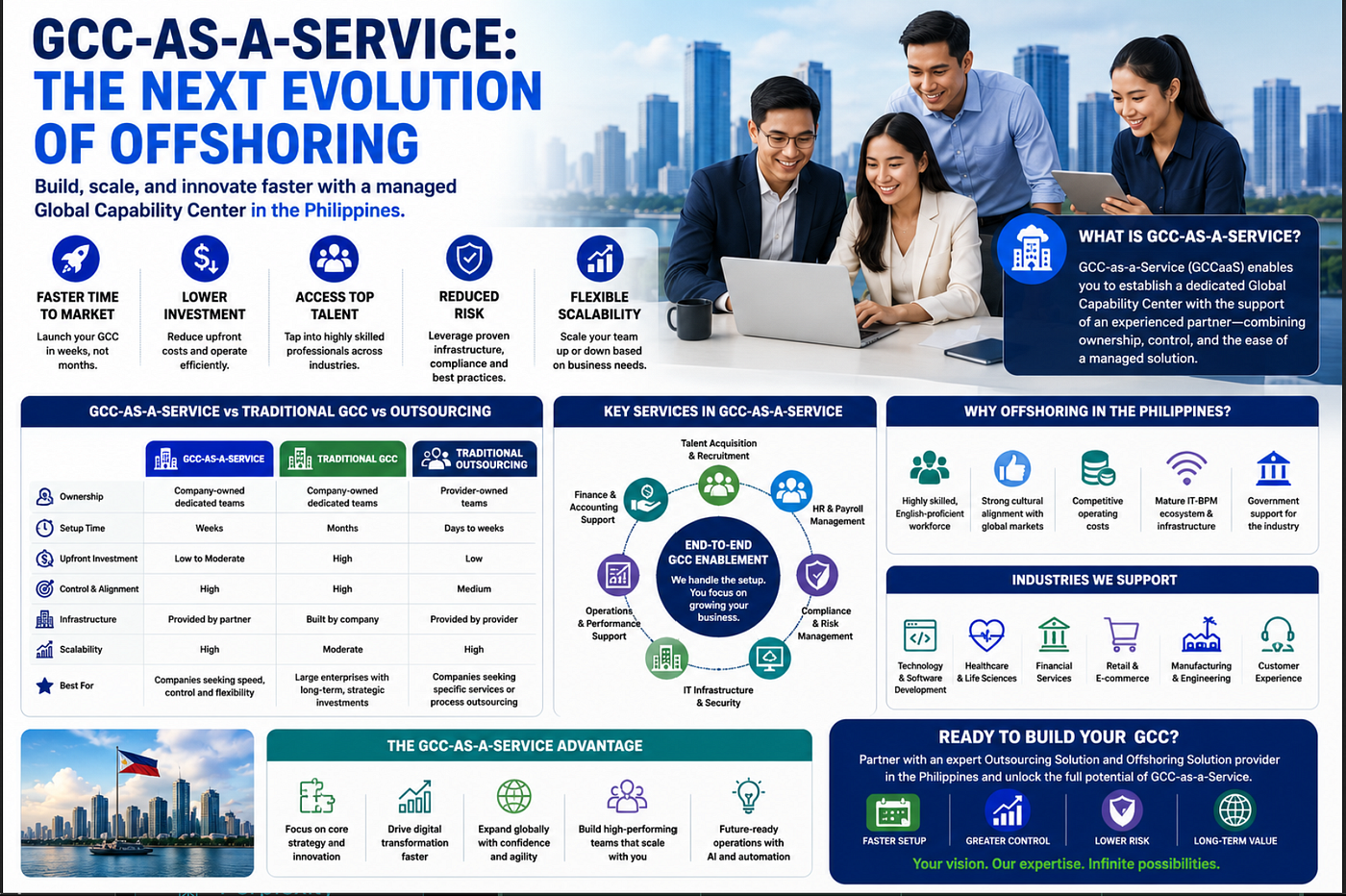
But as organizations scale globally and adopt distributed workforce models, traditional HR structures are being challenged. Manual processes, localized hiring systems, and office-based HR operations are no longer sufficient in a world defined by **Remote Work, [Global Capability Centers (GCCs)](https://isupportworldwide.com/offshoring-solutions/), [Offshoring Solutions](https://isupportworldwide.com/offshoring-solutions/), and [Remote Staffing](https://www.iswerk.ph/)**.
Today, HR itself is undergoing transformation. Many organizations are shifting core HR functions into remote staffing models supported by offshore teams and GCC structures.
This shift is not just operational — it is strategic.
The central question is no longer:
Can HR functions be done remotely?
Instead, it is:
How can remote staffing, GCCs, and offshoring improve the efficiency, scalability, and impact of HR operations?

The Evolution of HR in a Global Workforce Model
Traditionally, HR teams operated within centralized office environments. Their responsibilities included:
- Recruiting local talent
- Managing employee records
- Conducting onboarding sessions
- Handling payroll and compliance
- Supporting employee relations
However, globalization and digital transformation have changed workforce expectations and organizational structures.
Companies now operate across multiple countries, time zones, and employment frameworks. This complexity requires HR systems that are scalable, technology-driven, and globally coordinated.
As a result, HR functions are increasingly being supported by:
- Remote staffing teams
- Offshore HR operations
- Global Capability Centers
- AI-driven HR systems
- Cloud-based HR platforms
This evolution enables organizations to deliver HR services faster, more efficiently, and at a global scale.
Why HR Functions Are Moving to Remote Staffing Models
Several key factors are driving the shift of HR functions into remote staffing environments:
1. Global Talent Expansion
Organizations are no longer hiring only locally. HR teams must now support recruitment across multiple countries and regions.
2. Increased Hiring Volume and Complexity
With global expansion, HR teams handle larger and more complex recruitment pipelines, requiring scalable systems.
3. Cost Optimization Pressure
Companies are looking for ways to reduce HR operational costs while maintaining service quality.
4. Digital HR Transformation
Modern HR systems are now cloud-based, making remote execution more practical than ever.
5. Demand for Faster Hiring Cycles
Business growth requires HR to operate at speed, reducing time-to-hire and onboarding delays.
Remote staffing provides the flexibility and scalability required to meet these demands.
Key HR Functions Transformed by Remote Staffing
Remote staffing is not limited to recruitment. It is transforming multiple HR functions across the employee lifecycle.
1. Recruitment and Talent Acquisition
Recruitment is one of the most impacted HR functions.
Remote staffing enables organizations to build distributed recruitment teams that can:
- Source candidates globally
- Screen resumes efficiently
- Conduct virtual interviews
- Manage applicant tracking systems
- Coordinate hiring pipelines
With support from **Offshoring Solutions**, companies can establish dedicated recruitment teams in cost-effective regions such as the Philippines, where skilled HR professionals specialize in global talent acquisition.
In GCC environments, recruitment becomes a centralized, data-driven process that supports enterprise-wide hiring needs.
2. Onboarding and Employee Integration
Onboarding is critical for employee success, but traditional onboarding processes are often slow and inconsistent.
Remote staffing improves onboarding by enabling:
- Digital onboarding workflows
- Automated documentation processing
- Virtual orientation programs
- Standardized training modules
- Global onboarding consistency
HR teams within GCCs ensure that onboarding is uniform across all regions, while offshore teams manage execution at scale.
This reduces time-to-productivity and improves employee experience.
3. Payroll and Compensation Management
Payroll is one of the most structured HR functions and is highly suitable for remote execution.
Remote staffing teams can manage:
- Payroll processing
- Benefits administration
- Salary benchmarking
- Compliance tracking
- Multi-country payroll coordination
Offshoring solutions help companies manage complex payroll structures across different jurisdictions, ensuring accuracy and compliance.
GCCs provide centralized oversight, reducing risk and improving financial control.
4. Employee Relations and Support
Employee relations require consistent communication and responsiveness.
Remote HR support teams handle:
- Employee inquiries
- Grievance management
- Policy clarification
- Engagement surveys
- HR helpdesk operations
With remote staffing, organizations can provide 24/7 HR support across global time zones.
This is especially valuable in offshore and distributed workforce environments where employees operate across different regions.
5. Performance Management
Performance management systems have become more data-driven and continuous.
Remote HR teams assist with:
- Performance tracking systems
- KPI monitoring
- Feedback collection
- Review cycle coordination
- Employee evaluation analytics
AI-powered HR tools integrated into GCCs allow organizations to track performance in real time and make data-informed decisions.
6. Learning and Development (L&D)
Continuous learning is essential in modern organizations.
Remote staffing enables HR teams to manage:
- Virtual training programs
- Learning management systems (LMS)
- Skill development tracking
- Certification programs
- Career development planning
Offshore HR teams can coordinate training delivery across multiple geographies, ensuring consistent skill development.
The Role of Global Capability Centers in HR Transformation
Global Capability Centers are becoming central to modern HR transformation strategies.
In the context of HR, GCCs function as centralized hubs that manage:
- Global recruitment strategies
- HR analytics and reporting
- Employee lifecycle management
- Policy standardization
- Talent development programs
By integrating remote staffing into GCCs, organizations gain:
Scalability
HR teams can expand quickly without geographic constraints.
Standardization
Processes are consistent across global operations.
Data Visibility
Centralized dashboards provide insights into workforce trends.
Efficiency
Automated systems reduce manual HR workloads.
GCCs transform HR from a transactional function into a strategic capability.
Offshoring as a Strategic HR Enabler
Offshoring plays a critical role in supporting remote HR operations.
By building HR teams in offshore locations, organizations gain access to:
- Skilled HR professionals
- Lower operational costs
- Time zone advantages
- Established HR service ecosystems
Countries like the Philippines are widely recognized for strong HR service capabilities, particularly in recruitment support, payroll processing, and employee engagement services.
Offshoring allows organizations to scale HR operations without increasing internal overhead.
Remote Work as the Foundation of HR Transformation
Remote work is the foundation that enables remote HR staffing models to succeed.
It allows HR professionals to:
- Operate from anywhere
- Manage global employee populations
- Collaborate across time zones
- Use cloud-based HR systems effectively
Without remote work infrastructure, global HR operations would remain fragmented and inefficient.
Remote work enables HR to become a truly global function.
Technology’s Role in Remote HR Staffing
Technology is the backbone of modern HR transformation.
Remote HR teams rely on:
- Human Resource Information Systems (HRIS)
- Applicant Tracking Systems (ATS)
- AI-powered recruitment tools
- Payroll automation platforms
- Employee engagement software
- Learning management systems
AI is increasingly used to:
- Screen candidates faster
- Predict employee attrition
- Optimize workforce planning
- Improve hiring accuracy
Technology ensures that remote HR teams remain efficient, scalable, and data-driven.
Challenges of Remote HR Staffing
Despite its benefits, remote HR staffing comes with challenges:
1. Data Security and Privacy
HR data is highly sensitive and requires strict security controls.
2. Compliance Complexity
Global HR operations must comply with multiple labor laws and regulations.
3. Cultural Differences
HR teams must manage diverse employee expectations across regions.
4. Communication Gaps
Remote HR teams must ensure clarity and consistency in messaging.
5. System Integration
Different HR tools must be integrated across global operations.
Organizations overcome these challenges through governance frameworks, technology investment, and strong GCC oversight.
Benefits of Remote Staffing for HR Functions
When properly implemented, remote staffing delivers significant benefits for HR operations:
- Reduced HR operational costs
- Faster recruitment cycles
- Improved global talent access
- Greater scalability of HR functions
- Enhanced employee support coverage
- More consistent HR processes
For GCCs and offshore organizations, these benefits translate into stronger workforce management and improved organizational efficiency.
The Future of HR in Global Workforce Models
HR is evolving from an administrative function into a strategic business partner.
Future HR models will include:
- AI-driven recruitment and workforce planning
- Fully integrated GCC-based HR ecosystems
- Global remote HR teams operating 24/7
- Skills-based hiring and development systems
- Predictive analytics for employee behavior
Remote staffing will become a core component of HR strategy, not just an operational tool.
Conclusion
Remote staffing is fundamentally transforming how HR functions operate in modern organizations.
When combined with Global Capability Centers, Offshoring Solutions, and Remote Work models, it creates a powerful framework for building scalable, efficient, and globally integrated HR operations.
HR is no longer confined to local offices or manual processes. It has become a global, technology-driven function that supports every stage of the employee lifecycle.
Organizations that embrace remote HR staffing will benefit from faster hiring, improved efficiency, better employee experience, and stronger workforce scalability.
In the future of work, HR success will depend not on location — but on how effectively organizations can build and manage global talent systems at scale.
메타데이터
- post_id
- ea780d363385
- slug
- benefits-of-remote-staffing-for-hr-functions-how-global-capability-centers-and-offshoring-are-ea780d363385
- url
- https://medium.com/@biznewzworldwide/benefits-of-remote-staffing-for-hr-functions-how-global-capability-centers-and-offshoring-are-ea780d363385
- canonical_url
- https://medium.com/@biznewzworldwide/benefits-of-remote-staffing-for-hr-functions-how-global-capability-centers-and-offshoring-are-ea780d363385
- author_url
- https://medium.com/@biznewzworldwide
- status
- ok
- fetched_at
- 2026-06-11 06:59:45