Can AI Stop the Next Pandemic?
Can AI Stop the Next Pandemic?
THE UNIVERSAL RECORD Sourced reporting. No opinions.
Artificial intelligence is helping scientists detect outbreaks sooner, analyze dangerous pathogens faster and accelerate vaccine research, but experts say it remains one tool within a much broader global health strategy.
By Brad Socha | August 6, 2026 | 8:38 AM EST
Originally published by The Universal Record. Read the original article: Can AI Stop the Next Pandemic?
The COVID-19 pandemic exposed weaknesses in global disease surveillance while also accelerating investment in artificial intelligence across healthcare and public health. Today, governments, researchers and international organizations are using AI to monitor emerging diseases, analyze genetic data, identify promising drug candidates and improve vaccine development. The goal is straightforward: detect the next outbreak before it becomes a global crisis.
Although AI has advanced rapidly, scientists caution that it cannot prevent pandemics on its own. Effective preparedness still depends on strong public health systems, laboratory capacity, international cooperation and rapid sharing of reliable data. AI enhances these efforts rather than replacing them.
AI Is Changing How Outbreaks Are Detected
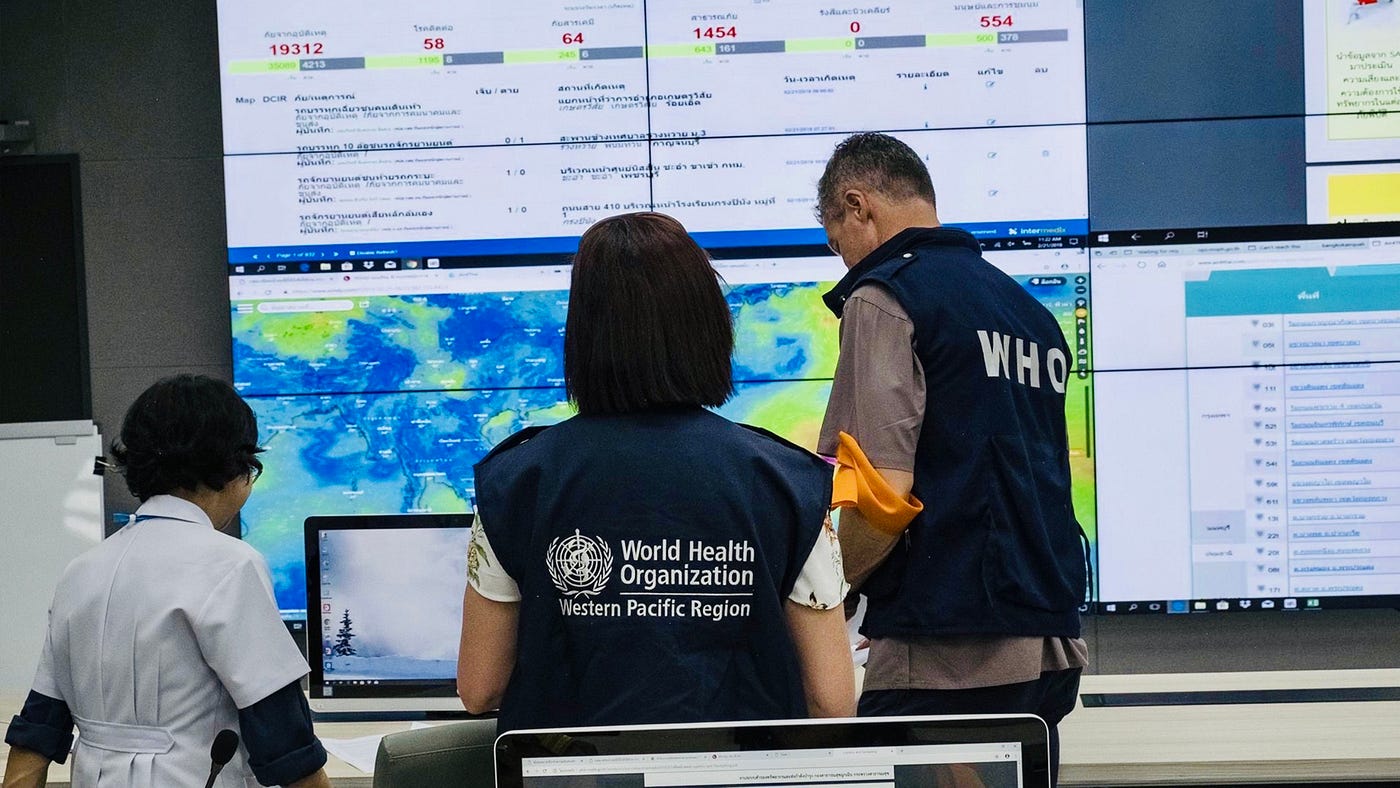
One of AI’s greatest strengths is its ability to process enormous amounts of information far faster than humans. Every day, health agencies collect data from hospitals, laboratories, veterinary services, wastewater monitoring, genomic sequencing centers and even publicly available online reports.
Machine learning systems can search these datasets for unusual patterns that may indicate an emerging disease. Rather than waiting for large numbers of confirmed cases, AI can identify subtle warning signs, helping investigators begin examining potential outbreaks sooner.
The World Health Organization’s Hub for Pandemic and Epidemic Intelligence in Berlin has incorporated AI into its Epidemic Intelligence from Open Sources (EIOS) platform, which continuously scans publicly available information from around the world to help identify potential health threats more quickly. The Hub now supports surveillance efforts across more than 150 countries while expanding international collaboration on pandemic preparedness.
Earlier detection does not eliminate outbreaks, but it can provide valuable time for testing, contact tracing and public health interventions before widespread transmission occurs.
Genome Sequencing Gives AI More to Work With
Modern pathogen surveillance increasingly depends on genomic sequencing, which determines the genetic code of viruses and bacteria.
During COVID-19, genome sequencing allowed scientists to monitor the emergence of new variants. Similar techniques are now being expanded globally for influenza, mpox, coronaviruses and other pathogens with pandemic potential.
AI helps researchers analyze millions of genetic sequences, identify mutations that deserve closer attention and compare newly discovered pathogens with previously known organisms.
The WHO’s Global Genomic Surveillance Strategy aims to strengthen sequencing capacity worldwide through 2032, allowing countries to detect dangerous pathogens earlier and share genetic information more efficiently.
While AI can identify patterns that deserve investigation, researchers emphasize that laboratory testing and scientific review remain essential before drawing conclusions about a pathogen’s behavior.
Accelerating Drug Discovery
Developing new medicines traditionally requires years of laboratory research and billions of dollars in investment.
AI is helping shorten the earliest stages of that process by rapidly evaluating enormous chemical libraries and predicting which compounds may interact with specific biological targets.
Instead of experimentally testing millions of molecules one by one, researchers can use AI to prioritize the most promising candidates for laboratory evaluation.
This approach has already been used in cancer research, antibiotic development and antiviral drug discovery. During COVID-19, AI-assisted screening helped researchers identify existing medicines worth further investigation while supporting efforts to design entirely new therapeutic compounds.
Importantly, AI recommendations are only the starting point. Every promising drug candidate must still undergo laboratory validation, animal studies and extensive human clinical trials before receiving regulatory approval.
Designing Better Vaccines
Artificial intelligence is also beginning to reshape vaccine research.
Scientists can use machine learning to analyze viral genomes, predict which portions of a virus are most likely to stimulate an effective immune response and evaluate how viruses may evolve over time.
Organizations including the Coalition for Epidemic Preparedness Innovations (CEPI) are supporting research that combines AI with next-generation vaccine platforms to improve readiness for future outbreaks. Some projects aim to develop broader vaccines capable of protecting against multiple strains within the same viral family rather than targeting only a single variant.
The long-term objective is ambitious: significantly reduce the time required to develop safe vaccines after a new pathogen is identified.
Researchers caution, however, that vaccine safety and effectiveness cannot be accelerated beyond rigorous clinical testing requirements.
Can AI Predict the Next Pandemic?
The idea of predicting exactly when and where the next pandemic will begin remains beyond today’s technology.
Instead, AI estimates risk.
By combining environmental conditions, wildlife monitoring, climate data, travel patterns, population density and disease surveillance, AI models can identify regions where spillover events may be more likely or where an outbreak appears to be accelerating unusually quickly.
These forecasts help public health agencies prioritize surveillance and allocate limited resources more effectively.
Scientists stress that these systems provide probabilities, not certainties. Disease emergence depends on countless biological, ecological and social factors that remain impossible to predict with complete accuracy.
Human Expertise Still Matters Most
Despite impressive advances, AI cannot replace epidemiologists, physicians, laboratory scientists or public health officials.
Algorithms are only as reliable as the data they receive. Incomplete reporting, delayed laboratory confirmation or biased datasets can produce misleading results.
Public health decisions also involve ethical, political and economic considerations that require human judgment.
Experts increasingly describe AI as a decision-support technology rather than an autonomous decision-maker. It can rapidly analyze information, highlight anomalies and recommend areas for further investigation, but experienced professionals remain responsible for interpreting evidence and determining appropriate responses.
A Powerful Tool, Not a Complete Solution
Artificial intelligence is becoming an increasingly important part of global pandemic preparedness. Faster outbreak detection, improved genomic analysis, accelerated drug discovery and more efficient vaccine research all have the potential to strengthen public health responses.
Yet AI alone cannot stop future pandemics.
Preparedness ultimately depends on international cooperation, transparent reporting, resilient healthcare systems, scientific collaboration and sustained investment in surveillance infrastructure. AI can make these systems faster and more effective, but it cannot replace the human institutions that protect global health.
As governments continue investing in pandemic preparedness after COVID-19, AI is likely to become one of the most valuable tools available, not because it guarantees prevention, but because it gives scientists and public health officials more time to act before the next global health threat spreads.
Sources:
World Health Organization — The WHO Hub in Berlin: driving innovation to make the world safer from health threats — https://www.who.int/news/item/17-06-2025-the-who-hub-in-berlin-driving-innovation-to-make-the-world-safer-from-health-threats
WHO Hub for Pandemic and Epidemic Intelligence — Annual Report 2025 — https://pandemichub.who.int/news-room/annual-report-2025
World Health Organization — Global Genomic Surveillance Strategy for Pathogens with Pandemic and Epidemic Potential 2022–2032 — https://www.who.int/initiatives/genomic-surveillance-strategy
World Health Organization — R&D Roadmaps for Pathogen Families to Reduce Uncertainty About the Next Pandemic — https://www.who.int/philippines/news/detail-global/07-04-2026-r-d-roadmaps-for-pathogen-families-to-reduce-uncertainty-about-the-next-pandemic-and-boost-coordinated-global-r-d-preparedness
Coalition for Epidemic Preparedness Innovations (CEPI) — CEPI Launches Global Plan to Secure the Future Against Epidemic and Pandemic Threats — https://cepi.net/cepi-launches-global-plan-secure-future-against-epidemic-and-pandemic-threats/
About the Author Brad Socha is the founder of *The Universal Record*, focused on sourced, factual global reporting. Coverage includes international news, geopolitics, technology, and major developments.
메타데이터
- post_id
- ea79bc158d1c
- slug
- can-ai-stop-the-next-pandemic-ea79bc158d1c
- url
- https://medium.com/@pathofonejourney/can-ai-stop-the-next-pandemic-ea79bc158d1c
- canonical_url
- https://medium.com/@pathofonejourney/can-ai-stop-the-next-pandemic-ea79bc158d1c
- author_url
- https://medium.com/@pathofonejourney
- status
- ok
- fetched_at
- 2026-08-12 11:28:06