Beyond Minimum Order Quantity: How Low-MOQ Manufacturers Reshape Inventory Risk in Global Sourcing
Global sourcing has expanded access to manufacturing capacity across industries, but it has also amplified a procurement challenge that…
Beyond Minimum Order Quantity: How Low-MOQ Manufacturers Reshape Inventory Risk in Global Sourcing
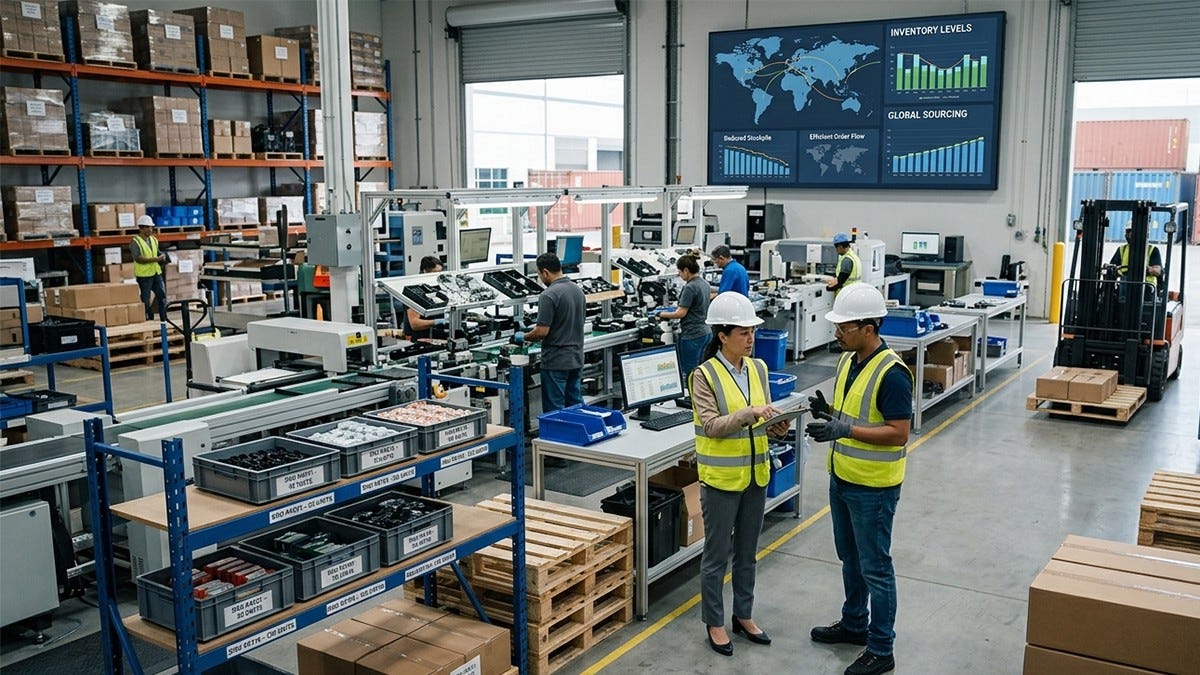
Global sourcing has expanded access to manufacturing capacity across industries, but it has also amplified a procurement challenge that many buyers underestimate: minimum order quantity (MOQ).
For retailers, distributors, e-commerce sellers, and importers, MOQ is often viewed as a straightforward commercial requirement. In reality, MOQ decisions influence inventory exposure, working capital utilization, demand forecasting accuracy, product launch flexibility, and supplier relationship management.
As supply chains become more volatile and product life cycles continue to shorten, many procurement teams are reassessing traditional assumptions around volume purchasing. The rise of low-MOQ manufacturers reflects a broader shift in sourcing strategy — one that prioritizes agility and risk management alongside unit-cost optimization.
Understanding how MOQ affects procurement outcomes requires looking beyond simple pricing discussions and examining the operational realities that drive supplier requirements and buyer behavior.
Why MOQ Becomes a Major Inventory Risk in B2B Purchasing
At its most basic level, MOQ meaning refers to the minimum quantity a supplier requires a buyer to purchase in a single order. While the concept appears straightforward, its implications are often significant.
Many procurement teams initially focus on unit pricing. Larger orders frequently reduce per-unit costs through economies of scale. However, inventory risk rarely appears on supplier quotations.
The challenge emerges when purchased volume exceeds actual market demand.
Excess inventory creates multiple layers of cost:
- Warehousing expenses
- Inventory financing costs
- Insurance and handling costs
- Product obsolescence risk
- Discounting pressure for slow-moving stock
- Cash flow constraints
A procurement decision that appears favorable from a manufacturing cost perspective can become significantly more expensive when downstream inventory carrying costs are considered.
The Hidden Trade-Off Between Unit Cost and Inventory Exposure
A common sourcing mistake is assuming that lower unit prices automatically improve profitability.
In practice, procurement decisions involve balancing multiple cost categories simultaneously.
| Procurement Variable | Low MOQ Scenario | High MOQ Scenario | | Unit Cost | Higher | Lower | | Initial Cash Outlay | Lower | Higher | | Inventory Risk | Lower | Higher | | Forecast Accuracy Requirement | Lower | Higher | | Product Flexibility | Higher | Lower | | Storage Costs | Lower | Higher |
The table illustrates a common sourcing reality: minimizing manufacturing cost does not necessarily minimize total procurement cost.
For businesses operating in uncertain markets, inventory risk can easily outweigh unit-cost savings.
What Causes High MOQ Requirements in Manufacturing and Global Sourcing
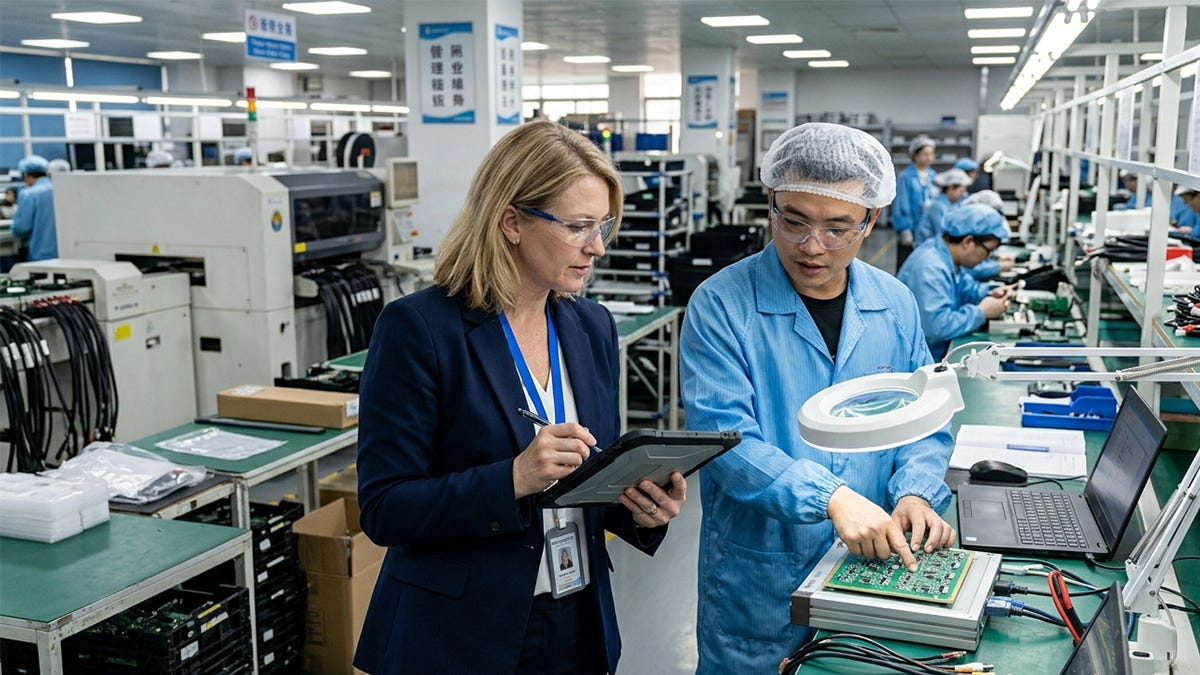
Many buyers assume suppliers impose MOQ requirements simply to increase revenue. In reality, MOQ manufacturing decisions are usually driven by production economics.
Manufacturers incur fixed costs every time production begins.
These costs may include:
- Machine setup
- Tooling adjustments
- Material preparation
- Labor allocation
- Quality control procedures
- Packaging configuration
- Administrative processing
Whether a production run consists of 500 units or 50,000 units, many setup costs remain relatively unchanged.
Consequently, manufacturers establish MOQ thresholds to ensure those fixed costs can be distributed across enough units to maintain profitability.
Manufacturing Economics Behind MOQ Requirements
Different production models create different MOQ expectations.
| Manufacturing Environment | Typical MOQ Pressure | | Injection Molding | Very High | | Metal Fabrication | Moderate to High | | Textile Production | Moderate | | Electronics Assembly | Moderate | | Digital Manufacturing | Low | | Custom Packaging | High |
The more setup-intensive the production process, the stronger the commercial incentive for higher MOQ requirements.
This explains why MOQ levels often vary significantly between suppliers producing similar products.
Supplier Capacity Utilization Considerations
Capacity planning also affects MOQ requirements.
Factories seek predictable production schedules. Small orders can increase operational complexity by creating:
- More production changeovers
- Increased scheduling inefficiencies
- Higher administrative workload
- Reduced equipment utilization
From the supplier’s perspective, larger orders often create more stable production economics.
Understanding this reality helps buyers negotiate more effectively because MOQ discussions are rarely about volume alone — they are often about operational efficiency.
How Low-MOQ Manufacturers Help Reduce Inventory and Supply Chain Risk
The emergence of low-MOQ manufacturers reflects changing market conditions.
Demand volatility, product customization, shorter trend cycles, and digital sales channels have increased the value of procurement flexibility.
Low-MOQ suppliers allow buyers to align purchasing volumes more closely with actual demand.
This shifts risk away from inventory accumulation and toward more responsive replenishment strategies.
Scenario: Private-Label Product Launch in E-Commerce Distribution
A mid-sized e-commerce distributor sourcing a private-label kitchen accessory faced a common forecasting challenge. Historical sales data was unavailable because the product category was new to the company’s portfolio.
The initial supplier proposed a 15,000-unit MOQ to achieve competitive unit pricing. However, internal demand projections ranged from 4,000 to 12,000 units during the first six months, creating substantial inventory uncertainty.
Instead of pursuing the lowest unit cost, the buyer selected a manufacturer willing to produce an initial 3,000-unit batch, with replenishment orders tied to actual sales performance.
The commercial outcome was not immediate cost savings. Unit pricing increased by approximately 11%, but inventory exposure declined by nearly 80%, allowing the company to validate demand, refine forecasting assumptions, and avoid committing working capital to unproven inventory.
From a procurement perspective, the decision shifted risk management priorities from manufacturing efficiency to demand validation. In this case, the lower MOQ functioned less as a pricing mechanism and more as a tool for controlling forecast risk.
Improved Demand Validation
Low MOQ sourcing enables businesses to:
- Test new products before scaling
- Validate customer demand
- Enter new geographic markets incrementally
- Reduce dead-stock risk
- Improve inventory turnover
This capability is especially valuable in industries characterized by rapidly changing consumer preferences.
Greater Working Capital Efficiency
Inventory ties up capital.
When businesses purchase only what they reasonably expect to sell, capital remains available for:
- Marketing investment
- Product development
- Market expansion
- Supplier diversification
- Strategic inventory reserves
For many SMEs, working capital preservation can have greater strategic value than marginal unit-cost reductions.
The Most Common Mistakes Buyers Make When Evaluating Low-MOQ Manufacturers
The growing popularity of low-MOQ suppliers has also created new procurement risks.
Some buyers focus exclusively on flexibility while overlooking supplier capability.
Low MOQ alone does not indicate operational excellence.
Mistake 1: Ignoring Scale-Up Capacity
A supplier may accommodate small initial orders but struggle when demand grows.
Procurement teams should assess:
- Production capacity
- Workforce scalability
- Equipment availability
- Supply chain resilience
A low-MOQ manufacturer that cannot support future growth may become a bottleneck.
Mistake 2: Overlooking Cost Stability
Some suppliers compensate for low volumes through:
- Variable pricing
- Frequent cost adjustments
- Surcharges
- Material markups
Buyers should evaluate long-term pricing behavior rather than focusing solely on initial quotations.
Mistake 3: Treating MOQ as the Only Risk Variable
MOQ is only one component of sourcing risk.
Other factors may carry equal or greater importance:
- Lead time reliability
- Quality consistency
- Financial stability
- Communication effectiveness
- Compliance capabilities
Procurement decisions become problematic when MOQ overshadows broader supplier evaluation criteria.
How to Evaluate Whether a Low-MOQ Manufacturer Is Commercially Reliable
Commercial reliability requires balancing flexibility with operational capability.
A useful evaluation framework is to examine four dimensions simultaneously.
Supplier Reliability Assessment Framework
| Evaluation Area | Key Question | | Production Capability | Can they consistently deliver required volumes? | | Financial Stability | Can they sustain long-term operations? | | Quality Systems | Are quality controls documented and repeatable? | | Supply Chain Strength | Do they have reliable upstream suppliers? |
This approach helps procurement teams distinguish between strategically flexible manufacturers and suppliers that simply accept small orders because they lack demand.
Operational Signals Worth Investigating
Experienced buyers often examine:
- On-time delivery history
- Customer retention rates
- Capacity utilization levels
- Supplier diversification
- Raw material sourcing strategy
These indicators frequently reveal more about supplier reliability than MOQ discussions alone.
Organizations that formalize a structured B2B procurement MOQ strategy often evaluate MOQ alongside supplier capacity, quality consistency, inventory turnover, and long-term scalability rather than treating minimum order quantity as an isolated metric.
How to Calculate the Real Cost Impact of MOQ Decisions
Many sourcing decisions become distorted because procurement teams compare only purchase prices.
A more accurate assessment considers total landed and inventory-related costs.
Analytical Cost Breakdown
The real procurement cost structure may include:
| Cost Component | Impact Area | | Unit Manufacturing Cost | Direct Procurement | | Freight Cost | Logistics | | Warehousing Cost | Inventory Holding | | Financing Cost | Working Capital | | Obsolescence Risk | Demand Uncertainty | | Markdown Risk | Sales Performance |
When these categories are included, high-MOQ sourcing can become less attractive than initially assumed.
Example: When a Lower Unit Cost Produces a Higher Total Procurement Cost
Consider a distributor sourcing a newly launched consumer product with uncertain demand.
| Cost Factor | High-MOQ Supplier | Low-MOQ Supplier | | MOQ | 20,000 units | 5,000 units | | Unit Cost | $4.00 | $4.60 | | Initial Inventory Investment | $80,000 | $23,000 | | Estimated Sell-Through Rate (6 months) | 75% | 90% | | Unsold Inventory Value | $20,000 | $2,300 | | Inventory Carrying Cost (20% annualized) | $16,000 | $4,600 | | Estimated Inventory-Related Cost Exposure | $36,000 | $6,900 |
While the high-MOQ supplier offers a 13% lower unit price, the buyer assumes substantially greater inventory exposure and working-capital commitment. In uncertain demand environments, the cost of excess inventory frequently exceeds the savings generated through scale purchasing.
This is why sophisticated procurement organizations increasingly evaluate inventory-adjusted cost models rather than relying exclusively on manufacturing cost comparisons.
When Low-MOQ Manufacturing Is the Right Strategy
Low MOQ sourcing is particularly effective when uncertainty is high.
Common Situations
New Product Launches
Demand forecasts are often unreliable during product introductions.
Lower order quantities reduce exposure while generating market intelligence.
Seasonal Product Categories
Seasonal demand fluctuations increase inventory risk.
Low MOQ sourcing allows businesses to respond more precisely to actual demand patterns.
Emerging Markets
Companies entering unfamiliar regions often lack historical sales data.
Smaller purchasing commitments help reduce forecasting errors.
Product Customization
Customized products typically serve narrower customer segments.
Lower MOQs help prevent excess inventory accumulation.
When Low-MOQ Manufacturing Can Become a Business Risk
While low MOQ sourcing offers flexibility, it is not universally beneficial.
Procurement teams sometimes overcorrect by prioritizing flexibility at the expense of efficiency.
Risk Scenario 1: Fragmented Purchasing
Very small order volumes may create:
- Frequent reordering
- Higher transaction costs
- Administrative burden
- Supply interruptions
Risk Scenario 2: Capacity Competition
Suppliers often prioritize larger customers during periods of capacity constraint.
Small-volume buyers may face:
- Extended lead times
- Production delays
- Allocation limitations
Risk Scenario 3: Missed Economies of Scale
For mature products with predictable demand, excessively small orders may increase overall procurement costs unnecessarily.
The optimal strategy depends on demand stability rather than MOQ alone.
How to Negotiate MOQ Requirements Without Damaging Supplier Relationships
MOQ negotiations are most successful when buyers understand supplier economics.
Aggressive pressure tactics often produce poor long-term outcomes.
Instead, negotiations should focus on creating mutually viable production conditions.
Effective Negotiation Approaches
Discuss Annual Volume Rather Than Individual Orders
Suppliers may accept smaller order batches if annual purchasing commitments remain attractive.
Explore Production Consolidation
Combining multiple SKUs or purchase schedules can improve manufacturing efficiency.
Consider Flexible Delivery Arrangements
Production volume and delivery volume do not always need to match.
Some suppliers can manufacture larger quantities while shipping in smaller batches.
Share Forecast Visibility
Better demand visibility reduces supplier uncertainty and may support MOQ flexibility.
The objective is not simply lowering MOQ requirements but aligning commercial incentives.
Building a Scalable Procurement Strategy Beyond MOQ Optimization
MOQ remains an important factor in global sourcing procurement, but it should not dominate sourcing strategy.
The most effective procurement organizations evaluate sourcing decisions through a broader risk-adjusted lens.
Inventory management, supplier capability, working capital efficiency, forecast confidence, and long-term scalability all interact with MOQ decisions.
As global supply chains become increasingly dynamic, the role of low-MOQ manufacturers is likely to expand. However, successful buyers recognize that flexibility alone does not create competitive advantage.
Competitive advantage emerges when procurement teams understand the economic drivers behind MOQ requirements, quantify inventory risk accurately, and align sourcing decisions with actual market uncertainty.
Viewed through that lens, MOQ is not simply a purchasing constraint. It is a strategic variable that influences how risk, capital, and operational flexibility are distributed across the supply chain.
메타데이터
- post_id
- ea7a8526c8d8
- slug
- beyond-minimum-order-quantity-how-low-moq-manufacturers-reshape-inventory-risk-in-global-sourcing-ea7a8526c8d8
- url
- https://medium.com/@widq/beyond-minimum-order-quantity-how-low-moq-manufacturers-reshape-inventory-risk-in-global-sourcing-ea7a8526c8d8
- canonical_url
- https://medium.com/@widq/beyond-minimum-order-quantity-how-low-moq-manufacturers-reshape-inventory-risk-in-global-sourcing-ea7a8526c8d8
- author_url
- https://medium.com/@widq
- status
- ok
- fetched_at
- 2026-06-21 07:44:09