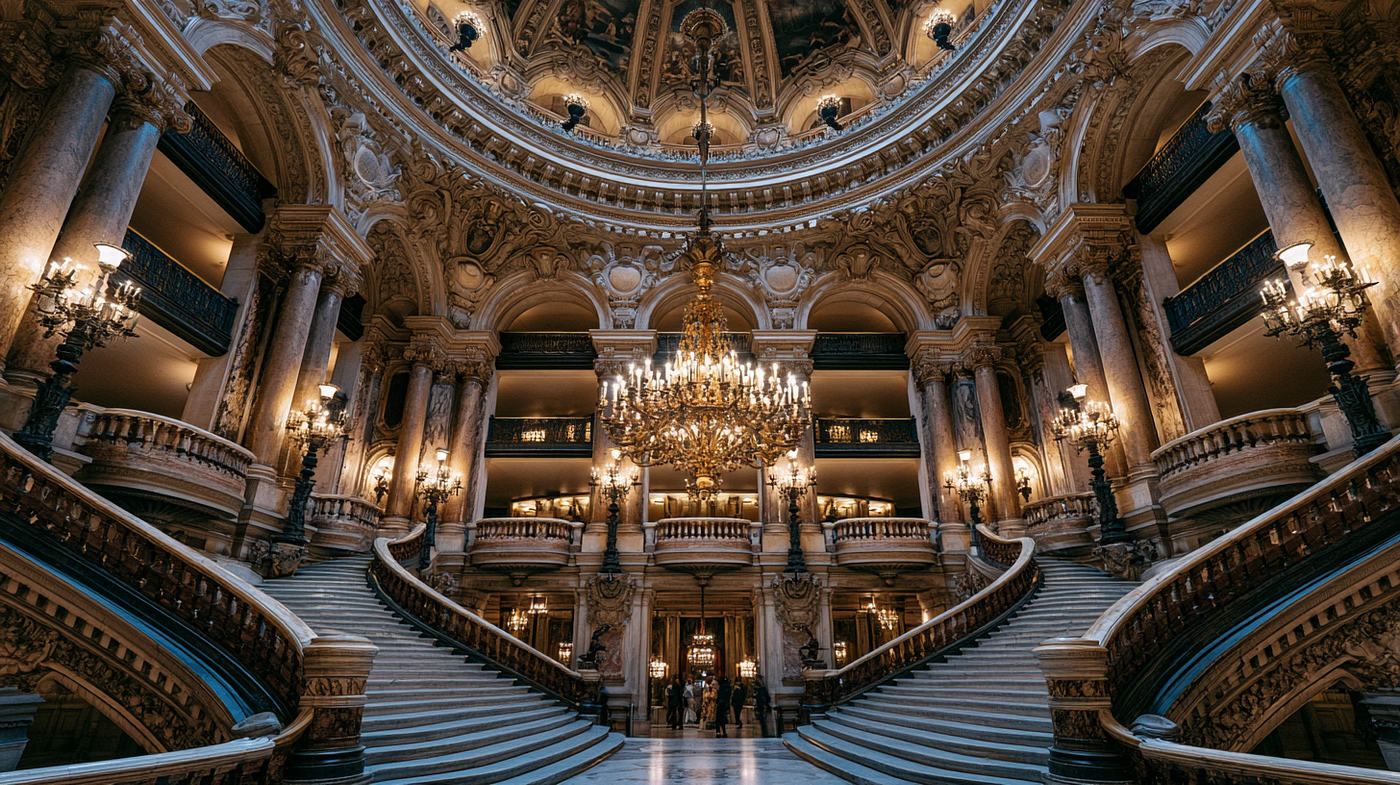
Emotional Architecture: Why Impossible Buildings Feel More Human Than Real Ones
Have you noticed something strange?
Emotional Architecture: Why Impossible Buildings Feel More Human Than Real Ones
Have you noticed something strange?
Some images feel emotional before anything happens.
No characters, no action, no story.
Just a staircase disappearing into fog, a tiny room suspended above water, a corridor too narrow to exist, an impossible balcony holding too many flowers
Architecture can create emotion long before characters arrive.
And Midjourney is surprisingly good at building these impossible emotional spaces.
The problem?
Most creators write:
“beautiful fantasy building”
and receive:
beautiful empty building.
Because emotional architecture is not about structures.
It is about spatial psychology
The Biggest Mistake: Designing Buildings Instead of Feelings
The goal is not: “create a beautiful image.”
The goal is:
“create a world that physically behaves like an emotion.”
Building emotional structures.
This changes everything.
Weak Prompt:
ancient fantasy house floating in sky, Canon EOS R5, 50mm lens — ar 16:9 — raw — v 8.1
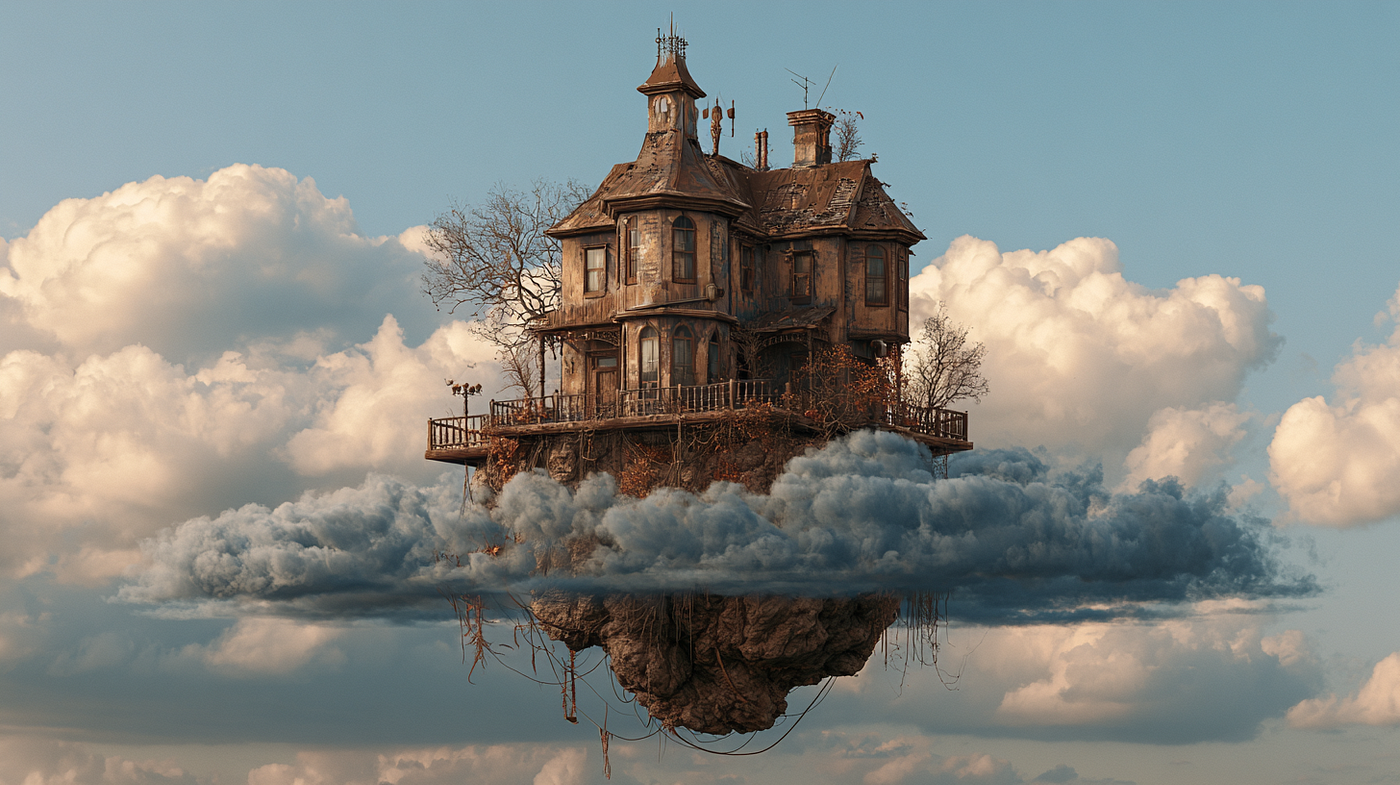
Strong Prompt:
small fragile wooden house suspended above endless fog, thin bridges connecting isolated rooms, soft morning light dissolving structural edges, architecture designed around loneliness rather than function, cinematic scale, Canon EOS R5, 50mm lens — ar 16:9 — raw — v 8.1

What changed?
We stopped describing architecture.
We started describing emotion
Architecture Creates Emotion Through Five Behaviors
1. Fragility
Fragile architecture creates tension.
Think:
tiny supports
thin bridges
hanging rooms
overloaded structures
Prompt:
weathered tower resting on impossibly thin stone pillars above a dark forest valley, fragile engineering creating visible tension, atmospheric perspective, Sony A7R V, 85mm lens — ar 16:9 — v 8.1

gigantic glass greenhouse supported by extremely thin metal legs above flooded marshland, fragile architecture, soft sunrise mist — ar 7:3 — v 8.1

2. Isolation
Large empty spaces increase emotional distance. This is one of the strongest emotional tools in architecture.
Not because architecture changes, because space around architecture changes.
A building rarely feels lonely by itself, it feels lonely when:
there is too much empty space
too much distance
too little visual support
too much surrounding silence
Prompt:
small cabin standing alone inside gigantic flooded ruins, architecture overwhelmed by scale, soft fog layers, cinematic emptiness, Nikon Z8, 35mm lens — ar 21:9 — v 8.1

tiny cabin trapped beneath gigantic abandoned concrete structures disappearing into clouds, architecture overwhelmed by impossible scale, cinematic mood — ar 7:3 — v 8.1

3. Compression
Narrow spaces feel psychological.
Prompt:
extremely narrow corridor filled with old lamps and peeling wallpaper, compressed architecture creating claustrophobic intimacy, shallow light shafts, Leica photography — ar 2:3 — v 8.1

stacked sleeping compartments inside narrow vertical tower, compressed architecture creating visible discomfort — ar 2:3 — v 8.1

4. Vertical Vulnerability
Height creates emotional instability.
Humans are naturally sensitive to height, not because height itself is emotional, but because height introduces:
risk
exposure
fall potential
loss of control
The higher architecture rises, the more the brain automatically evaluates:
“Could this fail?”
This creates a strange phenomenon.
Prompt:
multiple tiny rooms stacked vertically on fragile wooden supports above ocean cliffs, impossible vertical settlement, storm approaching — ar 9:16 — v 8.1

towering stone structure attached to cliff walls using minimal supports, visible exposure above endless valley, atmospheric fog layers — ar 16:9 — v 8.1

5. Incomplete Structures
Missing pieces create mystery.
Humans naturally want completion.
When we see:
unfinished stairs
missing walls
broken bridges
rooms without doors
structures that suddenly stop, the brain automatically tries to finish them.
This creates something extremely useful for emotional architecture: Participation
Prompt:
abandoned staircase leading toward unfinished rooms disappearing into clouds, architecture interrupted by absence, cinematic fog behavior — ar 16:9 — v 8.1

narrow wooden bridge stopping suddenly above enormous canyon fog, unfinished architecture creating psychological tension — ar 7:3 — v 8.1

Prompt Demonstrations: Weak vs Strong Emotional Architecture
Weak:
floating city fantasy — ar 16:9 — v 8.1

Strong:
fragile city assembled from disconnected homes connected by unstable bridges, visible repairs everywhere, soft lantern lights revealing structural vulnerability — ar 16:9 — v 8.1

Weak:
dream house, Nikon Z8, 35mm lens — ar 7:3 — v 8.1

Strong:
house built around a massive tree root system slowly invading walls and windows, Nikon Z8, 35mm lens — ar 7:3 — v 8.1

Weak:
castle in clouds, Sony A7R V, 50mm lens — ar 7:3 — v 8.1

Strong:
fragmented stone architecture dissolving upward into cloud systems and atmospheric haze, Sony A7R V, 50mm lens — ar 7:3 — v 8.1

Weak:
magical forest, Sony A7R V, 50mm lens — ar 7:3 — v 8.1

Strong:
impossible forest structures made from intertwined roots creating vertical pathways disappearing into mist Sony A7R V, 50mm lens — ar 7:3 — v 8.1

Notice something: We are no longer describing objects.
We are describing relationships.
abandoned cliffside hotel frozen during construction decades earlier, exposed floors visible through missing walls, weathered scaffolding remaining intact, clouds slowly moving through unfinished rooms, cinematic realism — ar 16:9 — v 8.1

endless library with incomplete staircases and unfinished reading rooms disappearing into darkness, partially constructed shelves reaching toward empty space, cinematic mystery, atmospheric dust particles, Leica photography — ar 7:3 — v 8.1

small weathered house trapped inside unfinished tunnel system, corridors extending into darkness but stopping unexpectedly, cinematic loneliness, atmospheric lighting behavior, Sony photography — ar 16:9 — v 8.1

What This Really Teaches
Most creators ask: “How do I create beautiful dreamlike images?”
Perhaps the better question is:
How do I build worlds that physically behave like emotions?
Because emotional images rarely come from objects.
They come from relationships.
And relationships are where visual language begins.
Libée Lune
메타데이터
- post_id
- eaa981fc7481
- slug
- emotional-architecture-why-impossible-buildings-feel-more-human-than-real-ones-eaa981fc7481
- url
- https://medium.com/@libelune/emotional-architecture-why-impossible-buildings-feel-more-human-than-real-ones-eaa981fc7481
- canonical_url
- https://medium.com/@libelune/emotional-architecture-why-impossible-buildings-feel-more-human-than-real-ones-eaa981fc7481
- author_url
- https://medium.com/@libelune
- status
- ok
- fetched_at
- 2026-06-09 15:37:30