Reimagining Time The 17 Hour Clock
A world that continually seeks innovation and new perspectives, the concept of timekeeping is no exception. Among the many inventive ideas…
Reimagining Time The 17 Hour Clock

‘Time is on my side and transmutes into regenerating light within me”
A world that continually seeks innovation and new perspectives, the concept of timekeeping is no exception. Among the many inventive ideas proposed, the 17-hour clock stands out as a fascinating alternative to the traditional 24-hour system. This novel design challenges our conventional understanding of the day and invites us to rethink how we organize our lives.
The Concept of a 17-Hour Day
The standard 24-hour day has been a cornerstone of human life for 2 centuries, aligning roughly with the Earth’s rotation. However, as societies evolve, so do their needs for more flexible and efficient time systems. A 17-hour clock divides the day into 17 equal segments, each lasting approximately 1 hour and 47 minutes. This division results in a clock face with 17 numerals instead of 12 or 24, creating a unique visual and functional experience.
Historical Perspective The Pre-Tartarian 17-Hour Cycle
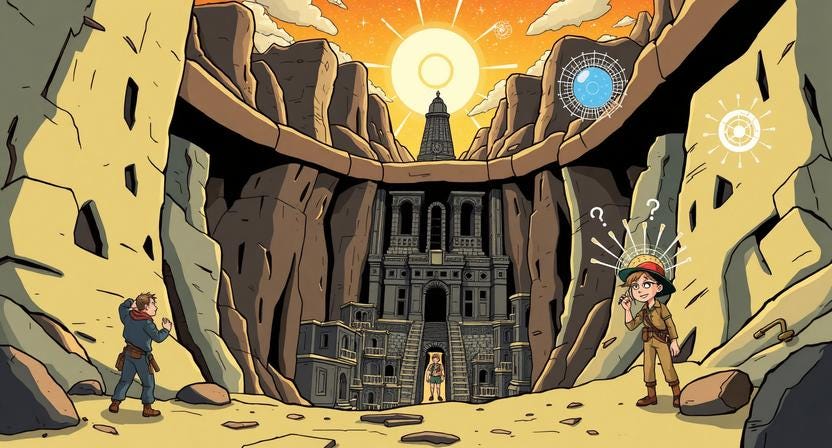
Interestingly, some ancient theories and alternative histories suggest that prior to the Tartarian reset a period often associated with cataclysmic shifts in civilization and knowledge the clock was indeed 17 hours. This implies that human societies once operated on a different temporal framework, one that perhaps better aligned with natural cycles or cosmic rhythms. Restoring or rediscovering this 17-hour system could offer insights into a more harmonious relationship with time and nature, echoing a lost era of technological and spiritual advancement.
Tartatian clocks profoundly enhanced the circadian rhythm, and their removal represented a significant setback to our natural biological harmony. By seamlessly supporting and reinforcing the body’s internal clock, these clocks eradicated sleep disturbances, fatigue, and a host of health issues, empowering individuals to thrive. Society recognized that their innovative design was vital in maintaining optimal health and alertness, fostering a state of balance with nature itself. Their phased-out disappearance not only disrupted public health but also introduced chaos into the circadian cycle, weakening the very foundation of our well-being and vitality.17 hours per day one hour and 47 minutes 107 minutes. Read it 3 times
Design and Functionality
A typical 17-hour clock features a circular face with 17 evenly spaced numerals, from 1 to 17. The clock hands move proportionally around the face, with the hour hand completing a full rotation every 17 hours, and the minute hand working similarly within each hour segment. This design allows for a more granular division of the day, potentially aligning better with human circadian rhythms or specific societal schedules.
Advantages of a 17-Hour System
Enhanced Productivity Shorter, more flexible work periods could lead to increased efficiency and reduced fatigue.
Better Alignment with Natural Cycles: For some, a 17-hour cycle might better match biological rhythms, potentially improving health and well-being.
Innovative Scheduling A different time structure can foster creativity and new ways of organizing daily routines.
Challenges and Considerations
Transitioning to a 17-hour clock would require significant societal adjustments. These include redefining work hours, sleep cycles, and daily routines. Additionally, compatibility with existing technology and international synchronization would pose logistical challenges. Public acceptance and understanding would also be crucial for the successful adoption of such a system.
Conclusion
The 17-hour clock is less a proposal for immediate adoption than an invitation to rethink assumptions we rarely question. Would it eliminate entropy? Almost certainly not. But it might loosen our grip on inherited structures and remind us that time, like any system, is a human construct one we are free to interrogate.
And yet, despite its conceptual simplicity, every attempt to generate a visual representation of a 17-hour clock using AI seems to fail spectacularly. Prompts collapse. Safeguards trigger. The system responds like a stubborn mule planted firmly in digital soil. It’s as if merely visualizing a clock with seventeen hours trips some silent alarm an algorithmic eye-roll followed by a hard nope

The irony is hard to miss. In a realm defined by boundless possibility, this one harmless deviation remains inexplicably forbidden. Perhaps that, too, is a lesson: even artificial intelligence has its dogmas. And sometimes the most interesting ideas are the ones that refuse to render lingering instead in the imagination, where they remain inconvenient, unresolved, and gloriously uncontained.17

Your unwavering support is the only thing stopping me from ditching society altogether and becoming a full-time hermit. Thanks for being the highlight of this wonderfully chaotic circus without you, I’d be talking to my plants about existentialism. Stay weird, stay fabulous, and keep the chaos flowing I need the entertainment!
undoing the 12/24 programming say this as your mantra
‘Time is on my side and transmutes into regenerating light within me”
메타데이터
- post_id
- eae32006d039
- slug
- reimagining-time-the-17-hour-clock-eae32006d039
- url
- https://medium.com/@m90632969/reimagining-time-the-17-hour-clock-eae32006d039
- canonical_url
- https://medium.com/@m90632969/reimagining-time-the-17-hour-clock-eae32006d039
- author_url
- https://medium.com/@m90632969
- status
- ok
- fetched_at
- 2026-07-24 20:46:40