“They Seem Fine” Is Not a Metric
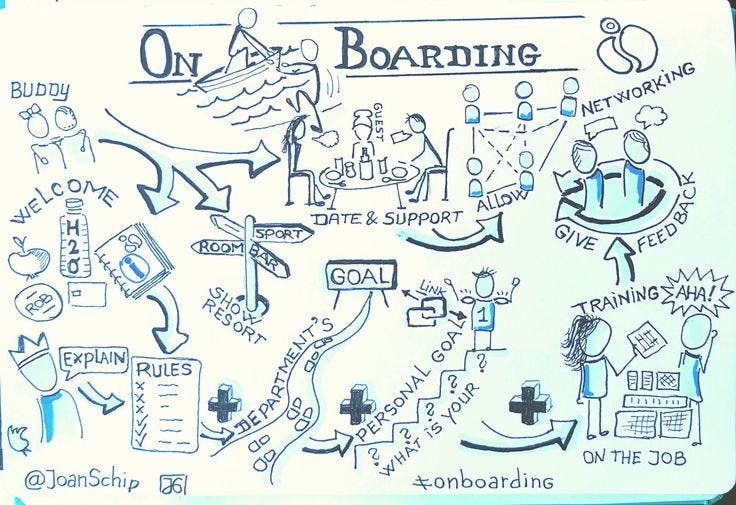
Part 3 of 3: Role-Based Onboarding
“They Seem Fine” Is Not a Metric
Part 3 of 3: Role-Based Onboarding
There is a particular kind of corporate bluff that all of us have participated in at some point or the other and it sounds like this: “Yeah, the onboarding went well. They settled in quickly.”

What we usually means is: they didn’t resign (yet), they didn’t visibly struggle, and no one raised a flag. These are absence-of-bad-things observations. They are not measurements of a successful onboarding.
The challenge with evaluating role-based onboarding is that the failure modes are largely invisible. As we explored in Part 1, the new hire is often actively concealing their gaps to protect their professional reputation. And the success metrics most organisations reach for — retention at 90 days, performance rating at end of probation — are lagging indicators that don’t really reveal much.
Good measurement provides signals early enough to act on them.
What you’re actually trying to measure
Before we get to metrics, it’s worth being precise about what a successful role-based onboarding is trying to achieve. There are three things:
- The new hire has the knowledge they need to do their job — not a complete picture (that takes years), but a solid, accurate foundation without critical gaps.
- The new hire has clarity on what good looks like — they know what success looks like at their level, how their work will be evaluated, and what the priorities are.
- The new hire feels able to ask for help — they haven’t retreated into impression management mode. They trust that surfacing gaps is safe.
These are measurable. They require asking the right questions at the right time.
Measure clarity, not contentment
The most commonly used onboarding survey asks some version of “how are you finding it so far?” This is a contentment measure. It is almost useless.

A new hire can find it fine and still be operating on a framework of false assumptions. They can enjoy their team and still have no idea how their role connects to the organisation’s priorities. They can feel positive about their manager and still be completely unclear on how their performance will be evaluated. Worse still, they can be confident about their performance metrics only to be caught off gaurd by the end of the evaluation period.
Replace “how are you finding it?” with questions that measure clarity:
- “What does winning at this job look like for you right now?”
- “If you had to name the people you most need on your side in this role, who comes to mind? What do you know about them?”
- “Be honest — what’s one thing about this place you’re still figuring out?”
These questions are not comfortable. That’s the point. A new hire who can’t answer the first question doesn’t have the clarity they need — regardless of how they’re “finding it.”
Run this at Day 30. It’s early enough that corrections are cheap. It’s late enough that the new hire has genuine observations to offer.
The manager’s mirror
Here’s a nudge that most organisations miss entirely: survey the manager, not just the new hire.
At Day 60, ask the manager three parallel questions:
- “How confident are you that your new hire knows what you’re expecting from them?”
- “When did they last ask you something that showed they were thinking in the right direction?”
- “What’s the gap you haven’t found the right moment to address yet?”
This does two things. First, it surfaces misalignments early — the new hire who thinks they’re on track but whose manager is already concerned, or the manager who thinks everything is fine but whose new hire is quietly struggling.
Second, it holds the manager accountable to the plan they wrote in Part 2. If the manager can’t answer “does your new hire understand what success looks like?” there’s a good chance those expectations were never made explicit in the first place. The question is diagnostic. It reveals as much about the onboarding plan as it does about the new hire.
The signals that precede attrition
Most organisations measure 90-day retention because it’s easy. It’s also, as a standalone metric, a poor one — by the time someone hands in their notice, the onboarding failure happened two months ago.
The signals that actually predict whether someone is likely to disengage are earlier and subtler:
Rework rate in the first 60 days — How often is work being sent back for significant correction? This isn’t about quality standards; it’s about alignment. High rework in the first two months is almost always a signal that expectations weren’t clear upfront. The work isn’t wrong because the hire is incapable. It’s wrong because no one told them precisely what right looks like.
Question frequency — Is the new hire asking questions? A new hire who goes quiet after the first two weeks hasn’t necessarily found their feet — they may have entered impression management mode. If the questions stop before the knowledge has transferred, that’s a signal, not a success.
Stakeholder relationship formation — By Day 45, has the new hire met the core stakeholders identified in their plan? This is a simple checklist. It’s also a meaningful one. Stakeholder relationships that don’t form in the first 60 days are significantly harder to build later, and the new hire who is still operating without those relationships at Day 90 is operating with a structural disadvantage.
New hire’s own assessment of readiness — Ask directly: “On a scale of 1–10, how confident do you feel in your understanding of your role and priorities?” Follow up on anything below 7. The number matters less than the conversation it opens. A new hire who gives a 6 and then explains exactly which parts feel unclear is giving you exactly the information you need. Most managers never ask the question.
The 90-day review: what it should and shouldn’t be
The 90-day review is often treated as binary — stay or go. It’s usually a performance discussion, sometimes a probation sign-off, rarely a genuine reflection on the onboarding experience itself.
Reframe it. The 90-day review should include a structured look backwards at the onboarding plan:
- What did we get right?
- What was missing or inaccurate in hindsight?
- What did you have to figure out yourself that should have been made explicit?
This conversation has two benefits. For the current employee, it’s validating — their experience of onboarding is being taken seriously rather than filed away. For the organisation, it’s institutional learning. Every 90-day review that includes this conversation improves the next role-based onboarding plan for this team. The manager who does this consistently will write better plans because they’re regularly receiving structured feedback on what the previous one missed.
Closing the loop
Role-based onboarding done well can be an asset for the team. It is a unique opportunity to leverage each of the potential one saw in the employee before they were hired. But it can be time consuming initially and it does take a village.A manager writes a plan, shares it, runs calibration check-ins, and reviews it at Day 90. HR makes good templates available, normalises the practice, and asks the right questions at the right intervals.
The new hire who was quietly pretending to be settled at Day 45? In a well-designed system, they never have to pretend. They know what they’re working towards. They have someone to flag confusion to. And they have a manager who has thought clearly about what they need — not because they’re an exceptional manager, but because the system made it the obvious thing to do.
Put simply, they have the structure to build accurate knowledge and the psychological safety to surface gaps.
That’s what a nudge does well. It doesn’t rely on exceptional people. It makes the right behaviour the easy behaviour.
And that’s worth building.
메타데이터
- post_id
- eb008ce892bc
- slug
- they-seem-fine-is-not-a-metric-eb008ce892bc
- url
- https://medium.com/nudge-intended/they-seem-fine-is-not-a-metric-eb008ce892bc
- canonical_url
- https://medium.com/nudge-intended/they-seem-fine-is-not-a-metric-eb008ce892bc
- author_url
- https://medium.com/@nudgeintended
- status
- ok
- fetched_at
- 2026-06-27 07:40:21