CBRS vs Private LTE vs 5G: What’s Best for Enterprises?
Enterprise connectivity is no longer just about getting teams online. Today, businesses need secure, reliable, and scalable networks that…
CBRS vs Private LTE vs 5G: What’s Best for Enterprises?
Enterprise connectivity is no longer just about getting teams online. Today, businesses need secure, reliable, and scalable networks that support real-time operations, smart devices, automation, and mission-critical communication. That is why companies are comparing CBRS, Private LTE, and 5G to find the right wireless solution. For organizations exploring advanced enterprise connectivity, Horizon Powered provides wireless networking solutions designed to support modern business needs across industries.
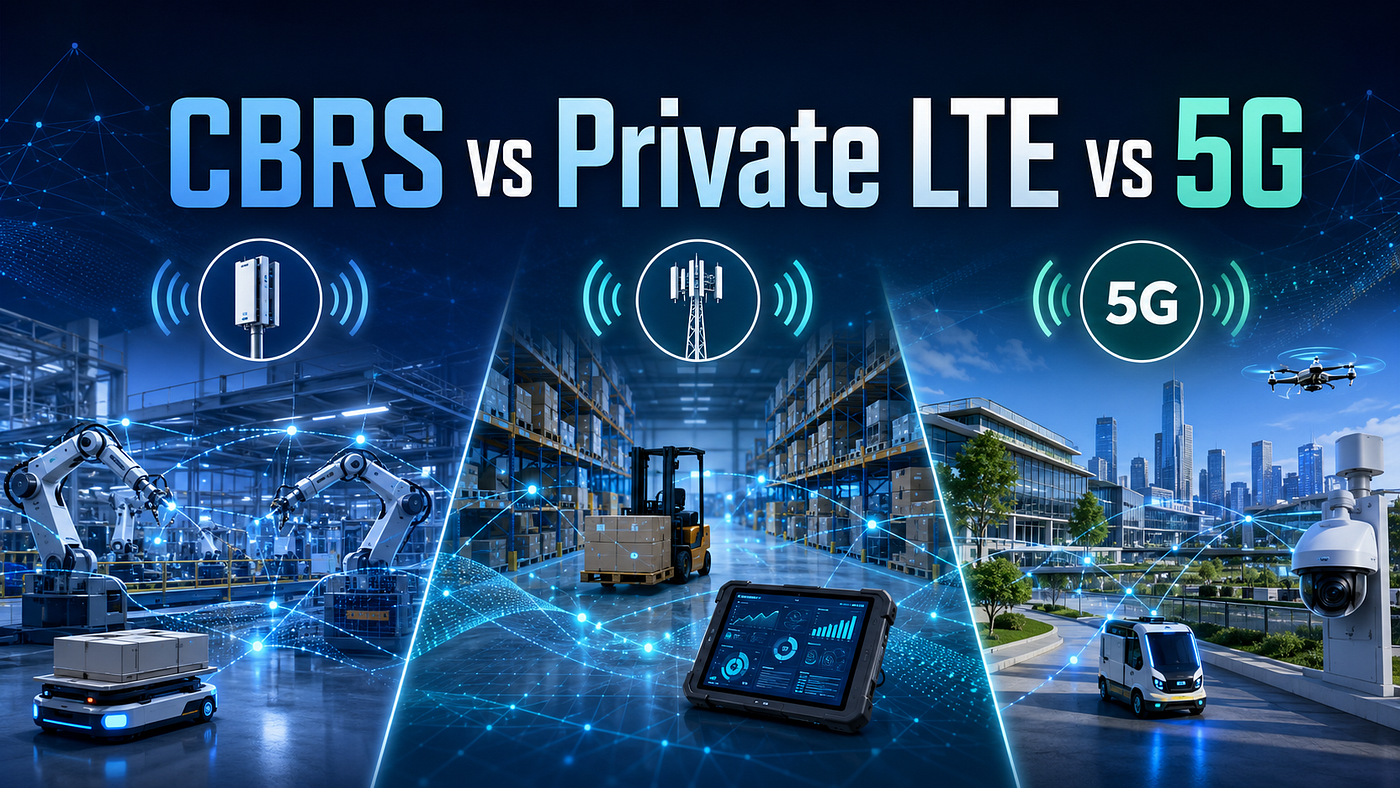
As digital transformation grows, traditional Wi-Fi and wired networks often struggle to meet the demands of large campuses, warehouses, factories, logistics hubs, utilities, and smart infrastructure. Enterprises now need better coverage, stronger security, lower latency, and more control over their networks.
This is where CBRS, Private LTE, and 5G become important. Each technology offers unique advantages, but the best choice depends on your business goals, budget, environment, and long-term connectivity strategy.
In this guide, we will compare CBRS vs Private LTE vs 5G based on cost, deployment, security, performance, coverage, scalability, and real-world enterprise use cases.
What Is CBRS?
CBRS stands for Citizens Broadband Radio Service. It uses the 3.5 GHz shared spectrum band in the United States and allows organizations to build private wireless networks without buying expensive exclusive spectrum licenses.
CBRS is popular because it offers a flexible and cost-effective way to deploy private connectivity. It is often used with LTE or 5G technology to create secure private networks for campuses, warehouses, industrial sites, schools, logistics centers, and outdoor facilities.
CBRS works through a shared spectrum model that includes:
- Incumbent users such as military radar systems
- Priority Access License users
- General Authorized Access users
This model helps businesses access wireless spectrum at a lower cost while still getting strong performance and control.
Best For:
CBRS is a strong choice for enterprises that need affordable private wireless coverage without the high cost of licensed spectrum.
What Is Private LTE?
Private LTE is a dedicated cellular network built for one organization. Unlike public mobile networks, Private LTE gives a business its own controlled network environment.
It can run on licensed spectrum, shared spectrum, or CBRS. The main advantage of Private LTE is control. Businesses can manage security, user access, traffic priority, data flow, and network performance according to their own requirements.
Private LTE is widely used in industries where downtime is not acceptable, such as manufacturing, energy, healthcare, utilities, logistics, mining, and public safety.
Best For:
Private LTE is ideal for enterprises that need reliable coverage, strong security, low latency, and full control over mission-critical operations.
What Is 5G?
5G is the latest generation of cellular technology. It offers faster speeds, lower latency, higher bandwidth, and support for more connected devices compared to previous generations.
Enterprises can use public 5G networks from mobile carriers or deploy private 5G networks for dedicated business operations. Private 5G is especially useful for advanced applications such as robotics, AI, automation, smart factories, AR, VR, connected vehicles, and real-time analytics.
However, 5G usually requires more investment, advanced infrastructure, and technical expertise.
Best For:
5G is best for enterprises planning future-ready networks with high-speed performance, massive IoT support, and advanced automation needs.
CBRS vs Private LTE vs 5G: Key Comparison
1. Cost and Deployment Complexity
Cost is one of the biggest factors when choosing between CBRS, Private LTE, and 5G.
CBRS Cost
CBRS usually has the lowest entry cost because it uses shared spectrum. Businesses do not always need to purchase expensive spectrum licenses, which makes deployment faster and more affordable.
This makes CBRS a smart option for schools, warehouses, campuses, retail chains, and mid-sized enterprises that need private wireless connectivity on a practical budget.
Private LTE Cost
Private LTE costs more than basic CBRS deployments because it requires network infrastructure, planning, devices, and technical setup. However, the investment is often worth it for businesses that need reliable and secure connectivity.
5G Cost
5G is usually the most expensive option, especially when building a private 5G network. It requires advanced hardware, planning, network design, and technical expertise.
SEO Takeaway:
CBRS is the most budget-friendly option. Private LTE offers a balance between cost and control. 5G delivers the most advanced performance but requires the highest investment.
2. Security and Network Control
Security is critical for enterprises handling sensitive data, industrial systems, operational technology, and mission-critical applications.
CBRS Security
CBRS can provide secure private wireless connectivity, especially when used with Private LTE or Private 5G. However, because it uses shared spectrum, it depends on spectrum coordination systems to manage access and interference.
Private LTE Security
Private LTE gives enterprises strong control over security, authentication, user access, and data routing. Since the network is private, businesses can keep sensitive data within their own environment instead of depending fully on public networks.
This makes Private LTE a strong option for healthcare, manufacturing, utilities, government, and industrial operations.
5G Security
Private 5G also offers strong security and network control. It can support advanced features such as network slicing and ultra-reliable low-latency communication. However, it can be more complex to manage.
SEO Takeaway:
For enterprises that need maximum control and secure operations, Private LTE is often the most practical and proven choice.
3. Performance and Latency
Performance and latency matter when businesses rely on real-time applications, IoT devices, automation, video monitoring, and industrial systems.
CBRS Performance
CBRS provides strong performance for common enterprise use cases such as IoT sensors, security cameras, team communication, mobile devices, and campus connectivity.
Private LTE Performance
Private LTE delivers stable and reliable performance with low latency. It is especially useful in environments where Wi-Fi may be unreliable, such as factories, warehouses, outdoor facilities, and industrial sites.
5G Performance
5G delivers the highest speed and lowest latency. It is designed for advanced applications like robotics, AR/VR, autonomous systems, smart cities, and real-time machine learning.
SEO Takeaway:
5G wins in speed and ultra-low latency, but Private LTE remains a reliable and practical option for many enterprise environments today.
4. Coverage and Reliability
A network is only useful if it reaches the places where teams, machines, and devices need to stay connected.
CBRS Coverage
CBRS provides good indoor and outdoor coverage. It is useful for campuses, warehouses, schools, logistics hubs, and medium-sized enterprise spaces.
Private LTE Coverage
Private LTE performs well in challenging environments such as factories, mines, ports, energy sites, and large industrial areas. It can deliver strong signal coverage where Wi-Fi often struggles.
5G Coverage
5G coverage depends on the spectrum being used. Low-band 5G can cover larger areas, while high-band mmWave 5G provides extremely fast speeds but needs more infrastructure because its range is limited.
SEO Takeaway:
For dependable coverage across large or difficult environments, Private LTE is often the strongest choice.
5. Scalability and IoT Support
Modern enterprises are connecting more devices every year, including sensors, cameras, vehicles, tablets, routers, gateways, and smart machines.
CBRS Scalability
CBRS can support moderate device density and is suitable for small to mid-sized enterprise networks.
Private LTE Scalability
Private LTE scales well for enterprise operations. It can support many connected devices across different departments, locations, and applications.
5G Scalability
5G is built for massive IoT environments. It can support a very large number of connected devices and is ideal for future applications that require high capacity and advanced automation.
SEO Takeaway:
5G leads in large-scale IoT support, but Private LTE is more practical for many current enterprise deployments.
Real-World Enterprise Use Cases
CBRS Use Cases
CBRS is commonly used in:
- School campuses
- Retail chains
- Warehouses
- Logistics hubs
- Office campuses
- Outdoor business locations
- Temporary enterprise networks
- Smart building connectivity
CBRS is a good fit when businesses need affordable private wireless coverage without building a highly complex network.
Private LTE Use Cases
Private LTE is commonly used in:
- Smart factories
- Energy grids
- Utility operations
- Mining sites
- Ports and logistics centers
- Healthcare facilities
- Industrial automation
- Public safety networks
- Remote field operations
Private LTE is best when reliability, security, and uptime are top priorities.
5G Use Cases
5G is commonly used in:
- Smart cities
- Autonomous vehicles
- Robotics
- AI-powered automation
- AR and VR applications
- Advanced manufacturing
- High-density IoT environments
- Real-time video analytics
- Future industrial systems
5G is ideal for enterprises planning long-term innovation and next-generation digital operations.
Challenges of CBRS, Private LTE, and 5G
CBRS Challenges
CBRS is cost-effective, but it may face interference in crowded areas because it uses shared spectrum. Availability and performance can also depend on location and spectrum coordination.
Private LTE Challenges
Private LTE requires proper network planning, infrastructure, and technical expertise. It can cost more than basic wireless options, but it provides stronger control and reliability.
5G Challenges
5G can be expensive and complex to deploy. Private 5G networks require advanced equipment, careful planning, and a mature ecosystem of compatible devices.
Which One Should Enterprises Choose?
The right choice depends on your business needs.
Choose CBRS if you need an affordable and flexible private wireless network for everyday enterprise connectivity.
Choose Private LTE if your business requires secure, reliable, and controlled connectivity for mission-critical operations.
Choose 5G if your enterprise is building for future innovation, massive IoT, ultra-low latency, and advanced automation.
The Hybrid Approach: CBRS, Private LTE, and 5G Together
Many enterprises are no longer choosing only one technology. Instead, they are using a hybrid approach.
For example:
- CBRS can provide affordable private wireless coverage
- Private LTE can support secure mission-critical operations
- 5G can power advanced applications and future innovation
A hybrid wireless strategy allows businesses to balance cost, performance, coverage, security, and scalability.
This approach is especially useful for enterprises with multiple locations, mixed applications, and different connectivity demands across departments.
Final Thoughts
CBRS, Private LTE, and 5G are not direct replacements for each other. Each technology has its own role in enterprise connectivity.
CBRS makes private wireless more affordable and accessible. Private LTE provides secure and reliable connectivity for critical operations. 5G delivers the speed, capacity, and low latency needed for next-generation innovation.
For most enterprises, the best solution depends on business goals, budget, technical requirements, and future growth plans. By understanding the strengths and limitations of CBRS, Private LTE, and 5G, organizations can build a smarter wireless strategy that supports both today’s operations and tomorrow’s digital transformation.
메타데이터
- post_id
- eb28c309fa26
- slug
- cbrs-vs-private-lte-vs-5g-whats-best-for-enterprises-eb28c309fa26
- url
- https://medium.com/@web.planetcellular/cbrs-vs-private-lte-vs-5g-whats-best-for-enterprises-eb28c309fa26
- canonical_url
- https://medium.com/@web.planetcellular/cbrs-vs-private-lte-vs-5g-whats-best-for-enterprises-eb28c309fa26
- author_url
- https://medium.com/@web.planetcellular
- status
- ok
- fetched_at
- 2026-06-24 04:09:36




