I Am Not Allowed to See Condemnation.
There is something about myself that I have always known, even before I had the language to explain it.
I Am Not Allowed to See Condemnation.

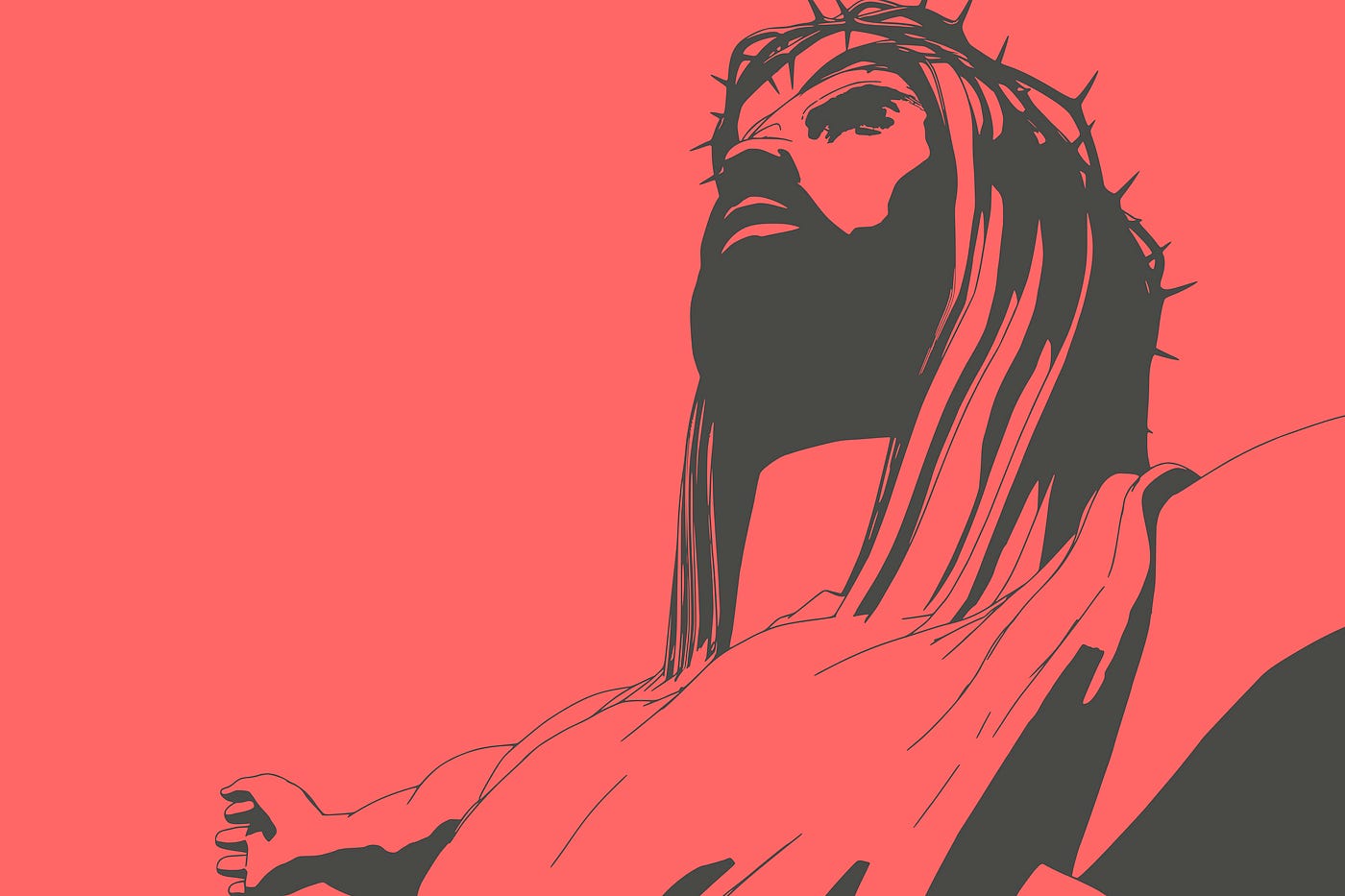
Authour generated
There is something about myself that I have always known, even before I had the language to explain it.
When I become interested in something, I tend to go all in. I will learn it, build it, teach it, sell it, or throw myself into the middle of it before I can honestly claim mastery. My willingness to begin has rarely depended upon whether I already possessed the necessary skill.
It comes from three convictions that feel as solid to me as the laws of physics.
I am resourceful.
Life is meant to be entered, explored, and figured out. The mess is part of it.
And if I have God, I am free to fail.
That last one does not mean I believe God guarantees the success of every idea I pursue. It means the outcome is not powerful enough to determine who I am or where I belong.
I can fail without becoming a failure.
I can be wrong without being abandoned.
I can hit the ground without disappearing.
Christ did not give me the belief that I would never fall. He solidified something much deeper: falling cannot separate me from where I belong.
Failure Is Information, Not Identity
Intellectually, I understand what people mean by failure. Something did not work. A plan collapsed. A decision produced consequences. A goal was not reached.
But somatically, failure does not feel final to me.
It feels like a signal.
Redirect.
Adjust.
Learn.
Build differently.
Try again.
My body does not naturally interpret a failed attempt as proof that I am worthless, incapable, or unsafe. It usually interprets it as new information about the terrain.
That is not because consequences are meaningless. Some failures are costly. Some expose impatience, pride, poor preparation, or harm done to another person. Sometimes failure requires repentance, repair, humility, and a serious change in direction.
But none of those things has the authority to rename me.
That is one of the freedoms Christ offers us. He does not remove correction, but He removes condemnation.
“There is therefore now no condemnation for those who are in Christ Jesus” (Romans 8:1).
That verse does not mean God becomes blind to what is broken in us. He sees it completely. He sees every motive, wound, defense, excuse, impulse, and failure more clearly than we ever could.
Yet He does not look at His children and declare them disposable.
He corrects as a Father. He restores as a Shepherd. He disciplines as One who has already claimed us.
Conviction says, “This is real, and it must change.”
Condemnation says, “This is what you are, and there is no hope for you.”
Those are not the same voice.
I Know Who I Am and Where I Belong
The deepest source of courage is not confidence in our abilities.
It is belonging.
Before Christ, I already possessed a willingness to move into disorder. I trusted myself to improvise, adapt, and remain standing when plans fell apart. Christ did not destroy that part of me. He gave it a permanent foundation.
Now I know who I am.
I know whose I am.
I know where I belong.
That means success cannot make me more loved, and failure cannot make me less His.
The outcome may change my circumstances, but it cannot change my identity.
This is what allows a person to move without needing absolute certainty. We no longer need every decision to prove that we are intelligent, worthy, gifted, or special. We no longer need each project to succeed in order to justify our existence.
Our lives are hidden with Christ.
Our identity is received before it is performed.
Our belonging is established before the results come in.
Galatians 2:20 says, “It is no longer I who live, but Christ who lives in me.”
That is not the erasure of the human self. It is the death of the isolated self—the self that believes it must create its own worth, secure its own future, and survive entirely through its own power.
In Christ, I am still here. But I am no longer alone.
“There Is Nothing Solid Underneath Me”
One of the most difficult things for me to understand is how deeply some people experience uncertainty as a threat.
I can explain it psychologically. I understand how trauma can fuse mistakes with danger, correction with rejection, and failure with shame. I understand how a person may have learned that love was conditional, safety was unstable, and worth depended upon performance.
I can teach all of that.
But somatically, I still have to remind myself that what feels like an obstacle to me may feel like annihilation to someone else.
My instinct is simple:
Jump.
Figure it out on the way down.
And if you hit the ground, you will still be there.
But some people do not believe there will be a stable self remaining after impact. They believe failure will reveal that there was never anything solid underneath them.
My immediate response is, “Awesome. Now we know what to build. Let me help you.”
That response comes from hope. I do not see emptiness as a final verdict. I see it as the place where a foundation can finally be laid.
But love must also teach me timing.
Sometimes people are not ready to build the moment the rubble is exposed.
Sometimes the first ministry is not construction.
It is presence.
It is sitting beside someone in the ruins long enough for them to discover that they are not alone, that their pain does not frighten us, and that we will not leave simply because the mess is real.
Jesus does not always drag people immediately toward the next lesson. Sometimes He asks, “What do you want Me to do for you?” Sometimes He weeps. Sometimes He stays. Sometimes He confronts. Sometimes, He tells a person to rise and walk.
Love does not move at the speed of our impatience.
The mature invitation is not, “Move at my pace.”
It is:
“There may be nothing solid underneath you yet, but you are still here. I am not afraid of the mess. When you are ready, we will build something real.”
And for the Christian, the deepest truth is that the foundation is not merely something we construct within ourselves.
The foundation is Christ.
I Am Not Allowed to See Condemnation
This is where everything became clear for me.
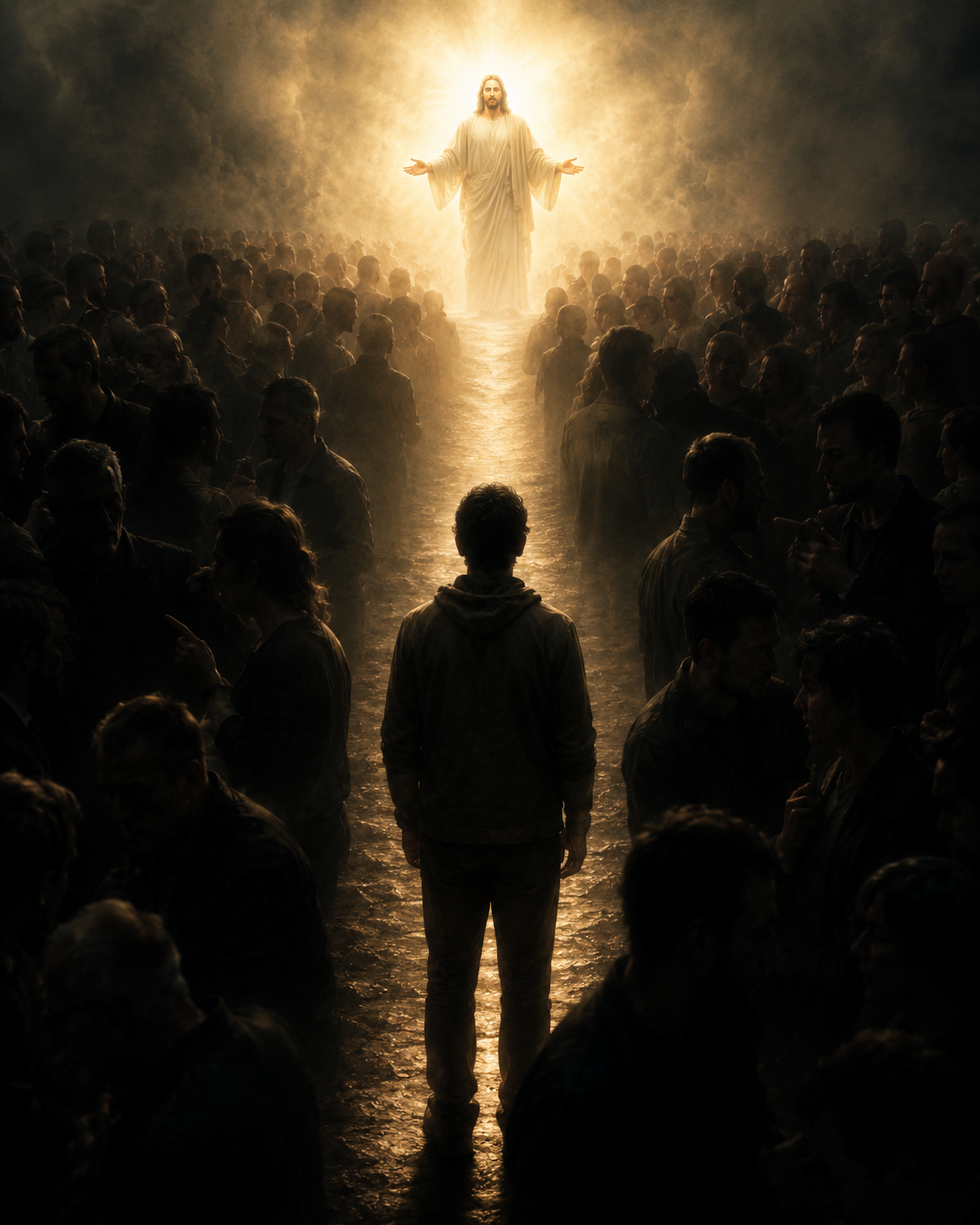
I am not allowed to see condemnation, because Christ does not look upon me with condemnation.
That does not mean I must ignore evil, excuse destructive behavior, or refuse to name sin. It does not mean I remain in unsafe relationships or remove accountability from people who cause harm.
It means I am not permitted to look at another human being and decide that their ruin is the final truth about them.
I am not allowed to condemn what Christ has called me to love, serve, confront truthfully, and help restore.
He did not deny my ruin.
He entered it and rebuilt me.
Therefore, I cannot look at another person’s ruin and call them hopeless.
That is the sentence that reaches deepest into me.
Because I have been shown mercy, I am now placed under the obligation of mercy.
Because Christ did not reduce me to my worst behavior, I am not free to reduce another person to theirs.
Because He saw what I could not yet see, I must remain open to what grace may still accomplish in someone else.
I may need to confront them.
I may need to establish boundaries.
I may need to tell the truth plainly.
I may need to protect others from what they are doing.
But I cannot stand above them as though I was rescued by merit and they were ruined by inferiority.
The cross removes that illusion.
How We Begin to Live This
The first step is not becoming fearless.
It is receiving an identity that does not depend upon fear disappearing.
Many people wait to act until their nervous system feels safe, confident, or ready. But courage rarely begins with the absence of fear. It begins when we stop allowing fear to determine who we are.
In Christ, we can take one honest step while still trembling.
We can try something small.
We can speak truth without rehearsing every possible outcome.
We can admit that we do not know.
We can allow correction without collapsing into shame.
We can make a mistake and remain present.
The body learns through experience. If a person has spent years believing that failure equals rejection, a single Bible verse may not immediately undo that pattern. The truth must be practiced.
Take a small risk.
Remain present afterward.
Notice that you are still here.
Tell the truth about what happened.
Receive grace.
Repair what needs to be repaired.
Try again.
Over time, the nervous system begins to learn what the spirit is being taught:
I can be wrong and still be loved.
I can be corrected and still belong.
I can fail and still remain in Christ.
I can face what is broken without condemning myself.
I can face what is broken in another person without condemning them.
This is not positive thinking.
It is discipleship becoming embodied.
The Mess Is Not the End of the Story
There is a rawness in learning that I genuinely love.
The mess reveals what theory hides. It exposes weakness, pride, potential, ignorance, courage, and the places where we still need God.
It makes things real.
But the Christian does not love the mess because pain is good or destruction is holy. We can enter the mess because Christ is not absent from it.
He enters tombs.
He steps into storms.
He touches what others avoid.
He restores people who believed their stories were already over.
So when life reveals that something beneath us is unstable, we do not have to panic.
Now we know where to build.
When a plan fails, we do not have to surrender our identity.
Now we know where to redirect.
When another person shows us their ruin, we do not have to recoil or stand above them.
Now we know where love must enter.
I am resourceful.
Life is meant to be entered and figured out.
The mess is not something I must fear.
And because I belong to Christ, I am free to fail honestly, learn deeply, repent quickly, repair what is mine, and continue without shame.
I know who I am.
I know where I belong.
And because Christ did not look at my ruin and call me hopeless, I am not allowed to do that to anyone else.
-TRAVIS KNOWLTON
메타데이터
- post_id
- eb2a60c44b12
- slug
- i-am-not-allowed-to-see-condemnation-eb2a60c44b12
- url
- https://medium.com/mustard-seed-sentinel/i-am-not-allowed-to-see-condemnation-eb2a60c44b12
- canonical_url
- https://medium.com/mustard-seed-sentinel/i-am-not-allowed-to-see-condemnation-eb2a60c44b12
- author_url
- https://medium.com/@1dochouse
- status
- ok
- fetched_at
- 2026-07-17 00:42:37