Why Proper Grounding Is Critical for Data Centers: Understanding the Risks and Solutions
Posted onMarch 5, 2026 March 5, 2026.by Bird Watcher.Posted inCloud
Why Proper Grounding Is Critical for Data Centers: Understanding the Risks and Solutions
Posted onMarch 5, 2026 March 5, 2026.by Bird Watcher.Posted inCloud
A recent mega component test revealed a startling insight: nearly half of the tested data centers were not properly grounded. While this may not immediately sound alarming, the implications of improper grounding are significant, affecting both safety and performance. In this blog, we’ll explore what data center grounding is, why it matters, the risks of improper grounding, and best practices to ensure a safe and efficient operation.
What Is Data Center Grounding?
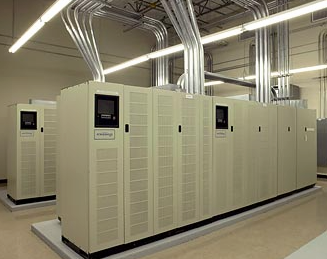
Data center grounding is the practice of connecting all conductive components — such as racks, cabinets, power distribution units (PDUs), servers, and other equipment — to a common earth ground. The goal is to create a reference point for electrical currents, providing a safe path for excess or fault currents to dissipate into the earth.
In essence, grounding is about safety and stability: it prevents uncontrolled electrical currents from damaging equipment or harming personnel. In data centers, where thousands of servers operate simultaneously and generate complex electrical loads, a properly implemented grounding system is indispensable.
Grounding is not the same as bonding, though the terms are often used together. Bonding refers to connecting all conductive elements together to ensure they are at the same electrical potential, reducing the risk of electric shock. Grounding, on the other hand, connects this network to the earth itself. Together, grounding and bonding form the backbone of a data center’s electrical safety system.
Why Grounding Matters
Proper grounding in a data center serves several essential functions:
1. Protecting Personnel
One of the most critical reasons for grounding is personnel safety. Electrical faults, such as short circuits or stray voltages, can create dangerous conditions. Proper grounding provides a low-resistance path for electricity to safely flow to the earth, reducing the risk of electric shock.
For example, if a server chassis becomes live due to a fault, a properly grounded system ensures the current quickly diverts to the earth rather than through a person touching the equipment. Without grounding, even a seemingly minor electrical fault can become life-threatening.
2. Safeguarding Equipment
Improper grounding can cause severe damage to sensitive data center equipment. High voltages or transient currents from lightning strikes, power surges, or switching operations can damage servers, storage arrays, and networking devices.
A grounded system helps dissipate these surges safely. It also stabilizes voltage levels across equipment, ensuring consistent performance. Without it, fluctuations can lead to hardware failure, data corruption, or downtime — risks that data centers can hardly afford.
3. Reducing Electromagnetic Interference (EMI)
Data centers are densely packed with electronic devices that emit electromagnetic fields. Improper grounding can amplify electromagnetic interference (EMI), which can degrade signal integrity, cause data errors, or disrupt communication between devices.
A well-grounded infrastructure provides a common reference point that minimizes potential differences between components, effectively reducing EMI. This is particularly critical in high-speed networks and sensitive applications like financial transactions or cloud computing services.
4. Meeting Compliance and Standards
Most countries have electrical codes and data center standards that mandate grounding and bonding practices. Organizations such as the Institute of Electrical and Electronics Engineers (IEEE), the National Fire Protection Association (NFPA), and the Telecommunications Industry Association (TIA) provide detailed guidelines for grounding.
Failure to meet these standards can result in legal liabilities, insurance complications, and increased operational risk. For instance, in the event of an electrical incident, lack of proper grounding could be considered negligence, leading to severe financial repercussions.
What Improper Grounding Looks Like
The mega component test highlighting that nearly half of data centers are not properly grounded is alarming. Improper grounding can manifest in several ways:
- Open circuits: Missing connections to the earth ground or broken bonding paths between equipment.
- High-resistance connections: Ground connections exist but are not low-resistance enough to safely carry fault currents.
- Inconsistent grounding points: Different parts of the data center grounded to separate points, creating potential differences.
- Corroded or loose connections: Over time, connections may degrade, reducing the effectiveness of the grounding system.
These issues might not produce immediate failures, which makes them particularly insidious. Often, equipment can appear to operate normally for months or even years before an electrical fault triggers a major incident.
The Consequences of Poor Grounding
The risks of inadequate grounding extend beyond immediate electrical hazards:
1. Equipment Damage and Downtime
Even minor grounding issues can create voltage fluctuations that degrade sensitive electronics. Servers may crash, storage arrays could lose data, and network equipment might malfunction. In a worst-case scenario, large-scale outages can occur, costing businesses millions in lost revenue.
2. Safety Hazards
Without proper grounding, personnel are at higher risk of electric shock. In high-density server rooms, even small voltages can be dangerous, especially if combined with conductive materials like metal racks or water leaks.
3. Data Integrity Issues
Voltage instability caused by improper grounding can lead to transient errors in storage systems or network equipment. In environments where data integrity is critical — like financial institutions, healthcare systems, or cloud service providers — these errors can have catastrophic consequences.
4. Regulatory and Compliance Risks
Data centers that fail to meet grounding and bonding standards risk penalties from regulatory authorities. Additionally, insurance claims for equipment damage or liability may be denied if it is found that grounding practices were inadequate.
Best Practices for Data Center Grounding
To avoid these risks, data center operators should adopt a proactive approach to grounding. Some key best practices include:
1. Establish a Single-Point Ground
A single-point ground ensures all equipment in the data center references the same earth potential. This minimizes voltage differences between devices and reduces the risk of stray currents.
2. Regularly Inspect and Maintain Ground Connections
Grounding is not a “set it and forget it” task. Periodic inspections should check for corrosion, loose connections, and degraded cables. Maintenance records should be kept to ensure compliance with standards.
3. Use High-Quality Grounding Conductors
Grounding cables should be sized appropriately for fault current and use corrosion-resistant materials. Copper is often preferred due to its high conductivity and durability.
4. Implement Redundant Grounding Paths
Redundancy ensures that even if one path fails, another path can safely carry fault currents. This is particularly important in large or mission-critical data centers.
5. Coordinate Grounding with Electrical Design
Grounding should be integrated into the overall electrical design, including uninterruptible power supplies (UPS), PDUs, and switchgear. A comprehensive design ensures that all systems work together safely and efficiently.
6. Conduct Regular Testing
Grounding systems should be tested for resistance to earth and continuity. Testing ensures that the system will function correctly during a fault condition. Standards such as IEEE 1100 (“Emerald Book”) provide guidance for testing procedures in data centers.
Conclusion
The recent finding that nearly half of data centers are not properly grounded underscores a critical industry vulnerability. Grounding is far more than an electrical formality; it is a cornerstone of data center safety, reliability, and performance.
Proper grounding protects personnel from electric shock, safeguards sensitive equipment, minimizes data errors, and ensures compliance with regulatory standards. Conversely, improper grounding exposes data centers to equipment damage, downtime, safety hazards, and potential legal repercussions.
Data center operators must prioritize grounding through careful design, regular inspection, and adherence to best practices. In an era where uptime, security, and performance are paramount, a solid grounding system is not optional — it is essential.
The takeaway is clear: grounding is the invisible safety net of every data center. Ignoring it is a risk no organization can afford.
메타데이터
- post_id
- eb3f91f2ef6a
- slug
- why-proper-grounding-is-critical-for-data-centers-understanding-the-risks-and-solutions-eb3f91f2ef6a
- url
- https://medium.com/@megacomponent20/why-proper-grounding-is-critical-for-data-centers-understanding-the-risks-and-solutions-eb3f91f2ef6a
- canonical_url
- https://medium.com/@megacomponent20/why-proper-grounding-is-critical-for-data-centers-understanding-the-risks-and-solutions-eb3f91f2ef6a
- author_url
- https://medium.com/@megacomponent20
- status
- ok
- fetched_at
- 2026-08-22 22:09:58