Everyone Counts | Erasmus+
What’s Left When the Words Run Out.
Everyone Counts
What’s Left When the Words Run Out.
Ten days in a Hungarian town, seven languages, and a group that kept finding other ways to be understood.
Two participants stood with their legs tied together, trying to build a tower out of drinking straws. One teammate was blindfolded. Another was not allowed to use their hands. A fifth had headphones playing loud music and could not hear a thing. The tower, somehow, still had to go up.

This was a session called tools for expression for people with disabilities, and it was one of the stranger, better hours of Everyone Counts. The group rotated through stations like it, each one quietly removing a sense or a limb the participants had been relying on, until the only way to finish the task was to invent a way of working together that did not depend on the channel they had lost. The straws were beside the point. What stuck was the noticing: how much of getting along had been running on autopilot, and how quickly that stopped being available.

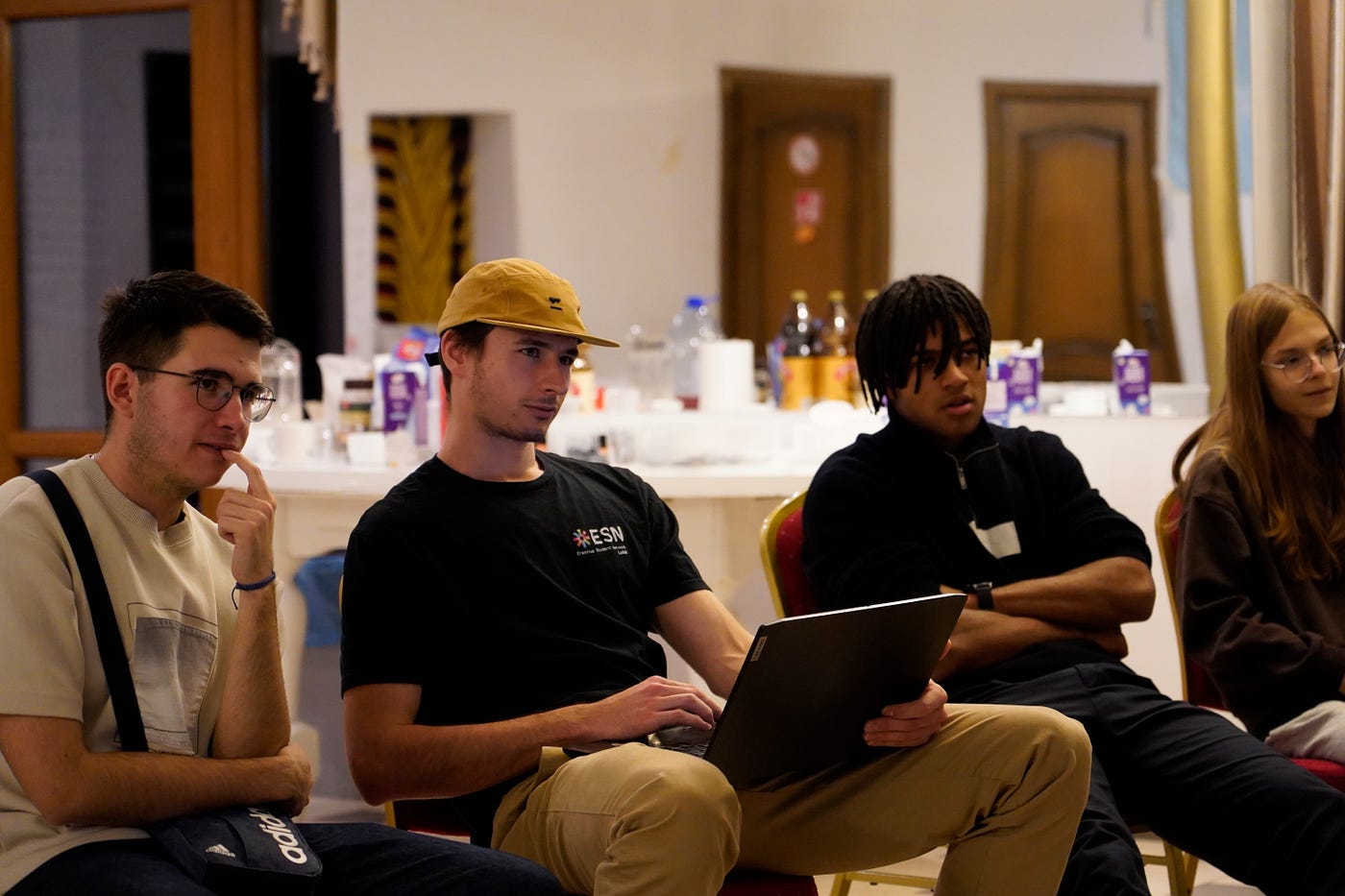
Everyone Counts gathered fifty-four young people from seven countries, Hungary, Lithuania, Portugal, Slovakia, Romania, Czechia and Serbia, for ten days in the small town of Bodrogkeresztur, under our Erasmus+ Accreditation. With that many half-shared languages in one room, plain talking only ever got you so far. So much of the ten days turned, in the end, on a single question: when the easy way to be understood is gone, what do you reach for instead?
First, the words went
The exchange kept taking language away on purpose, just to see what happened. In one pairs exercise, one person held a picture the other could not see and had to talk them into drawing it, line by line, with no peeking and no pointing. The drawings came back wonderfully wrong: a house where a face should be, a sun mistaken for a wheel. Then they did it again, this time allowed to ask questions, and watched the gap between what was meant and what landed shrink in real time.
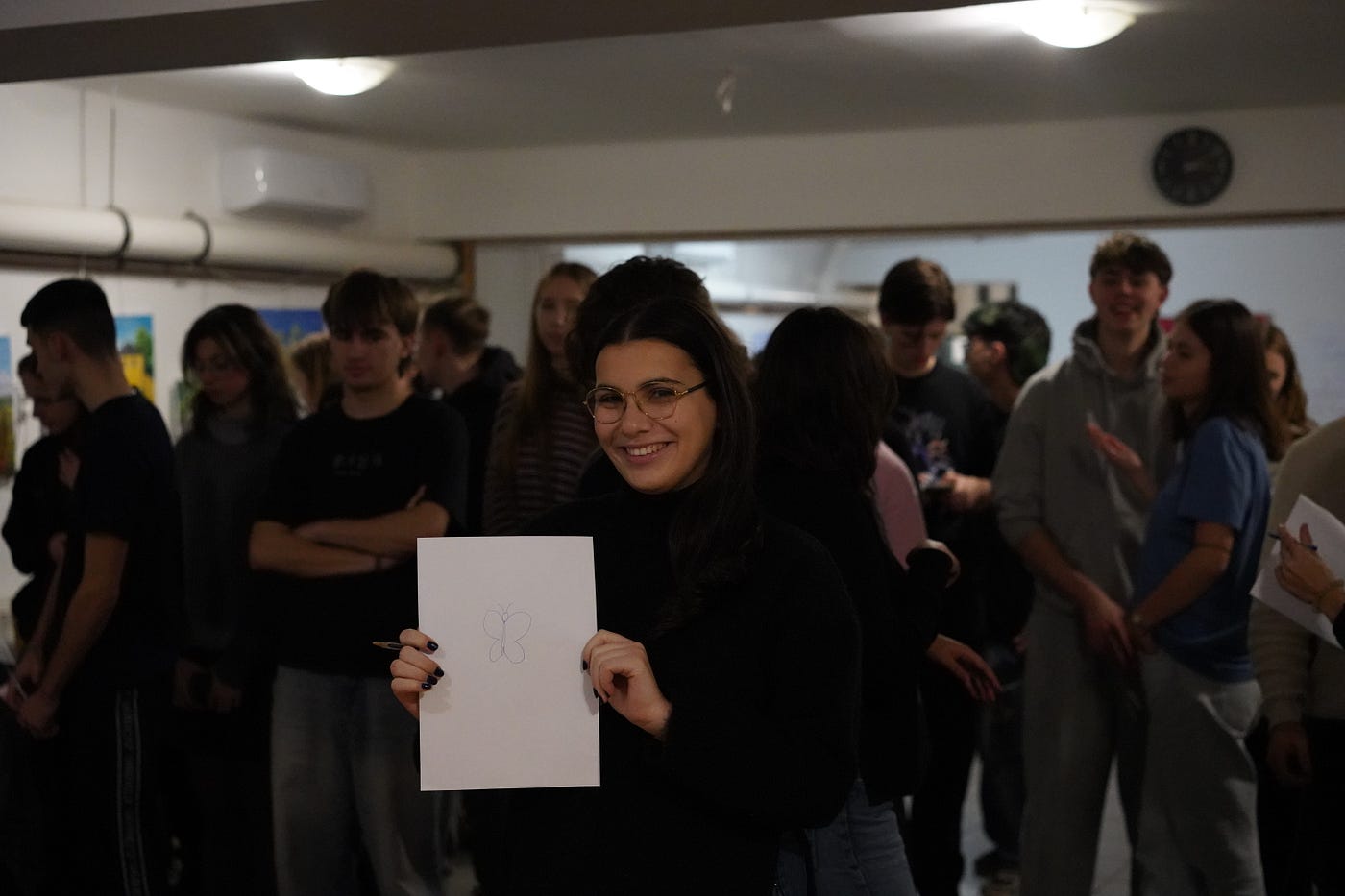
A run of sessions on non-verbal communication pushed further, handing teams everyday scenes to act out in total silence, comforting a friend, talking their way out of a misunderstanding, with nothing but faces, hands and the distance they kept from each other. The audience guessed at the emotion; the performers learned how loudly a body talks when the mouth is shut. By the time the group sat down to name the pieces of it, eye contact, posture, tone, personal space, they had already felt each one do its work.
Meaning, made sideways
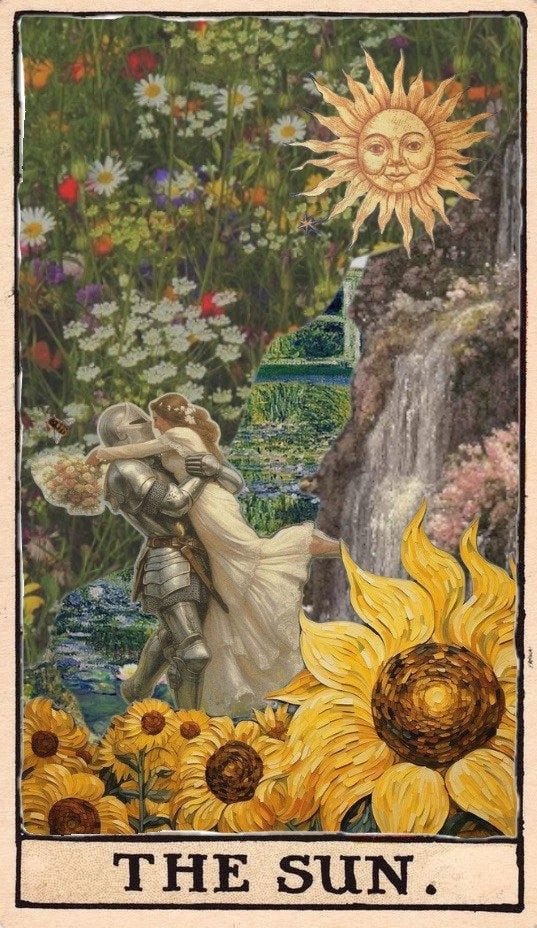
When language is unreliable, you make meaning out of whatever is left, and a lot of the week ran on exactly that. One morning everyone designed their own tarot card, each carrying a title and a handful of possible readings, so a single drawing could hold a feeling, a value and a memory at once. Later the cards were swapped and interpreted blind, the maker only revealing the real meaning after others had guessed, which turned out to be a small lesson in how differently the same image can land.
The self-expression sessions worked the same seam. Make something that says who you are, the group was told, a sketch, a few lines, a short performance, and then talk about why showing yourself and accepting yourself turn out to be the same muscle. And in one session the group built a House of Conversation in software: a foundation of trust, walls of respect, windows of curiosity, a roof to hold it together. It was a design task on paper. It read, by the end, like a blueprint for the whole ten days.
The shared language kept running out, and every time it did, the group got quietly better at everything else.

The slow art of being understood
Not everything was a puzzle to solve quickly. Some of the strongest hours were the slow ones. An active-listening session had two groups perform the same short scene, one really listening and one only pretending, and the difference was almost physical, the same sentences curdling on the second pass as they slid off a wall of half-attention. On one of the last mornings, participants went out alone with a camera to photograph their own week, then carried the images into a Reflection Cafe, rotating between small tables of questions, building a shared account of ten days out of dozens of private ones.

The cultural nights were the warm version of the same idea. Seven evenings, one country at a time, each one turning food, music and a flag into an invitation that needed no translation at all. An accordion on the Slovak night. A tower of šakotis on the Lithuanian one. Trays of arroz doce on the Portuguese evening that did not survive the hour. Nobody asked what anything was called. They just tasted it and asked for the story.

By the close, with Youthpass certificates handed out and a recap video gathering the ten days into a few minutes, what the participants kept naming was unglamorous and useful. Listen before you reply. Ask again when you have not understood. Leave a gap for the quieter voice. The big word the whole exchange was supposedly about kept dissolving into small, repeatable actions, which is probably the most honest thing it could have taught. They had spent ten days losing the easy ways to be understood, and finding, every time, that there was another one underneath.
[embed]
Read more about this activity at e29.eu.

메타데이터
- post_id
- eb50cb057d9f
- slug
- everyone-counts-eb50cb057d9f
- url
- https://medium.com/e29-eu/everyone-counts-eb50cb057d9f
- canonical_url
- https://medium.com/e29-eu/everyone-counts-eb50cb057d9f
- author_url
- https://medium.com/@e29.eu
- status
- ok
- fetched_at
- 2026-07-17 00:19:41