The Function, Principle and Advantages of OTU Board in DWDM Systems
OTU (Optical Transport Unit) board is a crucial component in Wavelength Division Multiplexing (WDM) systems, which is used for…
dwdmmdwdThe Function, Principle and Advantages of OTU Board in DWDM Systems
Function of OTU Board
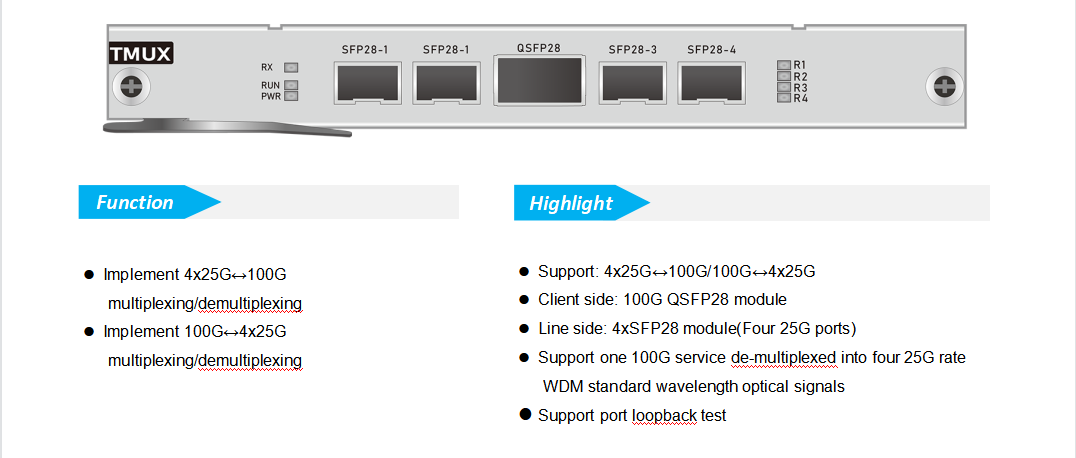
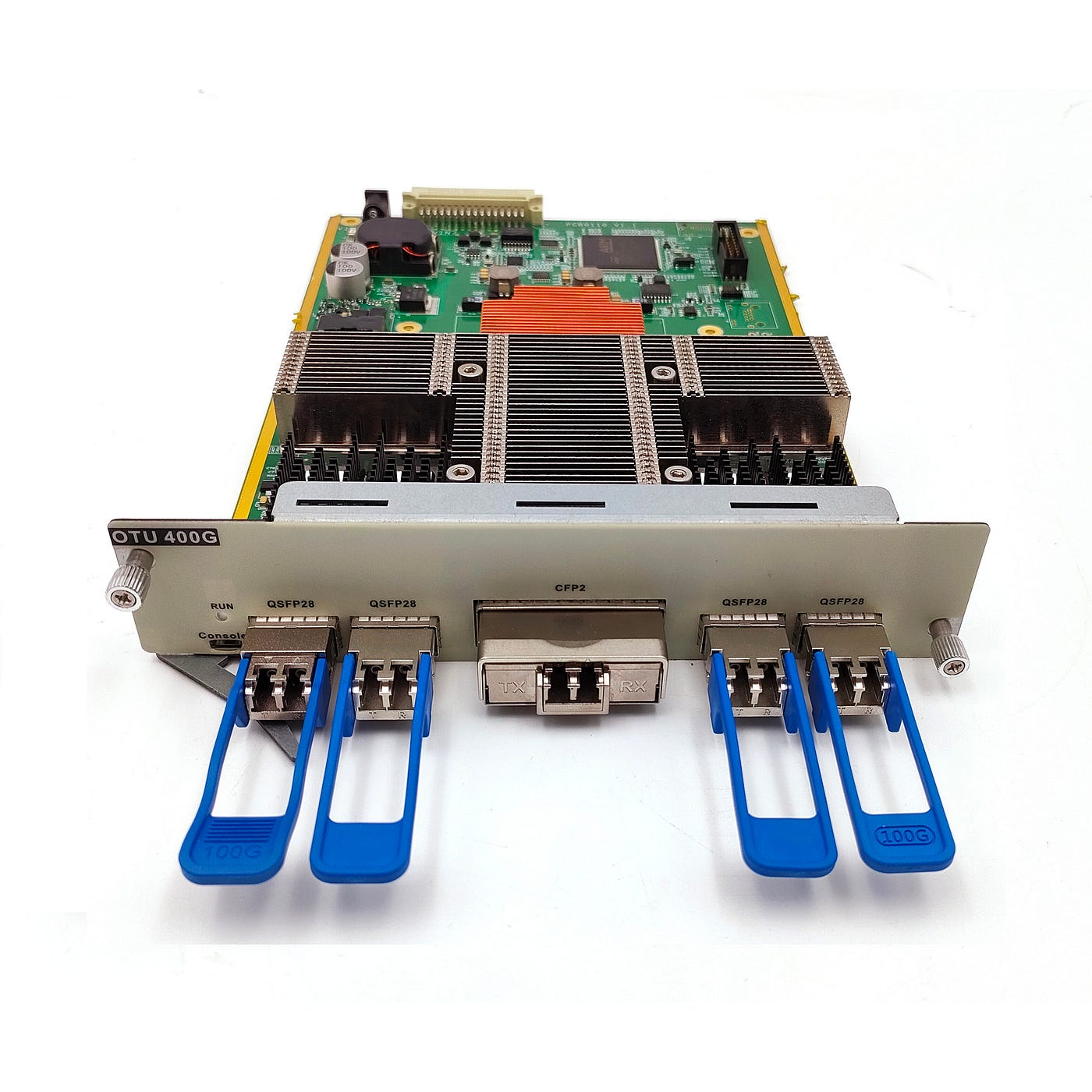
OTU board is responsible for multiplexing, demultiplexing, and managing multiple channels on a single fiber with different wavelengths. It can handle different types of signals such as Gigabit Ethernet, 10/40/100 Gigabit Ethernet, SONET/SDH, and Fiber Channel. Moreover, it can provide Forward Error Correction (FEC) and Optical Supervisory Channel (OSC) to protect signal quality and reduce errors.
When different client signals are routed into the OTU board, they are mapped into an optical channel with different wavelengths. Therefore, OTU board acts as an aggregator and a transmitter of high-capacity signals over an optical network.
Principle of OTU Board
The OTU board is typically installed in a WDM system that complies with ITU-T G.709 standards. It has three main functions:
-
Multiplexing: OTU board combines several channels with different bit rates and formats into a single high-speed OTU signal.
-
Demultiplexing: OTU board separates the received OTU signal into individual channels and formats for client delivery.
-
Management: With FEC and OSC management, OTU board can detect and compensate for errors to maintain signal quality and reliability.
OTU board uses various advanced technologies such as FEC, OSC, and Optical Automatic Level Control (OALC) to improve signal quality and minimize noise. It also provides Optical Performance Monitoring (OPM) and Fault Management (FM) to support network maintenance and troubleshooting.
Advantages of OTU Board
-
High Capacity: OTU board can transmit high-speed signals over long distances, up to hundreds of kilometers, and with high wavelength efficiency. It can support various bit rates and formats, which ensure high capacity and flexibility for future network upgrades.
-
Signal Quality: OTU board can efficiently manage signal quality and reduce the impact of transmission errors. FEC technology can provide reliable error correction capability, while OSC can provide real-time monitoring of signal quality.
-
Operational Efficiency: OTU board is easy to install, configure, and manage, which simplifies network management and reduces operational costs. It also provides remote management capabilities, which can improve network availability and reduce downtime.
In conclusion, OTU board plays an essential role in WDM systems, providing high-speed, high-capacity transmission of signals over long distances. It uses advanced technologies such as FEC, OSC, and OPM to ensure signal quality and reliability, while also offering operational efficiency and flexibility.
메타데이터
- post_id
- eb6ab5f15aba
- slug
- the-function-principle-and-advantages-of-otu-board-in-dwdm-systems-eb6ab5f15aba
- url
- https://medium.com/@anthonychen196/the-function-principle-and-advantages-of-otu-board-in-dwdm-systems-eb6ab5f15aba
- canonical_url
- https://medium.com/@anthonychen196/the-function-principle-and-advantages-of-otu-board-in-dwdm-systems-eb6ab5f15aba
- author_url
- https://medium.com/@anthonychen196
- status
- ok
- fetched_at
- 2026-07-24 16:59:40