What Happens If You Never Floss? The Truth Might Surprise You
There was a stretch of my life where I genuinely thought flossing was optional. Brush twice a day, use toothpaste, rinse, done. Flossing…
What Happens If You Never Floss? The Truth Might Surprise You
There was a stretch of my life where I genuinely thought flossing was optional. Brush twice a day, use toothpaste, rinse, done. Flossing felt like one of those extra steps dentists mention that you could probably skip if your teeth already looked clean enough.
Then I learned something that changed how I thought about the whole thing.
Your toothbrush can’t actually clean every part of your teeth. A pretty significant chunk of the surface area between your teeth stays untouched if you’re never flossing or cleaning between them some other way. And that’s exactly where problems tend to start, quietly, without anyone noticing.
Why Brushing Alone Isn’t Enough
Picture washing your hands but never cleaning between your fingers. From a distance your hands look clean, sure, but there’s still dirt sitting in those gaps your fingers don’t naturally reach.
Teeth work basically the same way. A toothbrush does a genuinely great job on the front, back, and chewing surfaces. The tight spaces between teeth, though, are just hard to reach with regular brushing — food particles and plaque settle in there, and bacteria slowly build up over time. That’s really the whole reason dentists keep pushing daily cleaning between teeth.
What Actually Happens If You Never Floss
At first, probably nothing dramatic. That’s honestly what makes it so easy to ignore. You brush, your breath seems fine, nothing hurts, everything looks normal on the surface.
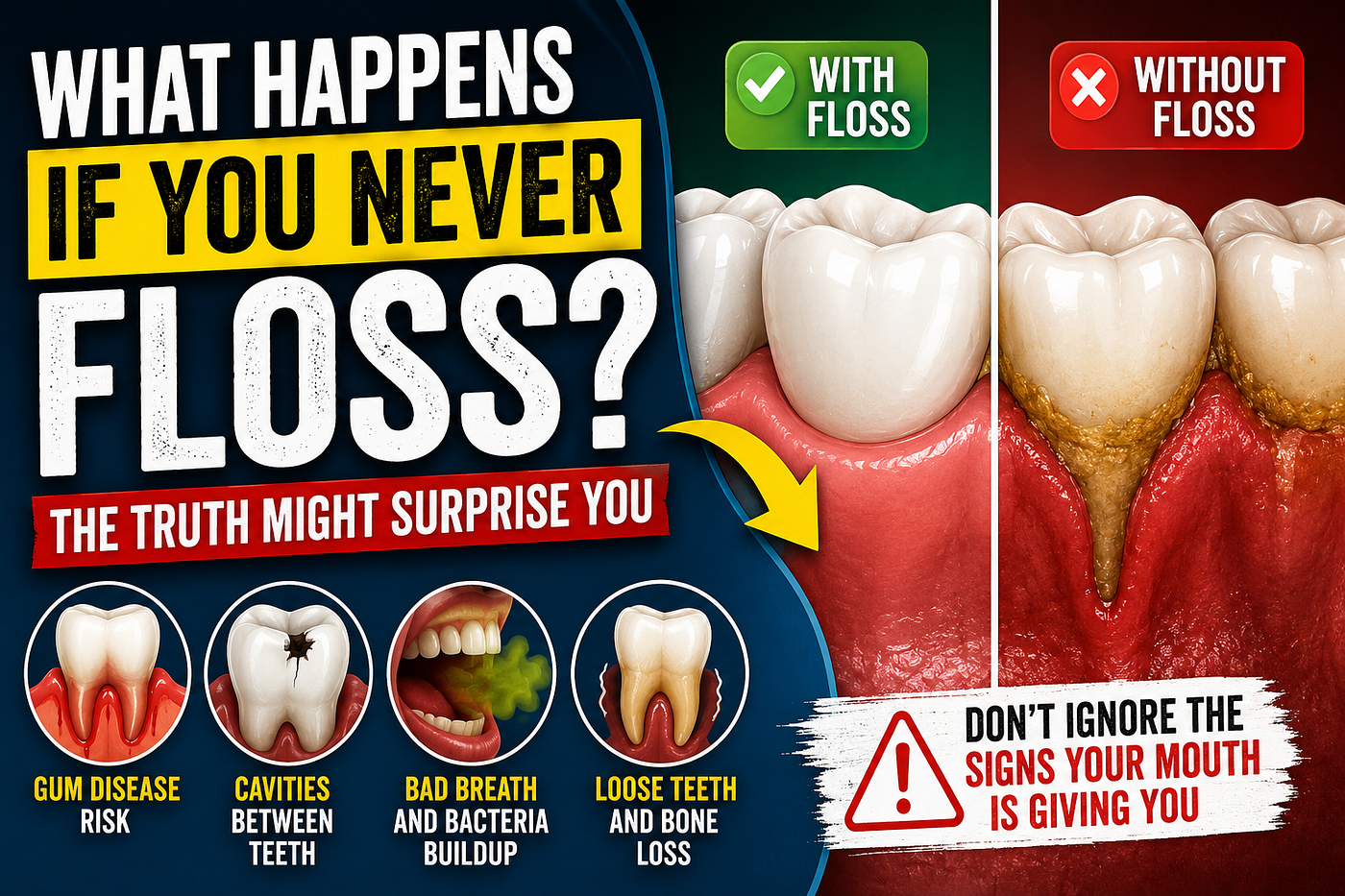
But underneath, plaque can be quietly building up between your teeth and along the gumline. Eventually your gums might get irritated and inflamed — that early stage is called gingivitis, and it’s usually where this whole story begins.
The First Warning Sign: Bleeding Gums
One of the most common early signs of gingivitis is bleeding while brushing or flossing. A lot of people see the blood and assume, “I must’ve flossed too hard.” Sometimes that’s true. More often, though, persistent bleeding is a sign the gums are already inflamed.
Here’s the interesting part: when someone with already-unhealthy gums starts flossing for the first time, the gums might bleed initially. That doesn’t necessarily mean the flossing itself is the problem — the inflammation was probably already there, just unnoticed. With consistent, gentle care over time, healthy gums generally stop bleeding.
Plaque Doesn’t Stay Soft Forever
Plaque is that sticky bacterial film constantly forming on your teeth. Cleared out regularly, it’s manageable. Left alone, though, it hardens into tartar — also called calculus — and tartar is a different beast entirely. You genuinely can’t brush that away at home. It takes a dental professional with the right tools. Which is really the whole argument for prevention being so much easier than fixing things after the fact.
When the Problem Moves Below the Gumline
This is where things get more serious. If gum inflammation keeps going unchecked, the tissue around your teeth can start separating from the tooth surface, creating what are called periodontal pockets. Bacteria love hiding and multiplying in these pockets.
If it progresses far enough, the tissue and bone supporting your teeth can actually get damaged — that’s periodontitis, the advanced stage. In severe cases, teeth can loosen or eventually be lost. And here’s the part that catches people off guard: it can all happen without much pain at all.
Why People Miss It
Dental problems rarely announce themselves dramatically. You can have inflamed gums while eating totally normally. You can have plaque sitting between your teeth while smiling in every photo without a hint of trouble. You can even develop real gum disease before feeling any obvious pain.
That’s exactly why waiting for a toothache isn’t a great strategy. Pain tends to be a late warning sign, not an early one.
Flossing Isn’t Really About Food Removal
A common misconception is that flossing’s whole point is getting food unstuck from between your teeth. That’s part of it, sure, but the bigger goal is clearing plaque from spots your toothbrush simply can’t reach. Cleaning between your teeth cuts down bacteria and plaque along the gumline, which protects your gums and lowers your risk of cavities forming between teeth specifically.
What If Your Gums Bleed the First Time You Try?
This is where a lot of beginners quit. They floss once, see blood, and decide “flossing just isn’t for me.” But bleeding often reflects existing inflammation, not damage from the floss itself. Rather than giving up, use a gentle technique and avoid snapping the floss hard against your gums. If bleeding keeps happening even with consistent, gentle care, that’s worth a dentist visit — persistent bleeding deserves real attention, not just working around it.
How Often Should You Actually Floss?
Once a day is a solid target for most people. You don’t need thirty minutes for this — a couple minutes done properly is plenty. Consistency matters way more than duration. Flossing once every two weeks just isn’t going to give you the same benefit as making it part of your actual daily routine.
What If You Hate Traditional Floss?
You’re not locked into one specific method. Some people get along fine with regular floss. Others prefer interdental brushes. Some go with water flossers instead. The best option is whatever actually cleans between your teeth and that you’ll genuinely stick with. Your dentist or hygienist can help you pick the right tool, especially if you’ve got braces, bridges, implants, or larger gaps between certain teeth.
A Simple Nighttime Routine
If you’re trying to actually build this habit, keep it dead simple. Before bed: clean between your teeth, brush gently for about two minutes with fluoride toothpaste, then spit out the extra rather than rinsing it all away immediately. That’s genuinely it. No ten-step routine required, just consistency.
A Story From the Dental Chair
Picture two people, same age. Both brush twice daily, both use fluoride toothpaste, both rarely touch soda. One cleans between their teeth every day. The other never does.
Years later, the second person may end up with cavities between teeth or gum problems that were basically invisible in a home mirror. The first person isn’t guaranteed a perfect result either — genetics, diet, medication, smoking, medical conditions, and tooth anatomy all play a role too. But cleaning between teeth removes one genuinely significant source of risk. Small daily habits really do produce very different outcomes over years.
What About “My Teeth Are Fine, Though”?
One of the most common arguments against flossing. “My teeth don’t hurt.” Great — but healthy teeth don’t always hurt, and that’s exactly the trap. Cavities can begin without any noticeable symptoms. Gum disease can progress quietly in the background. Problems between teeth are often impossible to spot in a mirror at home.
Regular dental exams catch what you can’t easily see yourself. Flossing and professional care work together here — one doesn’t replace the other.
Pakistan and Everywhere Else
In Pakistan and much of South Asia, plenty of people grow up assuming a dental visit is only necessary once a tooth actually hurts. That attitude shows up in plenty of other places too, honestly. The trouble is, preventive dentistry works on a totally different logic — instead of waiting for pain, the goal is preventing disease altogether, or catching it early enough that it’s still manageable.
Whether you’re in Pakistan, the US, Canada, the UK, India, or anywhere else, the basic principle stays the same: don’t wait for your mouth to hurt before you start actually caring for it.
The Biggest Mistake Is Just Waiting
If you’ve never flossed regularly, don’t beat yourself up over it. Just start today. You don’t need to be perfect overnight — start with one tooth at a time if that’s what it takes, learn proper technique, work it into your nighttime routine gradually.
If your gums bleed consistently, if they’re swollen, or if it’s been ages since your last checkup, book an appointment. This isn’t meant to scare you — it’s meant to help you catch small stuff before it turns into bigger stuff.
Final Thoughts
Flossing looks like a tiny, forgettable habit. Takes a few minutes, tops. But those few minutes reach places your toothbrush genuinely can’t touch on its own.
The truth about skipping it was never that one missed night destroys your teeth overnight. The real issue is what quietly happens over months and years when plaque keeps getting left between your teeth, again and again: bleeding gums, gingivitis, cavities forming between teeth, gum disease slowly progressing, and in severe cases, real damage to the tissue and bone holding everything in place.
Your mouth doesn’t always give you a loud, painful warning when something’s going wrong. Sometimes the warning is much quieter than that — a little bleeding, a little swelling, a bit of plaque you can’t even see. That’s exactly why prevention matters so much here.
Brush your teeth. Clean between them. Take care of your gums. And don’t wait for pain to be the thing that finally reminds you. A few minutes tonight might be one of the simplest investments you make in the smile you’re carrying for the rest of your life.
메타데이터
- post_id
- eb91cfc900a4
- slug
- what-happens-if-you-never-floss-the-truth-might-surprise-you-eb91cfc900a4
- url
- https://medium.com/@zulfiqaraiai/what-happens-if-you-never-floss-the-truth-might-surprise-you-eb91cfc900a4
- canonical_url
- https://medium.com/@zulfiqaraiai/what-happens-if-you-never-floss-the-truth-might-surprise-you-eb91cfc900a4
- author_url
- https://medium.com/@zulfiqaraiai
- status
- ok
- fetched_at
- 2026-08-11 20:06:48