From Automation to Autonomy: How Agentic AI Changes Enterprise Workflows
Enterprises have spent the last decade investing heavily in automation. From RPA bots to workflow engines, the goal has been simple: reduce…
From Automation to Autonomy: How Agentic AI Changes Enterprise Workflows
Enterprises have spent the last decade investing heavily in automation. From RPA bots to workflow engines, the goal has been simple: reduce manual effort and improve efficiency.
But a new shift is happening.
We are moving from automation systems that execute tasks to autonomous systems that make decisions and adapt in real time.
This is where Agentic AI fundamentally changes **AI enterprise workflows**.
Automation vs Autonomy: The Core Difference
Traditional automation is rule-based.
It follows predefined instructions:
- If X happens → do Y
- If data arrives → trigger workflow
- If condition is met → execute script
This works well when processes are stable and predictable.
But modern enterprises are not stable environments anymore.
They deal with:
- constantly changing data
- multi-system dependencies
- real-time decision making
- unstructured inputs (emails, documents, chats)
Automation breaks when complexity increases.
What Makes Agentic AI Different?
Agentic AI introduces a shift from execution to intent-based reasoning.
Instead of:
“Do this step-by-step workflow”
You define:
“Here is the goal, achieve it efficiently”
An Agentic AI system can:
- break down goals into sub-tasks
- choose tools dynamically
- adapt when conditions change
- learn from outcomes
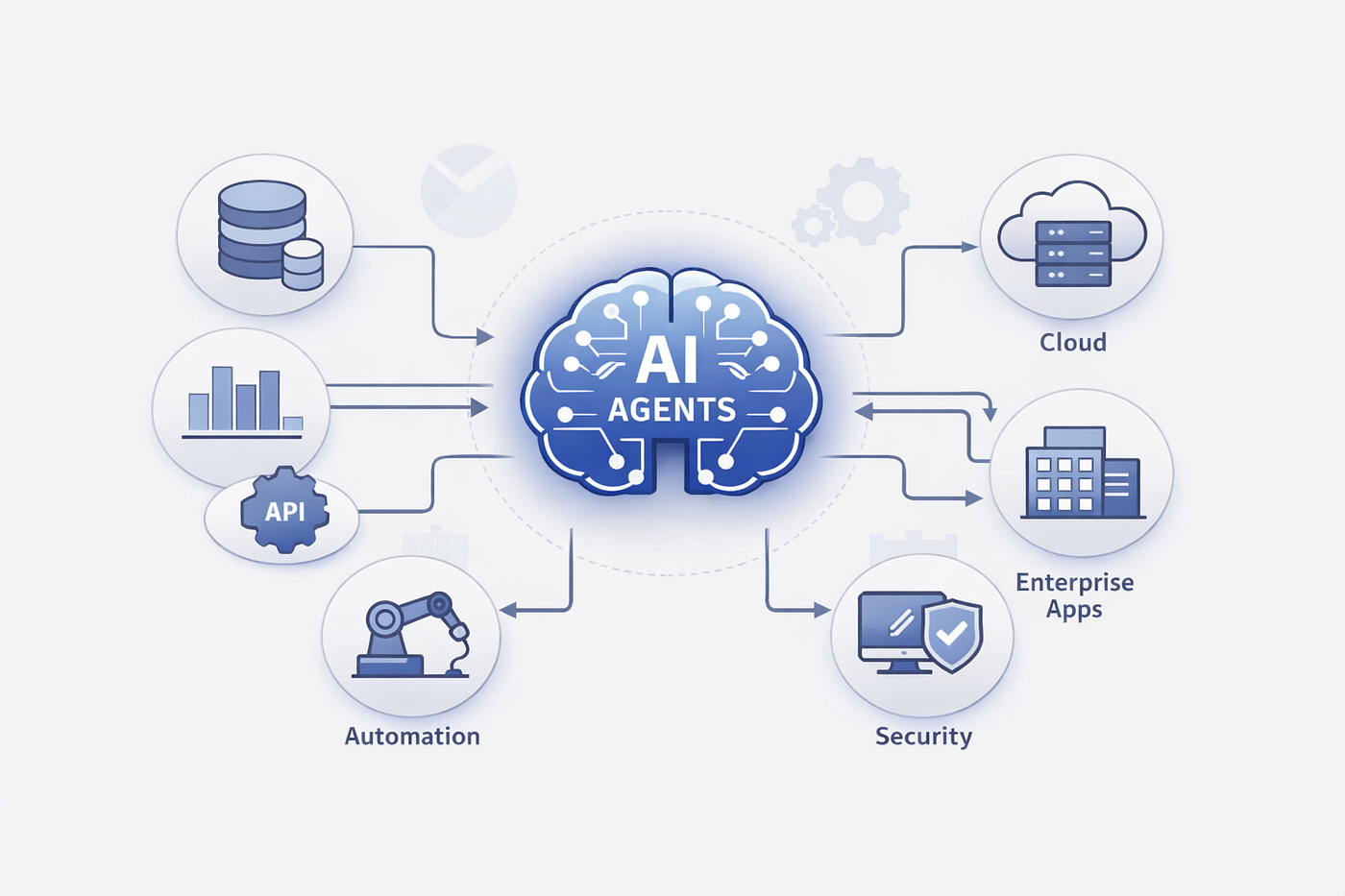
- coordinate across systems
In simple terms: Automation follows instructions. Agentic AI follows objectives.
How Enterprise Workflows Change with Agentic AI
1. From Static Workflows → Dynamic Task Planning
Traditional systems rely on fixed workflows designed in advance.
Agentic AI replaces this with:
- real-time task decomposition
- adaptive planning based on context
- decision branching based on outcomes
Example: Instead of a fixed customer support workflow, an AI agent decides:
- whether to respond directly
- escalate to human support
- pull CRM data
- generate personalized resolution
2. From Tool Integration → Tool Orchestration
Earlier systems required hard-coded integrations between tools.
Agentic AI can:
- decide which tool to use
- chain multiple tools together
- switch tools if one fails
For example:
- CRM system
- email system
- analytics dashboard
- ticketing system
All become interchangeable tools in an AI’s decision space, not fixed integrations.
3. From Human-Led Processes → Human-Supervised Systems
In traditional workflows: Humans manage systems.
In Agentic workflows: Humans supervise outcomes.
This changes roles:
- Humans define goals and constraints
- AI executes execution paths
- Humans intervene only when needed
This is closer to “management by objectives” than “management by tasks.”
4. From Reactive Systems → Proactive Systems
Automation reacts to triggers.
Agentic AI can:
- anticipate needs
- identify inefficiencies
- initiate workflows proactively
Example: Instead of waiting for a sales lead to be assigned:
- the agent detects high-value leads
- prioritizes outreach
- drafts personalized communication
- suggests next best action
Why Enterprises Are Shifting Now
Three major forces are driving this shift:
1. Complexity explosion
Modern enterprises operate across dozens of tools and systems.
2. Data overload
Too much unstructured data for static workflows to handle.
3. AI capability maturity
Large language models now support:
- reasoning
- planning
- memory
- tool use
This combination makes autonomy possible for the first time.
Real Enterprise Impact Areas
Agentic AI is already reshaping:
Customer Support
- autonomous ticket resolution
- smart escalation systems
- context-aware responses
Sales Operations
- lead qualification agents
- automated follow-up systems
- CRM enrichment agents
HR & Recruitment
- candidate screening agents
- interview scheduling automation
- onboarding assistants
IT Operations
- incident detection and resolution
- system monitoring agents
- automated debugging workflows
The New Workflow Model
We are transitioning to a new structure:
Old Model: Human → Software → Output
Automation Model: Human → Workflow Engine → Output
Agentic Model: Human → AI Agent System → Tools → Outcome
The key difference: The AI is no longer a tool layer, it becomes a decision-making layer.
Challenges Enterprises Must Address
Despite its power, Agentic AI introduces new challenges:
1. Control and predictability
Autonomous systems can behave unpredictably without constraints.
2. Governance
Enterprises need clear rules for:
- permissions
- decision boundaries
- audit trails
3. Data quality dependency
Agentic systems are only as good as the data they access.
4. Integration complexity
Legacy systems are not designed for autonomous orchestration.
The Future: Autonomous Enterprises
The long-term direction is clear:
Enterprises will evolve into systems where:
- workflows are no longer pre-built
- AI agents coordinate operations
- humans focus on strategy, not execution
This is not just automation evolution.
It is the foundation of the autonomous enterprise model.
Final Thoughts
The shift from automation to autonomy is not about replacing existing systems.
It is about redefining how work itself is structured.
Automation made businesses efficient.
Agentic AI will make them adaptive, intelligent, and self-directed.
And the enterprises that adopt this shift early will not just optimize workflows they will fundamentally redesign how decisions are made.
메타데이터
- post_id
- eb92aef5a2d3
- slug
- from-automation-to-autonomy-how-agentic-ai-changes-enterprise-workflows-eb92aef5a2d3
- url
- https://medium.com/@devikay/from-automation-to-autonomy-how-agentic-ai-changes-enterprise-workflows-eb92aef5a2d3
- canonical_url
- https://medium.com/@devikay/from-automation-to-autonomy-how-agentic-ai-changes-enterprise-workflows-eb92aef5a2d3
- author_url
- https://medium.com/@devikay
- status
- ok
- fetched_at
- 2026-06-13 07:35:29