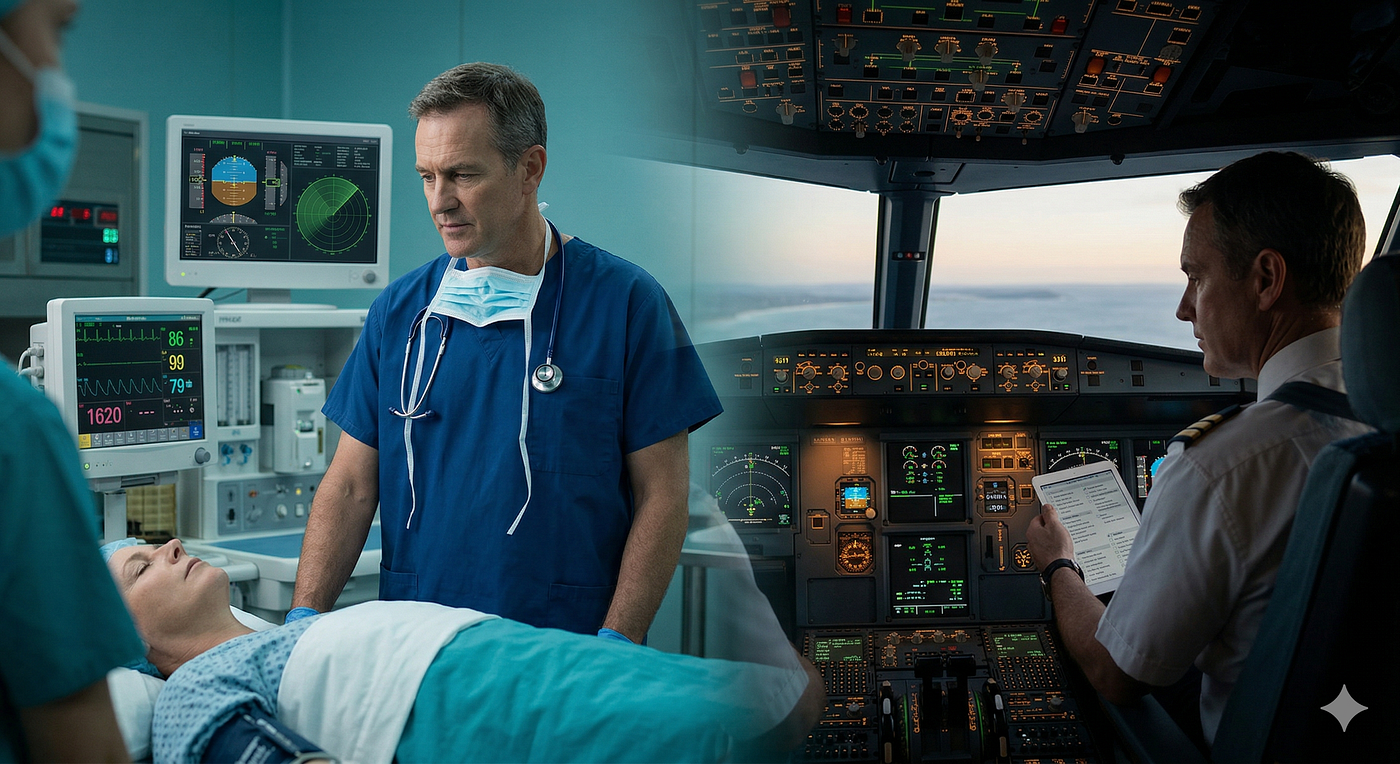
When the Airway Cannot Move: Planning for the Fully Fused Cervical Spine
Anaesthetic trainees are taught that the sniffing position is the starting point for most intubations. Neck flexion at the lower cervical…
When the Airway Cannot Move: Planning for the Fully Fused Cervical Spine
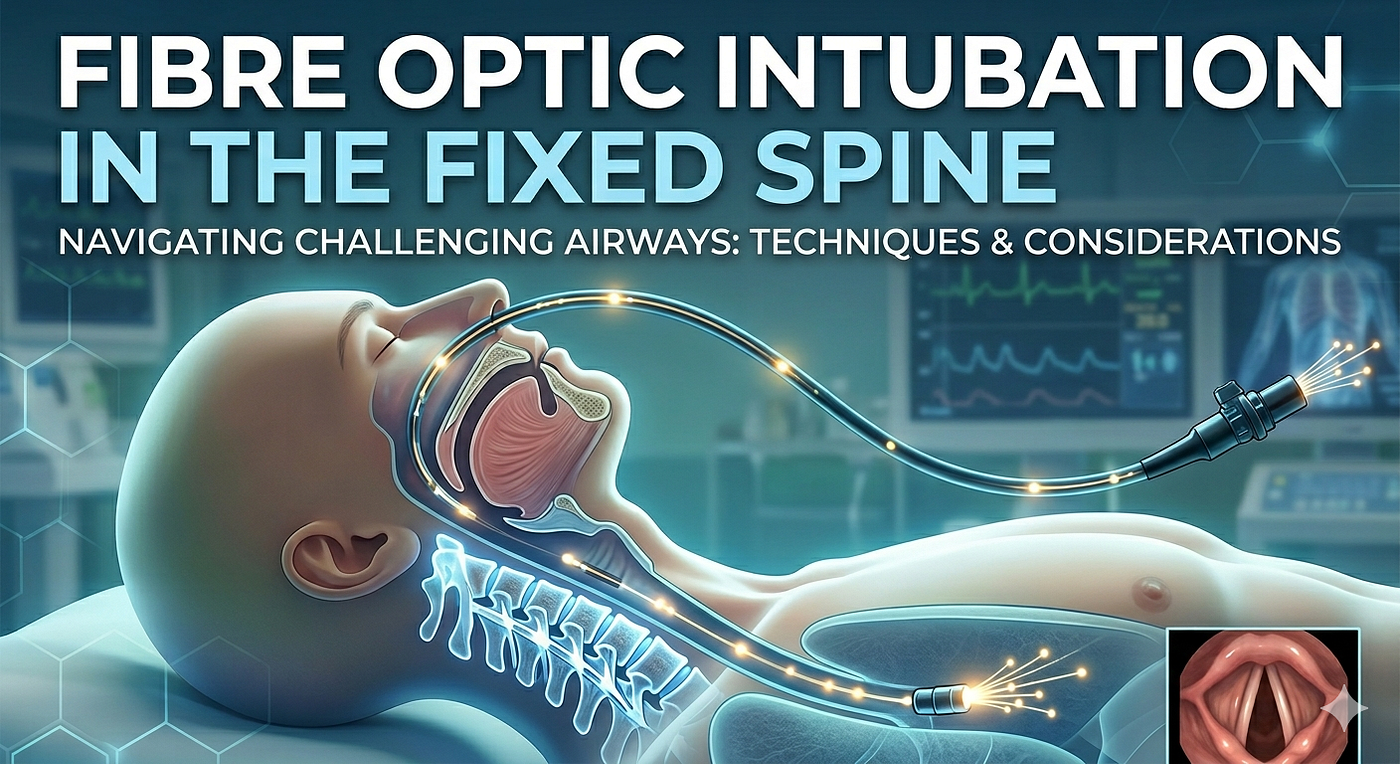
Anaesthetic trainees are taught that the sniffing position is the starting point for most intubations. Neck flexion at the lower cervical segments, extension at the atlanto-occipital joint, airway aligned. It is the first thing in the textbook and the first thing in the simulator.
Then, one day in private practice, a patient rolls into the anaesthetic bay whose head will not move. Not because of pain, not because of guarding, but because titanium rods and screws have fused the bones into a single rigid structure from the skull to the middle of the back. The pillow comes out and nothing changes. The head sits where the hardware says it sits.
These cases test the ability to hold two competing thoughts at once. The first is that conventional laryngoscopy is out. The second is that the airway still has to be secured, the tube still has to sit above the carina, and the patient still has to be kept safe through whatever the surgery demands.
In the fully fused spine, the two most common errors are both errors of planning rather than technique. The first is treating the difficult airway as a day-of-surgery problem, when the decisive work happens days earlier: imaging review, nasal passage assessment, mouth opening measured in centimetres, and confirmation with the facility that the fibre optic scope is present and functional. The second is over-sedating a patient whose own respiratory effort is the last line of defence. Remifentanil infusions at effect-site concentrations under 1.5 ng/mL preserve respiratory drive while giving adequate analgesia for scope passage. The temptation to give “just a little more” is the point at which the plan starts to fail.
The single-use disposable video intubation scopes have changed the landscape for private practice considerably. They remove the variable of a maintenance-degraded fibre optic bundle, and they mean that equipment availability is a logistics problem rather than a biomedical one.
I have written a longer, more technical guide covering the pre-assessment, topicalisation, sedation, and railroading considerations on my blog: https://dradamhill.com.au/blog/fibre-optic-intubation-fixed-cervical-spine
More of my clinical and research work is on ResearchGate.
메타데이터
- post_id
- ebb375c61d07
- slug
- when-the-airway-cannot-move-planning-for-the-fully-fused-cervical-spine-ebb375c61d07
- url
- https://medium.com/@adam_76461/when-the-airway-cannot-move-planning-for-the-fully-fused-cervical-spine-ebb375c61d07
- canonical_url
- https://medium.com/@adam_76461/when-the-airway-cannot-move-planning-for-the-fully-fused-cervical-spine-ebb375c61d07
- author_url
- https://medium.com/@adam_76461
- status
- ok
- fetched_at
- 2026-06-09 14:34:10