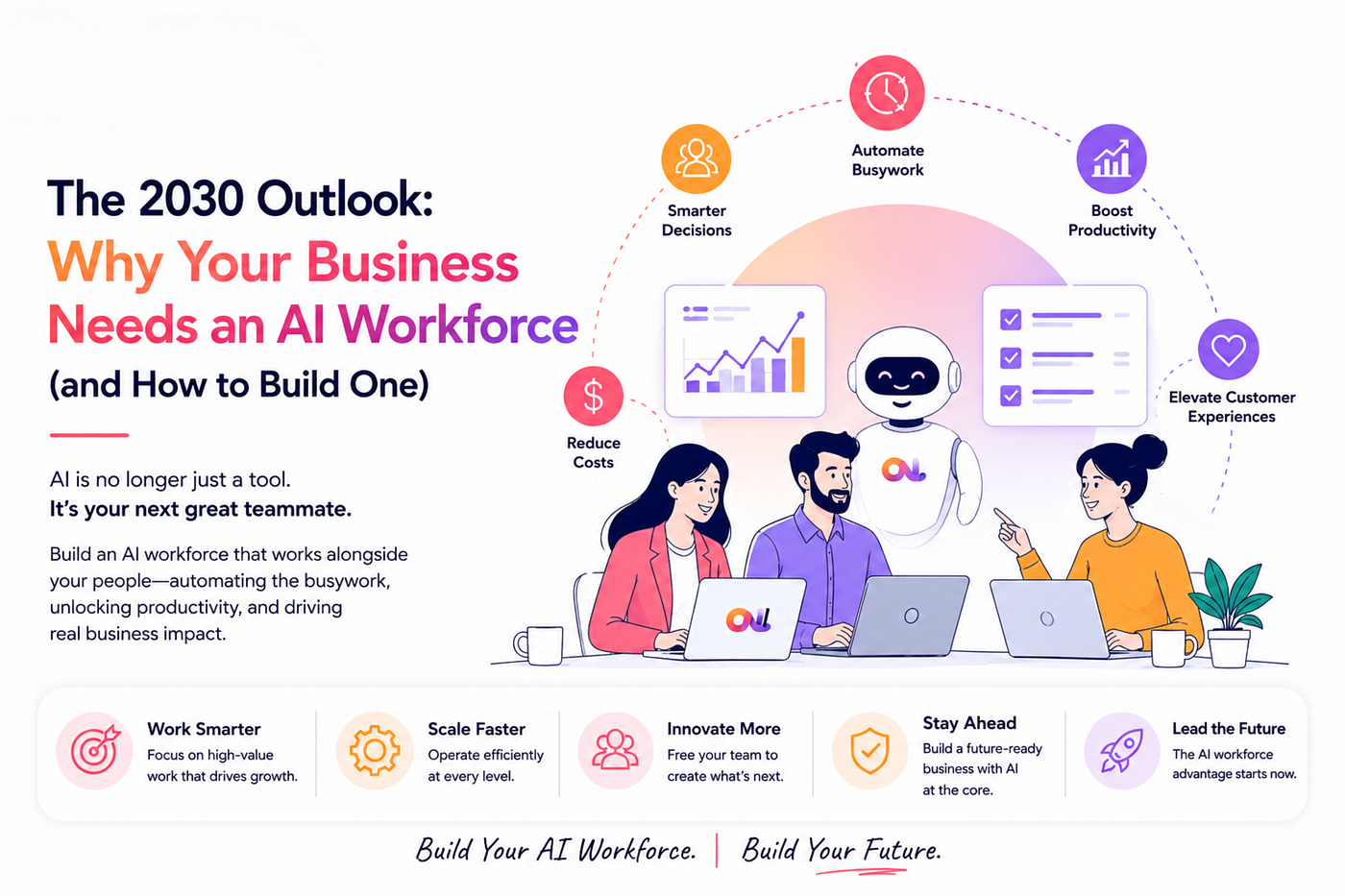
The Hidden Operational Problem Slowing Down Modern Businesses
Most businesses don’t notice operational inefficiencies until growth starts becoming difficult. In the early stages, teams manage workflows…
The Hidden Operational Problem Slowing Down Modern Businesses
Most businesses don’t notice operational inefficiencies until growth starts becoming difficult. In the early stages, teams manage workflows manually, employees handle repetitive tasks, and departments rely heavily on human coordination to keep operations moving. Everything appears manageable until the business begins scaling. What once felt like a functional process slowly turns into operational chaos, delayed workflows, communication gaps, and inconsistent productivity.
This is one of the biggest reasons modern businesses are investing heavily in workflow automation and operational optimisation in 2026. Companies are beginning to realise that growth is not only about increasing revenue or hiring more people. Sustainable growth depends heavily on how efficiently a business operates internally.
The Real Cost of Manual Operations
Many businesses underestimate how much productivity is lost through repetitive operational work. Teams often spend hours manually updating CRMs, preparing reports, transferring data between systems, following up internally, managing approvals, and handling administrative tasks that could easily be streamlined. Individually, these tasks may seem small, but together they consume hundreds of operational hours every month.
Operational inefficiency becomes even more dangerous as businesses grow. The larger the company becomes, the more expensive delays and bottlenecks become. Teams struggle to maintain consistency, communication slows down, and decision-making becomes harder. This often creates frustration internally while also negatively affecting customer experience.
Why Operational Efficiency Matters More Than Ever
Modern businesses now operate in highly competitive environments where speed, efficiency, and scalability are major competitive advantages. Companies that optimise their operations can respond faster to customer needs, improve workflow consistency, reduce operational costs, and scale more effectively without overwhelming internal teams.
Interestingly, the most efficient businesses today are not necessarily the ones hiring the fastest. They are the companies building smarter systems. Instead of solving every growth challenge by adding more manual labour, they focus on streamlining operations and eliminating repetitive work through automation and intelligent workflows.
How Automation Is Transforming Business Operations
Workflow automation is creating significant improvements across multiple areas of business operations. Companies are automating approvals, reporting systems, onboarding processes, internal notifications, customer communication, and operational workflows to reduce delays and improve productivity. Automation also improves customer operations by creating faster response times, smoother onboarding experiences, and more consistent communication.
Another major advantage of automation is operational visibility. Businesses generate enormous amounts of data every day, but many teams still rely heavily on manual reporting processes. Intelligent automation systems provide real-time operational insights, allowing businesses to make faster and more informed decisions without wasting hours building reports manually.
The Biggest Mistake Businesses Make
One of the biggest mistakes companies make is rushing into automation without understanding their operational bottlenecks first. Automating broken workflows simply creates faster inefficiencies. This is why operational analysis and automation audits are becoming increasingly important before implementing automation systems.
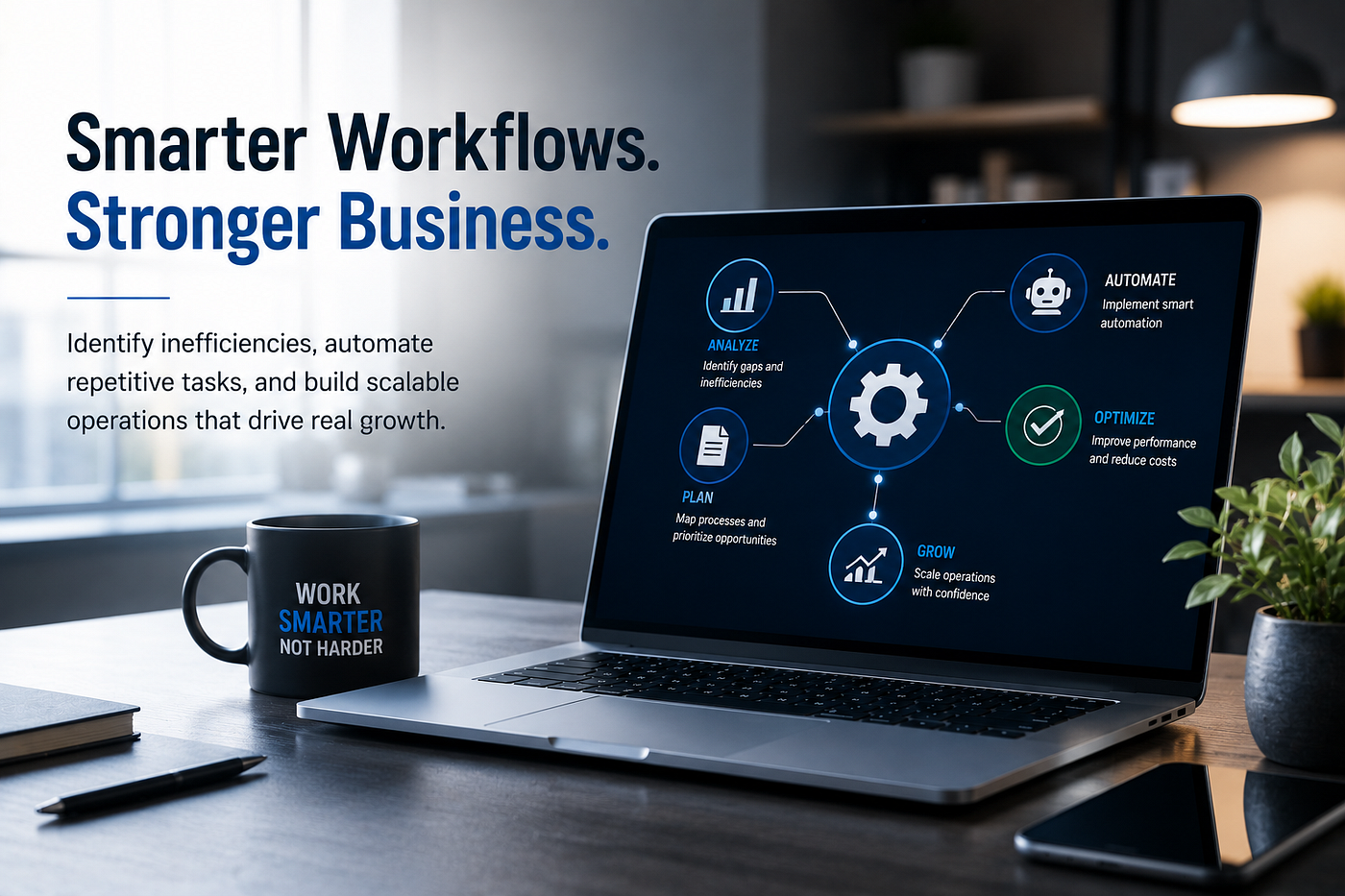
The smarter approach is to first analyse workflows, identify inefficiencies, optimise operational processes, and then automate strategically. Businesses following this approach usually experience far better long-term operational performance and scalability.
The Future of Smarter Business Operations
The future of business operations is not about replacing humans with automation. It is about eliminating operational friction and allowing teams to focus on higher-value work. Companies that optimise workflows early are positioning themselves for significant long-term advantages in productivity, efficiency, scalability, and customer experience.
Most businesses already have access to the tools they need. What they often lack is operational clarity. Understanding where inefficiencies exist — and how automation can solve them — is becoming one of the most valuable competitive advantages modern businesses can build.
If you’re exploring workflow optimisation and operational automation strategies, this detailed breakdown on **Automation Audit Services** explains how businesses are identifying operational bottlenecks and improving efficiency through smarter systems.
You can also explore how **AI Automation Solutions** are helping modern businesses scale more efficiently through intelligent workflows and automation infrastructure.
메타데이터
- post_id
- ebb73aec63a9
- slug
- the-hidden-operational-problem-slowing-down-modern-businesses-ebb73aec63a9
- url
- https://medium.com/@duaf6080/the-hidden-operational-problem-slowing-down-modern-businesses-ebb73aec63a9
- canonical_url
- https://medium.com/@duaf6080/the-hidden-operational-problem-slowing-down-modern-businesses-ebb73aec63a9
- author_url
- https://medium.com/@duaf6080
- status
- ok
- fetched_at
- 2026-06-20 20:29:01